FV Hospital races against time to save a Cambodian mother with placenta praevia and pulmonary embolism
Early detection of the complication and coordinated multidisciplinary treatment enabled FV doctors to control the pulmonary embolism and preserve the mother’s uterus. She recovered and was discharged after seven days. Dr Vo Trieu Dat, MD, MSc, examines Cambodian patient Sourn Channa before her discharge. (Photo: FV Hospital) From Cambodia to Vietnam in Search of a […]
Early detection of the complication and coordinated multidisciplinary treatment enabled FV doctors to control the pulmonary embolism and preserve the mother’s uterus. She recovered and was discharged after seven days.
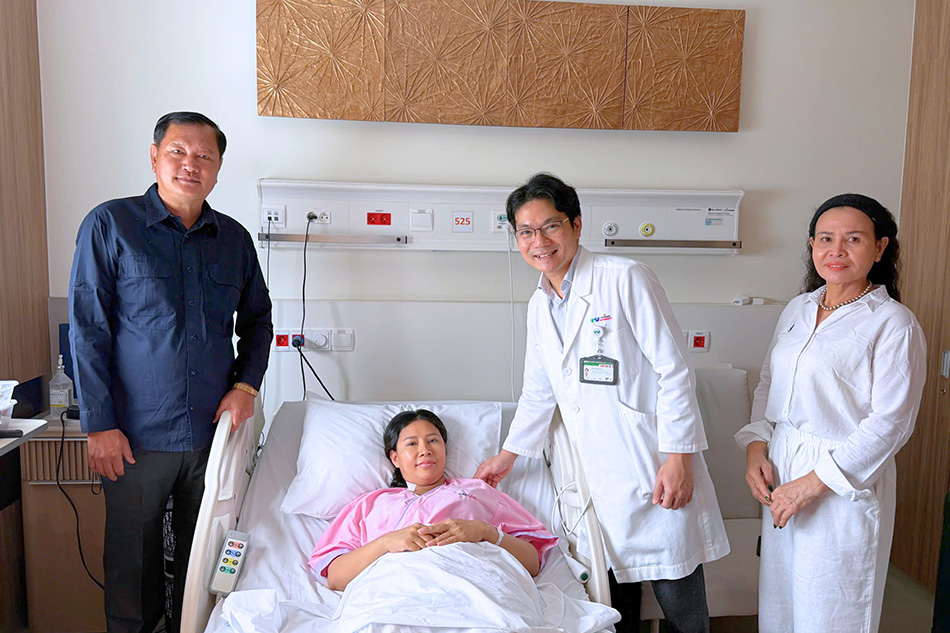
Dr Vo Trieu Dat, MD, MSc, examines Cambodian patient Sourn Channa before her discharge. (Photo: FV Hospital)
From Cambodia to Vietnam in Search of a Safe Place to Give Birth
Sourn Channa, 39 years old, a Cambodian national, was pregnant with her fourth child. She had been diagnosed with central placenta praevia, a condition in which the placenta lies low in the uterus and completely covers the internal cervical opening, preventing the baby from being delivered vaginally. More importantly, the condition placed her at risk of severe bleeding during pregnancy and childbirth.
Concerned about the potential impact on the health of both mother and baby, her family decided to travel to Vietnam. After researching several hospitals, she chose FV Hospital, which had been recommended by acquaintances for its medical expertise and ability to care for international patients.
Following examination and ultrasound, Dr Vo Trieu Dat, MD, MSc, Head of FV Thomson Maternity, confirmed that the patient had Grade 4 central placenta praevia. As the placenta completely covered the birth canal, a Caesarean section was the only option.
The challenge of the surgery was not only to deliver the baby safely, but also to control bleeding and preserve the mother’s uterus. Dr Dat consulted with the surgical and anaesthesia teams, preparing for potential complications during this complex delivery.

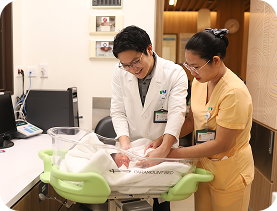
Dr Vo Trieu Dat, MD, MSc, counsels an expectant mother. (Photo: FV Hospital)
An Unexpected Complication 15 Minutes into Surgery
The operation initially proceeded as planned. The baby was delivered safely within a short period. However, just 15–20 minutes after the operation began, Channa’s SpO₂ – a measure of blood oxygen saturation – suddenly dropped. This was a serious warning sign, prompting the anaesthesia team to urgently investigate the cause.
Drawing on their clinical experience and vigilance, the anaesthetists immediately suspected a blood clot that had travelled to the lungs, causing a pulmonary embolism. This is a medical emergency that can lead to cardiovascular collapse or cardiac arrest on the operating table. According to Dr Le Thi Bich Tram, MD, MSc, from the Anaesthesia and Intensive Care Department, pulmonary embolism occurring during surgery is reported in approximately 0.004% of cases in some studies, but carries a very high mortality rate.
The situation was even more complicated for a mother who had just undergone a Caesarean section. Pregnancy and the postpartum period are inherently associated with an increased risk of blood clots. If a pulmonary embolism progresses, emergency treatment is required; however, anticoagulant therapy can also increase the risk of bleeding from the uterine surgical wound.
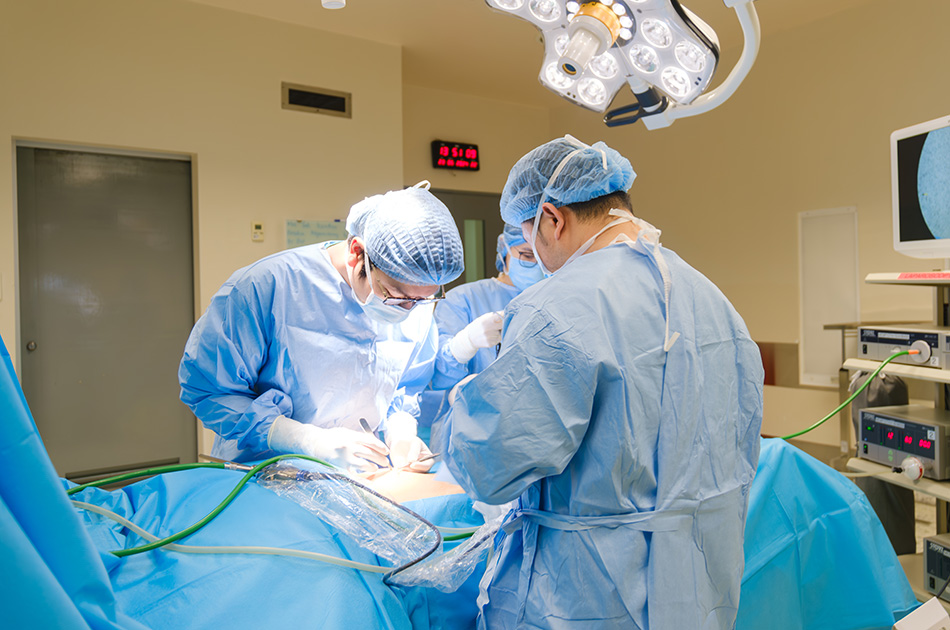
The FV Hospital surgical team performs a Caesarean section while working to control bleeding and preserve the uterus of patient Sourn Channa. (Photo: FV Hospital)
A Three-Hour Race from the Operating Theatre to the ICU and CT Scanner
Although the clinical findings indicated only a 60% likelihood of pulmonary embolism, the surgical and anaesthesia teams did not wait for a definitive diagnosis before taking action.
The emergency response protocol was activated, and the multidisciplinary teams worked together to agree on an approach. Rather than waking the patient to breathe spontaneously, as would normally be the case, they decided to keep her on mechanical ventilation under fully controlled conditions.
The Intensive Care Unit (ICU) team was already on standby. As soon as the operation was completed, the patient was transferred directly from the operating theatre to the ICU. Approximately three hours later, a CT scan confirmed a blood clot causing an embolism in a small branch of the right lower lobe of the lung. Fortunately, the clot had not caused widespread obstruction or compromised circulation.
Dr Ho Minh Tuan, MD, PhD, Head of the Cardiology and Interventional Cardiology Department at FV Hospital, together with the Obstetrics, Anaesthesia and Intensive Care teams, carefully considered every treatment option. Thrombolytic drugs could dissolve the clot but were unsuitable immediately after surgery due to the risk of severe bleeding. Anticoagulants were necessary to prevent the clot from progressing, but the risk of recurrent bleeding from the uterine surgical wound also had to be taken into account.
A contingency plan was therefore prepared: if the pulmonary embolism worsened, the interventional cardiologist would perform catheter-based thrombectomy in the Cathlab.
“With a mother who has just undergone a Caesarean section, we have to carefully weigh the need to control the blood clot against the risk of bleeding. The choice of medication must also take into account whether it passes into breast milk, so that the baby is not affected,” Dr Tuan explained.
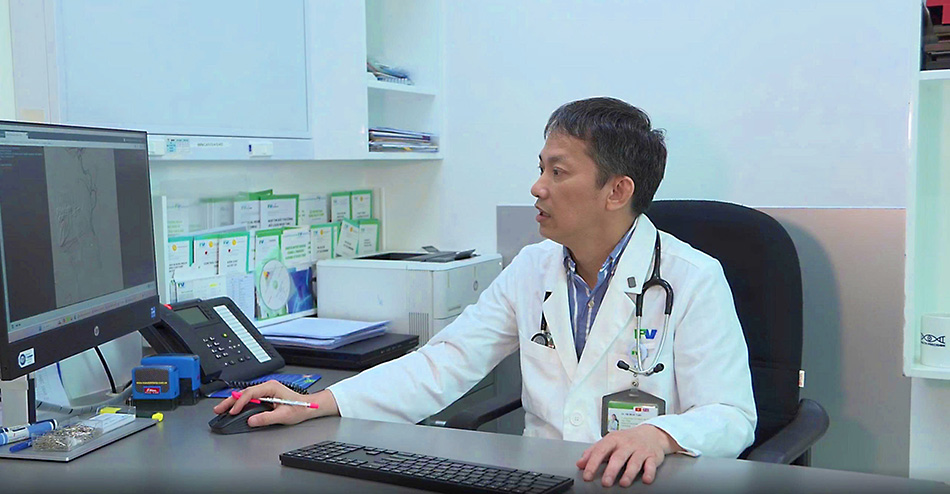
Dr Ho Minh Tuan, MD, PhD, Head of the Cardiology and Interventional Cardiology Department at FV Hospital, stands ready to perform pulmonary artery thrombectomy if required. (Photo: FV Hospital)
The team selected an anticoagulant appropriate for the mother’s condition while closely monitoring her risk of bleeding.
This was when the advantages of a multispecialty hospital became particularly evident. The departments did not manage the case in isolation; instead, they continuously communicated and agreed on the treatment plan, while simultaneously monitoring respiratory and circulatory function, postoperative recovery and the risk of haemorrhage. Every decision had to take into account both the mother’s health and the baby’s safety.

The newborn is carefully cared for by midwives from FV Thomson Maternity Department while the mother receives treatment. (Photo: FV Hospital)
FV’s Multidisciplinary Approach: The Key to Managing Rare and Complex Cases
After approximately 48 hours of intensive monitoring and treatment, Channa’s pulmonary embolism was brought under control. She did not require catheter-based thrombectomy or advanced circulatory support.
The doctors subsequently continued to select an appropriate anticoagulant regimen for the mother’s recovery and breastfeeding. She remained under observation to assess her risk factors for further blood clots. After seven days in hospital, she was well enough to be discharged, to the joy of her family and the treating team.
The patient’s mother, deeply moved, shared: “When we first arrived and heard the doctors explain that placenta praevia could be life-threatening, I was extremely frightened. But Dr Dat reassured us and promised to do everything possible to ensure the operation went safely, which gave our family peace of mind and confidence. Dr Dat and the doctors saved my daughter’s life and helped our family welcome the baby safely, with both mother and child doing well.”
“The successful management of this complex case is a source of pride for the entire team. It has further highlighted the vital role of multidisciplinary collaboration in managing unexpected situations,” Dr Dat shared.
This case also demonstrates that, in complex medical situations, in addition to individual doctors’ expertise, effective collaboration between specialties and preparedness for unexpected complications are crucial to a patient’s treatment and recovery.
For further information, please contact FV Hospital at 06 Nguyen Luong Bang Street, Tan My Ward (formerly District 7), Ho Chi Minh City, or call **(028) 3511 3333.
Related Articles
Taller than their classmates: A blessing or a hidden sign of precocious puberty?
Many parents are pleased when their 6- or 7-year-old is noticeably taller than peers. However, this may indicate precocious puberty,…

Vaginal birth after caesarean: an opportunity for mothers to give birth naturally at FV
According to UNICEF statistics, the rate of C-section births accounts for 34.4 per cent of all births in Vietnam from…

Uterine Fibroid Removal, Preserving the Function of Motherhood
Uterine fibroids are usually benign, and most women can live with these tumours. However, when the tumours are large and…