Pelvic floor treatment at FV hospital – tackling the common anxiety of middle–aged women
Maternity is something many woman go through in life and to bring a baby into the world is a blessing. However, maternity does have some hidden dangers as it can lead to diseases in the genital area, such as, most commonly, pelvic floor disorders.
Friday, 07/06/2019 | Maternity | by FV Thomson
Maternity is something many woman go through in life and to bring a baby into the world is a blessing. However, maternity does have some hidden dangers as it can lead to diseases in the genital area, such as, most commonly, pelvic floor disorders.
This disease is common in women who have delivered babies, have been pregnant, people over the age of 40, postmenopausal women, people with chronic constipation, those working in hard labour, or people who have undergone pelvic surgery. The disease not only causes aesthetic problems in the genital area, it also effects women’s quality of life. However, due to the sensitivity of the condition, many women tend to suffer alone and lose the chance to get early and thorough treatment.

What is Pelvic floor dysfunction?
The pelvic floor is a combination of three systems: the reproductive system (uterus, vagina), the lower unary system (bladder, urethra), and the lower digestive system (rectum, anus). The objective of the pelvic floor is to keep these systems together and in the right place when the body is working hard or doing exercise. The pelvic floor is also responsible for opening and closing the urethra, uterus, anus, controlling digesting activity and urination, sexual activities, and making giving birth easier.
However, after pregnancy or due to age, the muscular system and ligament in the perineum of aging women becomes stretched making the pelvic floor unable to keep the systems where they should be. In the early stages, the patient will notice a bulging block appearing in the vulva area when they squat, cough, or have a bowel movement. If not treated promptly, the bulging block will appear larger and more frequently. In the severe stage, the block will appear outside the vulva, where it cannot be positioned back into the vagina.
Below are some common symptoms of pelvic floor dysfunction:
- Urinating when coughing, running or doing hard labour
- Unable to hold when wanting to urinate
- Urinating at night more than once
- Increasing or decreasing urination and urinating more than 8 times a day
- Finding it difficult to urinate
- Feeling of urinating does not go away
- Flatulence when coughing, running or sneezing
- Being unable to control flatulence or bowel movements
- Having severe constipation, and lack of peristalsis movements
According to statistics from the Pelvic Society in Ho Chi Minh City, about 50% of women above 40 years old have pelvic floor dysfunction and have trouble controlling urination. About 40% of women above 50 years old have pelvic floor dysfunction with issues concerning the uterus, bladder, and colon. In addition, when women are postmenopausal, issues occur after having sex, where the vagina becomes stretched, shrinks, or becomes dry, and they encounter pelvic regional pain, and pain in the lower abdomen.
Pelvic Floor Treatment at FV – Tackling the Common Anxiety of Middle–Aged Women
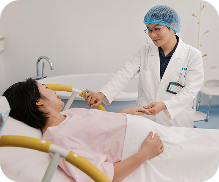
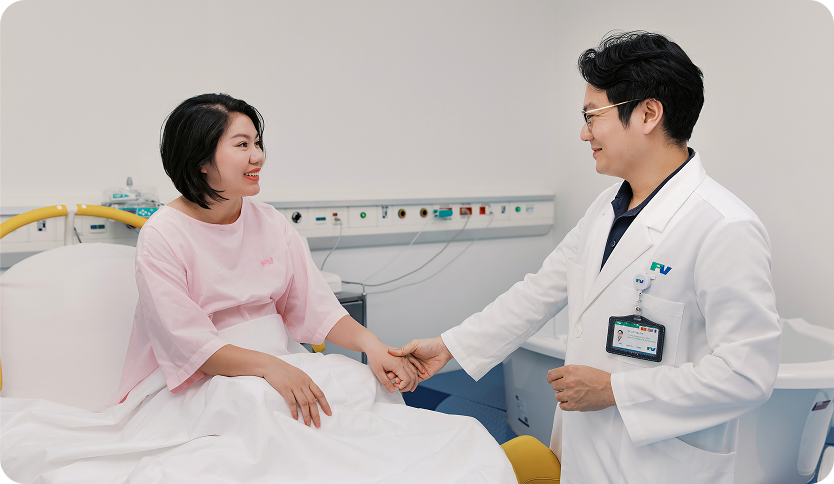
In order to tackle the common anxiety which many women face in their daily activities, FV Hospital benefits from a comprehensive array of treatment services and intensive pathology of female pelvic floor disorders. The treatment programmes are operated by Vietnamese and French doctors, who have many years of experience in the fields of Obstetrics and Gynaecology, Urology and Andrology, as well as Physiotherapy and Rehabilitation. Such programmes are led by specialist Dr Nguyen Thi Vinh Thanh – Deputy Head of Obstetrics and Gynaecology, and supported by obstetricians; Nguyen Duc Truong and Vo Trieu Dat. Dr Vinh Thanh held the position of Head of the Gynaecologic Unit of Tu Du Hospital and was a trainer of trainers in the field of pelvic floor treatment. He also received a medal “For People’s Health”, awarded by the Vietnamese Minister of Health.
At FV Hospital, we have suitable medical and surgical treatments for medical conditions of every patient. In the early stage, when the pelvic floor system falls slightly, physical therapy exercises is introduced to the patient as well as information on how to change living behaviour, and advice on using prosthetic devices to limit effects on the pelvic structure. In the severe stage, the patient would need to undergo surgery to reinforce and increase traction of the pelvic ligament system.
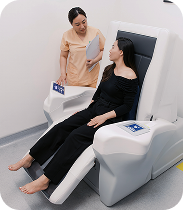
In cases where the patient is unable to control urination, FV Hospital is equipped with a urology monitor, Aquarius LT Laborie 2017. This allows doctors to evaluate exactly the urinary disorders through six measurements; urinary tract measurement, bladder pressure, perineal electrophysiology, urethral sphincter pressure, urinary pressure, and urinary pressure correlation. These measurements are essential for doctors to have full a diagnosis of the urinary disorder. This is the only non-invasive method in urodynamic measurements. The Department of Urology & Andrology in FV Hospital is one of the few units in the south of Vietnam which is equipped with kinetic ureters, carried out by experts trained in this technique.
Doctor Nguyen Van Nhan is the head of the Department of Kinetic Urology at CMU Grenoble Hospital, France. He has made many medical contributions in the country and has been awarded a national medal by the French Minister of Health. With the experience of more than 20,000 cases of urology conditions in France, Dr Nhan is an expert in performing urodynamic testing for diagnosing the phenomenon of urination during exertion. This is a physiological disorder that can occur in children and adults, men and women, but mostly occur in women at the age of 50 to 55 due to the effects of pregnancy, giving birth, and menopausal hormones. These all weaken the pelvic floor, the support organ, and makes the muscular urethra unable to be completely closed.
Book an appointment with Dr Nguyen Van Nhan – by calling FV’s Urology and Andrology Department on: (028) 5411 3333 – Ext. 1032.
Book an appointment with doctors from the Obstetrics and Gynaecology Department on: (028) 5411 3333 – Ext. 6000.