Table of contents
WHAT IS OBSESSIVE-COMPULSIVE DISORDER (OCD)?
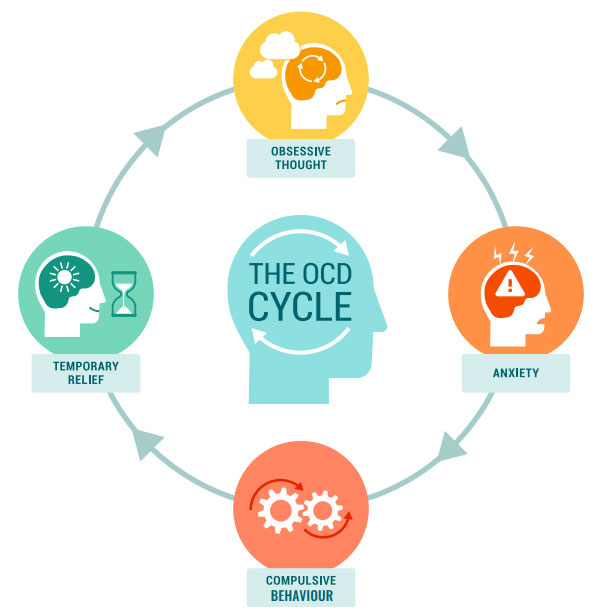
OCD is a mental health condition involving 2 key components:
- Obsessions: unwanted, intrusive thoughts, urges, or mental images that cause significant distress;
- Compulsions: repetitive behaviours or mental acts performed to reduce the anxiety caused by obsessions.
Although compulsions may temporarily relieve anxiety, they create a cycle in which the brain learns to depend on these rituals for relief without decreasing the obsessions. Over time, these compulsions and rituals becomes increasingly time-consuming, disruptive, and difficult to control.
HOW COMMON AND SERIOUS IS OCD?
- OCD affects approximately 1-2% of the global population, making it a relatively common condition.
- It typically begins in childhood, adolescence, or early adulthood, though it can appear at any age.
- Some individuals have mild symptoms, while others experience significant impairment in work, relationships, and daily functioning.
TYPES OF OCD
OCD manifests in different ways, including:
- Contamination OCD: fear of germs, dirt, or illness leading to excessive cleaning and avoidance behaviours;
- Checking OCD: compulsive checking of doors, appliances, or personal safety due to fear of harm or mistakes;
- Symmetry and order OCD: intense need for things to be arranged perfectly or performed in a specific way to reduce discomfort;
- Intrusive thoughts OCD: unwanted, distressing thoughts or mental images, often of a violent, sexual, or taboo nature;
- Hoarding disorder: related to OCD and involves difficulty discarding items due to fear of needing them in the future, leading to clutter and distress.
COMMON SYMPTOMS
- Persistent and distressing intrusive thoughts.
- Intense anxiety triggered by obsessive thoughts.
- Strong urges to perform repetitive behaviours or mental rituals.
- Temporary relief from anxiety after performing compulsions, followed by a return of intrusive thoughts.
- Avoidance of situations that may trigger obsessive thoughts.
- Difficulty controlling obsessions despite recognising them as irrational.
WHAT IS THE DIFFERENCE BETWEEN OCD AND OCPD?
There’s a difference between having OCD and being a perfectionist. A perfectionist has Obsessive-Compulsive Personality Disorder (OCPD). They do thing repeatedly because they want a perfect result. A person with OCD does things repeatedly—like washing their hands—because they are scare of what may happen if they don’t wash enough. This fear can lead to symptoms that are time-consuming, cause significant distress and interfere with daily functioning.
HOW CAN OCD BE MANAGED?
- Cognitive Behavioural Therapy (CBT): Exposure and Response Prevention (ERP) is a type of CBT that helps individuals confront their fears gradually while resisting compulsive behaviours.
- Medication: Selective Serotonin Reuptake Inhibitors (SSRIs) are commonly prescribed to help treat symptoms.
- Lifestyle adjustments: stress management, mindfulness, and support groups can complement therapy.
HOW CAN YOU HELP SOMEONE WITH OCD?
- Be patient and understanding; avoid judgment.
- Encourage them to seek professional help.
- Avoid reinforcing compulsions by participating in their rituals.
- Offer support without enabling OCD behaviours.
When to seek help
If obsessive thoughts and compulsions interfere with daily life, cause distress, or take up excessive time, professional help should be sought. OCD often worsens if left untreated, leading to more intense distress and impairment.
Get help at FV Hospital
At FV Hospital, our mental health specialists provide expert assessment and treatment for OCD. If you or a loved one needs support, don’t hesitate to reach out.
You are not alone. Help is available.
Source of references:
World Health Organization (WHO)
National Institute of Mental Health (NIMH)
American Academy of Child & Adolescent Psychiatry (AACAP)
American Psychiatric Association (APA)