“When I woke up, I thought I hadn’t had the operation yet because I felt almost no pain. It was only after asking the nurse that I finally believed the surgery was complete.”
Mr D.B. (71, a Cambodian national) is still struck with amazement when recalling his experience following lung cancer surgery at FV Hospital. Although the procedure lasted over two hours, for him, the recovery felt incredibly easy. Behind this experience lies the support of the da Vinci Xi surgical robot – a cutting-edge technology opening up minimally invasive treatment options for many lung cancer patients.
Lung cancer detected through routine health screening
During a visit to Vietnam for kidney stone treatment at FV Hospital, Mr D.B. decided to take the opportunity to undergo a comprehensive health check-up. Imaging results revealed a small nodule in his left lung. As the nodule was still very small at the time, doctors advised him to return home and continue with regular follow-ups.
After a year of observation, the nodule showed signs of growth, prompting his family to bring him back to FV Hospital for treatment.
Following a thorough evaluation involving a series of advanced tests – including an MRI, a full-body CT scan, and a biopsy – doctors confirmed he had non-small cell lung cancer in his left lung. Fortunately, the disease was detected at an early stage, the “golden” window for curative surgical intervention.
Dr Luong Ngoc Trung, MSc, Specialist Level II – Head of Vascular and Endovascular Surgery and a robotic surgery specialist for thoracic conditions at FV Hospital – noted that the patient, who works in the healthcare sector and has several family members in the medical profession, had researched treatment methods extensively. Ultimately, he chose to proceed with robot-assisted surgery at FV.
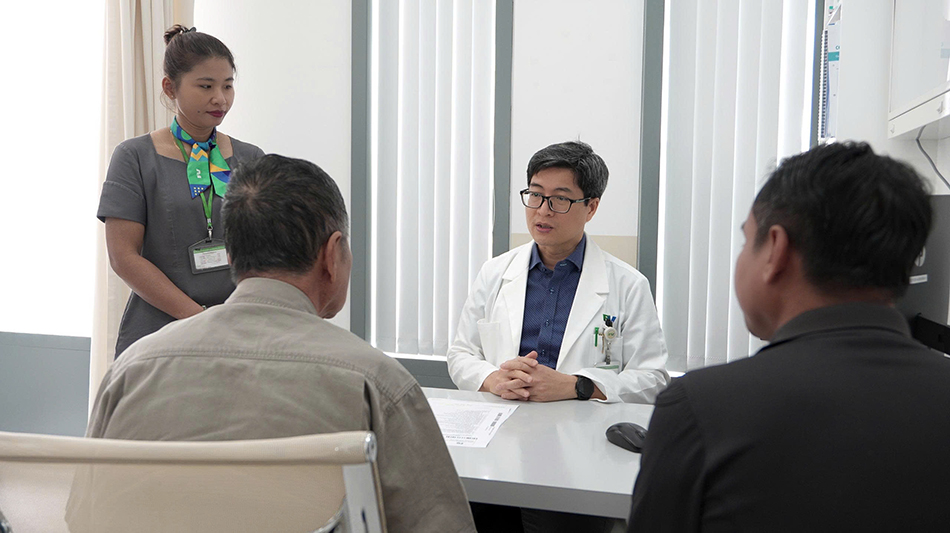
Dr Luong Ngoc Trung, MSc, Specialist Level II providing a consultation to the patient. (Photo: FV)
140-minute robot-assisted surgery
The procedure was performed by Dr Luong Ngoc Trung, MSc, Specialist Level II using the da Vinci Xi robotic system, one of the most advanced surgical platforms currently utilised by leading medical centres worldwide. The entire robotic operation took approximately 140 minutes, reducing the average duration of conventional laparoscopic surgery by about 20 minutes.
During the operation, surgeons performed a left lower lobectomy – removing the section of the lung containing the tumour – alongside a thoracic lymph node dissection. Lymph node clearance is a critical step in lung cancer treatment; thorough dissection allows doctors to accurately stage the disease and advise on the subsequent treatment plan. With robotic assistance, the process of clearing these nodes becomes significantly easier and more exhaustive.
According to Dr Trung, the standout advantages of the robot lie in its capacity for extreme precision in observation and manipulation. “The robot’s camera system provides high-resolution 3D imagery with multi-fold magnification. This allows the surgeon to clearly see minute structures deep within the chest cavity – something that can be difficult to achieve with traditional laparoscopy,” he explained.
The robotic arms also feature a flexible 540-degree rotation, enabling sophisticated manoeuvres with high stability. This minimises damage to healthy tissue and ensures superior control over the surgical site.
Minimal pain, rapid recovery
What surprised Mr D.B. most was how he felt upon regaining consciousness. “When I woke up, I thought I hadn’t had the operation yet because I felt almost no pain. It was only after asking the nurse that I finally believed the surgery was complete,” he shared.
The incisions in robotic surgery are only about 8 mm, resulting in minimal pain, reduced scarring, and a faster recovery compared to traditional surgical methods. This leads to significant savings in both time and hospitalisation costs.
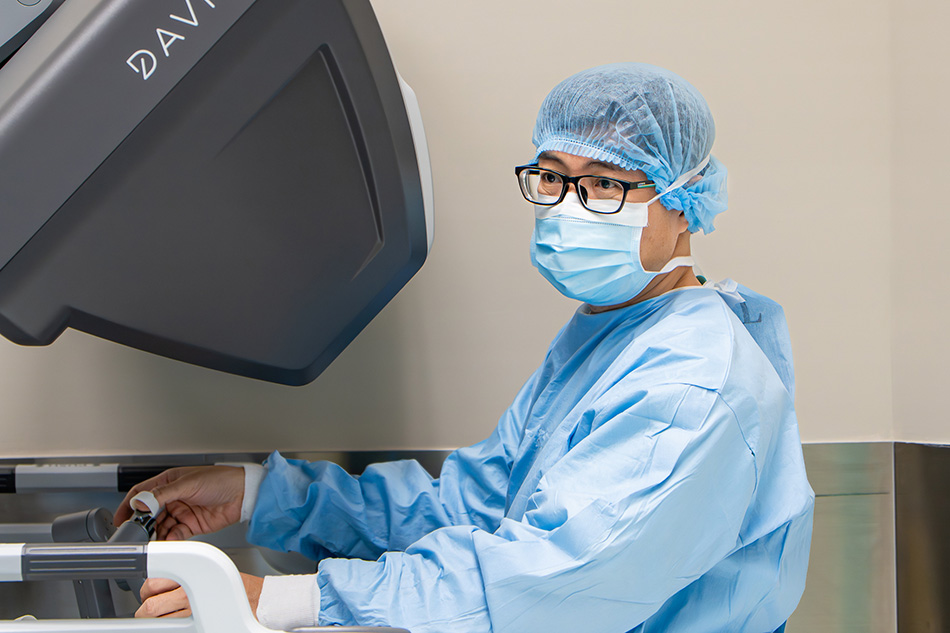
Dr Luong Ngoc Trung, MSc, Specialist Level II operating the da Vinci Xi surgical robotic system. (Photo: FV)
Just three days after the operation, Mr D.B. was discharged and able to return to his near-normal daily routine. According to the doctors, this is one of the greatest benefits of robotic surgery: it reduces trauma to the body while ensuring clinical efficacy.
Robotic technology – The new trend in cancer surgery
According to Dr Luong Ngoc Trung, MSc, Specialist Level II the advancement of robotic surgery is opening up numerous minimally invasive treatment opportunities for patients with thoracic conditions, particularly early-stage lung cancer. Recently, many lung cancer patients at FV, after being advised on various surgical options, have opted for the da Vinci Xi robotic surgery. Their collective experiences highlight the “gentle” nature of the procedure and a remarkable postoperative recovery.
“Medical information no longer has borders; patients can easily research treatment methods before making a decision. The increasing number of FV patients choosing robotic surgery reflects their confidence in the hospital’s professional team and advanced equipment,” Dr Trung shared.
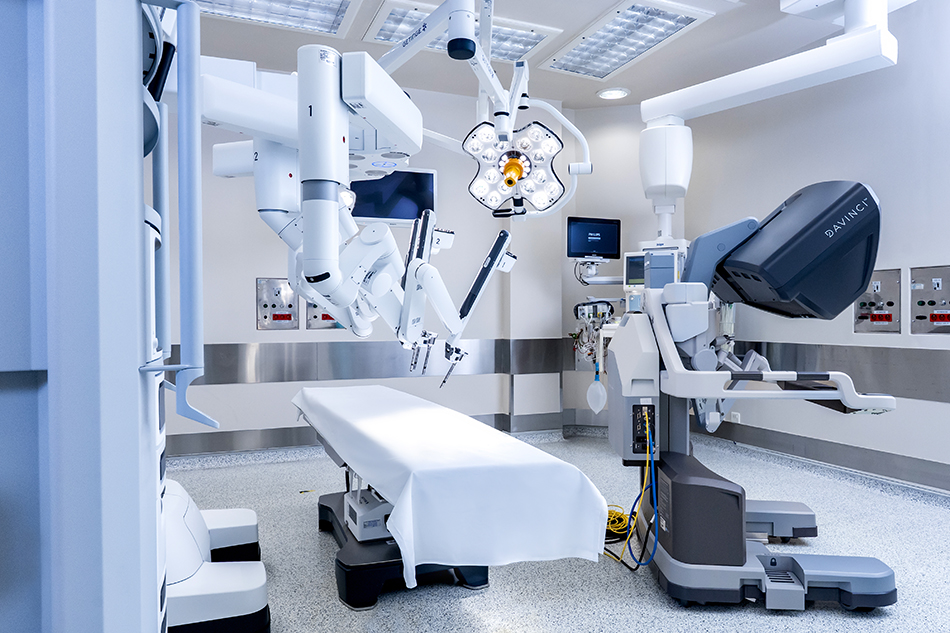
The da Vinci Xi surgical robotic system in a modern operating room at FV Hospital. (Photo: FV)
Beyond thoracic surgery, the FV da Vinci Robotic Surgery Centre also utilises the da Vinci Xi system across several specialities:
Gastrointestinal – Hepatobiliary & Pancreatic Surgery: Gastrectomy, colorectal resection, hepatectomy, and pancreatectomy
Urology: Prostatectomy, nephrectomy, and cystectomy
Gynaecology: Hysterectomy, treatment for endometriosis, myomectomy (uterine fibroid removal), and gynaecological cancer treatment
To help patients gain early access to high-tech treatments, FV Hospital is running a promotional programme offering a 40 million VND discount for the first 50 da Vinci Xi robotic surgeries, valid until 15 June 2026. For further information, please visit FV Hospital at 06 Nguyen Luong Bang, Tan My Ward, Ho Chi Minh City, or contact (028) 3511 3333.