Radiotherapy remains a vital tool in the fight against cancer. However, while it is highly effective in destroying tumours, many patients, particularly those with breast cancer, are concerned about the impact of radiation on the heart and surrounding healthy organs. At FV Hospital, the Deep Inspiration Breath Hold (DIBH) technique has delivered strong outcomes, helping more than 84% of breast cancer patients minimise the risk of cardiovascular complications.
Reducing radiation exposure to the heart using Deep Inspiration Breath Hold (DIBH)
In breast cancer radiotherapy, particularly the left breast, the heart is located very close to the treatment area. This requires doctors to carefully balance effective treatment with the risk of exposing the heart and coronary arteries to radiation, which can lead to serious long-term complications.
Since 2019, the Hy Vong Cancer Centre at FV Hospital has pioneered the use of Deep Inspiration Breath Hold (DIBH), combined with the Active Breathing Coordinator (ABC) system, to precisely control breathing and minimise movement during radiotherapy.
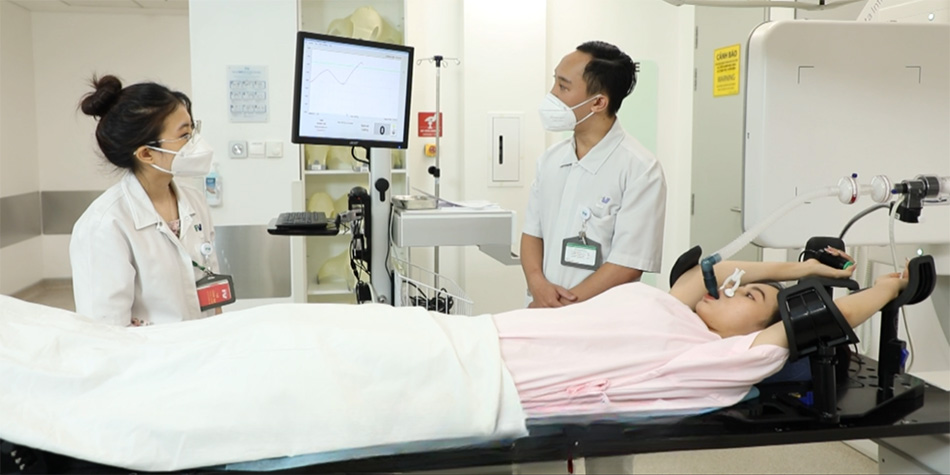
The patient uses the Active Breathing Coordinator (ABC) device to initiate Deep Inspiration Breath Hold (DIBH) during radiotherapy. Photo: FV
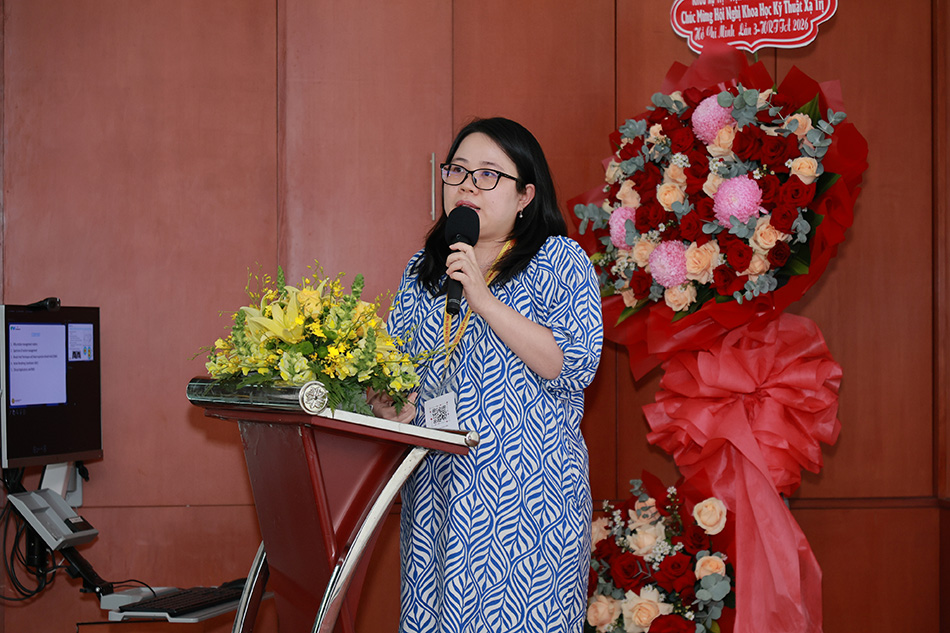
Dr Nguyen Huynh Ha Thu, MSc, presenting the DIBH technique at a radiotherapy scientific conference. Photo: FV
At the 3rd Annual Scientific Conference of the Ho Chi Minh City Radiation Therapy Technologists Association (HRTTA), themed ‘Multi-disciplinary Approach in Radiotherapy and Motion Management for Thoracic and Abdominal Areas,’ held in March 2026 at FV Hospital, Dr Nguyen Huynh Ha Thu, MSc, from the Hy Vong Cancer Centre, shared insights on the use of DIBH. “At FV, the DIBH technique and ABC system are routinely applied in radiotherapy for left breast cancer and tumours affected by the respiratory cycle, delivering high treatment efficiency while enhancing patient safety throughout the treatment process.”
During the radiotherapy process, the patient follows a “deep breath – hold – radiate” cycle, typically lasting 20-30 seconds at a time. This is supported by the Active Breathing Coordinator (ABC) system, which helps maintain a stable breathing pattern and precise control throughout treatment. In principle, when the patient takes a deep breath, the lungs expand and push the heart away from the chest wall. This creates a “safety buffer,” allowing the radiation beam to target the tumour while significantly reducing exposure to the heart.
The effectiveness of this method has been demonstrated in clinical practice. A 2023 study conducted at FV Hospital involving 51 patients with left breast cancer found that more than 84% achieved a reduction in the radiation dose to the heart. This directly correlates to a lower risk of coronary complications, with a minimum reduction of 7.4%, while over 50% of patients experienced reductions ranging from 14% to 30%.
Applying DIBH in radiotherapy across multiple cancer types
According to Dr Ha Thu, the DIBH technique is well suited for radiotherapy in cases where tumours move with the respiratory cycle or are located near critical organs. This includes left breast cancer, selected cases of right breast cancer, lung cancer, liver cancer, oesophageal cancer, adrenal gland tumours, as well as patients at higher risk of coronary damage or with pre-existing cardiovascular conditions.
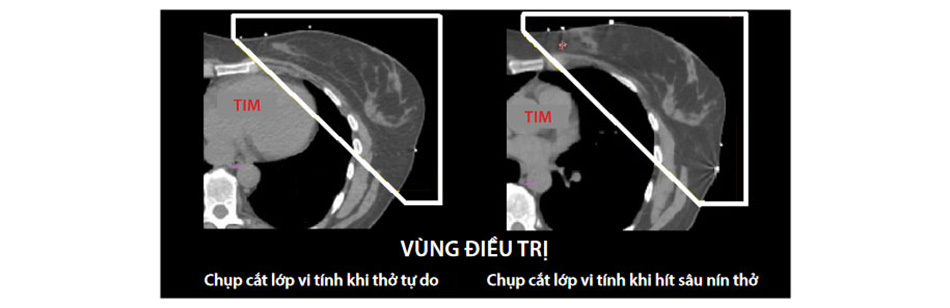
The image illustrates how the heart moves away from the radiation zone when the patient takes a deep breath and holds it. Photo: FV.
The success of DIBH relies heavily on close coordination between the patient and the clinical team, including oncologists, Radiation Therapy Technologists (RTTs), and medical physicists, who support every stage of the treatment process. Over nearly seven years of implementation, FV Hospital has developed a highly structured and personalised procedure. Prior to radiotherapy, patients are guided through the principles of the ABC system, becoming familiar with the equipment and practising breath control under strict professional supervision. Key indicators, such as inhalation volume and breath-hold duration are measured and tailored to each individual. In addition, bilingual materials and visual instructional videos help ensure that all patients, including international patients, can perform the technique accurately and confidently.
According to statistics, from 2019 to the present, FV Hospital has successfully applied the DIBH technique and the ABC system in 269 radiotherapy cases. Dr Basma Mbarek, MSc, Head of Hy Vong Cancer Centre, shared: “I am very pleased that radiotherapy techniques now not only increase treatment effectiveness but are also much safer for patients.”
Minimising Invasiveness: A Key Trend in Modern Cancer Treatment
The adoption of techniques such as DIBH reflects a key shift in modern oncology: not only focusing on tumour control, but also on minimising the impact on healthy organs and preserving patients’ quality of life post-treatment.
At FV Hospital, this trend is reflected in the continuous adoption of advanced radiotherapy and surgical technologies. Notable examples include the CyberKnife S7 robotic radiosurgery system, which delivers sub-millimetre precision and can target tumours even as they move. Alongside this, the da Vinci Xi robotic surgical system supports complex cancer procedures with a minimally invasive approach.
According to Dr Vu Truong Son, MSc, Medical Director of FV Hospital, investment in technology always goes hand in hand with developing clinical expertise: “We do not just invest in equipment; we build a team capable of mastering the technology to deliver optimal treatment effectiveness and greater safety for our patients.”
In the context of rising cancer rates, a multidisciplinary approach combining advanced technology, clinical expertise, and personalised treatment is increasingly seen as the most effective way to enhance the quality of patient care.
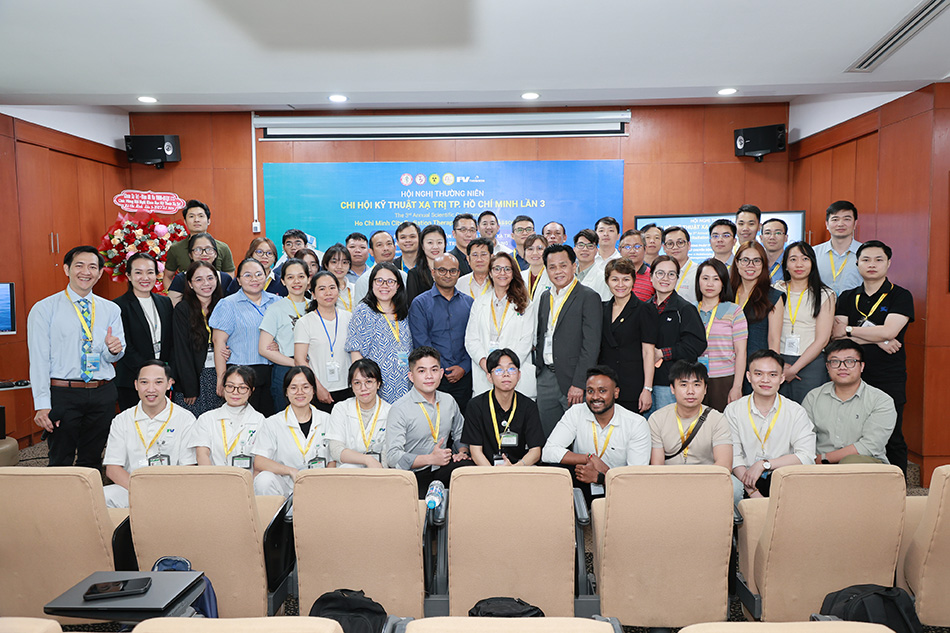
FV HOSPITAL SUCCESSFULLY HOSTS THE 3RD HRTTA ANNUAL SCIENTIFIC CONFERENCE 2026
FV Hospital recently successfully hosted the 3rd Annual Scientific Conference of the Ho Chi Minh City Radiation Therapy Technologists Association (HRTTA), themed ‘A Multidisciplinary Approach to Radiotherapy and Motion Management in Thoracic and Abdominal Radiotherapy’ (pictured). The event brought together a large number of oncologists and specialist Radiation Therapy Technologists (RTTs), with a focus on sharing practical experience in motion management, a key factor in ensuring treatment accuracy and patient safety.
For more information about cancer treatment at FV Hospital, visit 06 Nguyen Luong Bang, Tan My Ward, Ho Chi Minh City, or contact the hospital at (028) 3511 3333.