The Interventional Radiology team at FV Hospital has successfully treated an 8-year-old child with a ruptured cerebral arteriovenous malformation (AVM) using endovascular intervention. This advanced minimally invasive technique completely sealed the abnormal blood vessels through a tiny puncture in the groin. By avoiding open surgery to the skull, the procedure helped the child recover faster and return to normal daily activities sooner.
Paediatric cerebral AVMs: A hidden cause of brain haemorrhage
Haemorrhagic stroke in children is a serious medical emergency that can occur suddenly and may cause severe long-term complications if not treated promptly. Unlike in adults, one of the main causes in young children is congenital arteriovenous malformation (AVM), an abnormal connection between blood vessels in the brain that may remain unnoticed for years.
In a normal circulatory system, blood flows from the arteries through tiny capillaries before entering the veins, helping to regulate blood pressure. In children with cerebral AVM, however, the arteries connect directly to the veins through an abnormal cluster of blood vessels.
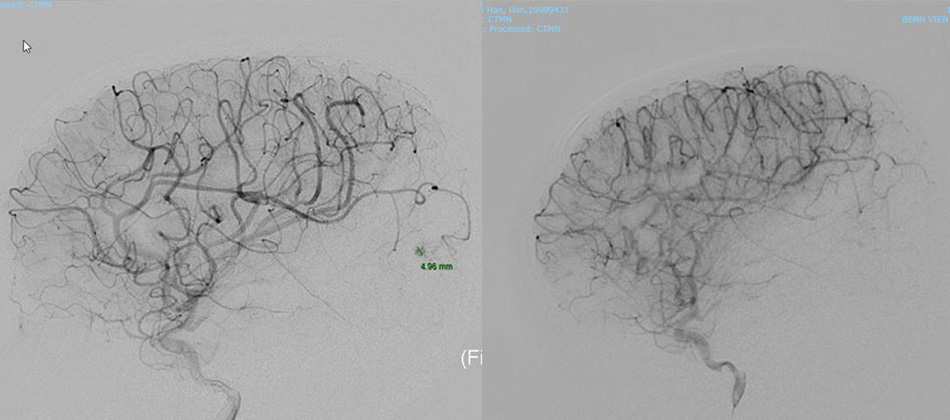
Pre-treatment (left) and successful vascular restoration after treatment (right)
One way to understand this condition is to imagine a weak area on a tyre wall placed under constant high pressure. At this weak point, the wall is very thin yet must withstand extremely high internal pressure. If the pressure becomes too great, the blood vessel can rupture and cause bleeding in the brain.
The recent case of an eight-year-old child is a typical example. The child was admitted with a severe headache, vomiting, and lethargy. A CT scan revealed intraparenchymal haemorrhage. This is a life-threatening condition. Without early treatment, the risk of death or permanent complications, such as paralysis or speech impairment, can be very high.
Endovascular intervention: A minimally invasive treatment option
After being stabilised in the Intensive Care Unit (ICU), the child underwent Digital Subtraction Angiography (DSA) to identify the source of the bleeding. The results confirmed the presence of a cerebral arteriovenous malformation (AVM).
Previously, treating an AVM often required major open brain surgery to remove the abnormal blood vessels. Today, advances in medical technology allow endovascular intervention to offer a safer and less invasive treatment option for children.
Dr Huynh Huu Danh, a specialist in vascular intervention for both adults and children who directly treated the patient, explained: “Treating cerebral vascular malformations in children is particularly challenging because their blood vessels are very small and delicate. Endovascular intervention helps minimise the risk of damaging important areas of the brain responsible for movement, speech, and other functions.”
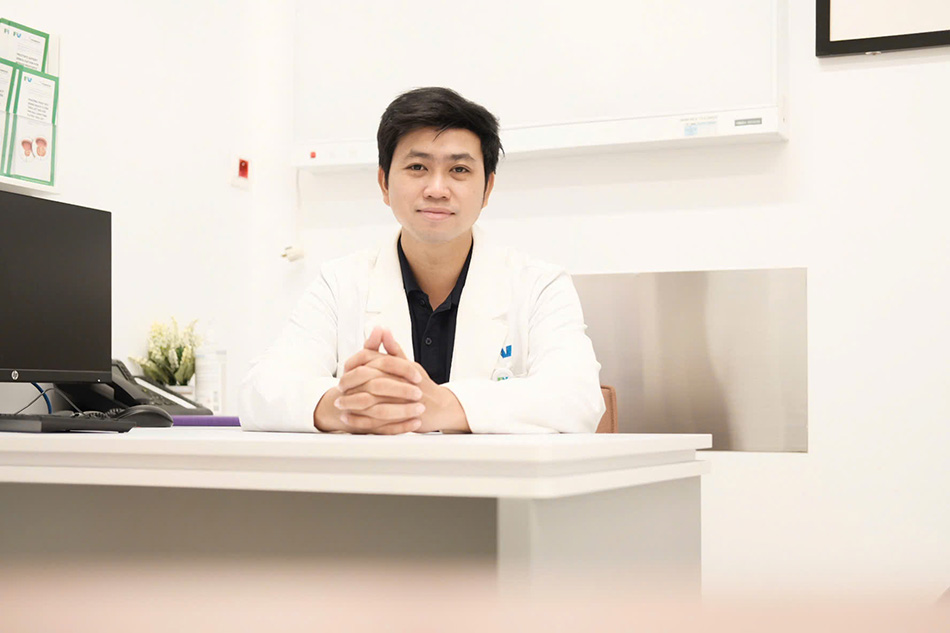
Dr Huynh Huu Danh is one of the few doctors in Vietnam capable of performing endovascular interventions for both adults and children.
Instead of performing open surgery, Dr Danh makes only a tiny puncture in the femoral artery. A microcatheter is then carefully guided through the blood vessels directly to the malformation in the brain, where the doctor injects a specialised embolic agent similar to medical glue.
In the modern Cathlab, guided by high-resolution DSA imaging, the doctor injects a specialised embolic material, similar to medical glue, to completely seal off the abnormal blood vessels from within.
Benefits of endovascular intervention for AVM treatment
Currently, FV Hospital is one of the few medical facilities in Ho Chi Minh City capable of performing paediatric cerebral vascular interventions. This field requires advanced equipment and a highly experienced team specialising in neuro-interventional radiology and anaesthesiology.
- No open brain surgery required: The child does not have to endure a long incision on the head, helping reduce pain and emotional stress.
- Better protection of healthy brain tissue: This technique precisely targets the malformation without damaging surrounding healthy brain tissue, helping preserve the child’s movement, learning, and cognitive functions.
- Faster recovery: Children can typically move shortly after the procedure and be discharged within a few days, helping children return to normal activities and school more quickly..
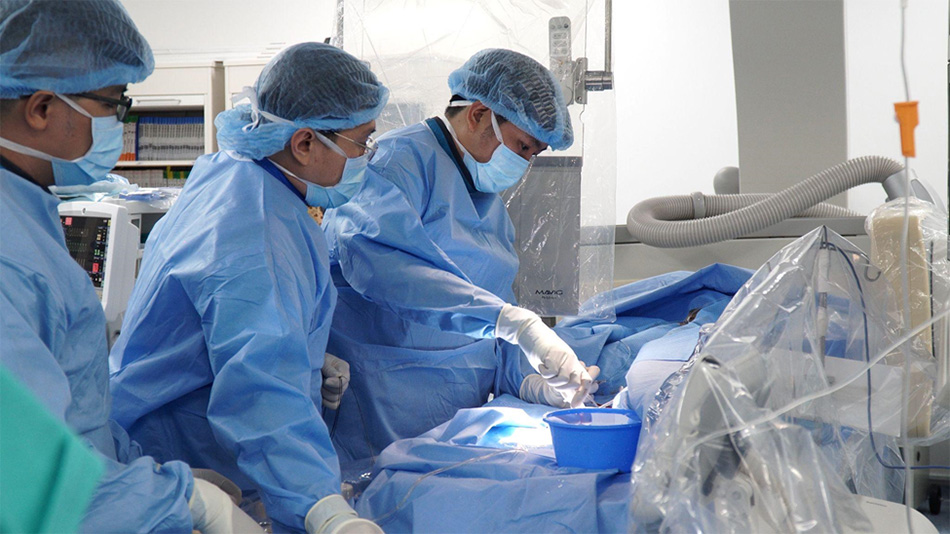
Dr Huynh Huu Danh treating a patient
The success of these paediatric cerebral vascular interventions highlights the importance of early diagnosis and advanced treatment techniques. With a team of experienced neuro-interventionists and modern facilities, FV Hospital remains committed to providing high-quality treatment and helping paediatric patients achieve the best possible recovery.
Parents should seek immediate medical attention if the child shows warning signs of stroke, as early treatment can significantly improve outcomes. To aid early recognition, remember the FAST rule:
- F (Face): The child’s mouth droops or looks uneven when smiling or speaking.
- A (Arm): Weakness in the limbs, unsteady walking, or inability to hold objects.
- S (Speech): Slurred speech or sudden difficulty understanding instructions.
- T (Time): Take the child to a hospital with specialised vascular intervention services immediately.