“Every time I lie down, I struggle to breathe. Walking is difficult, speaking is difficult, and even trying to take a deep breath leaves me feeling winded.” These were the words a 71-year-old male patient used to describe his condition to the emergency, cardiology and interventional cardiology teams at FV Hospital.
A complex case safely managed by a multidisciplinary emergency response system
Mr T.N., a 71-year-old from Dong Nai, shared that his condition had persisted for more than four months, despite prior medical treatment. However, as his health failed to improve and began to worsen, his family decided to rush him to FV Hospital for emergency care.
“In his 71 years of life, this is the first time he has ever been hospitalised. Our family chose FV because we already had great trust in the hospital, based on the positive experiences shared by many others who highly recommend it. So, when the emergency arose, we decided to drive straight from Dong Nai to FV,” the patient’s family shared.
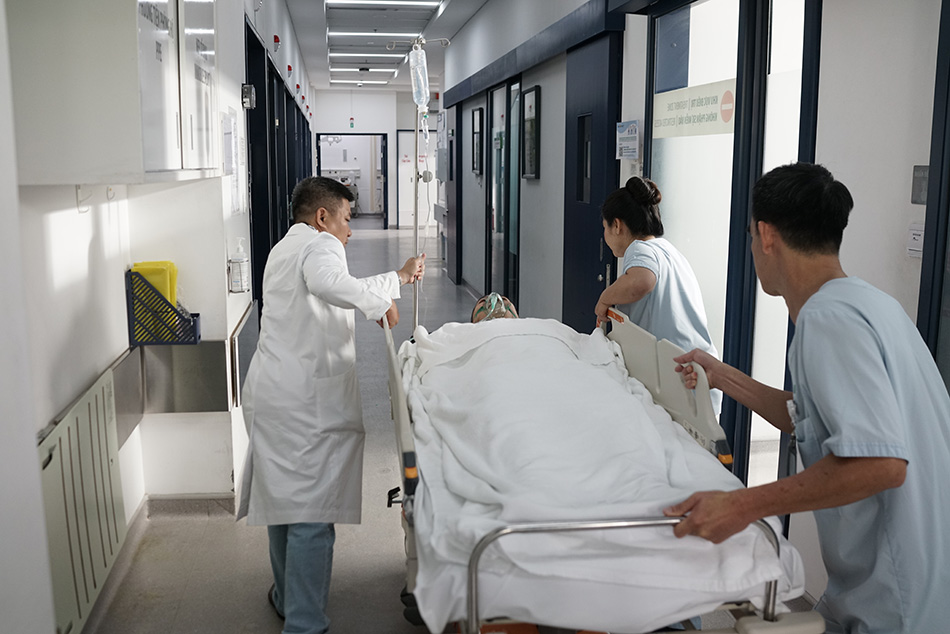
FV Emergency Department saves lives with its “70-minute golden hour” cardiac protocol.
According to emergency and cardiology specialists at FV Hospital, Mr T.N. was diagnosed with severe aortic stenosis and reduced cardiac contractility. If left untreated, he faced a high risk of sudden cardiac death, with a life expectancy of only about one year. Given this critical condition, doctors recommended treatment using transcatheter aortic valve implantation (TAVI).
Mr T.N. was immediately transferred to the Cath Lab (catheterisation laboratory). Dr Ho Minh Tuan, PhD, Head of Cardiology and Interventional Cardiology, who performed the procedure, assessed this as a highly challenging case with two major hurdles.
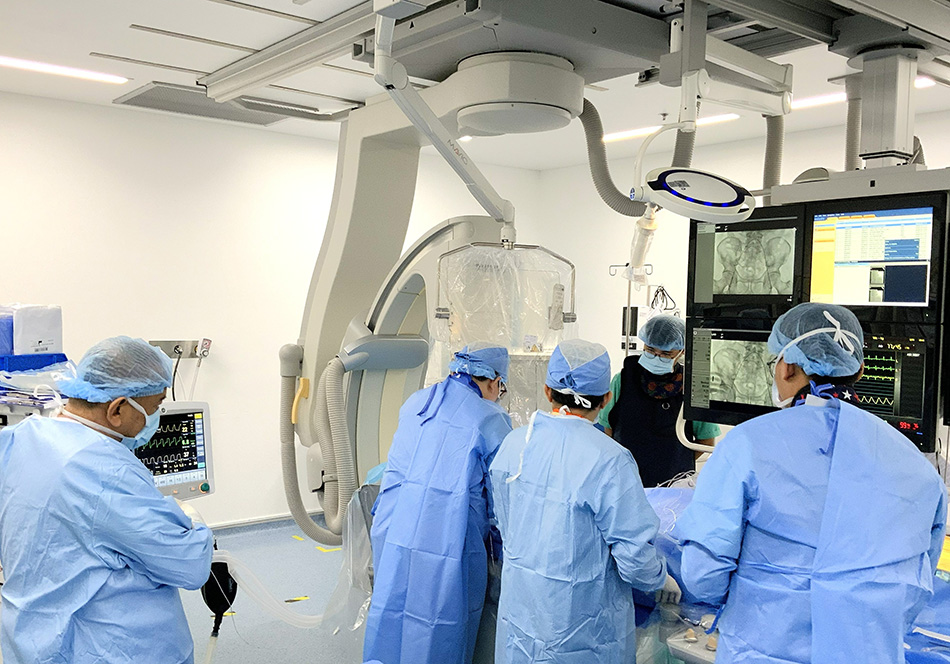
Dr Ho Minh Tuan, PhD, and the FV Hospital medical team swiftly perform TAVI to save the patient’s life.
First, the patient’s aortic valve was not only narrowed but also severely and extensively calcified, making it impossible to implant the valve using standard procedures. Consequently, the FV medical team decided to perform a specialized balloon valvuloplasty to break down the calcium deposits first, ensuring the new valve would fit securely against the vessel wall.
Second, the heart’s contractility (ejection fraction) had dropped to approximately 30%. In patients with such weakened cardiac function, there is a high risk of a sudden and significant drop in blood pressure during valve deployment. This required the procedure to be carried out with absolute precision, speed and efficiency, leaving no room for error or unnecessary movement.
Patient shows rapid recovery within the first day after the intervention
To ensure millimetre-level precision during the valve replacement, the surgical team used 3Mensio image analysis software integrated with AI to support measurement and valve placement planning, effectively controlling all technical variables. FV is also a pioneer in Vietnam in applying this world-renowned software, 3Mensio, in cardiovascular interventions.
Thanks to the seamless and close coordination of the entire team, including interventional cardiologists, anaesthesiologists, nurses and imaging technicians, supported by state-of-the-art equipment, the aortic valve replacement was successfully completed in just 60 minutes.
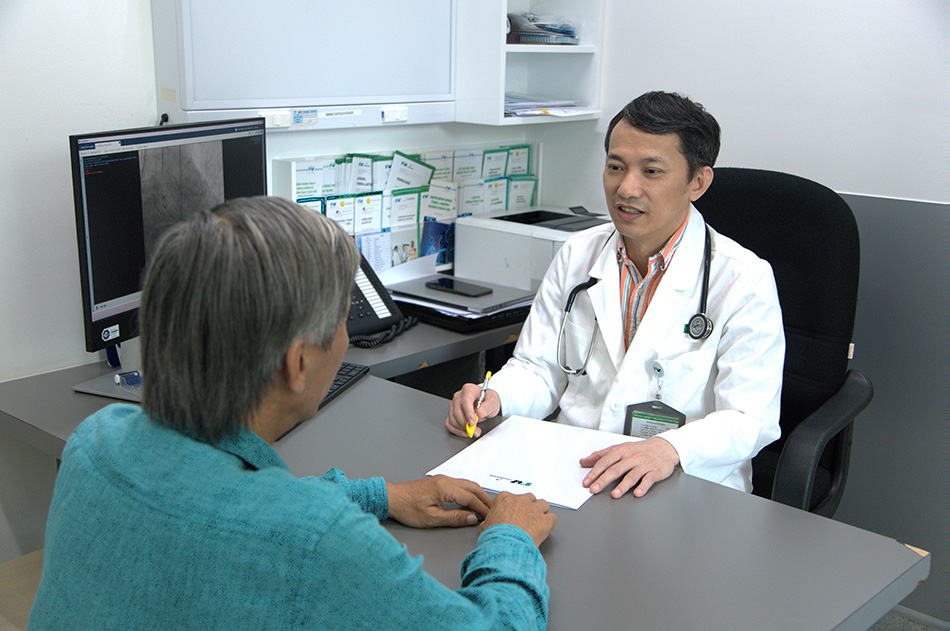
Patient follow-up with Dr Ho Minh Tuan, PhD, two weeks after TAVI intervention.
Following the procedure, Mr T.N. received one day of care in the Intensive Care Unit (ICU). That same night, he shared that he was finally able to sleep comfortably. His breathing felt light and smooth, something he had not experienced for more than two months. After two days of continuous monitoring, Dr Tuan assessed that the patient had made a remarkable recovery.
“Elderly people who have the means should definitely seek treatment; it would be a real waste not to. After the procedure, my whole body feels incredibly light and relieved,” the patient shared with FV Hospital a few days after his surgery.
FV elevates complex cardiovascular treatments with standardised protocols and advanced technology
Aortic stenosis is a dangerous cardiovascular condition commonly found in older adults. When symptoms such as shortness of breath, chest pain, or fainting occur, patients should seek immediate medical evaluation to reduce the risk of serious complications or death.
Dr Ho Minh Tuan, PhD, shared: “At FV, we not only adhere to JCI-standardised medical protocols but also manage and optimise the timing of interventions. This ensures patients achieve the best possible improvement in symptoms and prognosis at a reasonable cost.”
In particular, the transcatheter aortic valve implantation (TAVI) procedure is performed in a state-of-the-art Cath Lab by a team of highly experienced experts capable of handling the most challenging cases. FV is also a pioneer in Vietnam in applying the latest generation of valve technology, the Evolut™ FX.
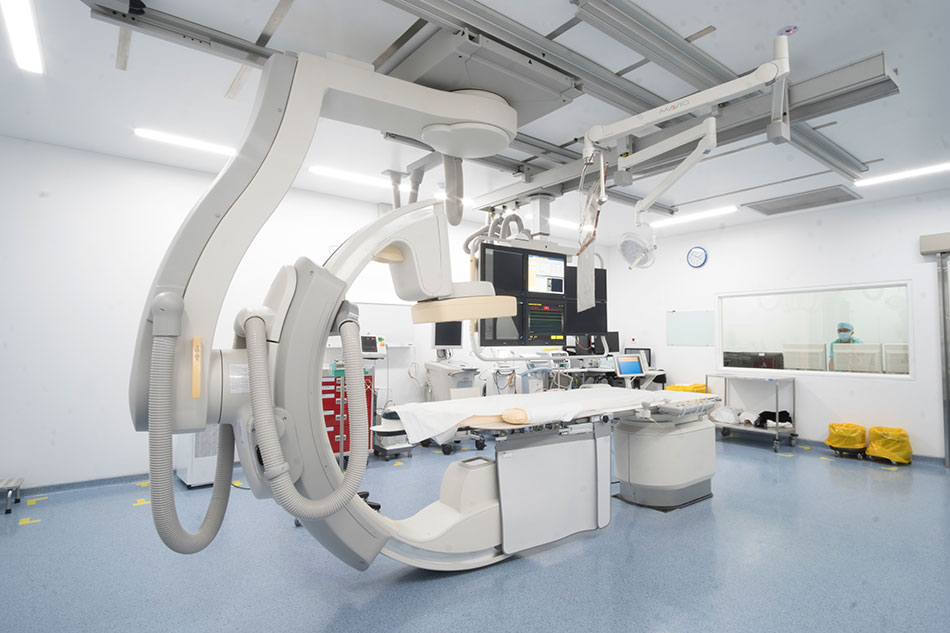
State-of-the-art Cath Lab system at FV Hospital.
At FV Hospital, the implementation of the “70-Minute Golden Hour” cardiac emergency protocol, which is faster than the international standard of 90 minutes, along with advanced equipment, has enabled the successful diagnosis, management, and treatment of many complex cardiovascular cases.
Furthermore, the FV Cardiology and Interventional Cardiology Department leads the way in the integrated application of advanced coronary treatment technologies, including:
- Intravascular Lithotripsy (IVL): Breaking down calcification using ultrasonic shockwaves.
- RotaPro: A rotational atherectomy device for treating calcified lesions.
- Intravascular imaging: IVUS (intravascular ultrasound) and OCT (optical coherence tomography).
- 3Mensio: AI-integrated software for intervention planning.
By applying these technologies with precision and expertise, FV consistently achieves both speed and accuracy in cardiac emergencies, maintaining a success rate of over 95% for critical intervention cases.