FV Hospital has successfully diagnosed and treated Vietnam’s first recorded case of Megaduodenum. This is an exceptionally rare condition, with only approximately 15 cases documented in medical literature worldwide.
Emergency treatment for a patient carrying 5 litres of abdominal fluid
Mr Y.C.S. (a 42-year-old Cambodian national) was admitted to FV Hospital in a critical state: vomiting blood, in shock due to severe anaemia and fluid loss, exhausted, and presenting with an abnormally distended abdomen. CT scan results astonished the medical team. The stomach and duodenum had dilated to an extreme degree, occupying nearly the entire abdominal cavity.
The patient was immediately provided with intensive resuscitation, blood transfusions, and haemodynamic stabilisation. When a gastric tube was inserted, FV doctors drained more than 5 litres of retained fluid from his stomach and duodenum. One month prior, he had undergone surgery at another medical facility in an attempt to address 7 years of persistent nausea and vomiting. However, his condition did not improve and, in fact, grew increasingly severe. A multidisciplinary consultation involving specialists from Emergency, Intensive Care, General Surgery, Gastroenterology, and Radiology was convened to find a solution for this abnormal condition.
“The vomiting of blood due to diffuse haemorrhagic gastroduodenitis was confirmed via emergency endoscopy and stabilised with medication. The primary challenge was the massive dilation of the stomach and duodenum. Initially, we suspected a bowel obstruction due to previous surgical scarring, but endoscopic and CT investigations ruled this out. It was then we considered a completely different pathology,” said Dr Phan Van Thai, MSc, Head of General Surgery at FV Hospital.
Duodenum dilated to the width of a shirt sleeve and completely non-functional
“The duodenum is the first segment of the small intestine, connecting directly to the stomach, and is approximately 25cm long. In a healthy individual, the duodenum is usually collapsed, roughly the size of a finger, and dilates to the size of a thumb when food passes through. In this patient, however, the measured diameter of the duodenum was 12cm, with a circumference of 38cm, as wide as a shirt sleeve,” Dr Thai explained.
A particularly significant observation emerged during monitoring of this case: while the stomach had visibly deflated and contracted after 3 days of nasogastric-duodenal tube drainage, the duodenum had not. It remained maximally dilated, adhered to the surrounding organs, effectively occupying the entire abdomino-pelvic cavity, and had completely lost its contractile function. This finding led the medical team to an important realisation: the patient was not suffering from a bowel obstruction as initially suspected. The problem lay within the duodenum itself.
Drawing on acute clinical experience, Dr Phan Van Thai and his team excluded common causes to reach the final diagnosis: Idiopathic Megaduodenum.
Major reconstructive surgery of the duodenum and digestive tract
Idiopathic Megaduodenum is a condition where the duodenum becomes abnormally wide and elongated, causing severe digestive disorders. Food becomes trapped within the duodenum and is unable to pass into the small intestine, leading to chronic vomiting, malnutrition, and exhaustion. According to medical literature, the optimal treatment is the complete resection of the diseased duodenal segment and the reconstruction of a new duodenum for the patient.
This is considered one of the most complex procedures in gastrointestinal surgery. The duodenum wraps around the head of the pancreas, where the bile and pancreatic ducts converge, and where many major blood vessels pass through. Even a minor error could result in vascular injury or leakage of digestive fluids, most critically pancreatic juice, which is capable of digesting the body’s own tissue.

Illustration of digestive tract reconstruction following duodenal resection. Image: ScienceDirect
During the surgery, Dr Phan Van Thai and his team meticulously detached the entire duodenum, which was tightly adhered to surrounding organs, resected the deformity, and used two healthy segments of the small intestine to restructure the digestive system: one segment was connected directly to the stomach to allow food to pass downward into the intestine, while the other was connected to the remaining duodenal stump to maintain the physiologically correct flow of bile and pancreatic juice. An entirely new “digestive junction” was created to replace the duodenum that had been non-functional for 7 years.
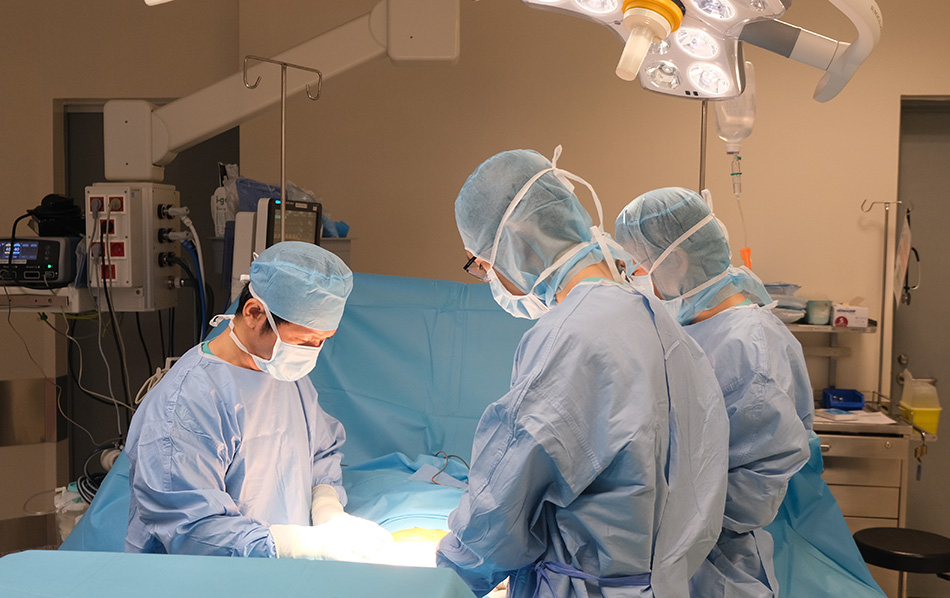
Dr Phan Van Thai (left) and the medical team operating on the patient with megaduodenum.
Following the surgery, the patient was able to eat normally, and his symptoms improved significantly. For the first time in 7 years, he was able to eat a meal without vomiting. Post-operative imaging confirmed that the reconstructed duodenum, as well as the stomach and small intestine, showed no abnormal accumulation. Nearly three weeks post-operation, Mr Y.C.S. was discharged from hospital, to the great joy of his family.
“When I came to FV, I placed my complete trust in the doctors to cure me. The results have been exactly what I had hoped for. I feel very fortunate and am deeply grateful to everyone, especially Dr Thai and the team, who made exactly the right diagnosis. I am truly happy that I can now eat without vomiting,” the patient said.
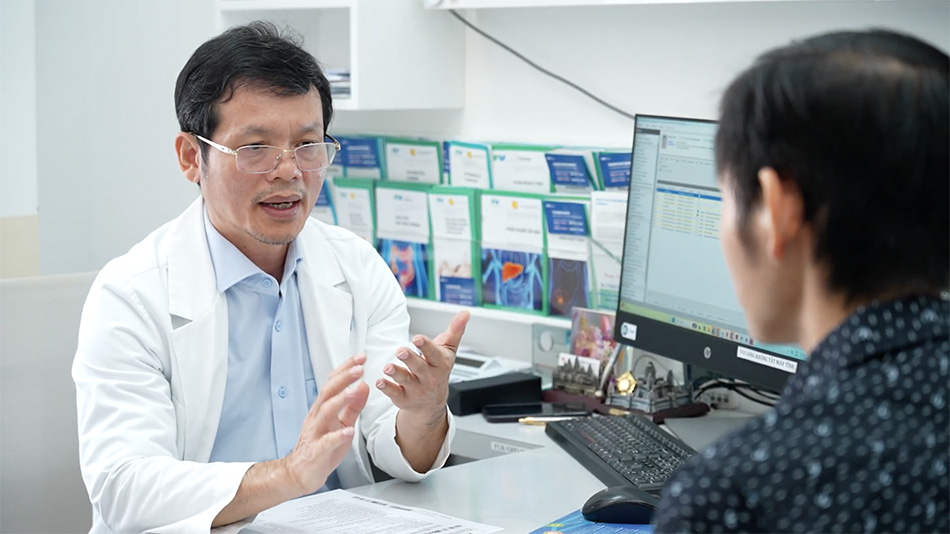
Patient Y.C.S. at his follow-up appointment after surgery.
Idiopathic Megaduodenum is easily confused with Superior Mesenteric Artery (SMA) Syndrome, as well as with other forms of intestinal obstruction. In many cases reported worldwide, patients have waited years before receiving the correct diagnosis.
Accurate diagnosis is the single most critical factor in successfully treating rare and complex conditions such as this. The combination of highly experienced specialists and advanced diagnostic capabilities at FV Hospital has once again demonstrated the effectiveness of seamless multidisciplinary collaboration in both diagnosis and treatment. This also highlights FV’s particular strength in identifying and managing rare medical conditions.
To consult with Dr Phan Van Thai, MSc, for the diagnosis and surgical treatment of gastrointestinal conditions, please contact the General Surgery Department at FV Hospital, located at 6 Nguyen Luong Bang Street, Tan My Ward (formerly District 7), HCMC. Telephone: 028 3511 3333. Emergency hotline: 028 3511 3500.