Table of contents
Abdominal aortic aneurysm
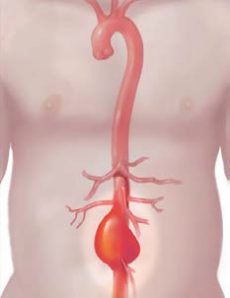
An aortic aneurysm is a weak spot in the wall of the aorta, the primary artery that carries blood from the heart to the head and extremities, most commonly in its abdominal part. The weakened area enlarges and is known as an aneurysm. In the majority of cases there are no warning symptoms. The risk is that an aneurysm will eventually rupture, causing extensive internal bleeding and a complete collapse of circulation, with a high risk of death.
A non-invasive test called abdominal ultrasound can find out if there is an abdominal aortic aneurysm and determine when it is dangerous and needs to be treated.
Carotid artery disease
The carotid arteries are a pair of blood vessels that deliver blood to the brain and head. Carotid artery disease occurs when fatty, waxy deposits called ‘plaques’ clog these arteries and block the blood supply to the brain. This condition develops slowly and often goes unnoticed, without symptoms.
The disease is often discovered after a stroke though some patients have Transient Ischemic Attacks (TIA), sometimes referred to as mini-strokes. A stroke can give the following symptoms:
- Sudden numbness or weakness in the face or limbs, often on only one side of the body
- Trouble speaking and understanding
- Sudden trouble seeing in one or both eyes
- Dizziness or loss of balance
- A sudden, severe headache with no known cause.
A non-invasive test called Doppler ultrasound can find out if there is a narrowing (‘stenosis’) of the carotid arteries.

Detection: annual Doppler and abdominal ultrasound screening
Abdominal aneurysms and carotid artery disease develop in patients with risk factors. The main risk factors for those 2 conditions are smoking, hypertension, diabetes and lipid disorders. The prevalence of those risk factors among Vietnamese is high.
Because these conditions are SYMPTOMLESS for a long period of time, they must be pro-actively detected, because when symptoms occur it is often too late as those symptoms are often very severe with disability due to stroke and death due to aortic aneurysm.
Their detection is easy using only Doppler of the carotid arteries and abdominal ultra-sound, 2 inexpensive and non-invasive tests.
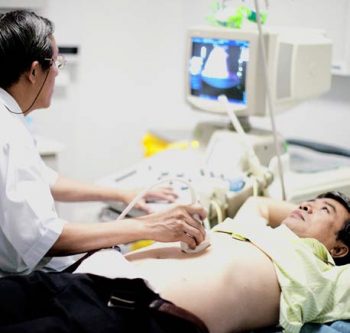
All patients with risk factors must be screened once a year by Doppler ultrasound of the carotid arteries and abdominal ultrasound when they are above 50-year old; some patients with severe risk factors should be screened when they are younger.
What are cardiovascular disease risk factors and what to do if I have any of them?
Risk factors for cardiovascular disease are habits, behaviours, circumstances, or conditions that increase a person’s risk of developing cardiovascular disease. They include:
- Lack of exercise
- Smoking
- Diabetes
- High blood pressure (hypertension)
- Being overweight
- Dyslipidaemia such as high LDL cholesterol (‘bad’ cholesterol)
- Unhealthy eating habits (night-time noshing, endless snacking, junk food, excess of salt, saturated fat, and sugar)
- Previous myocardial infarction
- Age over 50 for men and 60 for women
- Family history
- Ethnicity (non-Hispanic black > non-Hispanic white > Asian).
Having one or more risk factors increases a person’s risk of developing cardiovascular disease; it does not, however, mean that cardiovascular disease is inevitable.
While various cardiovascular disease risk factor calculators and assessment tools exist online, the only way to obtain an accurate understanding of a particular person’s risk is to be seen by a doctor who may order, if deemed necessary, diagnostic tests such as peripheral arteries ultrasound and coronary angioscan to assess atherosclerosis and risk of cardiovascular disease.