Using small 8 mm incisions, the da Vinci Xi robotic surgical system enabled FV doctors to successfully remove a kidney tumour located in a difficult-to-reach area. The patient recovered quickly, was discharged just two days after surgery, and reported no pain.
Kidney tumour discovered during routine screening led patient to seek a less invasive treatment option
Mr H.M (41-year-old from Cambodia) attends annual health check-ups regularly. During a routine screening in early 2026, a CT scan revealed a lesion suspected to be kidney cancer. He was even more shocked when he was advised to undergo open surgery involving a large abdominal incision to remove the tumour.
Concerned about post-operative pain and a lengthy recovery associated with major surgery, he decided to return to FV Hospital, where he had previously been treated, in search of a less invasive option. At FV Hospital, he was assessed by Dr Do Quang Minh, MSc, Specialist Level II – Head of Urology & Andrology at FV Hospital, who performed further evaluations and recommended surgery using the da Vinci Xi robotic surgical system. This advanced technology offers greater precision and a minimally invasive approach for complex procedures.

Dr Do Quang Minh, MSc, Specialist Level II, explains the da Vinci Xi robotic surgical technique to the patient.
According to Dr Minh, the patient’s tumour measured 5 cm (stage T1b) and was located deep within the kidney, invading the renal collecting system (renal calyces and pelvis). Positioned close to major blood vessels and the ureter, the tumour’s location made conventional laparoscopic surgery extremely challenging.
In contrast, the da Vinci Xi robotic surgical system features robotic arms capable of rotating up to 540 degrees, allowing surgeons to access deep and narrow surgical areas with enhanced precision. The procedure requires only small 8 mm incisions, helping to minimise tissue trauma while supporting surgical accuracy.
One of the system’s major advantages is its ability to facilitate highly precise tumour excision and lymph node dissection, allowing surgeons to perform smooth and flexible movements and potentially reducing operating time compared with conventional open surgery and some laparoscopic procedures. These features contributed to the success of the operation.
In kidney tumour surgery, the challenge lies not only in removing the tumour completely but also in controlling warm ischaemia time, the period during which blood flow to the kidney is temporarily interrupted. This is achieved by clamping the renal blood vessels, creating a clearer surgical field and enabling greater surgical precision. Medical guidelines generally recommend keeping warm ischaemia time within approximately 30 minutes, as prolonged interruption of blood flow increases the risk of kidney damage.
Robotic kidney tumour surgery enables rapid recovery and kidney preservation
During surgery, Dr Minh began by exposing the renal blood vessels, carefully separating the artery and vein. This stage required exceptional precision, as these structures lie close to the aorta, where even a small error could lead to serious complications. Drawing on extensive surgical experience, Dr Minh performed each step with precision and control.
Once the tumour had been clearly identified, blood flow to the kidney was temporarily interrupted by clamping the renal blood vessels, marking the start of the warm ischaemia period. Dr Minh skilfully controlled the robotic arms to dissect the tumour away from surrounding blood vessels and nerve structures while preserving as much healthy kidney tissue as possible.
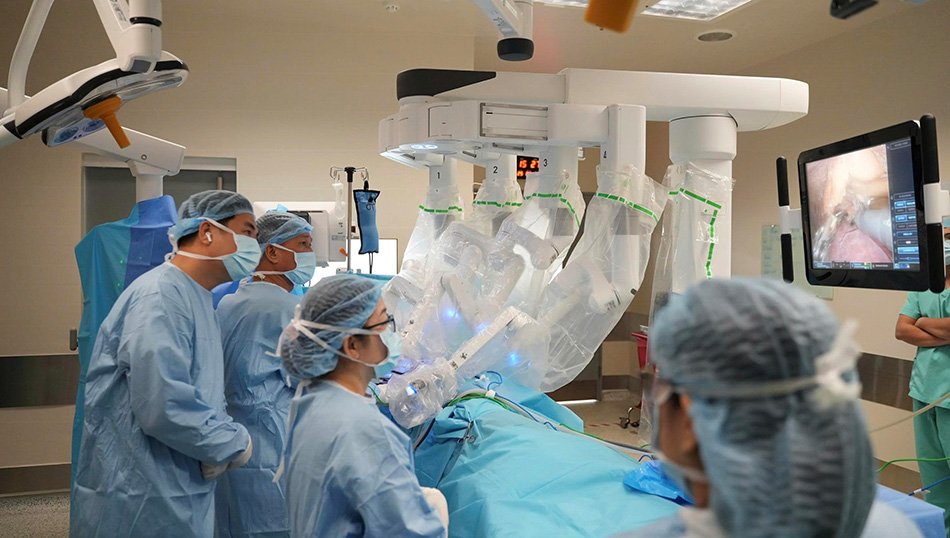
Dr Do Quang Minh, MSc, Specialist Level II, prepares for robotic surgery using the da Vinci Xi surgical system
By the end of the operation, the tumour had been successfully removed. Although its complex location required additional operating time, the team kept warm ischaemia time to around 31 minutes. This helped restore blood flow promptly and supported preservation of the patient’s kidney function.
The patient’s recovery was notably swift. After two days, he was able to eat normally and walk around his room. By the fourth post-operative day, he requested discharge, reporting minimal pain and discomfort. Compared with traditional open surgery, recovery may be faster following robotic procedures, depending on the patient’s condition and surgical complexity.
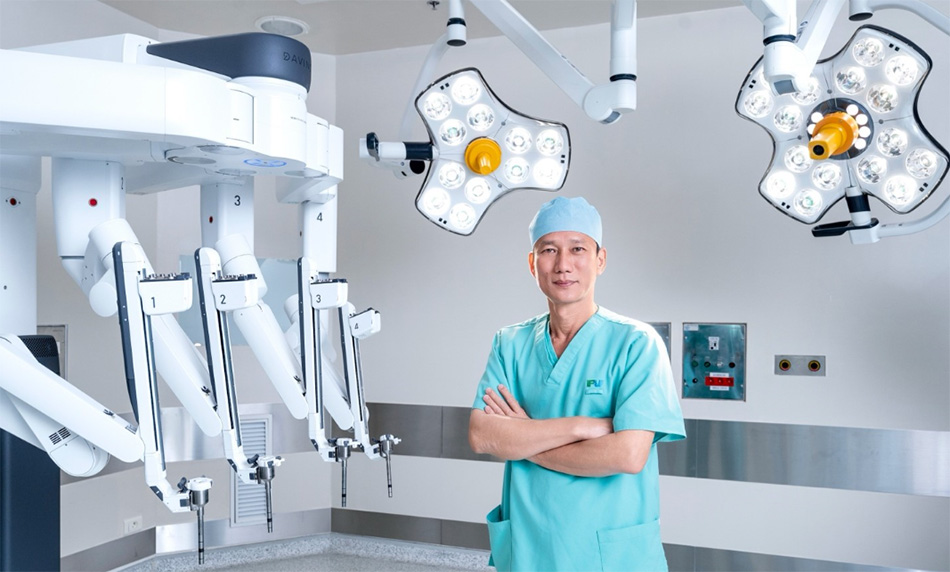
Dr Do Quang Minh, MSc, Specialist Level II – Head of Urology & Andrology at FV Hospital
Joining Dr Do Quang Minh in the operating theatre was Dr Enrique Ian S. Lorenzo, a robotic surgery expert from the Philippines with over 10 years of experience, who directly monitored, assessed, and supported the team throughout the procedure.
Following the operation, Dr Lorenzo commended the team’s professionalism, stating: “The operating theatre is highly organized, strictly adhering to international safety standards. The team members are experienced and work seamlessly together. In particular, Dr Minh demonstrated very strong skills and expertise in minimally invasive surgery.”
At FV Hospital, robotic surgery using the da Vinci Xi surgical system is currently performed in urology, gynaecology, thoracic surgery, oncology, and general surgery, including digestive, hepatobiliary, and pancreatic procedures. Its application is expected to expand to additional specialties in the future. FV’s robotic surgeons have received formal international training in robotic surgery and hold recognised professional certifications.
To help patients access robotic surgery, FV Hospital is offering a promotional discount of VND 40 million for the first 50 procedures performed using the da Vinci Xi surgical system until 15 June 2026. For more information, please visit FV Hospital, 6 Nguyen Luong Bang Street, Tan My Ward, Ho Chi Minh City, or call (028) 3511 3333.