On 23 May 2026, FV Hospital successfully hosted scientific conference “Personalised Lung Cancer Treatment: From Theory to Clinical Practice”. The event brought together more than 500 specialists and doctors in respiratory medicine, oncology, thoracic surgery and related fields to discuss current approaches to lung cancer diagnosis and treatment in Vietnam.
The burden of lung cancer in Vietnam and the growing role of precision medicine
Dr Vu Truong Son, MSc – Medical Director, FV Hospital, shared alarming statistics: “In Vietnam, there are 26,000 new cases and nearly 24,000 deaths due to lung cancer each year. Both incidence and mortality rates remain extremely high, posing a major challenge to the healthcare system.”
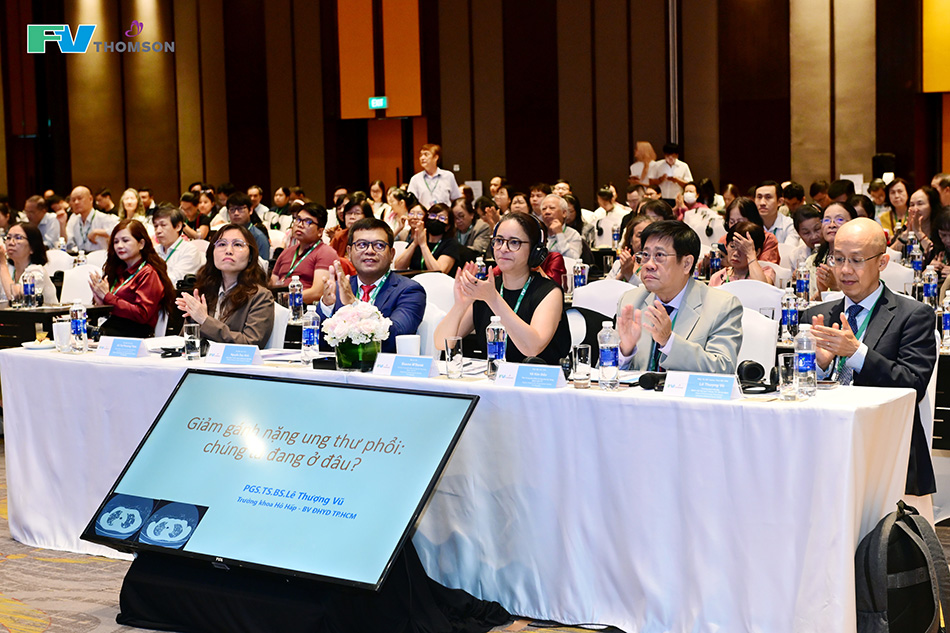
The conference attracted over 500 doctors and healthcare professionals who discussed key topics in lung cancer diagnosis and treatment
Dr Basma M’Barek – Head of Hy Vong Cancer Centre, FV Hospital and Conference Chair, emphasised: “The conference provided doctors with an overview of current clinical practice by connecting local epidemiology and available treatments in Vietnam with international guidelines.”
From prevention and early screening to modern perioperative treatment
Opening the scientific programme, Assoc Prof Le Thuong Vu, MD, PhD – Head of Pulmonology Department, University Medical Centre Ho Chi Minh City, shared an overview during his presentation titled “Reducing the burden of lung cancer: Where are we now?”.
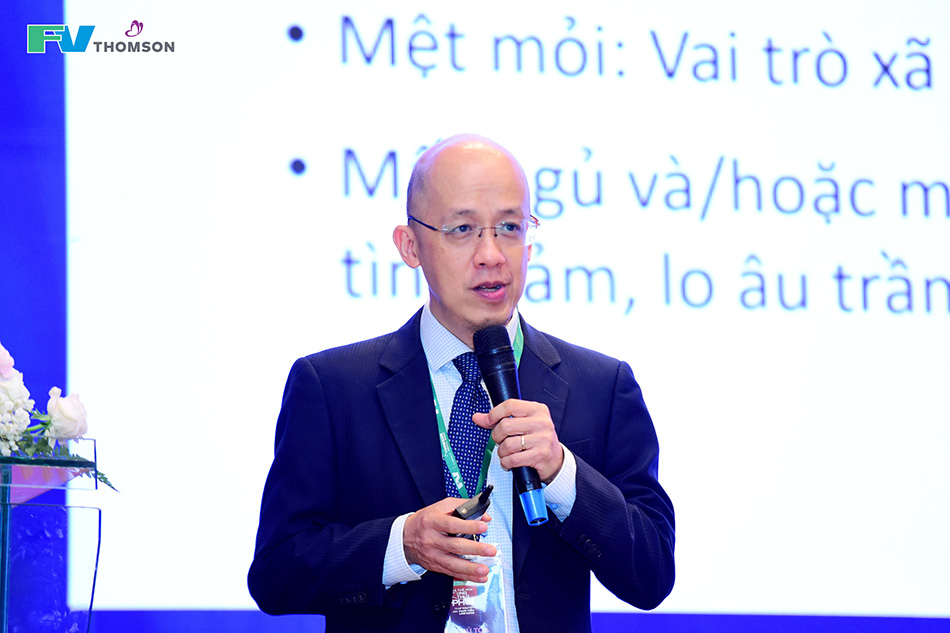
Assoc Prof Le Thuong Vu, MD, PhD – Head of Pulmonology Department, University Medical Centre Ho Chi Minh City, during his presentation
Assoc Prof Le Thuong Vu emphasised: “85% of lung cancer cases can be prevented by avoiding tobacco smoke.” Furthermore, the presentation delved into modern techniques in diagnosis and treatment:
- Early screening: Low-dose CT scans can help detect lung cancer at an early stage.
- EBUS-TBNA technique: Endobronchial ultrasound-guided transbronchial needle aspiration offers a more accurate and less invasive way to stage lung cancer, which is currently being implemented effectively at both FV Hospital and University Medical Centre Ho Chi Minh City.
- Perioperative multimodal treatment: Combining chemotherapy and immunotherapy before and after surgery is increasingly recognised standard practice worldwide. Additionally, targeted therapies have significantly improved outcomes for patients with appropriate genetic mutations.
Addressing clinical questions and the benefits of da Vinci robotic surgery
Continuing the programme, Dr Dang Dinh Minh Thanh, PhD, Specialist Level II – Head of Thoracic Surgery Department; Head of FV da Vinci Robotic Surgery Centre, presented on “Discussion of several controversial issues in lung cancer diagnosis and treatment”.
Dr Dang Dinh Minh Thanh shared insights on when a biopsy is needed versus when immediate surgery is indicated. He introduced how robotic surgery can provide enhanced visualisation of tumours and improved access to difficult areas within the chest cavity.
Notably, Dr Dang Dinh Minh Thanh affirmed: “Even with a lung tumour up to 4cm in size, under appropriate conditions, radical surgery can still be performed directly without further intervention. However, small lung nodules of 6mm or larger must be carefully monitored and assessed.”
Through his presentation, Dr Dang Dinh Minh Thanh highlighted the central role of the Multidisciplinary Team (Tumour Board) – where specialists in medical imaging, pathology, surgery, and medical oncology collaborate to develop a personalised treatment plan for each patient.
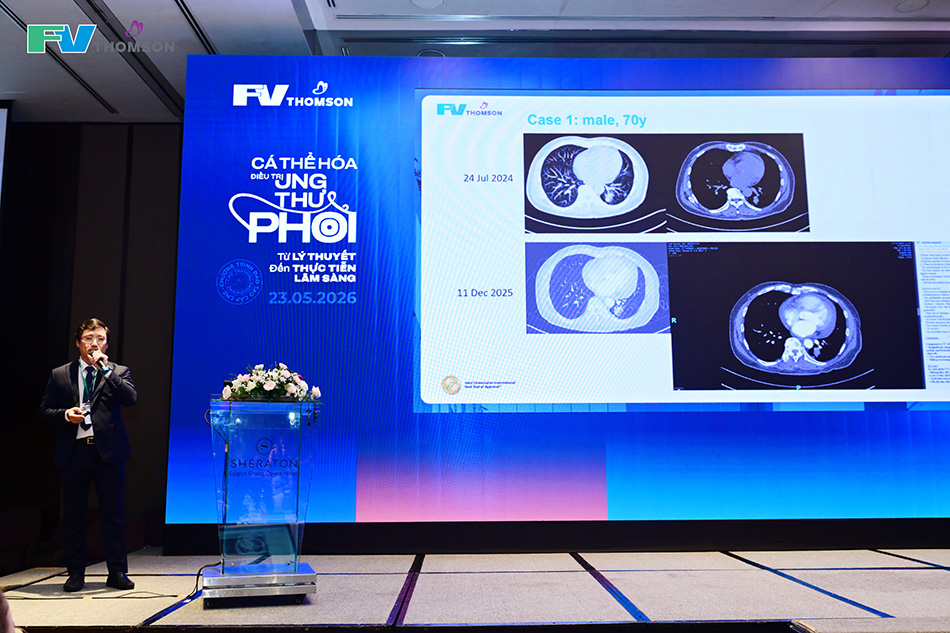
Dr Dang Dinh Minh Thanh, PhD, Specialist Level II affirmed that the Multidisciplinary Team (Tumour Board) plays a vital role in cancer treatment
One of the most memorable moments of the conference was a personal story shared by Dr Vu Truong Son, MSc, who placed his trust in his colleagues to treat his own father: “It has now been two years since my father underwent lung cancer surgery performed by Dr Thanh. Currently, he has returned to our hometown for his retirement, and his health remains good, and he is able to enjoy normal daily activities and mobility.
I feel incredibly fortunate that my father’s illness was detected at a very early stage through screening, allowing the surgery to be performed in a timely manner. I would like to express my sincere gratitude to Dr Thanh, the Hy Vong Cancer Centre, and FV Hospital for bringing such meaningful hope and happiness to my family.”
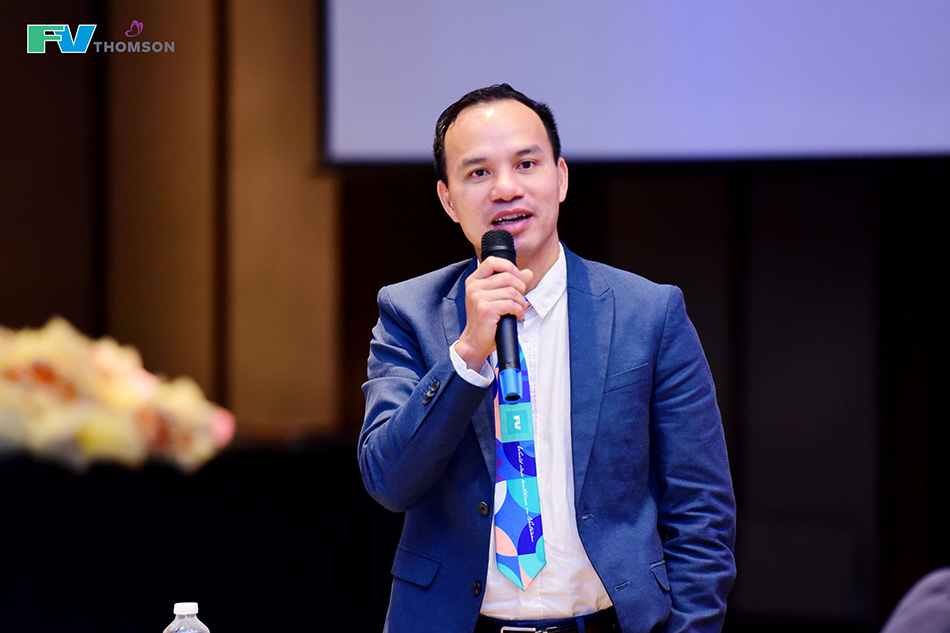
Dr Vu Truong Son, MSc shared the real-life treatment story of his father
The era of personalised treatment: targeted therapies and the continuing role of established medicines
In the advanced medical oncology session, Dr Vo Thi Phuong Thao, MSc – Senior Consultant, Hy Vong Cancer Centre, FV Hospital, presented on “Treatment of EGFR-mutated lung cancer”.
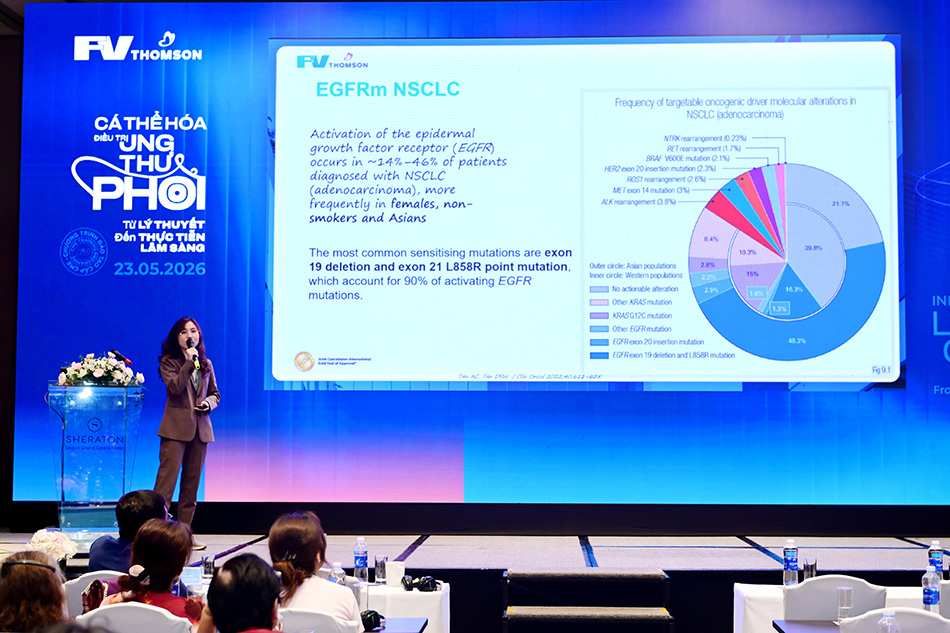
Dr Vo Thi Phuong Thao, MSc during her presentation at the conference
Dr Vo Thi Phuong Thao emphasised that modern treatment plans must be tailored to the biological characteristics and specific physical condition of each individual: “Treating a young patient is entirely different from treating an elderly patient. We must carefully evaluate accompanying medical conditions to adjust the treatment plan.” One important advancement highlighted was the combination of the new-generation targeted therapy Osimertinib with chemotherapy, which offers superior disease control.
Dr Vo Kim Dien, MSc – Deputy Head of Hy Vong Cancer Centre, FV Hospital, brought an interesting perspective through his presentation titled “The role of Vinorelbine in the era of personalised lung cancer treatment”.
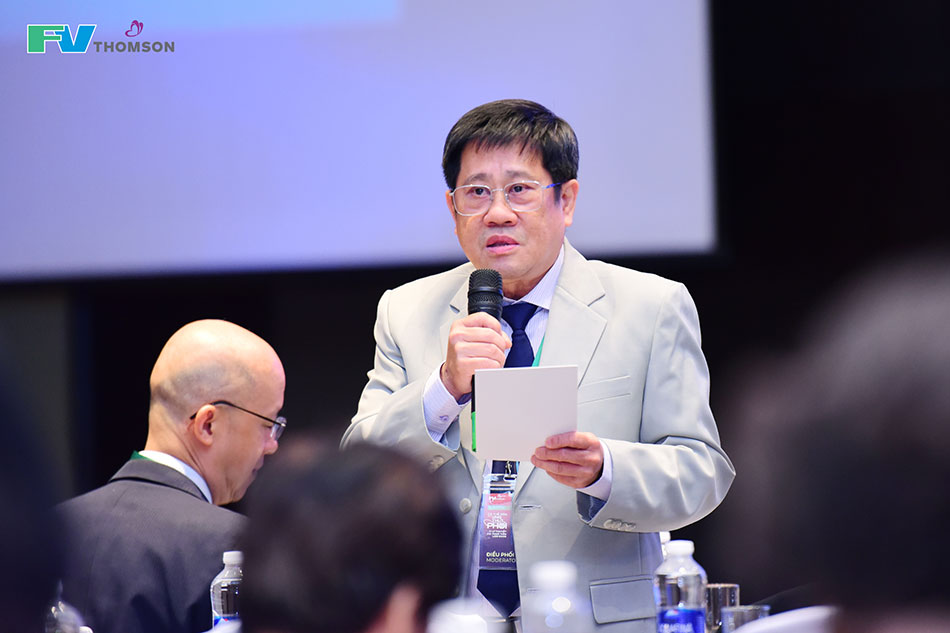
Dr Vo Kim Dien, MSc – Deputy Head of Hy Vong Cancer Centre, FV Hospital
Vinorelbine is a chemotherapy drug that has been in use for over 30 years. Although newer medicines have gained attention in recent years, studies over the past decade show that it still remains effective in certain patient groups, especially when applied as a metronomic therapy (continuous low doses). This method can help control the disease for longer and improve survival outcomes in cases that are unsuitable for or resistant to targeted drugs or immunotherapy.
Genetic testing: guiding personalised treatment
Concluding the conference, Dr Nguyen Duy Sinh, PhD – Medical Director, Gene Solutions Vietnam, affirmed: “Precision and personalised medicine often rely on genetic testing.” According to Dr Nguyen Duy Sinh, personalised treatment is not merely about choosing a single method, but rather about the appropriate combination of therapies such as targeted therapy, chemotherapy, or immunotherapy, based on the genetic and biological characteristics of each tumour.
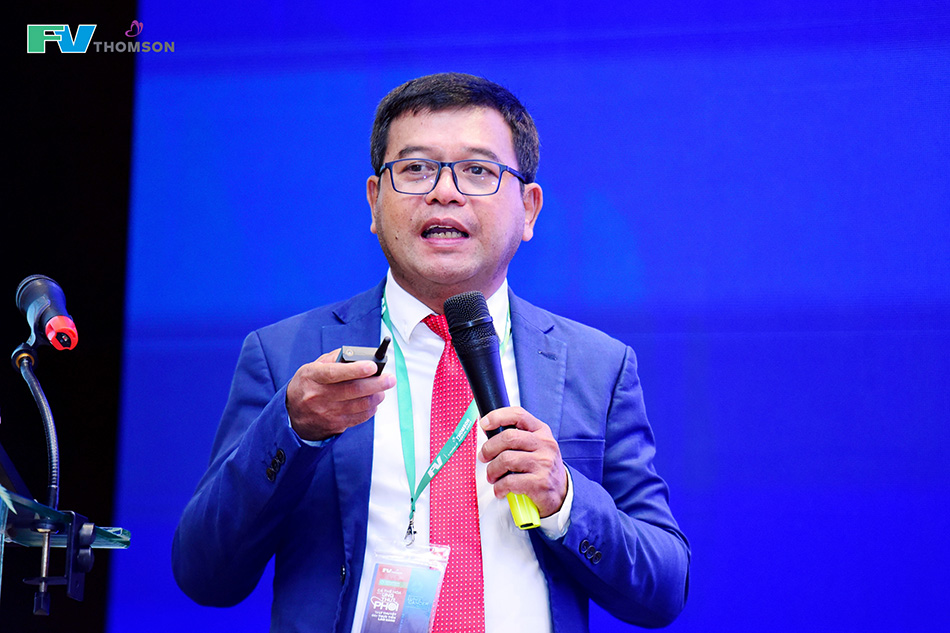
Dr Nguyen Duy Sinh, PhD – Medical Director, Gene Solutions Vietnam
He added: “Comprehensive genetic testing allows for the simultaneous analysis of multiple genes, helping doctors better understand the biological characteristics of the tumour for prognosis and treatment monitoring. Notably, ctDNA technology, which measures tumour DNA in the blood, is supporting the tracking of treatment responses and adjusting treatment plans when needed.”
Conclusion
The medical conference “Personalised Lung Cancer Treatment: From Theory to Clinical Practice” highlighted the rapid progress being made in personalised lung cancer treatment and the growing opportunities available to patients in Vietnam.
By combining advanced technologies, including comprehensive genetic testing, da Vinci robotic surgery and close collaboration through the Multidisciplinary Team (Tumour Board), FV Hospital and its clinical partners continue to strengthen access to international-standard cancer care, helping patients receive more personalised and effective treatment.