After years of specialist training in Japan and South Korea, Dr Nguyen Ngoc Ha returned to Vietnam with not only advanced surgical expertise but also a patient-centred treatment philosophy: modern surgery should go beyond saving lives to preserving organ function and improving patients’ long-term quality of life.
From survival to standard of living
With nearly 14 years of experience in urological surgery, Dr Ha smiles as he recalls his “good fortune” in gaining early exposure to laparoscopic (keyhole) surgery in Vietnam. This technique made it possible to remove organs such as the appendix, stomach, kidney or bladder through only a few small incisions, helping patients experience less pain and recover more quickly after surgery.
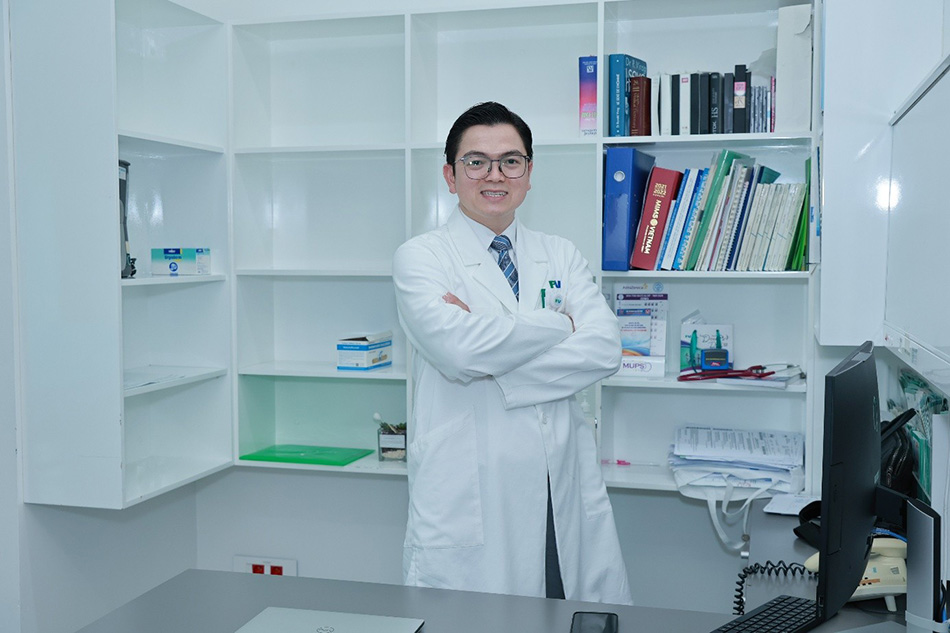
Dr Nguyen Ngoc Ha, PhD
However, the longer he practised, the more he recognised the limitations of traditional laparoscopic surgery. These include limited instrument mobility, which can make manoeuvring difficult in deep or confined areas such as the pelvis; two-dimensional visualisation with limited depth perception; physiological hand tremors; and the “lever effect”, which may reduce precision during delicate procedures. In addition, the significant physical strain surgeons experience during long and complex operations may also affect precision and surgical performance.
“In the past, patients only needed to “survive”, meaning surgery was purely to save their life. Today, they expect not only effective treatment but also a better quality of life and care,” Dr Ha explains. This shift in expectations means that successful cancer surgery should not only remove tumours effectively but also preserve as much normal function as possible and support long-term quality of life.
According to Dr Ha, this is where robotic surgery represents a major advance in modern surgical care.
“Without the robot, this operation would have been extremely difficult”
Dr Ha vividly remembers treating a 40-year-old IT engineer diagnosed with an 8 cm tumour in his left kidney. The challenge was that the patient already had stage 3A chronic kidney disease, with overall kidney function measuring only 56 mL/min.
In situations like this, removing the entire kidney along with the tumour is often the technically simpler option. However, this would likely have pushed the patient into stage 4 chronic kidney disease, significantly increasing the risk of end-stage kidney disease and lifelong dialysis. ‘No one wants to see a young man, particularly the main provider for his family, facing a life dependent on dialysis,’ he says.
The team chose the more challenging approach: robotic-assisted surgery to remove the tumour while preserving as much healthy kidney tissue as possible. According to Dr Ha, the robotic system played a crucial role, offering enhanced dexterity and precise control in a confined surgical field. The operation was successful: the tumour was removed while the patient’s kidney function remained stable after surgery.
“Without the robot, this operation would have been extremely difficult,” Dr Ha reflects.
Robotic surgery also offers significant advantages in prostate cancer treatment. During a radical prostatectomy (complete removal of the prostate gland), achieving good cancer control is only part of the goal. Preserving urinary continence and sexual function is equally important, as these have a major impact on quality of life after surgery.
To help preserve urinary continence and erectile function, surgeons must carefully protect delicate structures surrounding the prostate, including the urinary sphincter, bladder neck, nerve bundles and supporting pelvic tissues. Robotic surgery supports this precision through small, highly flexible instruments and a magnified high-definition 3D view, allowing surgeons to identify and preserve these critical structures more clearly. As a result, robotic radical prostatectomy is now widely regarded as the “gold standard” for treating localised prostate cancer, helping to balance effective cancer treatment with preservation of function.
“Compared to traditional laparoscopy, the robot is truly a revolution in urological surgery,” Dr Ha emphasises.

Dr Nguyen Ngoc Ha, PhD, consulting with a patient
Technology delivers its full potential within the right medical ecosystem
Dr Ha built his clinical expertise through years of training at leading urological centres in Vietnam and overseas. He completed his urology residency at the University of Medicine and Pharmacy at Ho Chi Minh City and Cho Ray Hospital. He later undertook a clinical fellowship in robotic urological surgery at Seoul National University Bundang Hospital in South Korea before receiving the Japanese Government’s MEXT Scholarship in 2020 to pursue advanced medical research.
However, Dr Ha believes that technology alone does not determine the success of an operation. Known for his enthusiasm for innovation and openness to new technology, he has never viewed robotics as a solution on its own. “No matter how advanced a robotic system may be, it is still a tool. When used within a professional medical environment and guided by skilled, dedicated surgeons, it can deliver the greatest benefit to patients,” he says.
For this reason, alongside his work at public hospitals and universities, Dr Ha has chosen to collaborate with FV Hospital. He values its internationally accredited surgical environment and patient-centred philosophy of care, noting that it is “on par with leading surgical centres across Asia”.
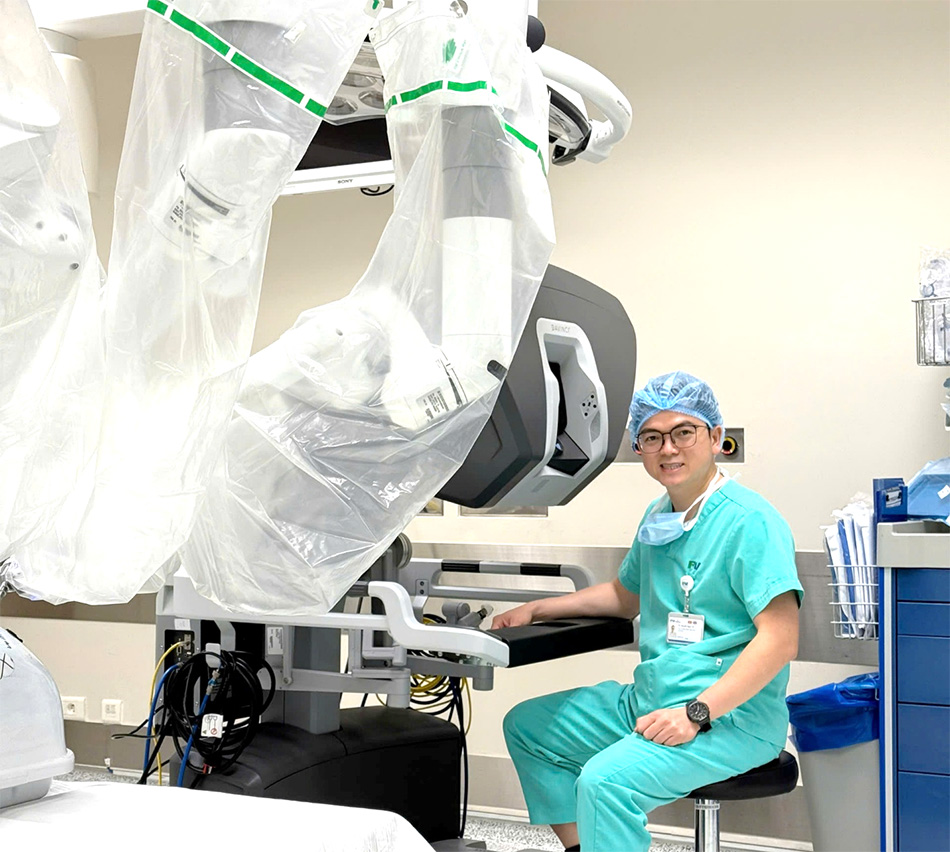
Dr Nguyen Ngoc Ha, PhD, with the da Vinci Xi robotic system at FV Hospital
According to Dr Ha, success in modern surgery does not depend on a single individual but on a closely coordinated team and system of care involving anaesthesia, scrub nurses, surgical assistants and well-organised clinical processes. When this “ecosystem” functions effectively, surgeons can focus fully on their expertise and patients benefit most. “FV provides all of these essential elements,” he emphasises.
As both a clinician and educator, Dr Nguyen Ngoc Ha remains committed to bringing world-class treatment standards closer to Vietnamese patients, with the goal that after surgery, patients not only survive but also enjoy healthier and more fulfilling lives.
Please contact Dr Nguyen Ngoc Ha, PhD at FV Hospital for examination via: (028) 3511 3333