Believing her persistent fatigue was simply a lingering effect of pneumonia, a 42-year-old pharmacist was shocked to discover she had stage 3A lung cancer. The tumour was located close to major blood vessels, making treatment particularly complex. Thanks to robotic surgery using the da Vinci Xi system at FV Hospital, the tumour was completely removed, and the patient recovered just one day after surgery.
Lung Cancer Hidden Behind Persistent Fatigue After Pneumonia
As a pharmacist, Ms Nguyen Thi Thanh Ha (born in 1984, from Ho Chi Minh City) was attentive to changes in her health. When she began experiencing persistent fatigue around the Lunar New Year, she decided to undergo a medical check-up. The results came as a shock: she had lung cancer.
The 3 cm tumour was located in the lower lobe of her right lung, in a particularly challenging position between multiple lobes and very close to major blood vessels. One hospital recommended chemotherapy first to shrink the tumour, concerned that immediate surgery could require extensive lung resection and carry a high risk of blood loss.
Working in the healthcare sector herself, Ms Ha felt uncertain about this approach and decided to seek a second opinion. She came to the FV Robotic Surgery Centre, where she was personally consulted by Dr Dang Dinh Minh Thanh, PhD – Head of the Centre and a specialist in robotic thoracic surgery.
After reviewing Ms Ha’s medical records, Dr Thanh proposed a different treatment plan: early surgery instead of pre-operative chemotherapy. “Tumours often adhere more firmly to blood vessels and bronchi after chemo-radiotherapy, making surgery more technically demanding and reducing the likelihood of complete tumour removal,” he explained. Given the tumour’s location and characteristics, robotic surgery was considered the most suitable option.
According to Dr Thanh, operating in deep and narrow areas close to major blood vessels can be challenging with conventional laparoscopic instruments due to limited movement and natural hand tremors, increasing the risk of damaging healthy tissue. In contrast, robotic arms offer enhanced flexibility, tremor filtration, and a high-definition camera system with 10x magnification, allowing surgeons to perform highly precise dissection while protecting surrounding vital structures.
“I had heard about robotic surgery before, but it was only after receiving detailed advice from the doctor that I felt truly confident choosing FV,” Ms Ha recalled.
Patient Recovered One Day After Surgery and Returned Home After Three Days: “Robotic Surgery Is a Major Breakthrough”
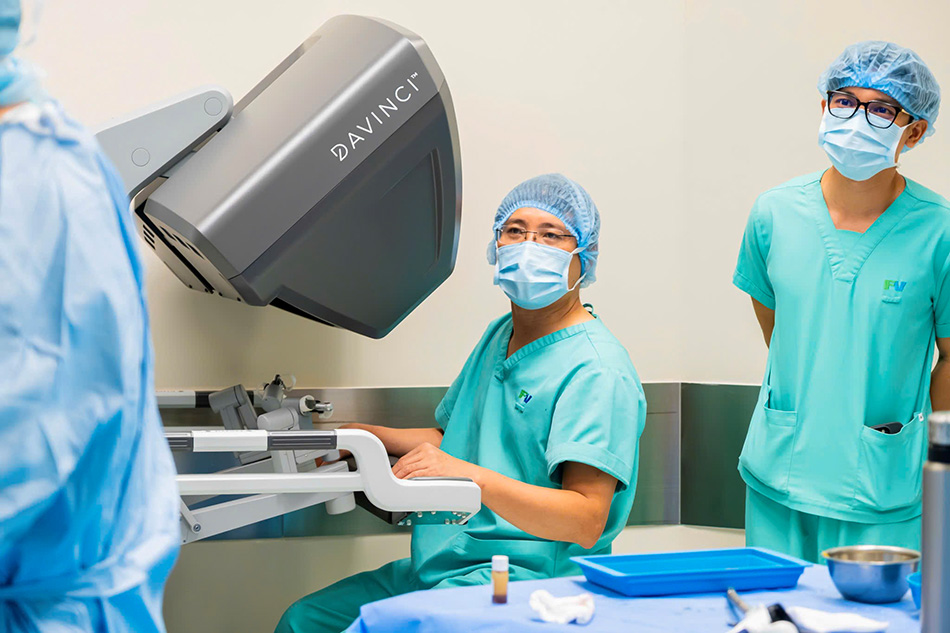
Dr Thanh performing the robotic surgery for patient.
Ms Ha’s surgery was completed in just 100 minutes by Dr Dang Dinh Minh Thanh using the da Vinci Xi, one of the world’s most advanced robotic surgical systems. Thanks to the robot’s precision, flexibility, and enhanced visualisation, the entire tumour was successfully removed without the need to resect additional lung lobes. Relevant lymph nodes were also thoroughly cleared.
“Everything went according to plan, and the robotic system helped make the procedure even smoother,” Dr Thanh shared after the surgery.
The benefits of this minimally invasive technology became clear the very next day. Experiencing minimal pain and requiring fewer drainage tubes, Ms Ha was already able to sit up and speak comfortably. For her, the experience was not only successful medically, but also far gentler than expected. She recovered within 24 hours and was discharged home after just three days.
“Although I had researched robotic surgery beforehand, I only truly understood its effectiveness after experiencing it myself. It really is a remarkable advancement in medical technology!” Ms Ha said emotionally.
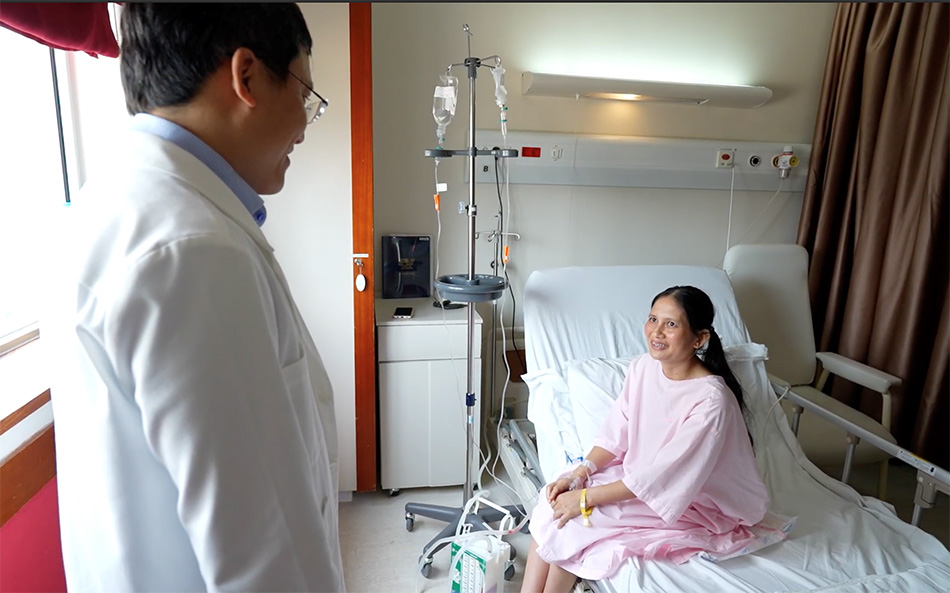
Just one day after surgery, Ms Ha was able to sit up and talk with Dr Thanh.
Dr Thanh noted that the patient would continue with targeted therapy to optimise long-term treatment outcomes. He also advised that patients recovering from pneumonia should undergo a follow-up CT scan within three to four weeks to help detect any early signs of malignancy before the disease progresses.
FV Expands Robotic Surgery Across Multiple Specialties
The FV da Vinci Robotic Surgery Centre officially commenced operations in early 2026, supported by a comprehensive professional ecosystem ranging from specialised surgeon training and standardised operating procedures to international-standard operating theatres. This represents a significant milestone in FV’s commitment to bringing world-class medical technology to patients in Vietnam.
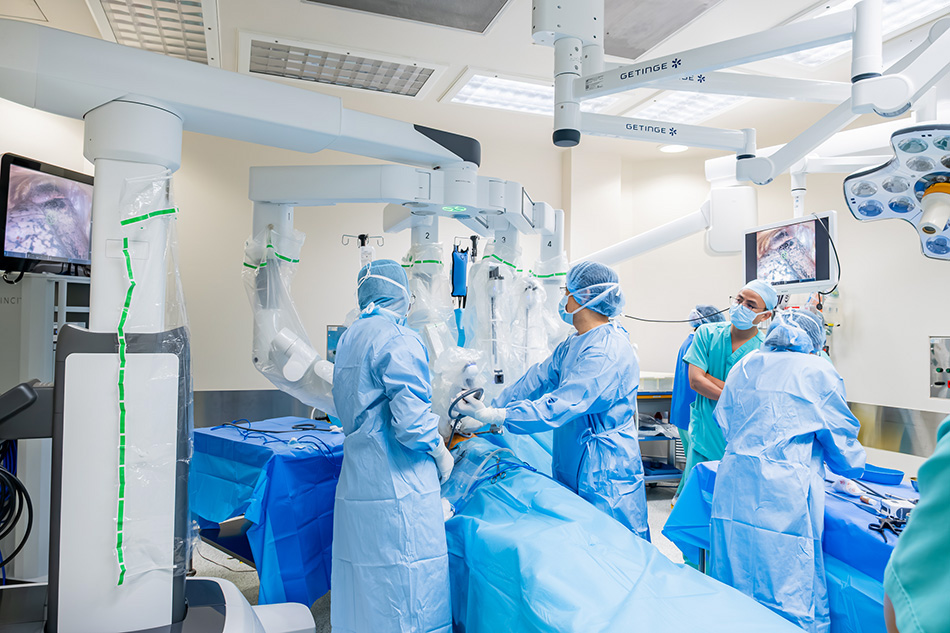
Surgeons performing a procedure at the FV da Vinci Robotic Surgery Centre.
At the FV da Vinci Robotic Surgery Centre, robotic surgery is now applied across multiple specialties, helping improve surgical precision, treatment outcomes, and recovery time:
- Thoracic Surgery: Lung cancer, mediastinal tumours, thymic tumours, and oesophageal surgery.
- Gastrointestinal & Hepatopancreatobiliary Surgery: Gastrectomy, colorectal resection, liver resection, and pancreatic surgery.
- Urology: Prostatectomy, nephrectomy (kidney removal), and cystectomy (bladder removal).
- Gynaecology: Hysterectomy, endometriosis treatment, uterine fibroid removal, and gynaecological cancer treatment.
To help more patients access advanced surgical technology, FV Hospital is offering a VND 40 million discount for the first 50 patients undergoing da Vinci Xi robotic surgery, valid until 15 June 2026. For further information, please visit FV Hospital at 6 Nguyen Luong Bang Street, Tan My Ward, Ho Chi Minh City, or contact (028) 3511 3333.