For the first time at the 6th Ho Chi Minh City International Gastric Cancer Forum (HIGCF 2026), live demonstrations of gastric cancer surgery using the da Vinci Xi robotic system were broadcast directly from the operating theatres at FV Hospital.
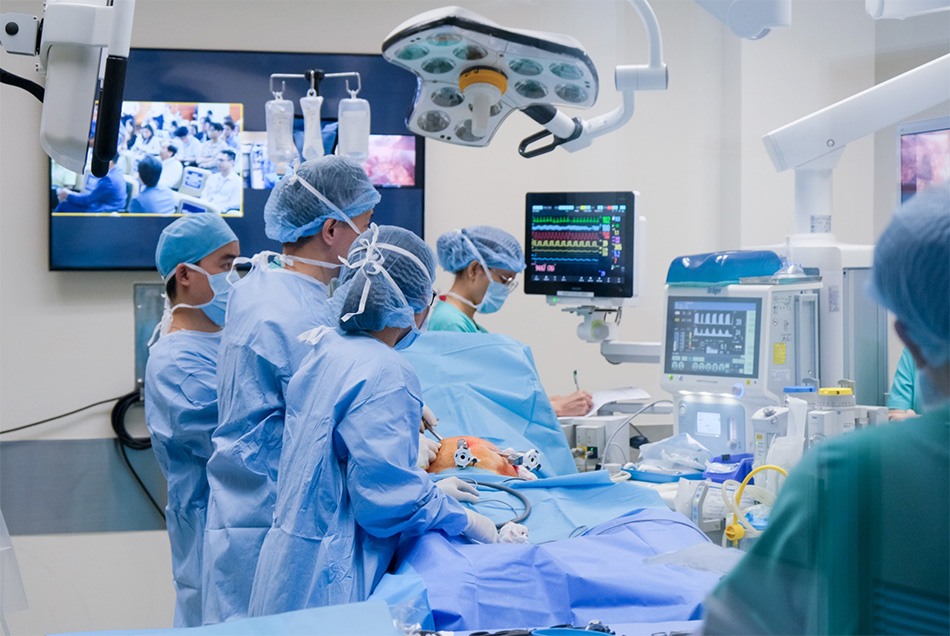
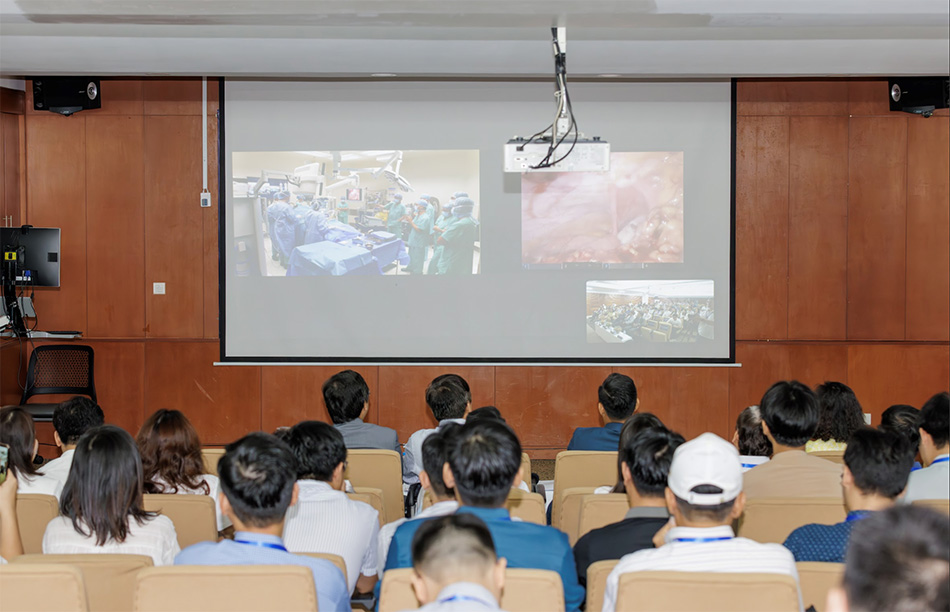
Numerous Vietnamese doctors observe the live demonstration at FV Hospital on 13th May (Source: FV)
HIGCF 2026 is a specialized international scientific forum on gastric cancer, held from 13th to 16th May 2026. The forum focuses on the latest advances in minimally invasive treatments, multimodal treatment strategies, and the application of new technologies in gastrointestinal surgery.
The event brings together more than 500 local and international experts in surgery, endoscopy, chemotherapy, and pathology. Notably, the forum welcomes robotic surgery specialists from Japan, South Korea, China, Taiwan, and Malaysia, alongside healthcare leaders and surgeons from hospitals across Vietnam, as well as members of the Vietnam Surgical Association and the Vietnam Gastric Surgery Society.
Leading surgeons from Japan and Vietnam participate in live demonstrations
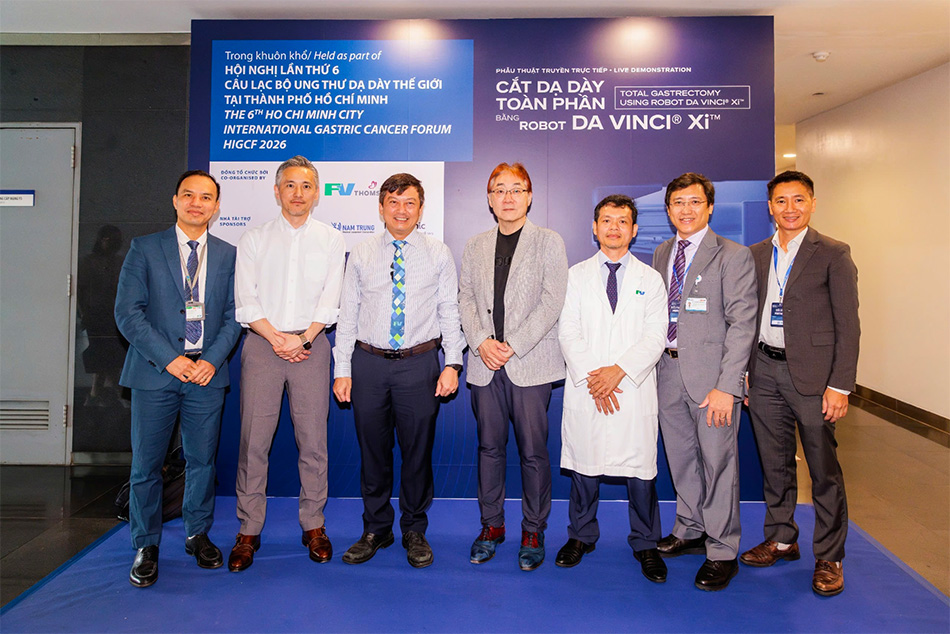
Two experts from Fujita Health University, Professor Ichiro Uyama, Head of the Department of Gastric and Robotic Surgery (centre), and Associate Professor Masaya Nakauchi, specialist in robotic gastric and oesophageal surgery (second from left), participating in the surgery on 13th May.
On 13th and 14th May 2026, four live demonstration surgeries took place at FV Hospital, broadcast to the auditoriums of both FV Hospital and the University Medical Centre HCMC, including:
- Two total gastrectomies using the da Vinci Xi robotic system
- A laparoscopic distal gastrectomy with D2 lymph node dissection for a patient with locally advanced gastric cancer.
- An Endoscopic Submucosal Dissection (ESD) procedure for a 60-year-old patient with a precancerous lesion in the gastric antrum. this technique allows for the precise excision of the affected area without the need for major surgery, helping to preserve the stomach and shorten recovery time.
Through these demonstrations, the forum showcases a comprehensive range of treatment techniques for gastric cancer, from early to advanced stages.
The two robotic surgeries are performed by a team of internationally recognised robotic surgery specialists from Japan, alongside surgeons from FV Hospital and the University Medical Centre HCMC:
- Professor Koichi Suda, MD, PhD – Vice Director of Fujita Health University Hospital (Japan).
- Professor Ichiro Uyama, MD, PhD – Head of the Department of Gastric and Robotic Surgery, Fujita Health University (who has performed more than 1,000 robotic procedures for gastric and oesophageal cancer).
- Associate Professor Masaya Nakauchi, MD, PhD – Specialist in robotic gastric and oesophageal surgery, Fujita Health University (Japan).
- Dr Phan Van Thai, Specialist Level II – Head of the General Surgery Department, FV Hospital.
- Dr Nguyen Viet Hai, Specialist Level II – Gastrointestinal Surgery Department, University Medical Center HCMC.
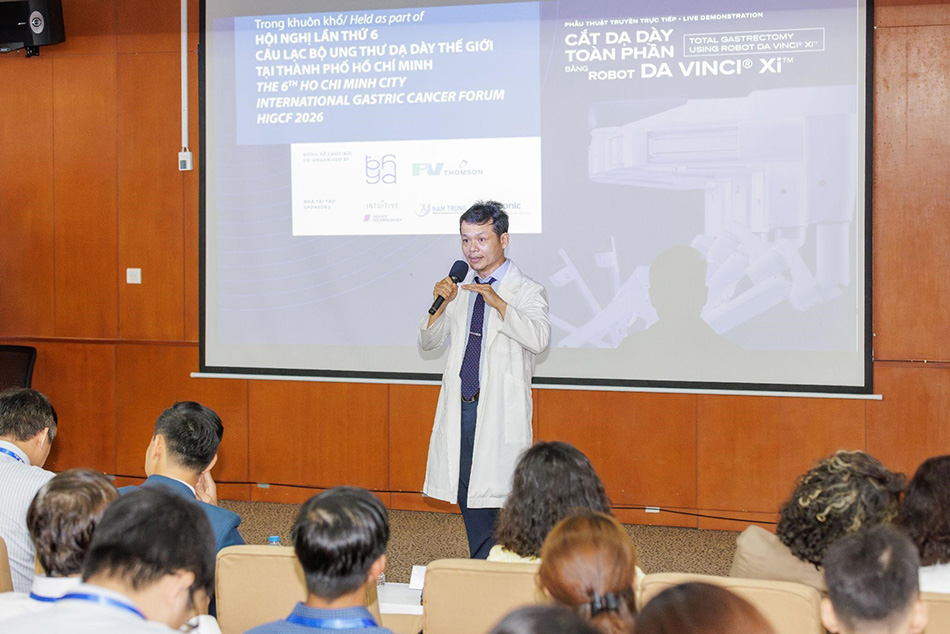
Dr Phan Van Thai, Specialist Level II – Head of General Surgery Department at FV Hospital and representative of the robotic surgical team, speaking during the live demonstration (Source: FV)
The remaining two laparoscopic surgeries were performed by doctors from University Medical Center HCMC and FV Hospital, with the support of Professor Noriyuki Inaki, a renowned Japanese expert in laparoscopic surgery and post-gastrectomy reconstruction.
During the robotic procedure performed on 13th May, surgeons treated a 51-year-old female patient with diffuse infiltrative gastric cancer and features suggestive of metastasis, which had significantly affected her ability to eat.. The complex procedure lasted more than seven hours and concluded successfully with a total gastrectomy to remove the patient’s stomach.
The experts from Fujita Health University highly commended the efficiency of the robotic technology and the seamless coordination of FV Hospital’s surgical team during this live demonstration.
“This was a highly challenging case. In Japan, surgery might not even have been considered due to the advanced stage of the cancer. However, thanks to the da Vinci Xi robotic system at FV Hospital, with its superior visualisation and flexibility in complex anatomical areas, we were able to perform the procedure with high precision. I believe the advantages of robotic surgery were clearly demonstrated in this case,” noted Professor Ichiro Uyama following the surgery.
Associate Professor Masaya Nakauchi also expressed his impression of the collaboration between the teams from FV Hospital and University Medical Center HCMC. “Even though this technique is relatively new here, the supporting doctors and nurses were quick, precise, and professional. It felt as though I were working in my own hospital in Japan. This reflects the rapid progress of Vietnamese surgical teams in implementing robotic surgery,” he remarked.
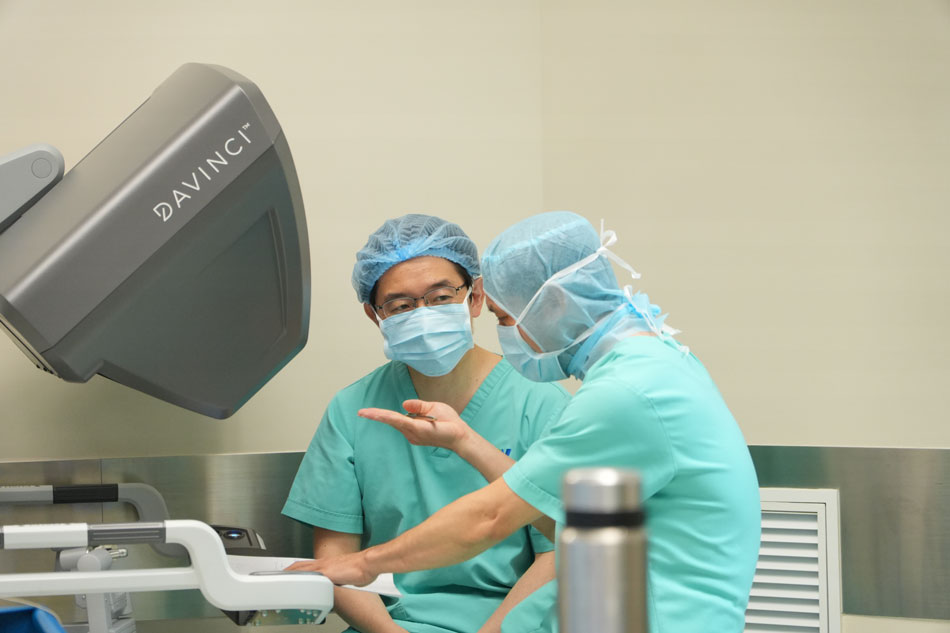
Experts discuss the procedure during robotic laparoscopic surgery on May 14th.
Public–private partnership expands access to advanced treatment technologies
According to the organisers, hosting an international forum in Vietnam with the participation of leading global experts and hundreds of local surgeons is of significant importance in showcasing Vietnam’s surgical capabilities to the world.
Dr Jean-Marcel Guillon – CEO of FV Hospital, shared: “This initiative once again demonstrates FV’s strong commitment to fostering collaboration between local and international medical institutions. Through this, advanced surgical techniques for cancer treatment are updated, shared, and transferred to improve the quality of care for patients in Vietnam.”
Associate Professor Nguyen Hoang Bac, MD, PhD – Director of University Medical Center HCMC, highly valued the coordination between University Medical Center HCMC and FV Hospital in implementing live surgical demonstrations and professional exchanges at HIGCF 2026. He described this as a meaningful collaboration model that supports the development of gastrointestinal surgery in Vietnam amid increasing international medical integration.
“The partnership model between public, private, and international hospitals brings practical value, as each unit possesses unique strengths in expertise, technology, and management experience. When knowledge is shared and resources are connected, the ultimate beneficiaries are the patients, who gain access to modern, safe, and minimally invasive treatment methods right here in Vietnam,” noted Associate Professor Nguyen Hoang Bac.
FV Hospital expands collaborative training and robotic surgery applications
Currently, robotic surgery remains a highly specialised field requiring significant investment, limiting the number of latest-generation robotic systems available in Vietnam. Meanwhile, there is a growing demand among surgeons at major hospitals to learn and apply these advanced techniques.
According to Dr Jean-Marcel Guillon: “Since commissioning the da Vinci Xi robotic system, FV has been dedicated to developing a collaborative model, unique to our hospital, designed to enable surgeons and specialists from other institutions to undergo training, receive certification, and utilise FV’s robotic system to operate on their patients.”
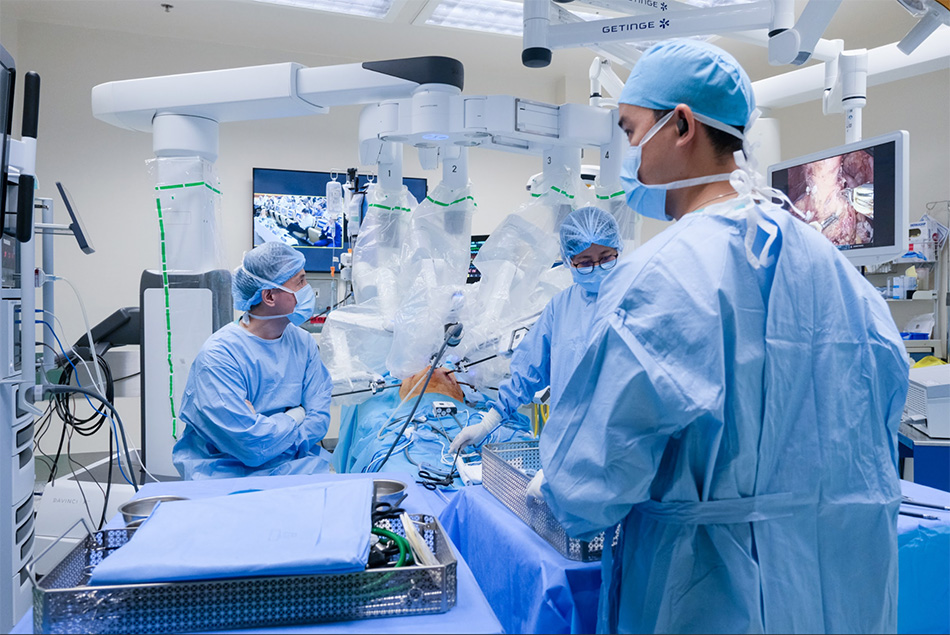
The total gastrectomy procedure is broadcast live to the FV Hospital auditorium
Robotic surgery opens new horizons in gastric cancer treatment
Speaking during the live broadcast of the robotic gastrectomy, Associate Professor Vo Duy Long, MD, PhD – Deputy Head of the Department of Gastrointestinal Surgery at University Medical Center HCMC, stated: “A key focus of the 6th Ho Chi Minh City International Gastric Cancer Forum is robotic surgery. It offers significant advantages through its flexibility and precision in deep, challenging locations – areas where even laparoscopic or open surgery can struggle. Robotic surgery is the natural evolution of laparoscopy. In my view, we are truly in the era of robotic surgery, not just for gastric cancer but across many surgical fields.”
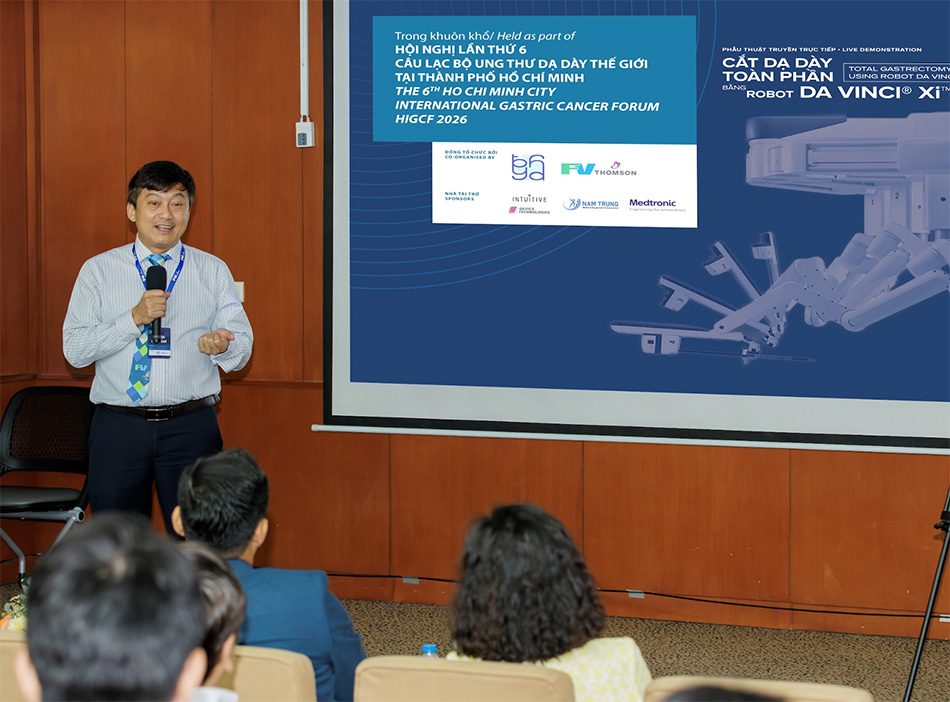
Associate Professor Vo Duy Long, MD, PhD – Deputy Head of the Department of Gastrointestinal Surgery, University Medical Center HCMC.
Treating gastric cancer, especially in complex cases, requires extreme precision as tumours are often located near vital blood vessels and lymph node systems. The da Vinci Xi robotic system utilises high-resolution 3D imaging alongside robotic arms with a wide range of motion. This allows surgeons to perform dissections and lymph node clearance with greater accuracy, minimising damage to healthy tissue, reducing blood loss, and supporting faster patient recovery.
According to Mr Ryan Johnston – General Manager, Sales & Marketing Asia at Device Technologies, the pace of robotic surgery development in Vietnam is gaining regional attention, driven by increasing hospital investment and the high expertise of local doctors. Furthermore, the cost of robotic treatment in Vietnam remains more competitive than in Thailand or Singapore, providing more patients with the opportunity to access advanced technology domestically.
As Vietnamese surgery enters a phase of deeper integration with minimally invasive technologies, collaboration models between public, private, and international surgical centres are expected to help bring advanced techniques closer to both Vietnamese doctors and patients.