Following the strategic investment in the da Vinci Xi robotic surgical system – the most advanced generation of surgical robotics currently available – in late 2025, and the successful completion of its inaugural procedures under the supervision of international experts, FV Hospital officially launched the FV da Vinci Robotic Surgery Centre on March 12, 2026.
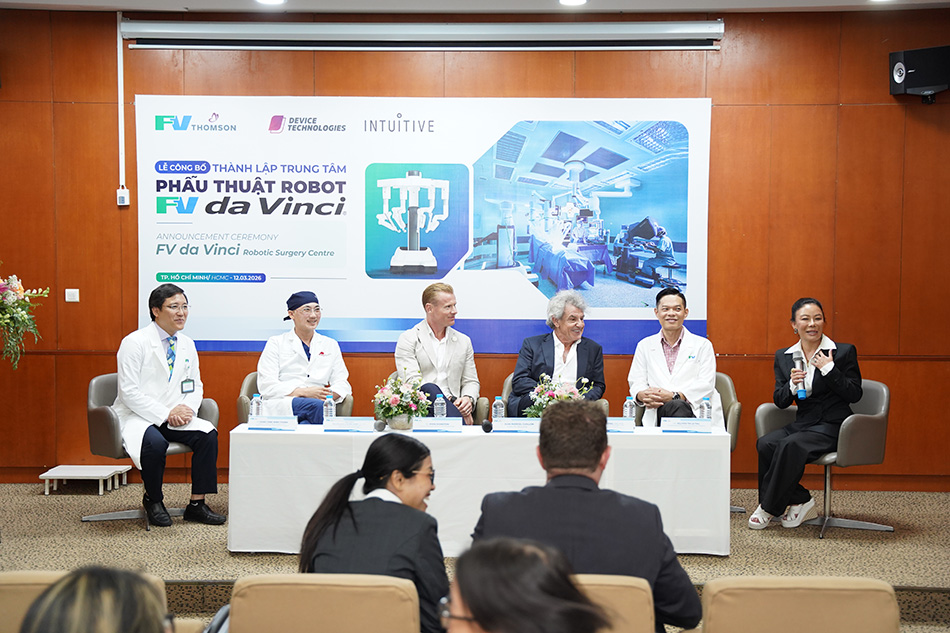
Launch event of the FV da Vinci Robotic Surgery Centre at FV Hospital.
This milestone marks a significant step in FV Hospital’s medical technology development strategy, and opens access for patients in Vietnam to highly precise, minimally invasive surgical techniques that were previously available only at leading medical centres abroad.
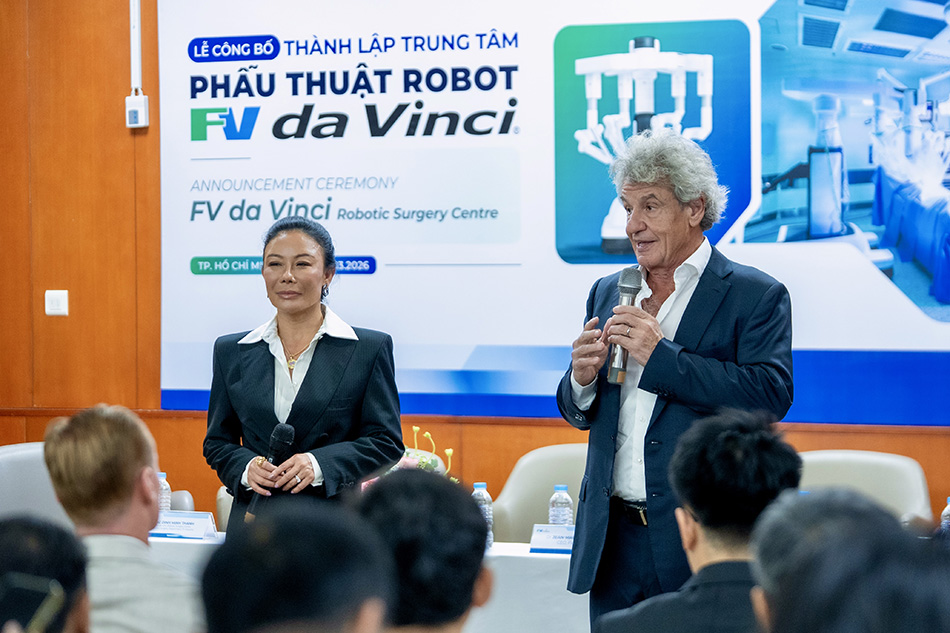
Dr Jean-Marcel Guillon, Chief Executive Officer of FV Hospital, addressing attendees at the launch of the FV da Vinci Robotic Surgery Centre.
Robotic surgery — A revolution in modern surgical practice
Over the past decade, robotic-assisted surgery has transformed the landscape of modern surgery. The da Vinci system is now widely regarded as the world’s most advanced robotic surgical technology, with more than 12,000 systems currently in active use at hospitals across the globe.
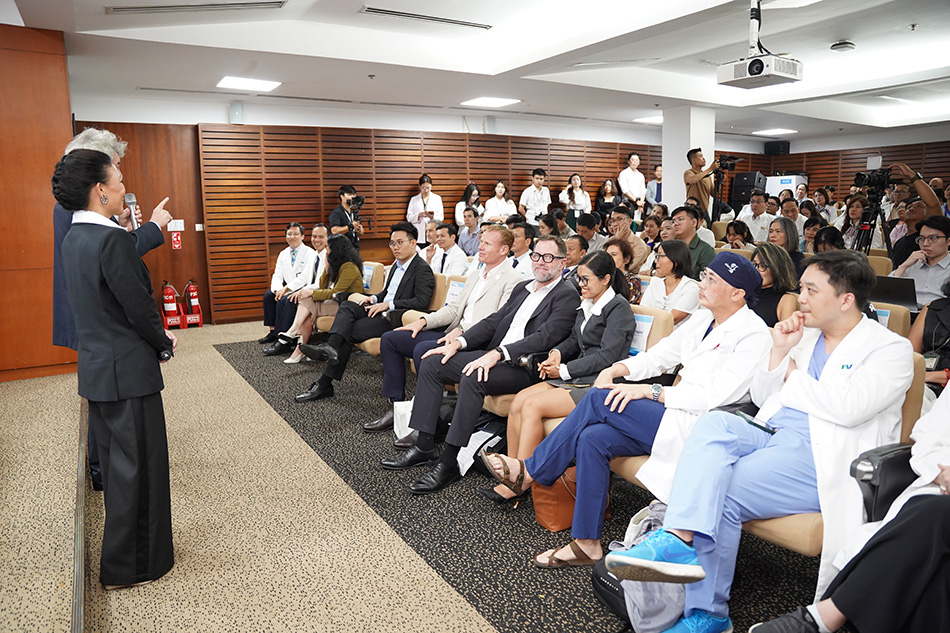
The launch of the FV da Vinci Robotic Surgery Centre draws widespread attention from medical specialists.
In Vietnam, da Vinci robotic surgery was first introduced in 2014 with the da Vinci Si system. The technology has since entered a new phase of development with the Xi generation, offering surgeons greater flexibility and precision in complex procedures through a surgeon-controlled, robot-assisted interface operated by specifically trained robotic surgeons.
FV Hospital is amongst the first institutions in Vietnam to operate the da Vinci Xi robotic surgical system, enabling Vietnamese patients to access advanced surgical techniques previously available only at major international medical centres.
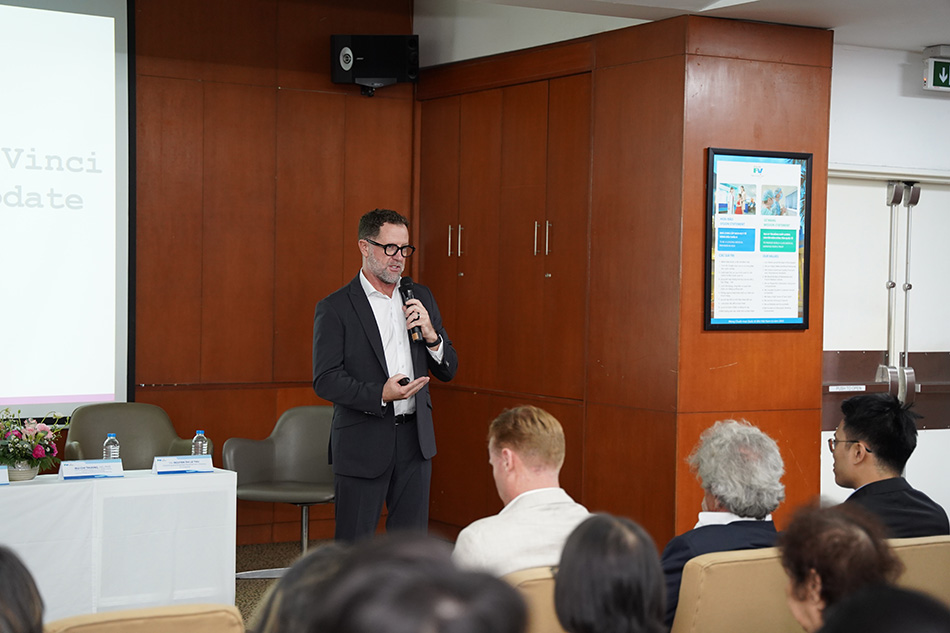
Adam Brown, Regional Business Director for Southeast Asia at Device Technologies, addressing attendees at the event. Image: FV
Speaking at the press conference marking the launch of the FV da Vinci Robotic Surgery Centre, Mr Adam Brown stated: “To date, more than 20 million robotic surgical procedures have been performed worldwide, over 3 million of those in 2025 alone. Da Vinci-assisted surgery is experiencing rapid growth across Southeast Asia, with a 24% growth rate recorded in 2025. In Vietnam, FV is the fourth hospital to acquire the da Vinci system and the second to operate the Xi generation.”
FV da Vinci Robotic Surgery Centre — A multidisciplinary centre of surgical excellence
The establishment of the FV da Vinci Robotic Surgery Centre is designed to ensure that the robotic system is operated within a standardised, safe, and efficient clinical framework, whilst also laying the groundwork for the structured, long-term development of robotic surgery at the institution.
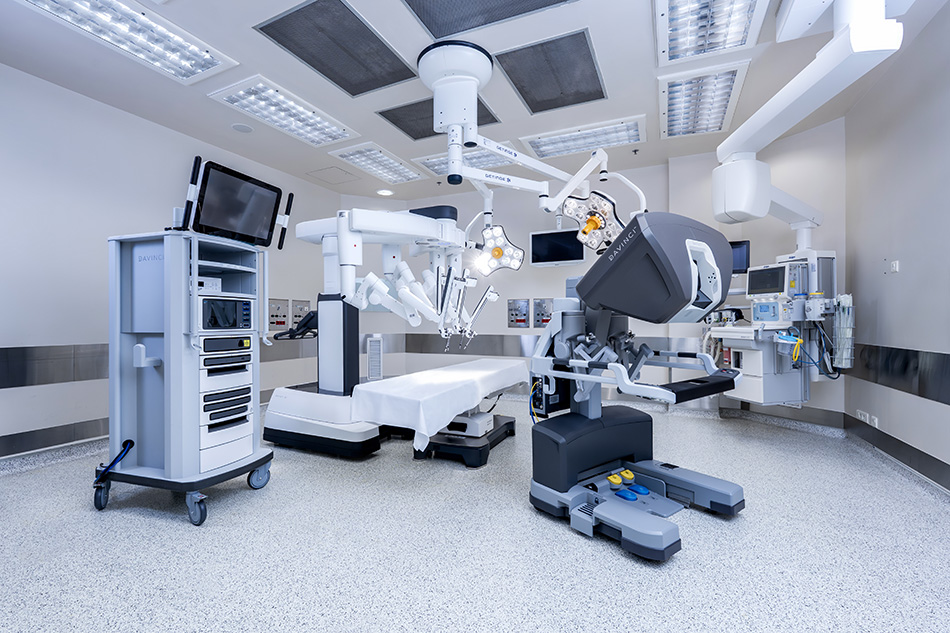
The da Vinci Xi robotic surgical system, one of the most advanced in Southeast Asia, at FV Hospital.
Dr Jean-Marcel Guillon, Chief Executive Officer of FV Hospital, said: “Robotic surgery is reshaping the future of surgical practice. The investment in the da Vinci Xi system and the establishment of the FV da Vinci Robotic Surgery Centre represent a strategic step towards bringing the world’s most advanced surgical technologies closer to patients in Vietnam.”
He further noted: “A modern robotic surgical system is not merely a piece of high-technology equipment. It requires a fully integrated clinical ecosystem, encompassing surgeon training, standardised operating protocols, and internationally accredited theatre facilities. The FV da Vinci Robotic Surgery Centre has been built with precisely that vision in mind.”
A surgical team trained to international standards
The FV da Vinci Robotic Surgery Centre is led by Dr Dang Dinh Minh Thanh, PhD, a thoracic surgery specialist with over 20 years of experience and one of Vietnam’s pioneering surgeons in the field of robotic-assisted surgery.
The Centre’s founding surgical team have completed rigorous training programmes and hold da Vinci Xi robotic surgery certification, having undergone training both at FV Hospital and at major robotic surgery centres across the region, including in Japan, South Korea, Singapore, and Thailand. The certified team comprises:
- Dr Luong Ngoc Trung, MSc – Head of Vascular Surgery Department
- Dr Phan Van Thai, MSc – Head of General Surgery Department
- Dr Do Quang Minh, MSc – Head of Urology Department
- Dr Robert Marie Riché, PhD – Specialist in Gynaecological Surgery
According to Dr Guillon: “Within just a few months, and with the comprehensive support from the manufacturer of the da Vinci system, FV Hospital has rapidly built a professional FV da Vinci Robotic Surgery Centre, gathering a team of doctors capable of performing almost all surgical techniques enabled by the da Vinci Xi system.”
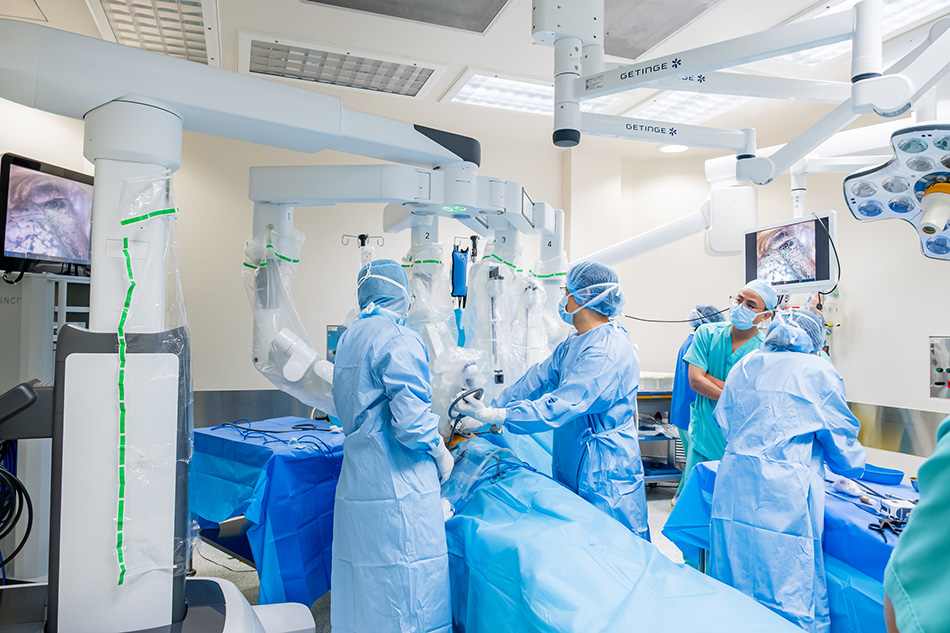
FV Hospital’s medical team performing robotic-assisted lung cancer surgery using the da Vinci Xi system
Having directly observed the FV surgical team during a gynaecological procedure performed by Dr Robert Marie Riché on the morning of March 12, Assoc. Prof. Dr Nguyen Quoc Truong Chinh, PhD — Director of the Minimally Invasive Gynaecological Surgery Unit at University of Texas Medical Branch (USA) — commented: “I have great admiration for the medical team at FV Hospital. The theatre team worked with exceptional dedication, seamless coordination, and a high level of professionalism. The operating theatre was immaculate, and the surgical equipment was modern and fully appropriate for robotic surgery. In the United States, we have extensive experience in robotic-assisted minimally invasive surgery. However, comparing the FV team with our own teams in the US, I see very little difference between the two.”
Opening up collaboration opportunities for surgeons in Vietnam
At the moment, many surgeons in Vietnam have been trained and hold da Vinci Si certificates (the previous generation of da Vinci Xi); however, they lack access to the robotic system to serve their patients.
According to Dr Jean-Marcel Guillon: “FV will soon launch collaboration programmes with surgeons both within and outside the hospital, opening opportunities for many doctors to utilise the da Vinci Xi robotic system to better serve patients.”
He emphasised that this expansion of collaboration is not only about providing surgeons with access to new technology. More importantly, it is about ensuring that more patients across Vietnam, particularly those with cancer, can benefit from the most advanced minimally invasive surgical techniques available.
Delivering measurable benefits for patients through robotic surgery
The da Vinci Xi robotic surgical system assists surgeons in performing operative manoeuvres with exceptional precision, thanks to its high-definition 3D imaging system that allows anatomical structures to be magnified many times over compared to standard laparoscopy.
The robotic arms have a high degree of flexibility, enabling intricate manoeuvres in deep and narrow areas of the body. As a result, robotic-assisted surgery brings numerous benefits to patients:
- Minimal incisions (~8 mm)
- Reduced post-operative pain
- Minimised blood loss and lower risk of complications
- Shorter recovery time. In less complex cases, patients may be discharged within 24 hours of surgery
Dr Mireille Diem My Truong, Director of Minimally Invasive Gynecologic Surgery, Department of Obstetrics and Gynecology – MedStar Georgetown University Hospital (USA), stated: “In the United States, the da Vinci robot is a very common surgical method. In gynaecology alone, approximately 200,000 to 300,000 robotic-assisted procedures are performed annually across the country. In my opinion, robotic technology is seeing increasing adoption in surgery precisely because of the substantial benefits it delivers. I often describe robotic surgery as the natural next evolution of laparoscopic surgery.”
Dr Bui Chi Thuong, PhD — Head of the Obstetrics Division at Nhan Dan Gia Dinh Hospital and Lecturer in Obstetrics at the University of Medicine and Pharmacy HCMC — who brings 26 years of experience in obstetric surgery, also welcomed the establishment of FV’s Robotic Surgery Centre: “I greatly commend FV’s decisiveness in acquiring the da Vinci Xi. This is the direction that modern medicine is heading, and there is simply no room to fall behind. I also had the opportunity to observe Dr Robert Riché perform a robotic myomectomy at FV Hospital. The procedure was swift, precise, and technically elegant, with the surgeon operating comfortably from the console throughout. I would be delighted to be invited to participate in the robotic surgeon training programme. The integration of advanced surgical technology into clinical practice will bring meaningful benefits to both surgeons and patients alike.”
Broad application across multiple surgical specialties
At the FV da Vinci Robotic Surgery Centre, robotic-assisted surgery is now available across the following specialties:
- Thoracic Surgery: Lung cancer; mediastinal tumours; thymoma; oesophageal surgery
- Gastrointestinal and Hepatopancreaticobiliary Surgery: Gastrectomy; colorectal resection; hepatectomy; pancreatectomy
- Urology: Radical prostatectomy; nephrectomy; cystectomy
- Gynaecology: Hysterectomy; surgical management of endometriosis; myomectomy; gynaecological oncology surgery.
The expansion of robotic surgery across multiple specialties means that an increasing number of patients will have access to advanced, minimally invasive surgical options.
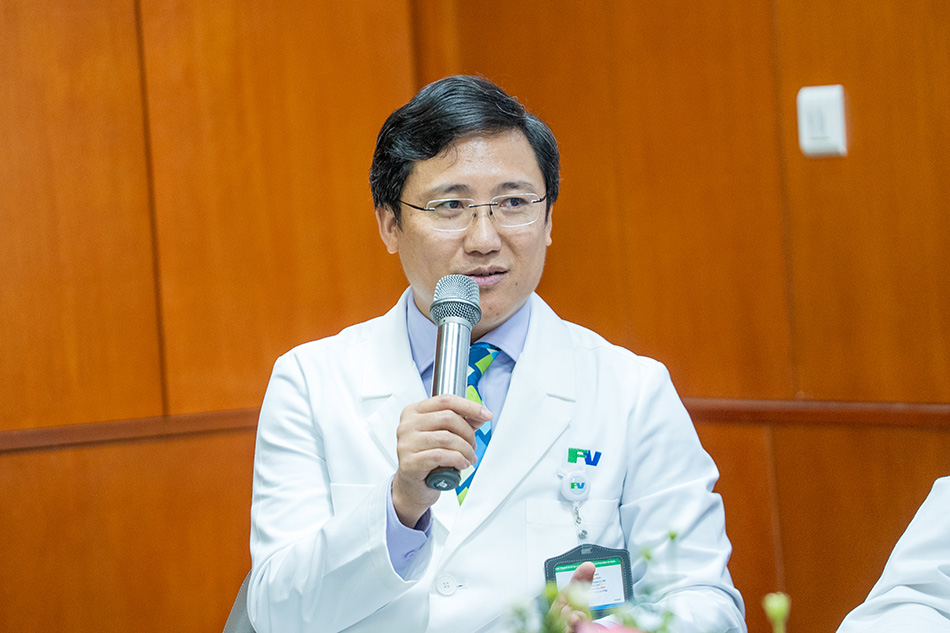
Dr Dang Dinh Minh Thanh, PhD, Head of the FV da Vinci Robotic Surgery Centre
Dr Dang Dinh Minh Thanh, Head of the FV da Vinci Robotic Surgery Centre, said: “The investment in the FV da Vinci Robotic Surgery Centre represents far more than an investment in equipment. It is an investment in a multidisciplinary team of specialist surgeons. The development of robotic surgery across multiple specialties enables us to work in a fully integrated manner, which is particularly important in cases requiring multidisciplinary collaboration and avoids the risk of an unplanned intraoperative conversion from robotic-assisted to open surgery. With this thorough investment, and the support of our international robotic surgery advisors, we are confident in extending robotic-assisted minimally invasive surgery indications to a wider range of conditions, including cases that would previously have required open surgery.”
Surgical infrastructure meeting international standards
Alongside its robotic technology, FV Hospital operates a suite of modern operating theatres with rigorous infection prevention and control protocols adhering to JCI accreditation standards.
The surgical site infection rate at FV is maintained at below 0.2%, equivalent to the standards of many major hospitals in the United States.
As a fully integrated multidisciplinary hospital, FV is also well-positioned to coordinate cross-specialty collaboration for the management of complex surgical conditions, particularly in cases requiring input from multiple surgical disciplines.
Aiming to become a regional hub for robotic surgery
Dr Jean-Marcel Guillon said: “FV Hospital’s vision is to become a leading robotic surgery centre within the Southeast Asia region. The acquisition of the da Vinci Xi system and the establishment of the FV da Vinci Robotic Surgery Centre are strategic steps towards bringing the world’s most advanced surgical technologies closer to patients in Vietnam.”
He also emphasised an important distinction for patients: the da Vinci Xi is not an autonomous surgical system. The surgeon remains in complete control at all times, directing every movement of the robotic arms to perform precise manoeuvres within the patient’s body.
According to Dr Jean-Marcel Guillon, the application of the da Vinci Xi robot is particularly significant in cancer treatment, especially for surgeries requiring manoeuvres in deep or hard-to-reach locations. The technology enables surgeons to operate with greater precision, whilst also enhancing the oncological treatment capabilities of the Hy Vong (Hope) Cancer Treatment Centre at FV Hospital.