A woman in her 30s from Cambodia was admitted with numbness and a significant loss of motor function—nearly 80%—on the left side of her body, caused by a brain tumour. The main challenge was not only identifying the exact location of the tumour, but also planning a surgical approach that would be both effective and safe.
The case was successfully managed by Dr Tran Luong Anh, Specialist Level II, with the support of a next-generation neurosurgical navigation system and multimodal intraoperative neurophysiological monitoring (IOM).
The challenge of removing a brain tumour completely while preserving healthy brain tissue
The patient had previously been diagnosed in her home country and was advised that she might have to live with the condition long-term. Seeking further treatment options and hoping to regain mobility, she came to FV Hospital.
Following clinical assessment and imaging investigations, Dr Tran Luong Anh, Head of Neurosurgery and Spinal Surgery, identified a cerebral cavernous malformation (CCM) located in the brainstem.
This type of vascular malformation consists of clusters of abnormally dilated blood vessels forming thin-walled cavities filled with blood. Although not malignant, CCM carries a significant risk of bleeding, which can lead to seizures, stroke, or permanent neurological damage if left untreated.
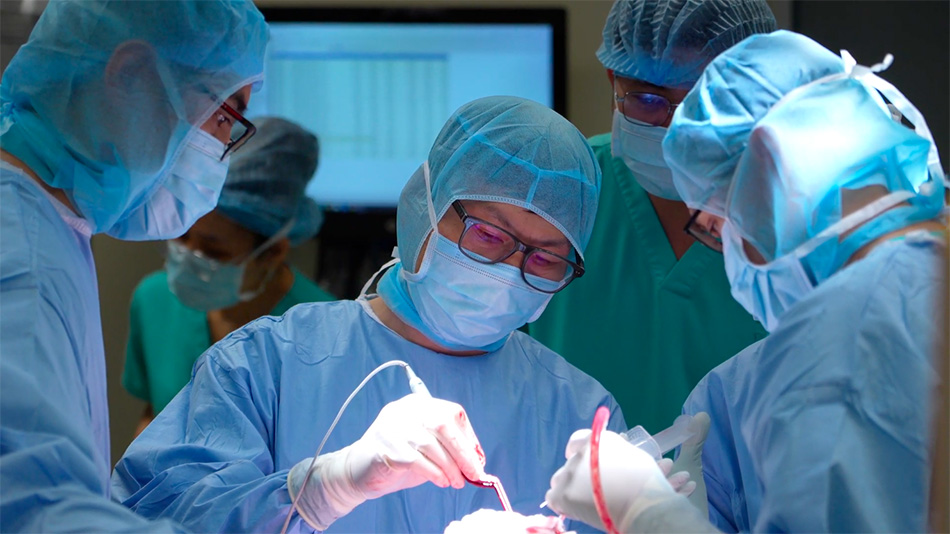
Dr Tran Luong Anh, Specialist Level II, performed brain tumour surgery on the patient
“The patient has a tumour within the brainstem parenchyma, a location that demands extreme surgical precision to avoid damage to critical neurological functions,” noted Dr Lương Anh.
To accurately localise the lesion, minimise the size of the surgical opening, and maximise patient safety, the surgical team utilised a Brainlab neurosurgical navigation system alongside multimodal intraoperative neurophysiological monitoring (IOM).
Precision surgery supported by Navigation and IOM
The operation was carried out with continuous support from the navigation system. By integrating pre-operative imaging data, such as MRI and CT scans, the system allows surgeons to plan the procedure in advance and navigate the surgical pathway with greater accuracy, thereby reducing trauma to surrounding healthy brain tissue.
In addition, intraoperative neurophysiological monitoring (IOM) was used to assess nerve function in real time throughout the procedure. This plays a critical role in reducing the risk of complications and safeguarding neurological function.
After three hours of surgery, the team was able to remove almost the entire lesion tumour, which measured nearly one-third of the brainstem. The use of advanced technologies enabled precise localisation of the lesion, safe surgical access, and maximal preservation of neurological function.
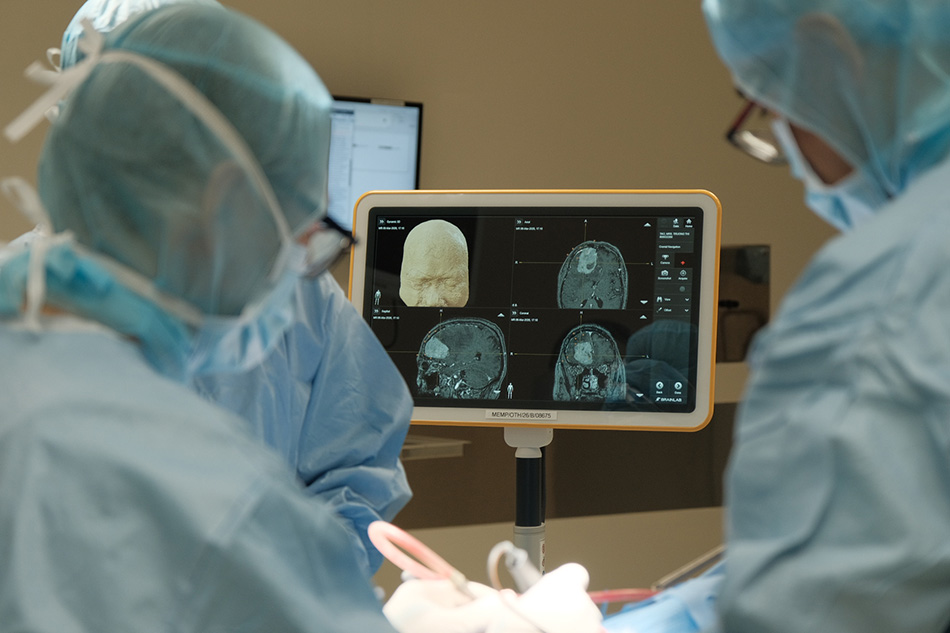
The KICK Navigation System (Brainlab) creates a 3D model of the brain’s structure
FV Hospital is equipped to treat all types of brain conditions
The Neurosurgery & Spinal Surgery Department at FV is a specialised unit capable of performing a wide range of complex conditions, including brain tumours, stroke, intracranial haemorrhage, vascular malformations, and epilepsy surgery such as hippocampal resection. The department also treats spinal conditions, including scoliosis, herniated discs, spondylolisthesis, and spinal tuberculosis.
The integration of advanced surgical systems, such as Neurosurgical Navigation, the latest Zeiss microscope with ultra-high magnification, ultrasonic aspirators for precise tumour removal, and Intraoperative Neurophysiologic Monitoring (IOM) – significantly enhances treatment outcomes. These technologies protect patients from neurological damage and reduce the risk of complications throughout the procedure.
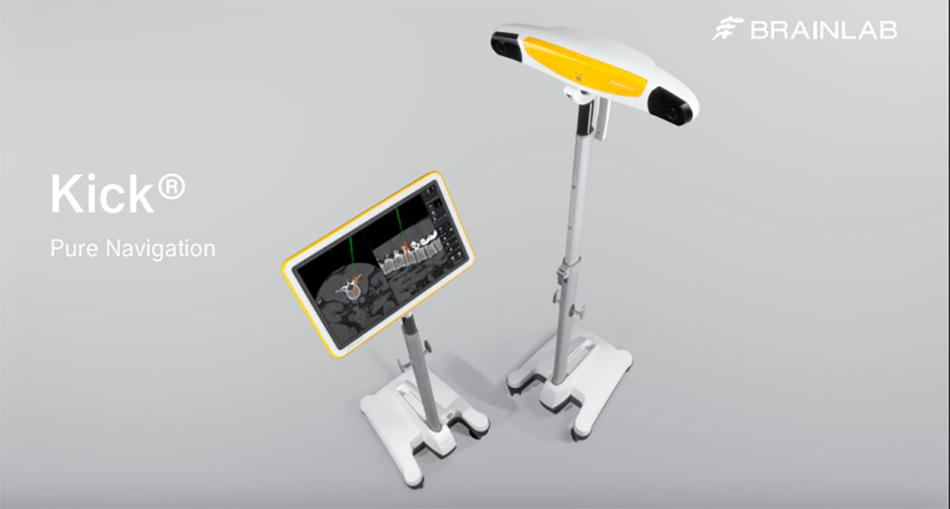
The KICK Navigation System (Brainlab) as applied in neurosurgery
All procedures are performed in operating theatres that meet JCI international standards, providing a near-sterile environment. This contributes to maintaining an exceptionally low surgical site infection rate of below 0.2%. After surgery, the patient is watched closely and cared for using a special recovery plan. This uses the latest equipment and early exercise to help patients return to their daily lives as quickly as possible.
FV Hospital’s comprehensive investment in high-tech systems enhances surgical safety, particularly for complex brain and spinal procedures. The goal is to provide both local and international patients with access to advanced treatments right here in Vietnam, improving recovery rates and reducing the risk of complications at a reasonable cost within a leading international hospital in the region.