A tumour located at the thoracic inlet, one of the most anatomically demanding locations in the chest, has been successfully removed by surgeons at FV Hospital using the da Vinci Xi robotic system. This case demonstrates how robotic-assisted surgery is enabling surgeons to operate with precision in anatomical spaces that would previously have required open surgery – transforming outcomes for patients of all ages.
Routine check-up finds a tumour in a tricky spot in the chest
In March 2026, 15-year-old L.S.C from Ho Chi Minh City was taken to FV Hospital for a general health check. She had been experiencing fatigue and mild exertional dyspnoea, symptoms that, whilst seemingly minor, prompted further investigation. However, imaging revealed a tumour at the thoracic inlet, the anatomical junction between the neck and the upper chest cavity.
Dr Dang Dinh Minh Thanh (PhD, Specialist Level II), Head of Thoracic Surgery and the FV da Vinci Robotic Surgery Centre, explains: “This is an uncommon type of thoracic tumour. As it grows, it can compress adjacent structures, including the airway (causing breathlessness), or the gullet (causing difficulty swallowing). It can also compress blood vessels and nerves, potentially causing weakness or altered sensation in the right arm.” While these tumours are usually non-cancerous, there is still a small chance they could become harmful over time, so the patient needs to have surgery early.”
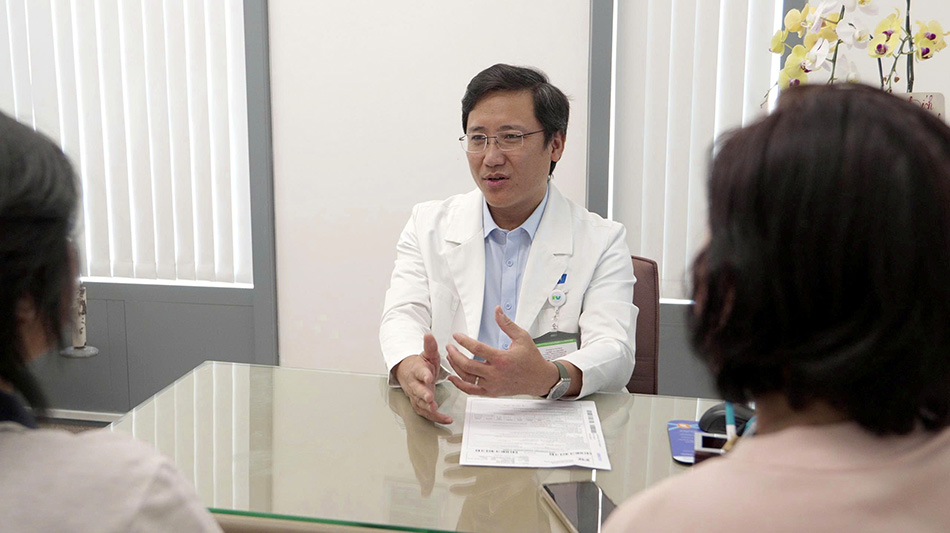
Dr Dang Dinh Minh Thanh (PhD, Specialist Level II) giving medical advice to a patient (Photo: FV)
What makes this case so special is the location of the tumour, which can be described as the “highest point” of the chest cavity. This is an incredibly tight space where many important parts of the body meet, including the main artery to the arm, a complex network of nerves, and the nervous system that controls vital functions. To make it even more difficult, part of the tumour was deep inside the chest, while the rest poked up into the neck – a spot that makes many surgeons think twice before operating.
Even though the tumour was small (4 x 5.5 x 6 mm), its proximity to these critical structures meant that any inadvertent injury during surgery could result in significant haemorrhage or permanent loss of arm function. There was also a risk of something called Horner’s syndrome – a condition that can cause a drooping eyelid or eye problems if the nerves at the top of the lungs are damaged.
Robotic surgery: Breaking the limits to reach the hardest spots
“Located at the very top of the chest cavity where space is incredibly tight, this tumour was extremely difficult to access using conventional invasive instruments. The conventional approach would have required open surgery with a large cut stretching from the neck down to the chest. This is a major operation that is not only painful but also leaves a long scar which could have a lasting impact on a young patient’s confidence and body image.”
“This is a sensitive area where vital blood vessels and nerves meet, so there is simply no room for error. That is why we decided to use the robot, allowing us to operate as accurately and gently as possible for the child,” says Dr Dang Dinh Minh Thanh (PhD, Specialist Level II).
With robotic arms capable of bending and articulating through a full 540-degree range of motion, the da Vinci Xi robotic system can ‘weave’ its way into the deepest and tightest corners from many angles – places that are very hard for human hands or standard tools to reach.
The entire procedure was performed via a thoracoscopic approach through the side of the chest, entirely avoiding the neck. This not only removed the tumour but also ensured there were no visible scars on the neck for young S.C. The tumour was carefully taken out without affecting any of the important parts around it.
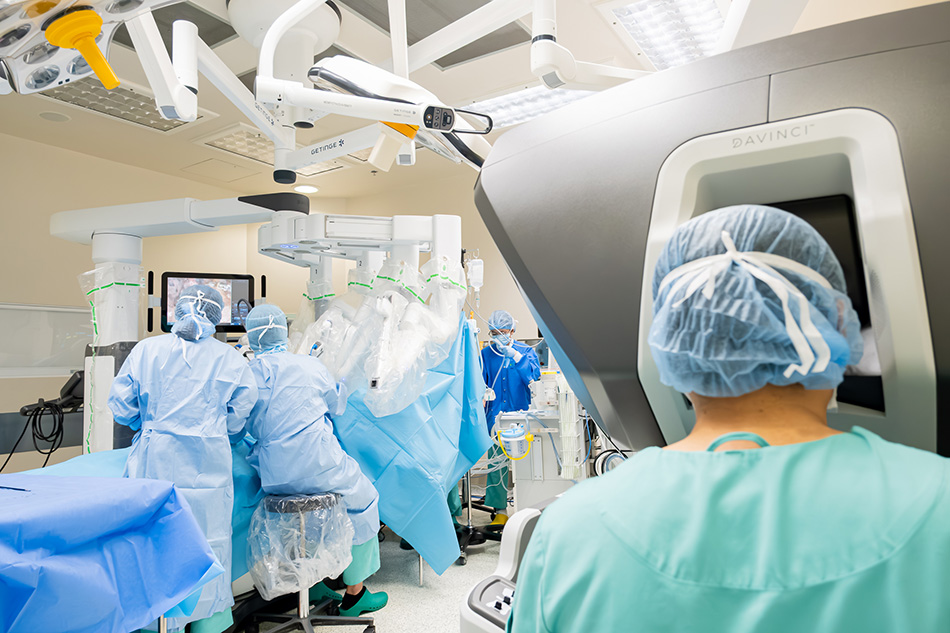
Dr Dang Dinh Minh Thanh (PhD, Specialist Level II) (right) performing surgery using the da Vinci Xi robot (Photo: FV)
After the operation, tests confirmed the tumour was a non-cancerous nerve growth. Recovery went well: On the first post-operative day, there were no complications, and the patient’s motor function and neurological status were entirely intact. Although the doctor said she could go home after two days, at the family’s request, the patient remained for three days to allow for continued close monitoring by the medical team.
Robotic technology: More opportunities for gentle, non-invasive treatment
Dr Dang Dinh Minh Thanh (PhD, Specialist Level II) is currently the Head of Thoracic Surgery and the FV da Vinci Robotic Surgery Centre. He has over 20 years of experience in chest surgery and is one of the first doctors in Vietnam to use robotic keyhole surgery.
According to Dr Thanh, robotic-assisted surgery is expanding the range of treatment options for conditions that previously required extensive open surgical approaches: “Robotic surgery is particularly effective in confined anatomical spaces or surgically challenging locations requiring exceptional precision such as tumours in the middle of the chest or at the top of the lungs.”
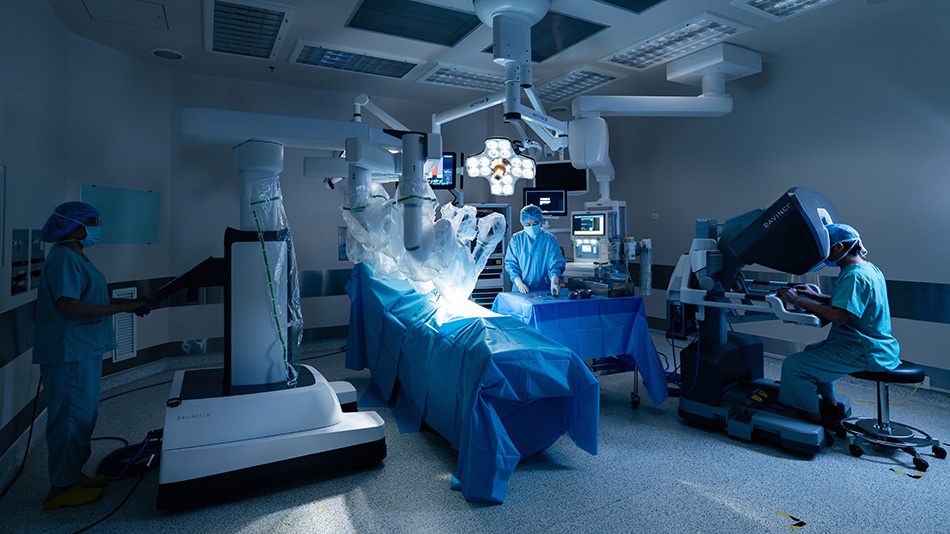
The da Vinci Xi robotic system at FV Hospital (Photo: FV)
FV Hospital currently uses robotic surgery for urology, gynaecology, chest surgery, and general surgery (including the digestive system, liver, gallbladder, and pancreas). This will soon expand to other areas to improve the quality of care for both simple and complex cases. The surgeons performing robotic operations at FV are highly experienced experts who have completed international training and hold professional certifications.
To help patients access this advanced technology, FV Hospital is offering a discount of 40 million VND for the first 50 da Vinci Xi robotic surgeries from now until 15th June 2026. For more information, please visit FV Hospital at 6 Nguyen Luong Bang Street, Tan My Ward, Ho Chi Minh City, or call (028) 3511 3333.