




HOW TO APPLY EYE DROPS
Follow these steps when applying eye drops:
- Wash your hands;
- Tilt your head back;
- Put a finger under your eye and use it to gently pull your lower lid downward. Keep that finger in place;
- Using your other hand, hold the dropper between your thumb and index finger;
- Position the dropper just over the edge of the lower lid. Hold it as close to your eye as you can without touching the dropper to your eye;
- Steady your hand. One way to do this is to lean your index finger against your brow;
- Look up;
- Slowly and gently squeeze one drop of medicine into your eye;
- Close your eye;
- Place a finger between your lower eyelid and your nose. Press gently for two minutes. This increases the amount of time that the medicine is exposed to the eye. It also reduces side effects that can develop if the drop gets into the bloodstream through the nose.
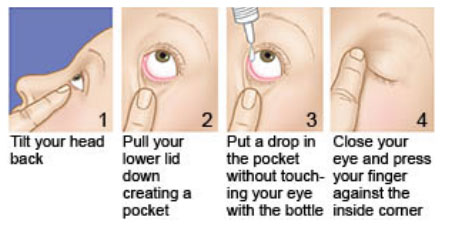
Steps to instill eye drops
HOW TO APPLY EYE OINTMENTS
Follow these steps when applying eye ointments:
- Wash your hands;
- Put a finger under your eye and use it to gently pull your lower lid downward. Keep that finger in place;
- Using your other hand, place the tip of the tube between your thumb and index finger with the remaining fingers braced against your cheek or nose;
- Hold the tube just over the edge of your lower lid without touching the tube to your lid or eyeball;
- Look up;
- Line the inner part of your lower lid with ointment;
- Gently pull up on your upper lid and look down. This will force the ointment to spread over the surface of the eye;
- Release the upper lid;
- If you can, close your eyes for 1–2 minutes.
DO NOT rub your eyes. If you applied the ointment correctly, your vision will be blurry for a few minutes. This is normal.
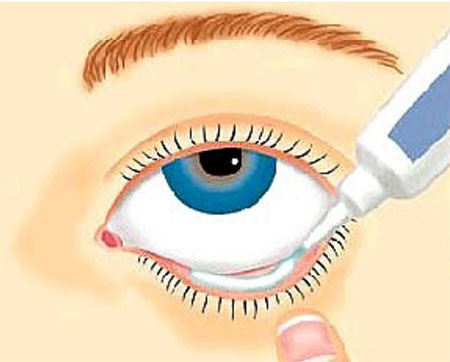
Ointment application
ADDITIONAL TIPS
- Make sure to use the eye drops or ointment as told by your health care provider.
- If you have been told to use both eye drops and an eye ointment, apply the eye drops first, then wait 3–4 minutes before you apply the ointment.
- Try not to touch the tip of the dropper or tube to your eye. A dropper or tube that has touched the eye can become contaminated.
Related Articles
Related Articles
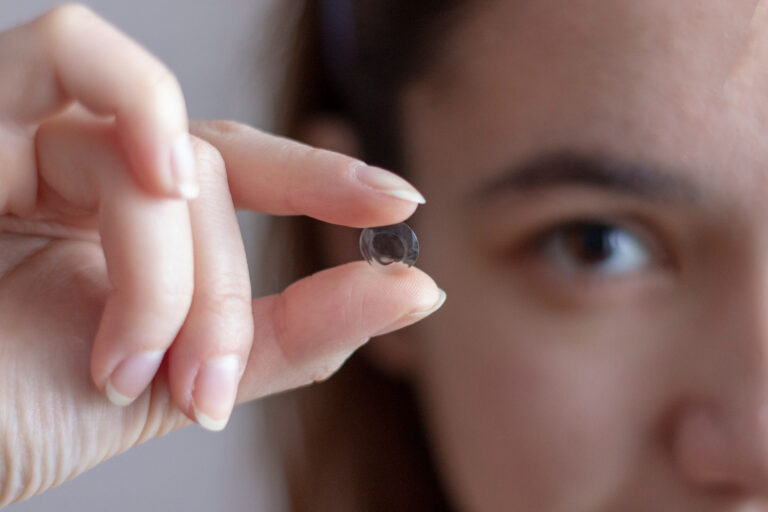
Orthokeratology (Night Lenses)
What is orthokeratology? Orthokeratology, or Ortho-K, is a non-surgical process that uses customised rigid contact lenses (specifically made for each patient) which are worn overnight to remodel the curvature of the cornea (the clear front surface of the eye). They are removed in the morning, allowing clear vision without correction during the day. The effects […]

Intravitreal injections
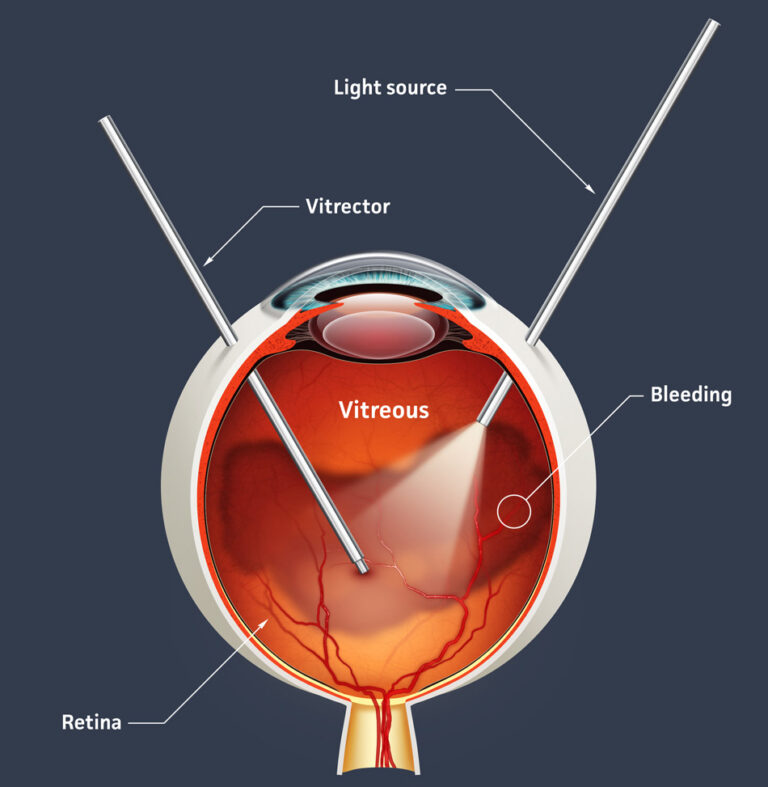
What is an intravitreal injection? An intravitreal injection is given through the white part of your eye into the jelly (called vitreous) that fills the inside of your eye. Special drugs injected into the jelly spread to the retina (inner layer at the back of your eye) and other structures in your eye. Your surgeon […]

What is LASIK eye surgery?
WHAT IS LASIK? LASIK, or Laser-Assisted in situ Keratomileusis, commonly referred to as laser eye surgery or laser vision correction, is a type of refractive surgery for the correction of myopia, hypermetropia, and astigmatism, and recently presbyopia. LASIK surgery is performed by an ophthalmologist who uses a laser or microkeratome to reshape the eye’s cornea […]
Orthokeratology (Night Lenses)
Intravitreal injections

