



WHY DO WE OFFER NEWBORN HEARING SCREENING?
Speech and language acquisition delay is one of the most common neuro-development difficulties in early childhood. The reason to perform newborn hearing screening is to detect a hearing disorder as early as possible and take action by supplying the child with a hearing aid or a cochlear implant.
At FV Hospital, all babies are offered health checks in the first few weeks of their life. One of these checks is hearing screening which is now standard in most western countries. Tests used for this screening are quick and simple with no risk of harm to your baby.
One or two babies in every 1000 are born with a hearing loss. Most of these babies will be born into families where no-one else has a hearing loss. It is not easy for parents to tell if a young baby has a hearing loss. Early identification of hearing loss is crucial for the child’s development. Late diagnosis of hearing loss has life-long implications in areas such as mental health and well-being, educational attainment, career development, quality of life and standard of living.
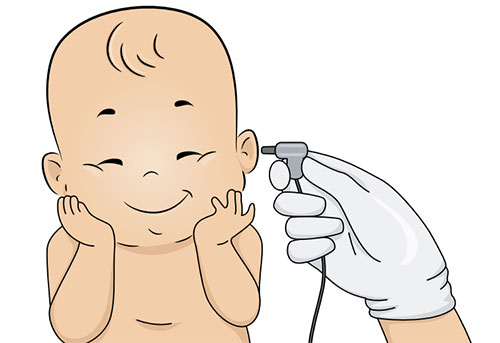
FV recommends that all newborns should be routinely screened for hearing problems.
WHEN AND WHERE ARE THE TESTS DONE?
Newborns can be screened very early after their birth, on day 2 or 3 of their life, while the mother is still in the maternity ward. The screening can also be done in the ORL consultation department during the first weeks of life
HOW IS THE SCREENING DONE?
A trained hearing screener will carry out the test in a quiet place. The test is easier to do if your baby is asleep. The following may help your baby to settle during the test:
- Try not to let your baby sleep before the appointment. This means that they are more likely to sleep through the test.
- If possible, feed your baby shortly before the test. This can help them sleep.
- Bring everything you need to make your child comfortable and happy. There will be space for you to feed and change your baby if necessary.
We use a portable equipment called Sentiero Advanced SOH09 which has been made by PATH Medical GmbH, a Germany-based company specialised in the development of products and solution in the field of audiometry. Results are given to you at the time of the screening.
The screening test is called Oto-Acoustic Emissions (OAE). The screener place a small soft tipped ear-piece in the outer part of your baby’s ear, which sends clicking sounds down the ear. When an ear receives sound, the inner part, known as the cochlea, usually produces an echo which is recorded by the screening machine. The test only takes a few minutes and you stay with your baby while the test is done. In the event of a failed test on one or both ears a second OAE test must be performed the following day.
If the second OAE fails then another audiological assessment testing is required within 2 weeks, in the ORL (ENT) department. This does not mean that your baby has a hearing loss as it could be due to post-natal fluid in the baby’s ear, or also happen if your baby was unsettled during the first test.
The audiological assessment test performed in the ORL Department is called “Automated Auditory Brainstem Response” (AABR). It involves three small sensors being placed on your baby’s head, neck and shoulders. Mufflers are put over your baby’s ears and a series of clicking sounds are played. A computer measures how well your baby’s ears respond to the sound.
WHAT DO THE RESULTS MEANS?
If there is a clear response to OAE from both of your baby’s ears it is unlikely that your baby has a hearing loss. The screener will give you information on how babies respond to sound as they grow and what to do if you have any worries about your baby’s hearing.
About 1 or 2 in every 1000 babies fail both OAE and AABR and require more tests with an audiologist (hearing specialist). You will be given an appointment within 4 weeks in a specialised audiology centre.
Related Articles
Related Articles
Breastfeeding your baby: Breast milk is the best
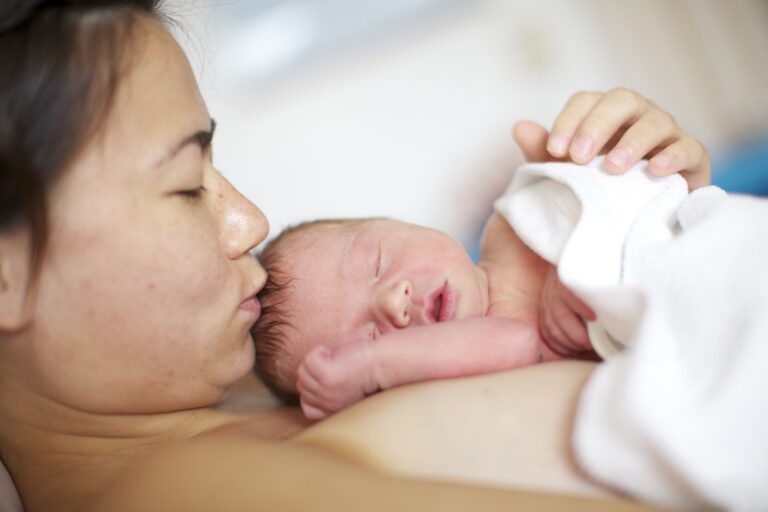
1. Why breastfeed? It’s best for your baby It’s best for you Being a new mom isn’t easy. Breastfeeding can help you make the transition. It helps you feel close Breastfeeding helps mothers and babies feel especially close. Mom enjoys the special bonding time and the break that breastfeeding gives her during the busy early […]
What is Polysomnography?
WHAT IS POLYSOMNOGRAPHY? Polysomnography (PSG) is a test used to diagnose sleep disorders, usually done at the hospital. It measures how well you sleep by recording your brain waves, the oxygen level in your blood, heart rate and breathing, as well as eye and leg movements during the study. This test can help your doctor […]
Tonsillectomy
WHAT IS A TONSILLECTOMY? A tonsillectomy is the surgical removal of the tonsils. The tonsils are two small almond-shaped mounds of lymphatic tissue that sit on either side of the back of the throat. They are part of your body’s system to fight infection and are only important during the first few years of life. […]
Obstructive sleep apnoea
Obstructive sleep apnoea (OSA) is a common problem that affects a person’s breathing during sleep. A person with OSA has times during sleep in which air cannot flow normally into the lungs. The block in airflow (obstruction) is usually caused by the collapse of the soft tissues in the back of the throat (upper airway) […]

