



WHAT IS VASCULAR DISEASE?
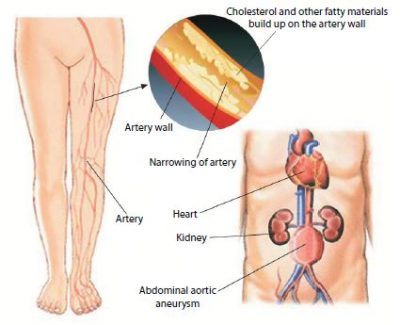
In our ageing population, vascular disease is a common cause of disability and mortality. Vascular disease or disease of the blood vessels can be categorised as those affecting the arteries (blood vessels carrying blood away from the heart) and those affecting the veins (blood vessels carrying blood to the heart).
Diseases affecting the arteries
Most of the diseases affecting the arteries are associated with atherosclerosis or thickening of the artery walls due to the deposit of fats. This may cause blockage of the affected vessels resulting in a decreased blood supply to the organs or parts of the body that are supplied by these vessels.
Depending on which parts are affected, you may end up with:
- Intermittent claudication (where you get muscle pain on walking)
- Gangrene
- Stroke
- Kidney or other organ failure
- Aneurysm (weakening of the artery wall which can rapture and cause death)
DISEASES AFFECTING THE VEINS
These include:
Varicose veins
- These are dilated and engorged veins in the legs which may lead to pain and ulcers in the legs which cannot heal.
Deep vein thrombosis
- This is another common vascular disorder where blood clots form in the veins.
- If the blood clots break away and move to the lung, these clots may get stuck in the lung arteries and cause pulmonary embolism which is life threatening.
WHAT IS VASCULAR SURGERY?
Vascular surgery is the field of medicine that is concerned with the diagnosis, treatment and prevention of diseases of the arteries, veins and lymphatics. There are more and more people affected by vascular diseases. The good news is that the range of diagnostic tests and treatment is also increasing.
Vascular diseases affect different parts of the body. Patients with vascular diseases are treated by multi disciplinary teams comprising vascular surgeons supported by vascular physicians, vascular radiologists and vascular rtechnologists who are skilled in the different aspects of vascular diseases .Vascular technologists carry out non-invasive vascular tests using ultrasound.
WHAT ARE SOME OF THE SPECIAL INVESTIGATIONS?
Non-invasive vascular investigations
Non-invasive vascular investigations are tests done to assess the circulation without the need for injections, harmful radiation or other unpleasant interventions. The technology used is sophisticated and the diagnostic accuracy is high.
The most effective is using ultrasound, which provides images of the blood vessels (using B mode scans) or detailed information about blood flow disturbances (using Doppler scan). These two functions can be combined (Duplex scan) to provide a more comprehensive assessment.
Invasive vascular investigations
The most important investigation for diagnosis of all vascular diseases is angiography. X-ray images of the arteries, veins and lymphatics are taken after injection of radio-opaque contrast medium into the blood vessels.Digital systems, which can enhance these images, have improved the accuracy and safety of this investigation. Other imaging investigations include:
- CT scans (computerised tomography)
- Radio-isotope angiography
- MRI (magnetic resonance imaging)
HOW IS VASCULAR DISEASE TREATED?
General Management
- Advice on lifestyle changes include stopping smoking and eating right
- Control of risk factors like high blood lipid levels and diabetes
Medication
- This will be considered first for circulatory disordered e.g. low dose aspirin for the treatment of intermittent claudication.

Surgery
Vascular surgery is carried out for repair of blood vessels in all parts of the body except in the heart and brain. These can be done in an open surgery or closed as “endovascular” procedures which involved using catheters that are inserted into the arteries through skin punctures
The open vascular surgical reconstruction techniques include:
- Direct repair by suturing (stitching)
- Endarterectomy (removing the plaque that is blocking the vessel)
- Bypass (using patient’s own vein or a tube graft made of artificial material)
- Angioplasties and stenting
- Endoluminal stent grafting
- Catheter-administered thrombolytic therapy
- Insertion of vena caval filters
The “endovascular” procedures include:
Angioplasty involves opening up narrowed vessels with balloons ,which are inserted inside the narrowed area to enlarge the segment.
Endoluminal stent grafting of aortic aneurysms and dissections involves putting a tube from within the artery, so that the affected area iscovered with a strong layer within.
This involves injection of drugs into the affected part to dissolve the blood clot.
Vena caval filters are mechanical devices placed in the vein to prevent large blood clots in the leg veins from going to the lung arteries (pulmonary ambolism).
Other forms of treatment
- Structured exercise programmes for intermittent claudication
- Compression bandaging for the venous insufficiency
- Physical therapy for lymphedema
With new techniques and continuing research, vascular specialists will continue to provide the most up to date care in the management of vascular diseases.
Contact information
Department of Cardiac, Thoracic and Vascular Surgery
Information in this brochure is given as a guide only and does not replace medical advice from your doctor. Please seek the advice of your doctor if you have any questions related to the surgery, your health or medical condition.
Information is correct at time of printing (Sep 2009) and subject to revision without notice.
Related Articles
Related Articles

FV Hospital Pregnancy Follow-up Package
Congratulations on your pregnancy and thank you for choosing FV Hospital as your healthcare service provider! A pregnancy is both a happy and challenging journey in the life of any women. To experience a healthy and safe pregnancy, as well as to give your baby the best beginning in life, mothers-to-be must undergo regular follow-ups […]
Orthokeratology (Night Lenses)
What is orthokeratology? Orthokeratology, or Ortho-K, is a non-surgical process that uses customised rigid contact lenses (specifically made for each patient) which are worn overnight to remodel the curvature of the cornea (the clear front surface of the eye). They are removed in the morning, allowing clear vision without correction during the day. The effects […]
Breast Cancer
Breast cancer is a very frequent cancer worldwide. In Vietnam its incidence has been increasing steadily and it is now the most common cancer affecting women. What are the Symptoms of Breast Cancer? Signs and symptoms of breast cancer may include: When to see a doctor? If you find a lump or other change in […]
Dentures Instructions
The new dentures you have received are a replacement for your missing teeth. They will attempt to restore support to the jaw, increase your chewing ability and improve your appearance. This information leaflet will assist you with your adjustment to new dentures. There are 2 types of dentures: Getting used to your new dentures For […]
FV Hospital Pregnancy Follow-up Package
Orthokeratology (Night Lenses)
Breast Cancer

