




Having previously postponed surgery because of concerns about invasive treatment, an American patient was urgently admitted to hospital with severe chest pain and haemoptysis (coughing up blood) caused by a recurrent cystic inflammatory lung lesion that had returned after many years. Through robotic surgery at FV Hospital, doctors successfully removed the non-functioning portion of the lung. The patient was discharged just three days after surgery.
Pulmonary cystic lesion returns after eight years
Mr J.A. Laurent (38 years old, American national) was first treated at FV Hospital in 2018 for cystic inflammatory leison of the lung. At the time, doctors performed CT-guided aspiration of the fluid collection and inserted a drainage tube, combined with antibiotic therapy. Following treatment, his condition improved significantly, and he continued to undergo regular follow-up examinations for a period of time.
In late March 2026, Mr Laurent returned to FV Hospital with symptoms similar to those he had experienced years earlier, including fever, chest pain, a persistent cough and ongoing respiratory inflammation.
According to Dr Luong Ngoc Trung, MSc, Specialist Level II, Head of Vascular & Endovascular Surgery and a thoracic surgery specialist at FV Hospital, CT scan results showed that the previous lesion had recurred in the lower lobe of the right lung. The lesion occupied nearly one-third of the thoracid cavity, and contained multiple air- and fluid-filled spaces within the lung.
Even more concerning, the damaged area was connected to the airway, allowing secretions to accumulate easily and leading to recurrent infections. “In long-standing recurrent cases such as this, medical treatment can only provide temporary control. If the diseased portion of the lung is not completely removed, the risk of recurrent infection remains very high,” Dr Trung explained.
The patient was initially treated with antibiotics and respiratory physiotherapy while the medical team discussed surgical removal of the damaged lung tissue. However, because he was reluctant to undergo surgery, Mr Laurent chose to continue with medical treatment first.
After several days of treatment, his condition improved temporarily, and he was preparing for discharge with plans to arrange surgery at a later date. However, shortly before his scheduled discharge, his condition suddenly deteriorated. He developed worsening chest pain, persistent coughing and haemoptysis (coughing up blood).
Dr Trung said these symptoms indicated that the underlying infection had progressed to a haemorrhagic complication, meaning that medical treatment alone was no longer sufficient to control the disease.
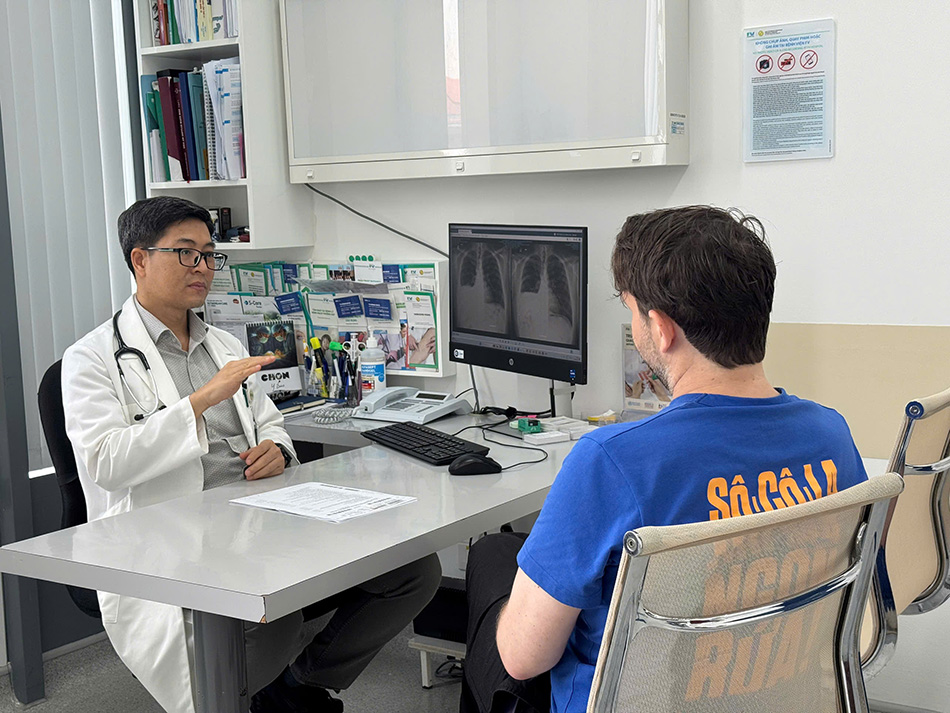
Dr Luong Ngoc Trung explains the patient’s condition and treatment options. Photo: FV
“When a patient has completed a full course of antibiotics but the lesion continues to progress and haemoptysis occurs, surgery becomes almost unavoidable. It is the most effective way to completely eliminate the source of infection and prevent fluid or blood from spreading to the left lung,” Dr Trung noted.
After receiving a detailed explanation of his condition and available treatment options, Mr Laurent decided to undergo surgery using the da Vinci Xi robotic surgical system, one of the most advanced robotic platforms currently available in Southeast Asia.
Robotic surgery: successfully dissecting a complex area of inflamed and adherent lung
On 6 April 2026, the procedure was performed by Dr Luong Ngoc Trung, MSc, Specialist Level II, together with FV Hospital’s thoracic surgery team. The objective was to completely remove the right lower lobe of the right lung, which had become non-functioning after years of recurrent infection.
Through four small incisions of only about 8 mm, the robotic arms were inserted into the chest cavity to reach the damaged area. Once inside, the team noted severe inflammation and adhesions, with the lung tissues tightly bound to surrounding tissues due to the infection process that had spanned many years.
This is one of the greatest challenges in thoracic surgery, as dissecting inflamed and adherent tissue in a narrow space requires exceptionally high precision to avoid damaging vital structures and to minimise bleeding.
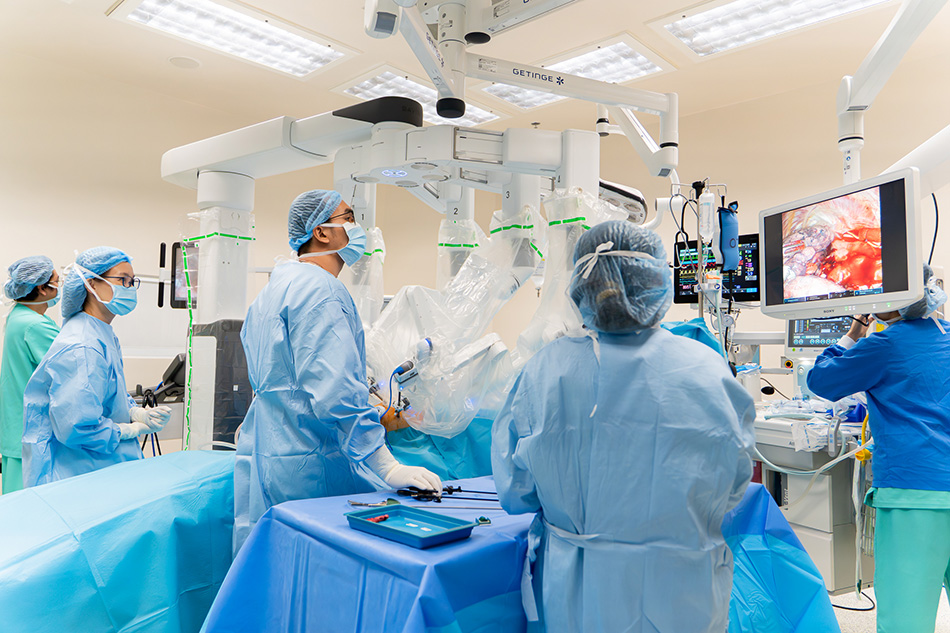
The FV Hospital surgeons uses robotic technology to remove the pulmonary cystic lesion. Photo: FV
The da Vinci Xi robotic surgical system is particularly valuable in complex procedures because it provides surgeons with high-definition, magnified visualisation and highly articulated instruments. These capabilities allow the surgical team to access deep and narrow areas within the chest cavity and perform delicate dissections with greater precision.
After carefully releasing the adhesions, the team used an automated stapling device integrated into the robotic system to resect and remove the damaged lung lobe.
The operation lasted nearly three hours and was completed successfully. The entire non-functioning section of the lung was removed using a minimally invasive approach.
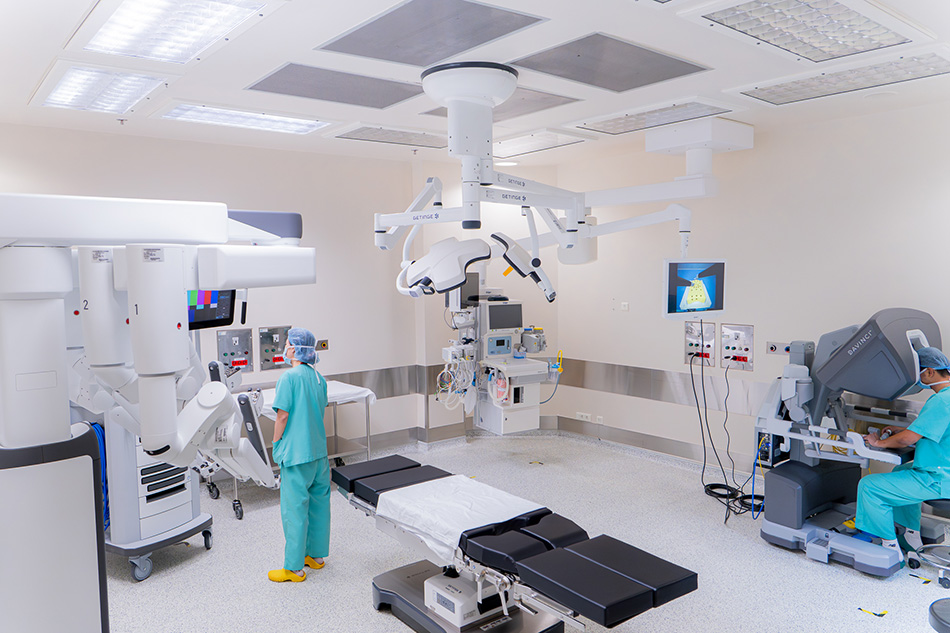
The da Vinci Xi robotic surgical system enhances precision in complex thoracic procedures. Photo: FV
If I had known, I would have had the surgery sooner!
Following the surgery, the patient recovered very quickly: by the next day, he could sit up, stand, and walk around his room on his own, with all respiratory indicators at good levels. Most notably, the deep pain he had experienced completely disappeared. Three days after the operation, the patient was discharged.
What surprised him most was that the post-operative recovery was much easier than he had previously imagined. “If I had known, I would have had the surgery sooner,” The patient said after recovering.
According to Dr Trung, completely removing the non-functional part of the lung eradicates the source of infection, reduces the risk of future recurrence, and helps the patient quickly return to his normal daily activities.
Currently, FV Hospital currently performs robotic surgery across a wide range of specialties, including General Surgery, Urology, Thoracic Surgery, Gynaecology and Oncology. Combined with JCI-accredited operating theatres and a team of surgeons trained in both robotic and laparoscopic techniques, the technology enhances the hospital’s ability to manage complex conditions using minimally invasive approaches.
To support patients in accessing this advanced surgical technology, FV Hospital is offering a promotional programme with a discount of VND 40 million for the first 50 procedures performed using the da Vinci Xi robotic surgical system. The programme is valid until 15 June 2026. For further information, readers can contact FV Hospital at 06 Nguyen Luong Bang, Tan My Ward (formerly District 7), Ho Chi Minh City, Tel: (028) 3511 3333.

