




Lithotripsy
A modern alternative to open surgery: 90–100% stone clearance through a pin-point incision.
What is Percutaneous Nephrolithotomy (PCNL)?
Percutaneous nephrolithotomy (PCNL) is a minimally invasive endoscopic procedure used to remove kidney stones. The surgeon creates a small tract (approximately 1 cm) from the flank directly into the kidney. Through this access, an endoscope and stone-fragmenting devices (laser or ultrasound) are introduced to break the stones into small pieces, which are then removed completely.
When is PCNL recommended?
-
Large kidney stones (usually larger than 2 cm)
-
Complex staghorn stones filling the renal collecting system
-
Hard stones that have not responded to extracorporeal shock wave lithotripsy (ESWL)
-
Stones causing obstruction, severe pain, infection, or reduced kidney function
Key benefits and potential risks
Advantages compared to open surgery
-
Less blood loss: Reduced need for blood transfusion
-
Less pain: No large muscle incision in the abdominal wall
-
Better cosmetic outcome: Only a small scar of about 1 cm (versus 10–15 cm with open surgery)
-
Shorter hospital stay: On average 2–3 days (compared to 5–7 days for open surgery)
Although PCNL is a highly safe procedure, as with any surgery, certain risks may occur:
Risks and complications (rare)
-
Bleeding: Usually self-limiting; vascular intervention is rarely required (less than 0.5%)
-
Infection: Preventive antibiotics are routinely administered; mild fever after surgery can be normal
-
Residual stones: In very complex cases, an additional procedure (ESWL or flexible endoscopy) may be needed to achieve complete stone clearance
-
Injury to surrounding organs: Extremely rare
How is the procedure performed?
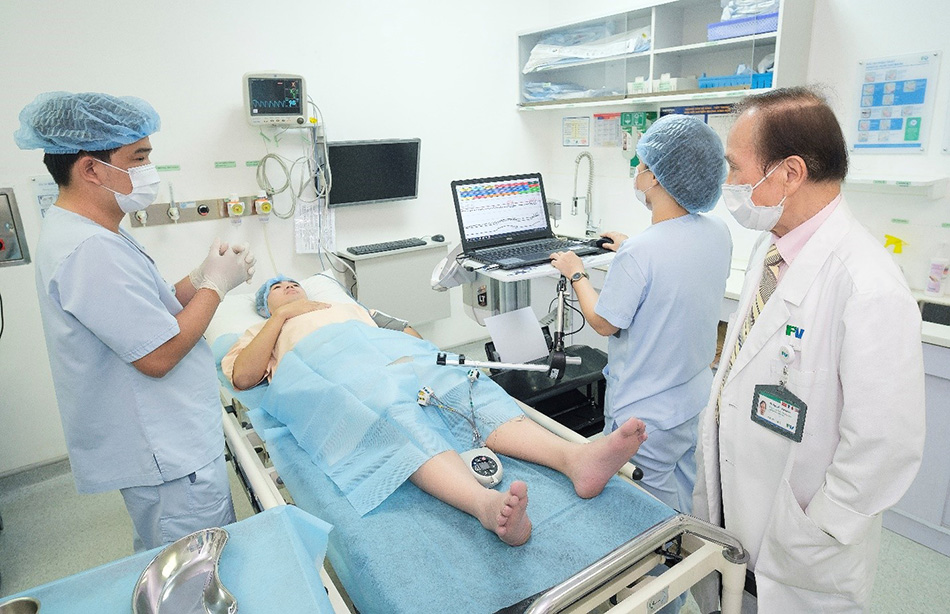
The surgery usually lasts 2 to 4 hours and is carried out under general anaesthesia.
Preparation
A small catheter is placed from the bladder to the kidney to inject contrast dye, allowing clear visualisation of the collecting system on X-ray imaging.
Creating the access tract
The patient lies in a prone position. Under ultrasound or X-ray guidance, the surgeon inserts a fine needle into the kidney. This access is gradually dilated to create a safe working channel.
Stone fragmentation and removal
An endoscope is introduced through the tract. Stones are fragmented using high-power laser energy or ultrasound, and the fragments are removed by grasping or suction.
Completion
A temporary nephrostomy tube and a ureteric stent (DJ stent) are usually placed to ensure proper urine drainage after surgery.
Recovery and home care guidance
| In hospital | At home |
|---|---|
| • Patients can usually start gentle mobilisation after one day • The nephrostomy tube is often removed before discharge (after 2–3 days) • Light blood-tinged urine may be observed and is considered normal | • Hydration: Drink 2–3 litres of water daily to help flush the urinary tract • Diet: Eat plenty of vegetables and avoid constipation • Activity: Avoid heavy lifting or strenuous activity for the first 4 weeks • Follow-up: After 4 weeks, the DJ stent will be removed during a simple cystoscopic procedure |
Comparison with other treatment options
| Method | Main indication | Advantages | Limitations |
|---|---|---|---|
| PCNL | Large stones, staghorn stones, hard stones | Highest stone-free rate, minimally invasive | Requires general anaesthesia, technically demanding |
| ESWL | Small stones (<2 cm), soft stones | Non-invasive, no surgery | Lower clearance rate, may require multiple sessions |
| RIRS | Ureteric stones, small to medium kidney stones | Natural access, no incision | Limited effectiveness for very large stones, higher equipment cost |
| Open surgery (traditional) | Very complex stones, failure of other methods | Complete stone removal in one operation | More pain, larger scar, longer recovery |
About this Care

A major advance in kidney stone treatment
nInstead of enduring a 15-cm surgical incision and weeks of pain, PCNL enables complete stone removal through a tiny puncture no larger than the tip of a pen.

