




FibroScan
FibroScan is the first and only non-invasive device for diagnosis and monitoring of hepatic fibrosis.
Why do we need to quantify liver fibrosis?
In its initial stages, liver fibrosis develops silently and often causes no symptoms. Early diagnosis and treatment will help prevent the disease from progressing to liver cancer, liver function failure, or other complications which may lead to more serious conditions and even death.
High risk of liver fibrosis
- Having hepatitis B and C …
- Alcoholics
- Increased liver enzymes due to various causes
- Obesity, fatty liver, blood lipid disorder, diabetes, hypertension
Advantages of FibroScan
- Result is delivered in a few minutes
- FibroScan can be applied instead of liver biopsy to help doctors make the next step for diagnosis and treatment
- Painless and harmless
- Can be performed many times for monitoring the liver fibrosis
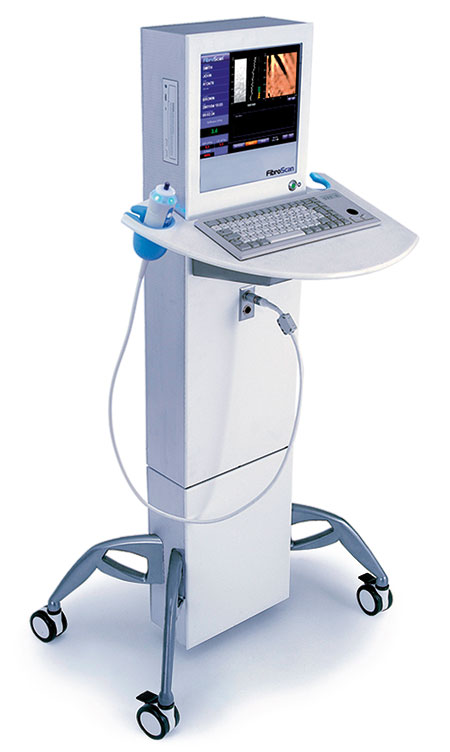
Quantifying liver fibrosis with expert in FibroScan
Fibroscan is performed by a team of qualified doctors at the Hepato-Gastroenterology Department of FV hospital:
Dr. Nguyen Ngoc Son is the Head of Department, who was trained and worked in Hepato-Gastroenterology in France and is an expert of Echosens – Paris in FibroScan;
Dr. Ngo Van Huy is the Deputy Head of Department, who was trained in Hepatology in Hong Kong. Completing the team is an expert staff of French, Swiss and Vietnamese doctors.
Related Articles
Related Articles

Virtual Colonoscopy (CT Colonography)
WHAT IS A VIRTUAL COLONOSCOPY? Virtual colonoscopy, also called CT colonography, is a method of screening the colon for precancerous polyps using a CT scanner. CT scanning is a non-invasive medical test that combines special x-ray equipment with sophisticated computers to produce multiple images of the inside of the body. CT colonography provides an interior […]
Colonoscopy
COLONOSCOPY OVERVIEW Colonoscopy is an investigation that allows your doctor to look at the inner lining of your large intestine (rectum and colon) using a thin, flexible tube called a colonoscope. A colonoscopy helps find ulcers, polyps, tumors, and areas of inflammation or bleeding. During a colonoscopy, tissue samples can be collected (biopsy) and abnormal […]
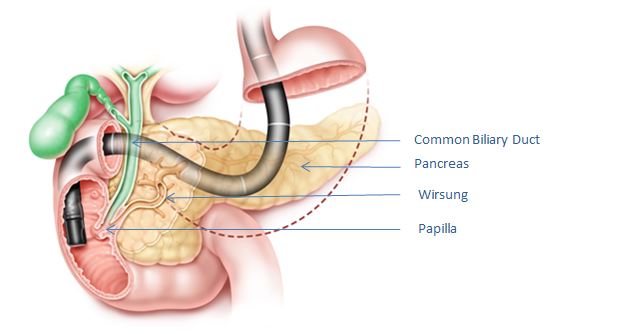
Endoscopic retrograde cholangiopancreatography (ERCP)
What is ERCP? Endoscopic retrograde cholangiopancreatography, or ERCP, is an endoscopic technique that is used to examine and treat problems in the bile and pancreatic ducts, and the gallbladder. The bile ducts are channels that drain bile from the liver and gallbladder; the pancreatic ducts drain the pancreas. Both types of ducts empty into the […]

13C-UREA Breath Test
H. pylori is a spiral bacterium implicated in gastritis, gastric ulcer, and peptic ulcer disease. The 13C-urea breath test breath test is a rapid noninvasive diagnostic procedure used to identify infections by Helicobacter pylori (H. pylori) and to confirm eradication after treatment. It is based upon the ability of H. pylori to convert urea to […]
Virtual Colonoscopy (CT Colonography)
Endoscopic retrograde cholangiopancreatography (ERCP)

