




With over three decades of experience in obstetrics and gynaecology, Dr Robert Riche remains committed to advancing treatment outcomes for his patients. At FV Hospital, he utilises the da Vinci Xi robotic surgical system, a cutting-edge technology that enables highly precise gynaecological procedures, helping to preserve fertility and significantly improve post-operative recovery for women.
From Europe to Vietnam: A Three-Decade Journey in Minimally Invasive Surgery
Dr Robert François Marie Riche, PhD, graduated in obstetrics and gynaecology from Grenoble University in France and completed advanced specialist training in laparoscopic surgery at the universities of Clermont-Ferrand and Marseille.
After many years of practice in France, he moved to Vietnam in the early 2000s. Dr Riche previously served as the Head of Obstetrics and Gynaecology at FV Hospital from 2004 to 2008, before going on to provide expert clinical consultancy across multiple healthcare systems in Ho Chi Minh City.
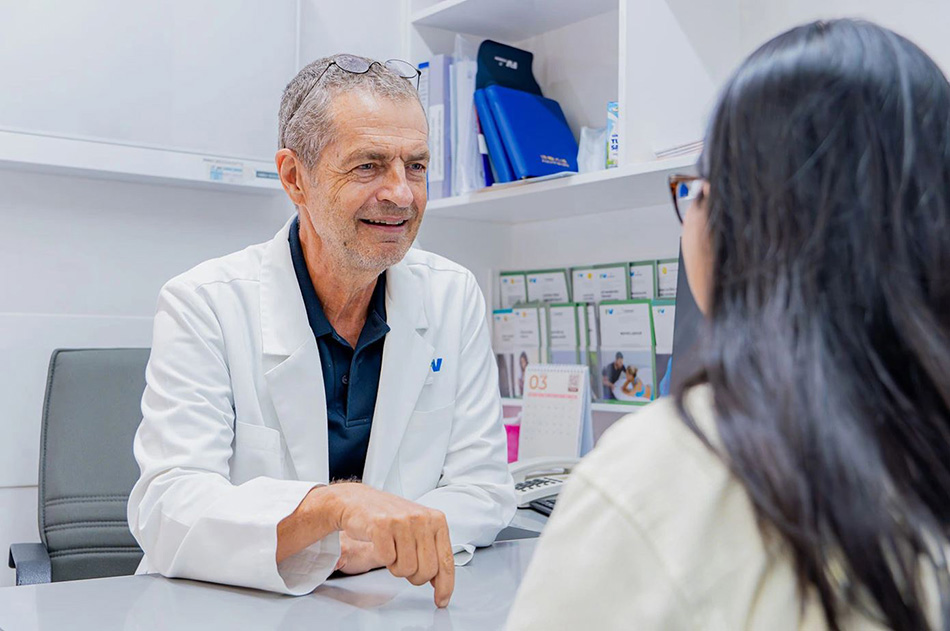
Dr Robert François Marie Riche consults a patient at FV Hospital. Photo: FV
According to Dr Riche, obstetrics and gynaecology is a field that demands exceptional surgical precision. The female pelvis contains several vital organs, including the uterus, ovaries, bladder, and rectum, all closely positioned and interconnected by a complex network of blood vessels and nerves. As a result, each procedure must go beyond simply removing a lesion and instead prioritise the maximum preservation of reproductive function.
“In gynaecology, simply curing the disease is not enough,” says Dr Riche. For him, every surgery must also safeguard the patient’s future – particularly for young women who aspire to motherhood. Guided by this philosophy, he consistently prioritises conservative surgical approaches whenever possible: removing tumours while preserving the ovaries, maintaining the uterus in fibroid treatments, and managing early-stage cancers in ways that protect fertility.
The da Vinci Xi robot: A New Frontier in Gynaecological Surgery
“When I began working at FV in 2004, gynaecological surgery primarily involved open procedures or vaginal approaches. From around 2005 onwards, laparoscopic surgery gradually became more prevalent due to its benefits: it is minimally invasive, reduces pain, and shortens recovery times for patients,” Dr Riche recalls.
However, in complex cases deep within the pelvis, where the surgical space is narrow and surrounded by critical anatomical structures, laparoscopy still has its limitations. The introduction of the da Vinci Xi robotic surgical system represents a significant advancement, particularly in the treatment of intricate gynaecological conditions.
Compared with traditional laparoscopy, the da Vinci Xi system offers several distinct advantages:
- Articulated robotic arms with flexible rotation and tremor filtration allow surgeons to perform steady, highly precise movements, even within narrow and complex surgical fields.
- High-definition 3D imaging provides a clear view of the delicate anatomical structures within the pelvis.
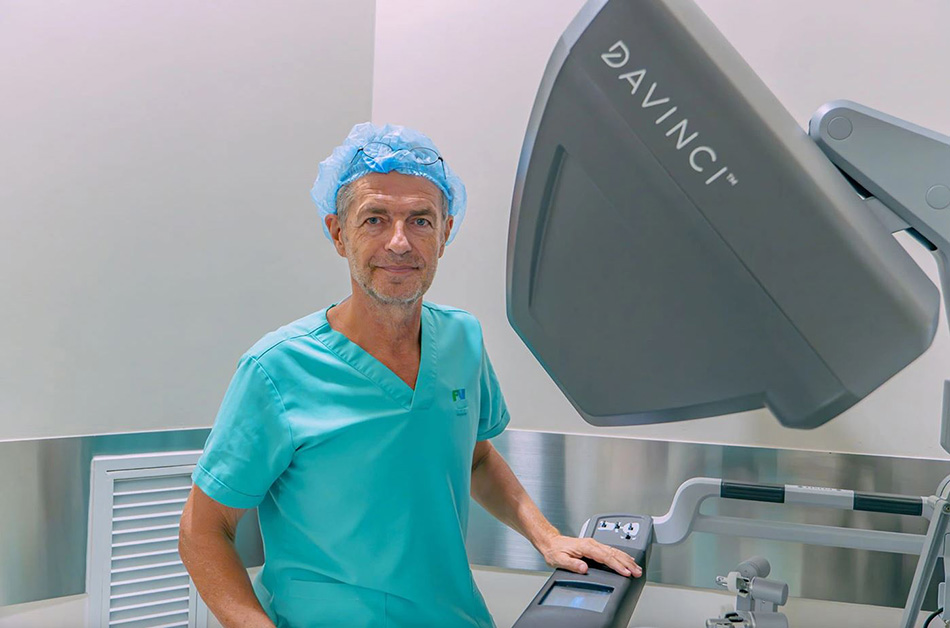
Dr Robert François Marie Riche, PhD, in the operating theatre equipped with the da Vinci Xi robotic system. Photo: FV
Regardless of how advanced the technology is, the success of robotic surgery ultimately depends on the surgeon’s experience and clinical judgement. With over 30 years of expertise in obstetrics and gynaecology, Dr Riche effectively utilises the da Vinci Xi system, turning this technology into a powerful tool for managing complex surgical cases.
Technology to Preserve the Gift of Motherhood
According to Dr Riche, robotic surgery is particularly beneficial in treating complex gynaecological conditions such as uterine fibroids, endometriosis, pelvic organ prolapse, and early-stage gynaecological cancers. These cases demand exceptional precision to effectively remove lesions while maximising the preservation of reproductive organs.
In robotic surgery, the surgeon typically makes only about four small incisions, each approximately 8 mm, in the abdominal wall to insert specialised instruments. This minimally invasive approach results in patients generally experiencing less pain, reduced blood loss, and a faster recovery. Hospital stays can be shortened from 7–8 days for open surgery to just 2–3 days. During a recent clinical observation and robotic surgery practice in Malaysia, Dr Riche witnessed several complex cases managed with notable efficiency. These included an endometriosis case involving a large mass completed in approximately 45 minutes, and a uterine fibroid case with complex pelvic adhesions finished in about 75 minutes — significantly reducing operative time compared with traditional methods.
“90% of gynaecological conditions today can be treated using robotic intervention. The greatest advantage is that, while offering a safety profile equivalent to traditional laparoscopy, robotic surgery significantly reduces the conversion rate to open surgery — from around 10% to less than 1%,” Dr Riche explains. He also notes that robotic surgery is not indicated for exceptionally large tumours exceeding 15 – 20 cm, or for malignant ovarian tumours that require complete removal.
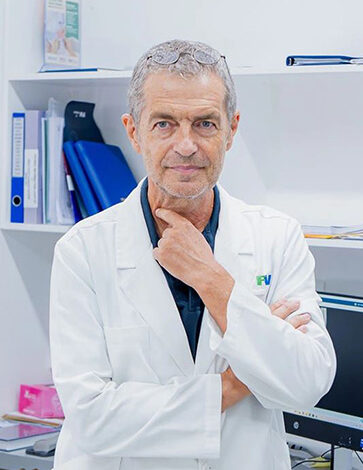
Dr Robert François Marie Riche, PhD – Specialist in gynaecological surgery with the da Vinci Xi robot. Photo: FV
According to Dr Riche, robotic surgery has become routine in many developed countries. “Obstetrics and gynaecology demand precision and delicacy in every movement, and the robot is the key.”
The French expert also expressed his hope that more women in Vietnam will have access to this advanced surgical technology. “Ultimately, the goal of treatment is not just to cure the disease, but to help women maintain their health, confidence, and preserve their ability to become mothers whenever possible.”
For a consultation and examination for gynaecological conditions using the da Vinci Xi robotic system with Dr Robert François Marie Riche, please contact FV Hospital at 6 Nguyen Luong Bang, Tan My Ward, Ho Chi Minh City, or call (028) 3511 3333.
Related News
See moreRelated News
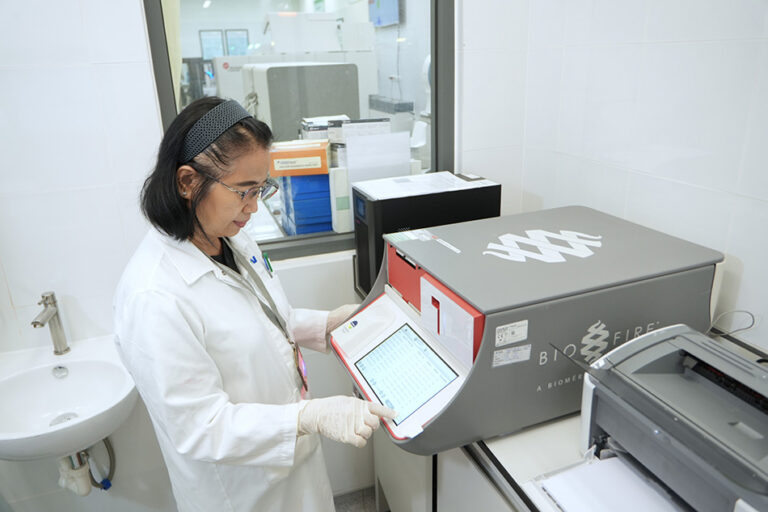
Quickly identify pathogens with 4 molecular diagnostic systems at FV
With four advanced rapid molecular diagnostic systems, BioFire® FilmArray®, QIAGEN QIAstat-Dx®, Cepheid GeneXpert®, and Sansure iPonatic III, the FV Hospital Laboratory & Blood Bank Department offers a wide range of rapid testing to help identify the bacteria, viruses and other infectious pathogens, helping your doctor make timely and informed treatment decisions. FV Hospital Laboratory & […]
Two Vietnamese midwives attain international IBCLC certification in breastfeeding counselling
Two midwives from FV Thomson’s Maternity Department have earned IBCLC (International Board Certified Lactation Consultant) certification, the international credential for breastfeeding support specialists. This achievement represents a significant clinical milestone in infant feeding support at FV Hospital, driven by the real-world complexities these practitioners encounter daily when supporting mothers and their newborns. Beyond certification: A […]

Nutcracker Syndrome: How a one-hour stent placement ended a year of abdominal pain
FV Hospital successfully treated a complex case of nutcracker syndrome using minimally invasive endovascular stenting, sparing the patient major open surgery. Persistent abdominal pain linked to renal vein entrapment For over a year, 41-year-old Ms V.T.K.P. from Ho Chi Minh City experienced persistent, dull lower abdominal pain that worsened with prolonged sitting or standing. As […]
TROP2-directed ADCs: A breakthrough in improving outcomes in advanced/metastatic triple-negative breast cancer
Advances in the treatment of advanced/metastatic triple-negative breast cancer are providing new treatment options for patients; particularly where existing therapies have limited efficacy. Among these, TROP2-directed antibody-drug conjugates (ADCs) are receiving increasing attention from the oncology community, supported by emerging clinical evidence on their efficacy and potential to improve treatment outcomes. The Scientific Seminar organised […]
Quickly identify pathogens with 4 molecular diagnostic systems at FV
Two Vietnamese midwives attain international IBCLC certification in breastfeeding counselling
Nutcracker Syndrome: How a one-hour stent placement ended a year of abdominal pain

