



After two unsuccessful interventions in his home country, Mr K.B. (a 70-year-old Cambodian national) was transferred to FV Hospital in a critical condition. He presented with obstructive jaundice, a severe infection, and a lithotripsy (stone-crushing) tool lodged within his bile duct. Following a complex five-hour major operation, surgeons successfully removed both the 12mm gallstone and the trapped medical instrument from the patient’s body.
Failed gallstone surgery leaves “foreign object” lodged in bile duct
Mr K.B. (70, Cambodian) initially experienced symptoms resembling the flu, including loss of appetite and abdominal bloating. However, just two days later, his entire body turned yellow and his abdomen became severely distended. A CT scan performed at a hospital in Cambodia revealed stones in the bile duct and a severe biliary infection, requiring urgent surgery.
Due to the complexity of the inflammation, surgeons were unable to perform a laparoscopic cholecystectomy (keyhole surgery) and were forced to convert to open surgery. Nevertheless, the open procedure also proved unsuccessful. In the days that followed, the patient underwent an Endoscopic Retrograde Cholangiopancreatography (ERCP) via the oral route to remove the common bile duct stones. However, as the stone was excessively hard, the lithotripsy (stone-crushing) equipment became ensnared and firmly lodged within the common bile duct, with no way to retract it. After two failed interventions, the stone remained, the biliary obstruction worsened, and the infection became life-threatening.
Dr Phan Van Thai, MSc, Specialist Level II, Head of General Surgery at FV Hospital, described Mr K.B.’s case as a “formidable challenge.” Having undergone major open surgery only 13 days prior, the patient was not an ideal candidate for another operation so soon. However, with the infection reaching a critical stage due to the trapped stone and medical equipment, emergency intervention was the only option. “Standard practice is to avoid re-operating so soon on a fresh, inflamed surgical site. But in this instance, there was no alternative; we had to operate to save the patient’s life,” Dr Thai explained.
Five hours of precision surgery to extract gallstone and foreign object
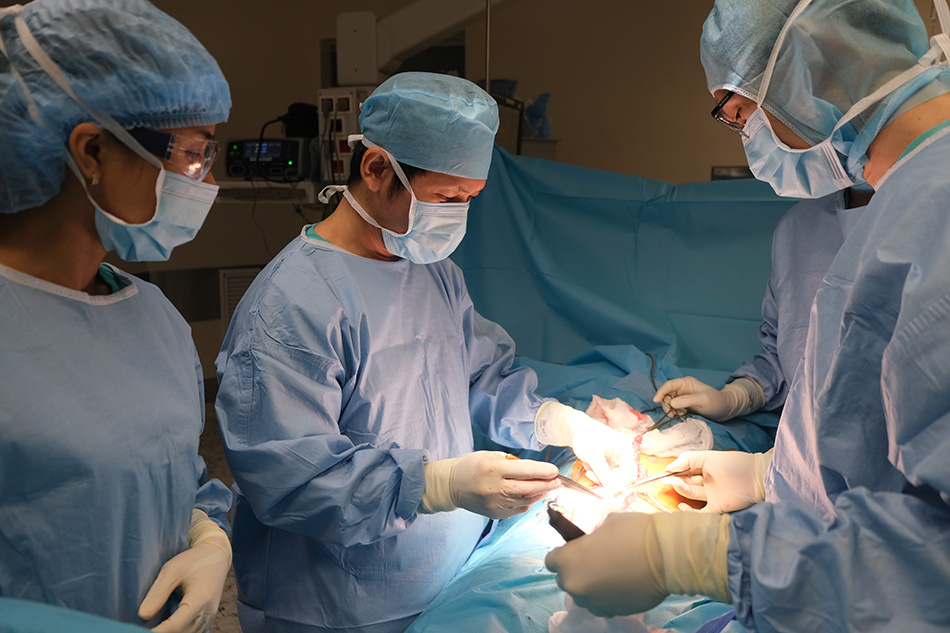
Dr Phan Van Thai, MSc, Specialist Level II (centre) during the cholecystectomy and gallstone removal procedure. Photo: FV
During the major operation, Dr Thai had to meticulously dissect each layer of tissue, moving the scalpel millimetre by millimetre to expose the biliary tract without damaging adjacent organs. Dr Thai noted that the walls of the gallbladder and bile duct were thick, hardened, and firmly adhered to the colon, duodenum, and hepatic hilum—resembling a “block of concrete”. The dissection was consequently an arduous task; even the slightest slip could have resulted in a perforation or tear to the surrounding organs. Furthermore, the scarring from the previous surgery was heavily inflamed and adhered, adding another layer of complexity to the procedure.
After five tense hours in the operating theatre, the surgical team successfully removed the 12mm diameter stone and extracted the trapped lithotripsy tool from the patient’s body. The gallbladder was then safely excised (removed) without causing any trauma to nearby structures, and all sites of inflammation were thoroughly treated.
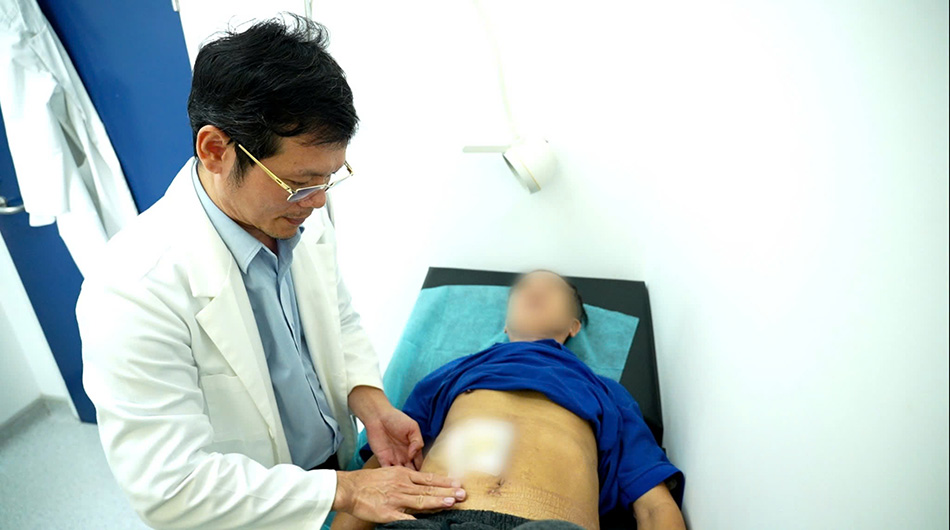
Dr Phan Van Thai, MSc, Specialist Level II examining the patient. Photo: FV
The patient remained under intensive post-operative monitoring and care. Two weeks after the surgery, his bile regulation and digestive functions had returned almost to normal, and he was discharged from hospital. “My health has now recovered well. I truly felt the professionalism of Dr Thai and the FV team throughout my treatment. I am sincerely grateful to everyone,” Mr K.B. said with emotion during a follow-up appointment in early February 2026.
How does gallbladder removal affect digestion?
The gallbladder’s primary role is to store and regulate the bile produced by the liver, enabling the body to digest fats more efficiently. When the gallbladder is removed (cholecystectomy), the liver continues to produce bile as usual. The key difference is that bile flows directly into the small intestine rather than being stored temporarily and released during meals. According to Dr Phan Van Thai, MSc, Specialist Level II, bile regulation may experience slight disruptions during the initial post-operative phase. However, with proper care and a tailored diet, the body typically adapts within a few weeks to a few months. Gallstones and common bile duct stones are frequent digestive conditions. For common bile duct stones, most cases require intervention to extract the calculi, either through Endoscopic Retrograde Cholangiopancreatography (ERCP) or surgical methods such as open surgery, laparoscopic (keyhole) surgery, or robot-assisted surgery using the da Vinci Xi system.
At FV Hospital, Dr Phan Van Thai, Head of General Surgery, brings extensive experience to the surgical treatment of abdominal conditions, including gallstones and gastrointestinal diseases. He is highly regarded by both colleagues and patients for his profound expertise and dedicated approach to patient care.
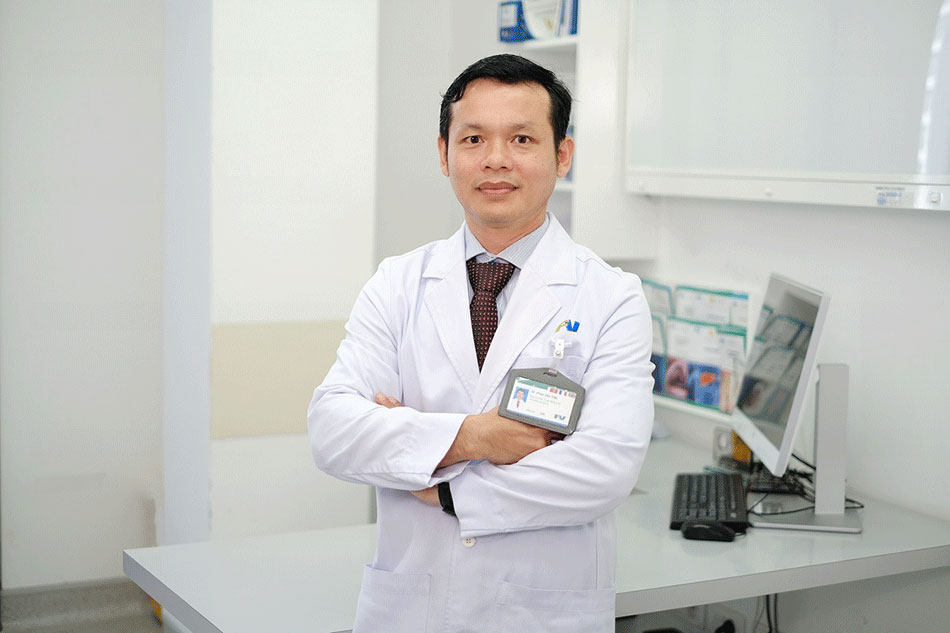
Dr Phan Van Thai, MSc, Specialist Level II – Head of General Surgery, FV Hospital
For more information about gallstone treatment available at the Department of General Surgery, FV Hospital, readers may visit the hospital at 6 Nguyen Luong Bang Street, Tan My Ward, Ho Chi Minh City, or contact the hotline at (028) 3511 3333.
Related News
See moreRelated News
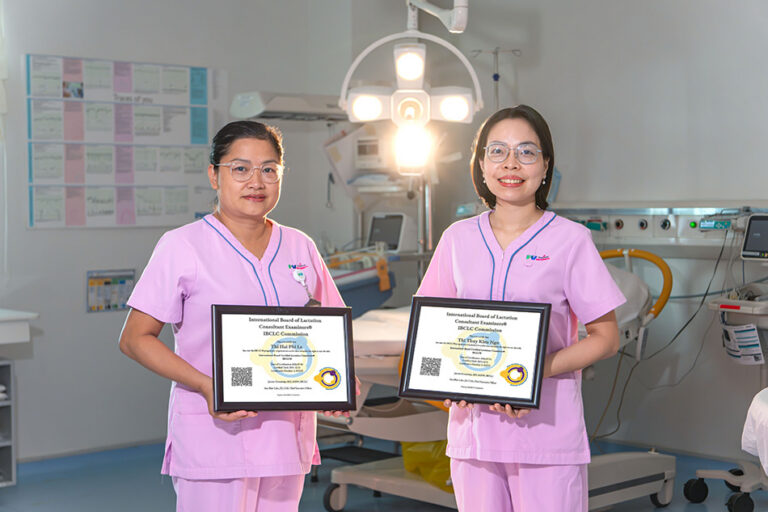
Two Vietnamese midwives attain international IBCLC certification in breastfeeding counselling
Two midwives from FV Thomson’s Maternity Department have earned IBCLC (International Board Certified Lactation Consultant) certification, the international credential for breastfeeding support specialists. This achievement represents a significant clinical milestone in infant feeding support at FV Hospital, driven by the real-world complexities these practitioners encounter daily when supporting mothers and their newborns. Beyond certification: A […]
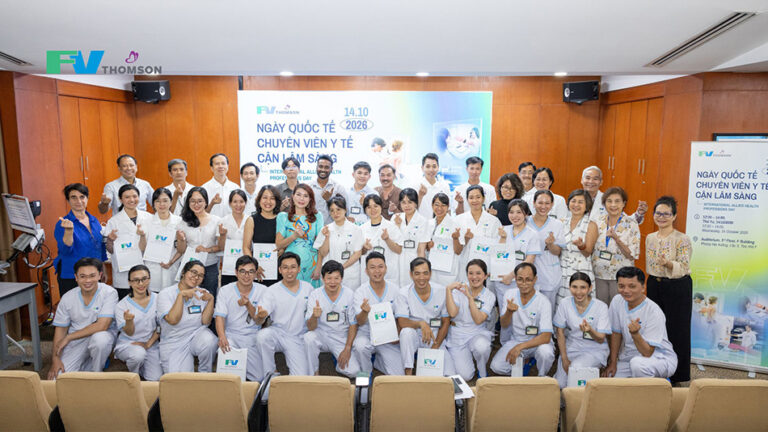
FV Hospital Celebrates International Allied Health Professions Day 2026
On 14 October 2026, FV Hospital held a special event to express its appreciation for allied health professionals. Attendees included members of the Board of Directors, heads of departments, and more than 40 allied health professionals and specialists. The event recognised the dedication of allied health professionals across a range of specialties, including Dietetics and […]
FV pioneers ERAS® implementation in Vietnam in line with international standards, supporting faster postoperative recovery
FV Hospital has become the first hospital in Vietnam to partner with Sweden-based Encare AB to implement the Enhanced Recovery After Surgery (ERAS®) programme. Through this partnership, FV joins Encare’s network of 22 hospitals in 11 countries across the Asia-Pacific region. The initiative aims to standardise surgical care according to international guidelines, leverage data to […]
The Pink Month 2026 at FV: Raising awareness and taking proactive care of breast health
Every year, millions of women worldwide are diagnosed with breast cancer. In 2024, an estimated 2.43 million new cases and nearly 694,000 deaths from breast cancer were recorded globally. In Vietnam, GLOBOCAN 2022 estimated 24,563 new cases, making breast cancer the most commonly diagnosed cancer among women. Behind these statistics are the individual health stories […]
Two Vietnamese midwives attain international IBCLC certification in breastfeeding counselling
FV Hospital Celebrates International Allied Health Professions Day 2026
FV pioneers ERAS® implementation in Vietnam in line with international standards, supporting faster postoperative recovery

