




Following the discovery of suspected malignant lesions in both lungs, Mr Nguyen Van Hung underwent two consecutive surgical procedures within less than two weeks.
The clinical conundrum: determining the pathology of bilateral pulmonary nodules
At 70 years old, Mr Nguyen Van Hung from Ho Chi Minh City maintained a regular daily exercise routine. Recently, however, he developed concerning symptoms: persistent bouts of coughing, accompanied by ongoing fatigue, poor sleep quality, and a marked decline in his overall health.
Heeding his wife’s advice, he presented to FV Hospital for a medical evaluation. Computed tomography (CT) scanning revealed indeterminate, potentially malignant lesions in both lungs. A subsequent transthoracic needle biopsy of the left lower lung mass confirmed lung cancer.
Dr Dang Dinh Minh Thanh (PhD, Specialist Level II, Head of Thoracic Surgery and Head of the da Vinci Robotic Surgery Centre at FV Hospital), explained that to determine surgical eligibility, the medical team first needed to ascertain whether the nodule in the right lung was benign or malignant. If the right-sided lesion was also malignant and represented metastatic spread from the left lung, the patient would be classified as having advanced-stage disease, rendering radical surgery inappropriate.
During multidisciplinary team discussions with respiratory physicians and oncologists, Dr Minh Thanh and his team identified a suspicious mediastinal lymph node (a lymph node situated within the mediastinum, the central anatomical compartment between the lungs). This further complicated clinical staging: failing to thoroughly evaluate this node meant clinicians could not rule out regional nodal metastasis.
Dr Minh Thanh further elaborated that the primary challenge was concurrently establishing the tissue diagnosis of both the right pulmonary nodule and the mediastinal lymph node. A concurrent percutaneous biopsy was unfeasible, as a needle biopsy through the chest wall cannot safely access the mediastinal nodes. Evaluating mediastinal nodes typically requires endobronchial ultrasound (EBUS) or thoracoscopy. Following extensive consultation, the consensus was that performing a thoracoscopic wedge resection of the right lung alongside mediastinal lymph node sampling offered the only single-stage diagnostic solution, whilst also minimising financial strain for the patient.
On June 11, Dr Thanh and his team performed the initial diagnostic procedure, aimed not at definitive cancer treatment, but at achieving accurate clinical staging.
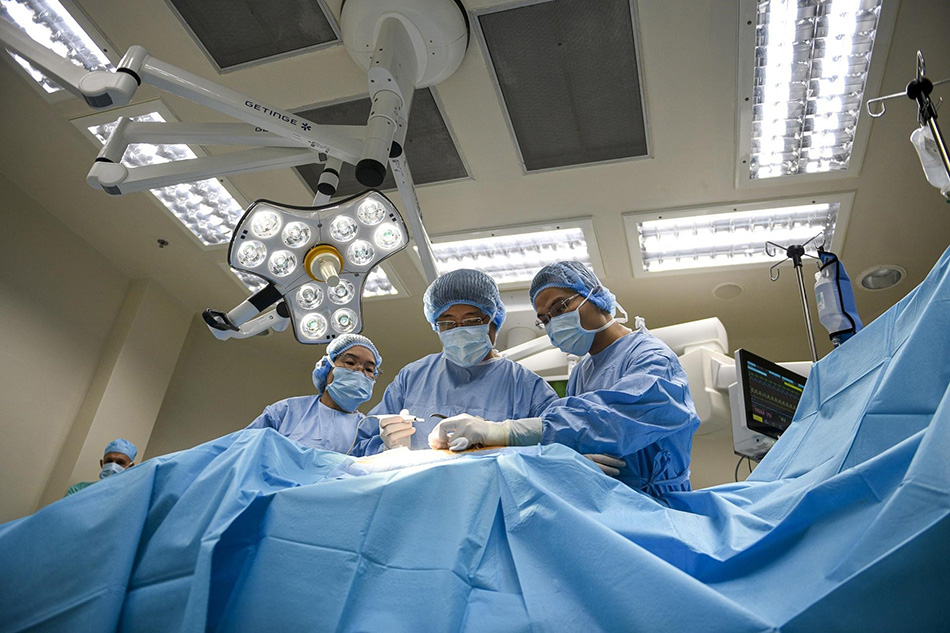
Patient undergoes thoracoscopic surgery for a right lung wedge resection and mediastinal lymph node biopsy.
A race against time for definitive lung cancer intervention
Ten days later, histological analysis provided reassuring news: both the right lung nodule and the mediastinal lymph node were benign. This confirmed that Mr Hung’s lung cancer remained in its early stages and was amenable to surgical resection.
However, the clinical team immediately faced another time-critical challenge. “Nearly a month had elapsed between initial detection and definitive histological confirmation. Any further delay could allow the tumour to progress, potentially compromising the efficacy of the treatment,” said Dr Dang Dinh Minh Thanh, PhD, Specialist Level II.
After carefully evaluating the patient’s recovery from the first operation from the initial procedure, the surgical team decided to proceed with the second major operation just 13 days later. “When the doctor recommended operating so soon, I felt anxious given the short interval between surgeries. But when he reassured me it was safe, I placed my full trust in him,” Mr Hung recalled.
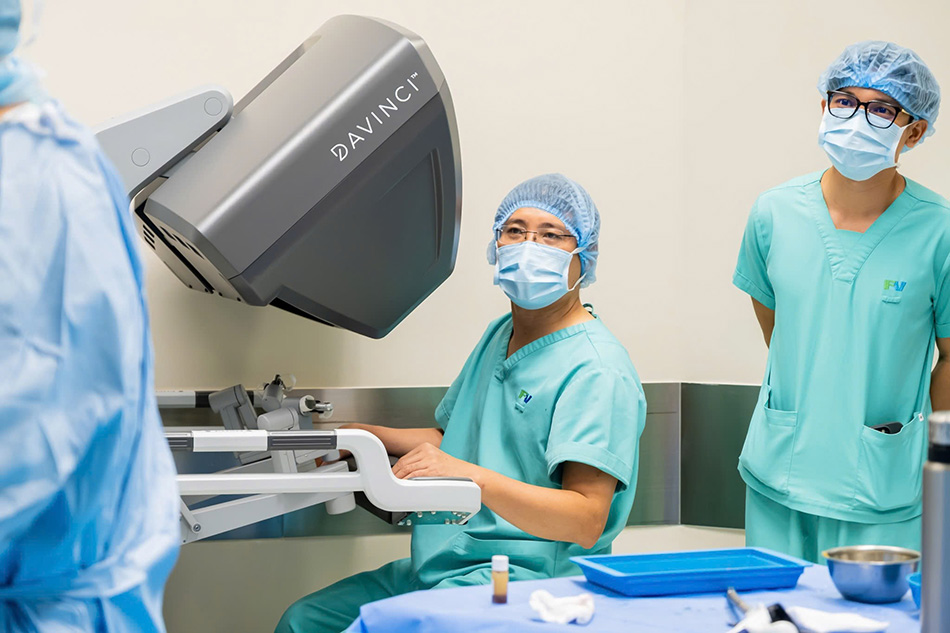
Dr Dang Dinh Minh Thanh (centre) performs a robotic-assisted pulmonary resection using the da Vinci Xi system.
For the procedure, the team selected the da Vinci Xi robotic system to perform a left lower lobectomy and radical lymph node dissection. Intraoperatively, surgeons encountered active bleeding due to the tumour’s close proximity to complex vascular structures. Utilising high-definition 3D visualisation and the superior dexterity of robotic articulation in confined spaces, the bleeding was rapidly controlled. Total intraoperative blood loss was limited to approximately 100ml.
Mr. Hung experienced a highly favourable recovery; he commenced early mobilisation by day two and was discharged once clinically stable. “Before the operation, I was worried about the pain. Afterwards, however, there was only mild soreness around the incision sites, far less painful than I had anticipated. Just two days later, the doctors had me up and walking, and my strength returned remarkably fast,” he said.
“Let’s go to FV Hospital, they will look after you even better than I can”
Throughout his month-long inpatient stay, the clinical team frequently observed the couple supporting each other without other family present. The couple confided that they had chosen not to inform their children to spare them unnecessary anxiety. Despite the absence of relatives, Mr Hung emphasised that his hospital stay was seamless due to round-the-clock nursing support. “The nursing staff took exceptional care of me, assisting with everything from meals to personal hygiene. My wife hardly had to lift a finger,” Mr Hung cheerfully said.
He added that having received routine care at FV previously, he had immense faith in the clinical team. When surgery became necessary, his wife encouraged him: “Let’s go to FV Hospital, they will look after you even better than I can.”
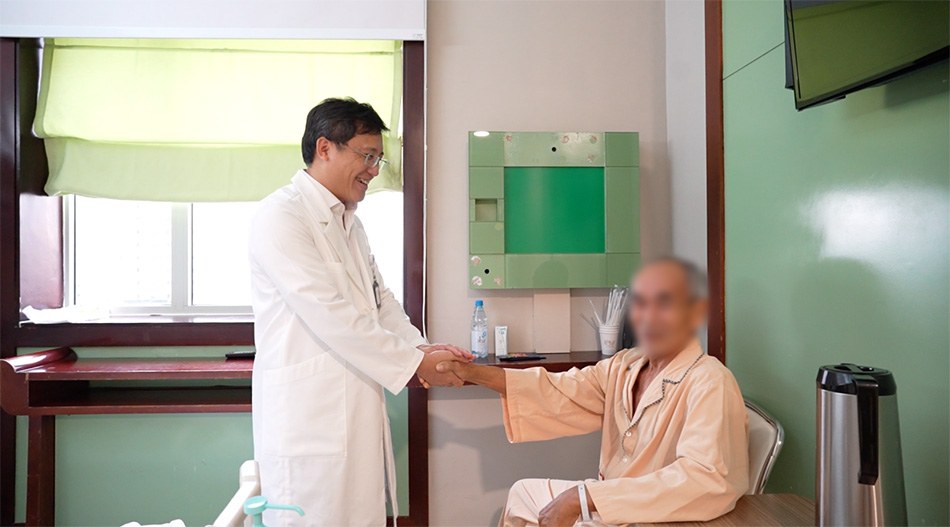
Dr Dang Dinh Minh Thanh congratulates the patient on his discharge day.
Alongside investment in leading technologies such as the da Vinci Xi robotic system, FV Hospital has expanded its coverage under the social health insurance scheme across numerous advanced clinical specialties, including oncology. This initiative enhances patient access to high-tech medical care at more reasonable costs. To learn more about services covered by social health insurance, please visit FV Hospital at 6 Nguyen Luong Bang Street, Tan My Ward (formerly District 7), Ho Chi Minh City, or call (028) 3511 3333.
Related News
See moreRelated News
Two Vietnamese midwives attain international IBCLC certification in breastfeeding counselling
Two midwives from FV Thomson’s Maternity Department have earned IBCLC (International Board Certified Lactation Consultant) certification, the international credential for breastfeeding support specialists. This achievement represents a significant clinical milestone in infant feeding support at FV Hospital, driven by the real-world complexities these practitioners encounter daily when supporting mothers and their newborns. Beyond certification: A […]
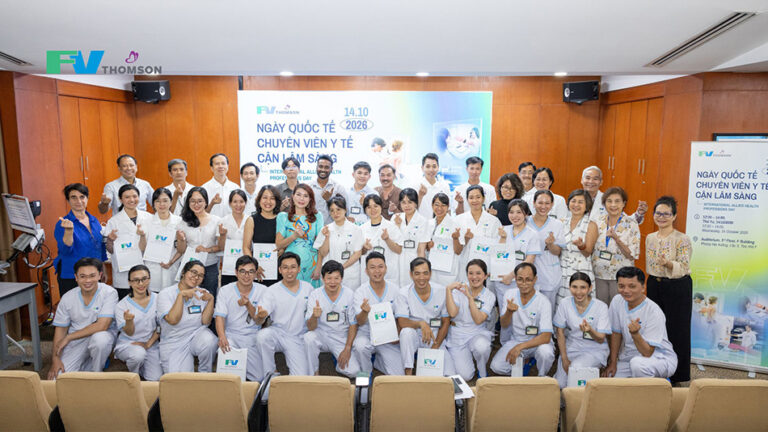
FV Hospital Celebrates International Allied Health Professions Day 2026
On 14 October 2026, FV Hospital held a special event to express its appreciation for allied health professionals. Attendees included members of the Board of Directors, heads of departments, and more than 40 allied health professionals and specialists. The event recognised the dedication of allied health professionals across a range of specialties, including Dietetics and […]
FV pioneers ERAS® implementation in Vietnam in line with international standards, supporting faster postoperative recovery
FV Hospital has become the first hospital in Vietnam to partner with Sweden-based Encare AB to implement the Enhanced Recovery After Surgery (ERAS®) programme. Through this partnership, FV joins Encare’s network of 22 hospitals in 11 countries across the Asia-Pacific region. The initiative aims to standardise surgical care according to international guidelines, leverage data to […]

Nutcracker Syndrome: How a one-hour stent placement ended a year of abdominal pain
FV Hospital successfully treated a complex case of nutcracker syndrome using minimally invasive endovascular stenting, sparing the patient major open surgery. Persistent abdominal pain linked to renal vein entrapment For over a year, 41-year-old Ms V.T.K.P. from Ho Chi Minh City experienced persistent, dull lower abdominal pain that worsened with prolonged sitting or standing. As […]
Two Vietnamese midwives attain international IBCLC certification in breastfeeding counselling
FV Hospital Celebrates International Allied Health Professions Day 2026
FV pioneers ERAS® implementation in Vietnam in line with international standards, supporting faster postoperative recovery

