




In late February 2026, a research study by Dr Nguyen Van Te (Head of Nuclear Medicine at FV Hospital) and his colleagues was officially published in the Journal of Health and Ageing (Thong Nhat Hospital). The report highlights the successful diagnosis of ATTR cardiac amyloidosis in an 80-year-old male patient suffering from heart failure and multiple comorbidities. The report has attracted attention because it describes the successful diagnose using conventional methods.
Dr Nguyen Van Te: An expert in diagnosing “hard-to-detect” heart conditions
Cardiac amyloidosis is a condition caused by the deposition of abnormal insoluble proteins build up in the in the extracellular spaces of the heart, gradually affecting the heart’s ability to function properly. Because the symptoms are often unclear and can resemble other cardiovascular diseases, this rare but serious condition remains challenging to diagnose and treat. Beyond the heart, amyloidosis may also affect the nervous system, lungs, digestive system, liver, kidneys and thyroid gland.

Dr Nguyen Van Te is a nuclear medicine specialist with more than 35 years of experience
In the published report, Dr Nguyen Van Te and his colleagues demonstrated the value of combining different imaging techniques can help doctors accurately diagnose the disease without the need for an invasive heart biopsy. These techniques include electrocardiography (ECG), echocardiography, cardiac MRI (CMRI), and cardiac PYP scan using the radioactive tracer technetium-99m.
Dr Nguyen Van Te explained that the cardiac PYP scan is a safe and non-invasive diagnostic technique. It has a sensitivity of more than 85% and a specificity of up to 99% in distinguishing between the AL and ATTR forms of amyloidosis. “For the ATTR form, this scan can completely replace an invasive heart biopsy,” Dr Te said. “It helps reduce costs for patients, requires no complicated preparation, and can be performed at any time.”
However, due to limited access to advanced equipment, cardiac PYP scans are still not widely available for cardiovascular diagnosis in Vietnam and many other countries.
Clinical capabilities of FV Hospital’s Nuclear Medicine Department
FV Hospital’s Nuclear Medicine Department is among the pioneers in Ho Chi Minh City and southern Vietnam in offering specialised cardiac PYP scans for the diagnosis of ATTR cardiac amyloidosis. By following international protocols, the medical team can help detect the disease at an early stage, particularly in older patients showing signs of heart failure related to restrictive cardiomyopathy.
FV Hospital’s advanced Siemens Symbia Intevo Excel SPECT/CT system plays a key role in the diagnosis of cardiac amyloidosis by combining functional imaging (SPECT) with anatomical imaging (CT). The system optimises bone scintigraphy using radiotracers, enabling the early detection of ATTR amyloid deposits without the need for an invasive myocardial biopsy.
The system also incorporates advanced technologies such as Flash 3D, which can reduce the required radiotracer dose by up to 50%, and CARE Dose4D™, which automatically adjusts X-ray exposure according to each patient’s body characteristics. These features help minimise radiation exposure while maintaining high-quality image resolution for accurate lesion assessment and quantification.
The Nuclear Medicine Department’s contribution represents an important step forward in multidisciplinary cardiac care at FV Hospital, creating a seamless and patient-centred treatment journey. Advanced imaging technology in the Nuclear Medicine Department plays a key role in providing accurate diagnostic results from the outset. Patients are then referred to the Cardiology and Interventional Cardiology Department for a personalised treatment and follow-up plan. Cardiologists work closely with clinical nutritionists to support patients in managing their lifestyle, diet and medications safely and effectively.
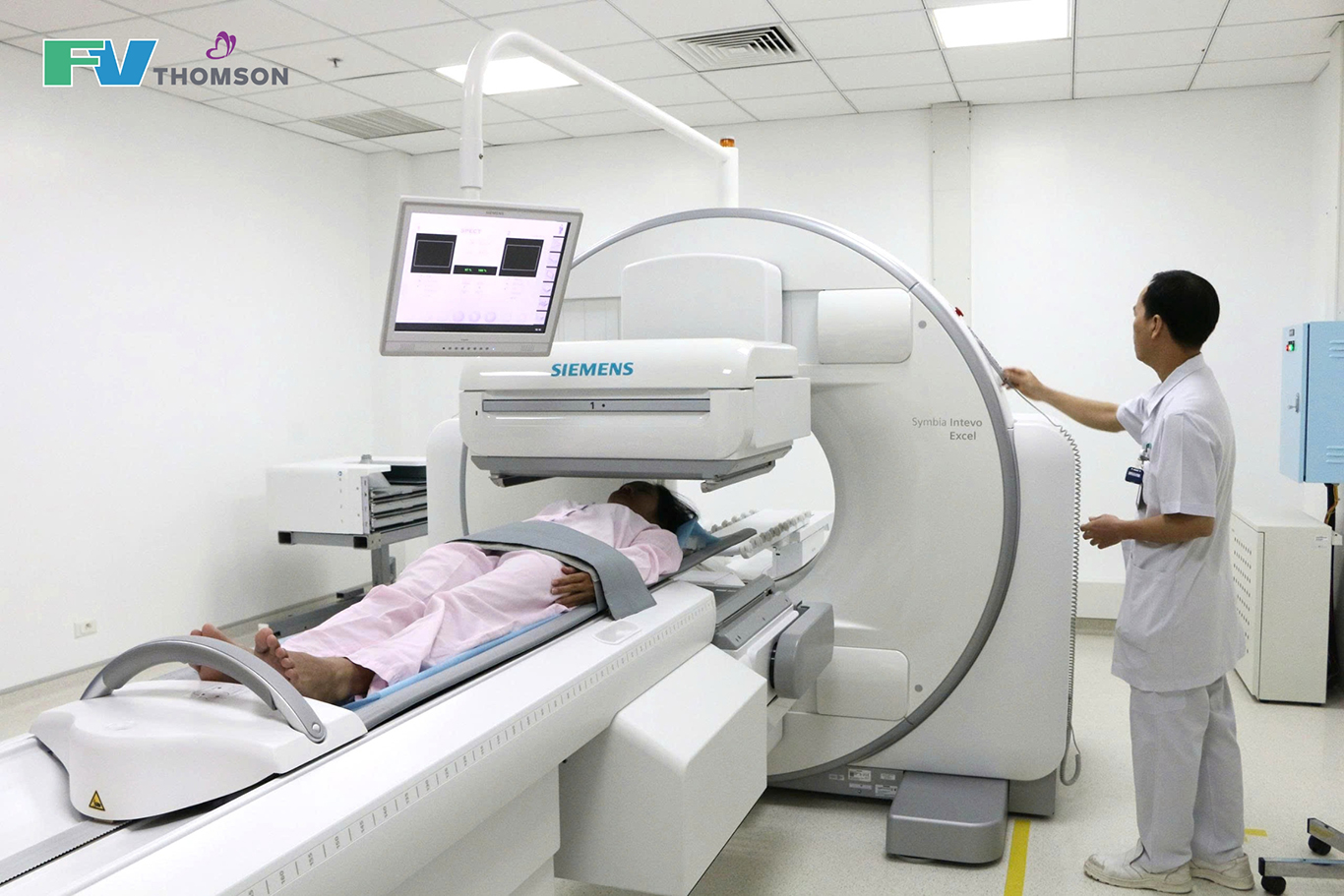
The advanced SPECT/CT system delivers faster scan times while using lower radiation doses.
This multidisciplinary approach helps optimise treatment outcomes not only for cardiac amyloidosis, but also for other chronic cardiovascular conditions such as hypertension, high cholesterol and heart failure. By combining advanced medical technology with close collaboration across specialties, FV provides patients with seamless care – from early diagnosis to long-term treatment and recovery.
The newly published research paper highlights the expertise of Dr Nguyen Van Te and his colleagues, while also reflecting FV Hospital’s ongoing commitment to investing in advanced diagnostic technologies and improving the quality of cardiac care in Vietnam.
Related News
See moreRelated News

Nutcracker Syndrome: How a one-hour stent placement ended a year of abdominal pain
FV Hospital successfully treated a complex case of nutcracker syndrome using minimally invasive endovascular stenting, sparing the patient major open surgery. Persistent abdominal pain linked to renal vein entrapment For over a year, 41-year-old Ms V.T.K.P. from Ho Chi Minh City experienced persistent, dull lower abdominal pain that worsened with prolonged sitting or standing. As […]

TROP2-directed ADCs: A breakthrough in improving outcomes in advanced/metastatic triple-negative breast cancer
Advances in the treatment of advanced/metastatic triple-negative breast cancer are providing new treatment options for patients; particularly where existing therapies have limited efficacy. Among these, TROP2-directed antibody-drug conjugates (ADCs) are receiving increasing attention from the oncology community, supported by emerging clinical evidence on their efficacy and potential to improve treatment outcomes. The Scientific Seminar organised […]
FV Hospital introduces Rezum Water Vapour Therapy: A minimally invasive option for men with benign prostatic hyperplasia
Beyond causing daily inconvenience, benign prostatic hyperplasia (BPH), commonly known as an enlarged prostate, can significantly affect patients’ sleep, overall health and mental well-being. Alongside medication and surgery, patients can now consider Rezūm Water Vapour Therapy, a minimally invasive treatment recently introduced at the Urology & Andrology Department at FV Hospital. How does Rezum work? […]
3.0 Tesla MRI system at FV: Advanced diagnostics, a more comfortable experience
FV Hospital continues to enhance the quality of its screening and routine healthcare services by introducing the state-of-the-art Philips Ingenia Elition X 3.0 Tesla Magnetic Resonance Imaging (MRI) system. This advanced technology not only helps reduce patient waiting times but also delivers exceptionally clear, high-resolution medical images. The addition of this new system underscores FV’s […]
Nutcracker Syndrome: How a one-hour stent placement ended a year of abdominal pain
TROP2-directed ADCs: A breakthrough in improving outcomes in advanced/metastatic triple-negative breast cancer
FV Hospital introduces Rezum Water Vapour Therapy: A minimally invasive option for men with benign prostatic hyperplasia

