



FV Hospital has successfully performed Vietnam’s first two coronary interventions using Intravascular Lithotripsy (IVL) – an advanced technology that uses ultrasound shockwaves to break up arterial calcification. This pioneering technique marks a significant advancement in treating severely calcified coronary lesions that traditional methods have been unable to manage effectively.
By using IVL to disrupt calcium deposits within the arteries, cardiologists at FV Hospital’s Cardiology and Interventional Cardiology Department can now treat complex coronary calcification cases that previously required open-heart surgery or posed a high risk of restenosis after intervention.

Dr Ho Minh Tuan, PhD (third from left), Head of Cardiology & Interventional Cardiology, pictured with his team after a successful coronary procedure using IVL technology (Photo: FV)
Two Patients with Severe Coronary Artery Calcification Successfully Treated Using IVL
The first patient was a 67-year-old woman with a history of coronary stenting at another hospital in Ho Chi Minh City. Due to severe calcification, the stent had not fully expanded, leading to recurrent narrowing of the artery. Several interventions, including balloon angioplasty and even the RotaPro (a diamond-tipped drill) had failed to deliver satisfactory results.
Dr Ho Minh Tuan, PhD, Head of the Cardiology & Interventional Cardiology Department at FV Hospital, opted to use an IVL balloon – a device that emits ultrasound shockwaves to fracture the calcium deposits. After six wave cycles, the lesion was fully opened, the stent expanded optimally, and blood flow was successfully restored. “Immediately after the procedure, the patient’s chest tightness and breathlessness were relieved. Imaging also confirmed that blood flow to the heart had been completely restored,” Dr Tuan shared.
The second case involved an 89-year-old woman with critical narrowing of the left main coronary artery – a vessel responsible for supplying 70% of the heart’s blood. The calcification was extensive, and without timely intervention, the risk of mortality was high. To manage this complex case, the FV medical team first used the RotaPro system to remove superficial calcification, followed by IVL to target deeper calcium deposits beneath the endothelium. Post-procedure imaging confirmed that the artery was clear of residual calcification. A stent was then placed, and optical coherence tomography (OCT) imaging was used to validate the result. The patient recovered well.
IVL: A Breakthrough in Cardiovascular Intervention
According to Dr Ho Minh Tuan, PhD, the IVL technique represents a significant technical advancement in cardiovascular intervention in Vietnam, offering significantly enhanced patient safety. Compared to traditional methods such as balloon angioplasty or the RotaPro system, IVL has proven highly effective in treating “stubborn” calcium plaques. It does so while minimising damage to healthy tissue and lowering the risk of complications during and after the procedure.

Dr Ho Minh Tuan, PhD (centre) and his team performing IVL to break up calcification within the artery (Photo: FV)
One of the key advantages of IVL is its ability to fracture calcified plaques even in deep and tightly narrowed arterial segments – areas that have long posed challenges for interventional cardiologists. The ultrasound shockwaves delivered by the IVL balloon target calcified structures, enabling the artery to expand and allowing optimal stent placement – an outcome not always achievable with other techniques. This results in improved symptom relief and contributes to better long-term quality of life for patients.
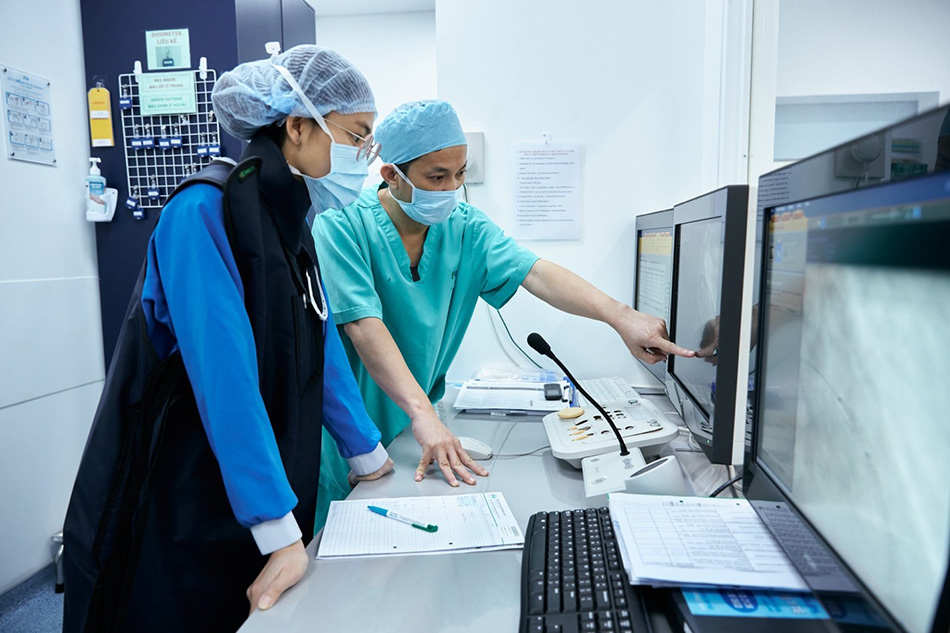
Dr Ho Minh Tuan, PhD examining a coronary stent using OCT imaging (Photo: FV)
The IVL technique is seamlessly integrated into a modern coronary intervention workflow, supported by advanced diagnostic and navigation tools such as IVUS (Intravascular Ultrasound) and OCT (Optical Coherence Tomography). These intravascular imaging techniques provide detailed visualisation, enabling clinicians to precisely tailor treatment to the characteristics of each lesion and optimise procedural success.
In addition, the decision to use IVL or RotaPro is based on the characteristics of the lesion. IVL is particularly effective for vessels that remain adequately wide but show deep-wall calcification, whereas RotaPro is better suited for tighter lesions with more superficial calcium. Used together when appropriate, these technologies offer greater precision and enhance patient safety.
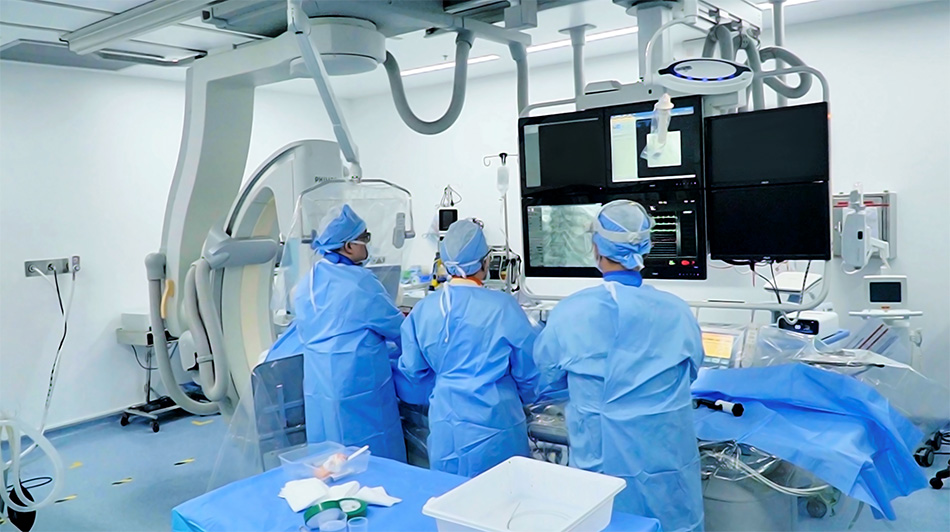
IVL is considered a highly effective solution for treating complex coronary calcification cases that previously required open-heart surgery (Photo: FV)
“Intravascular Lithotripsy is expected to play an increasingly important role as Vietnam’s population continues to age, and the prevalence of chronic diseases such as diabetes, hypertension, dyslipidaemia, and chronic kidney disease rises. These factors are leading to more complex and heavily calcified coronary lesions. IVL offers an effective solution for cases that previously required surgical intervention or carried a high risk of restenosis,” said Dr Tuan.
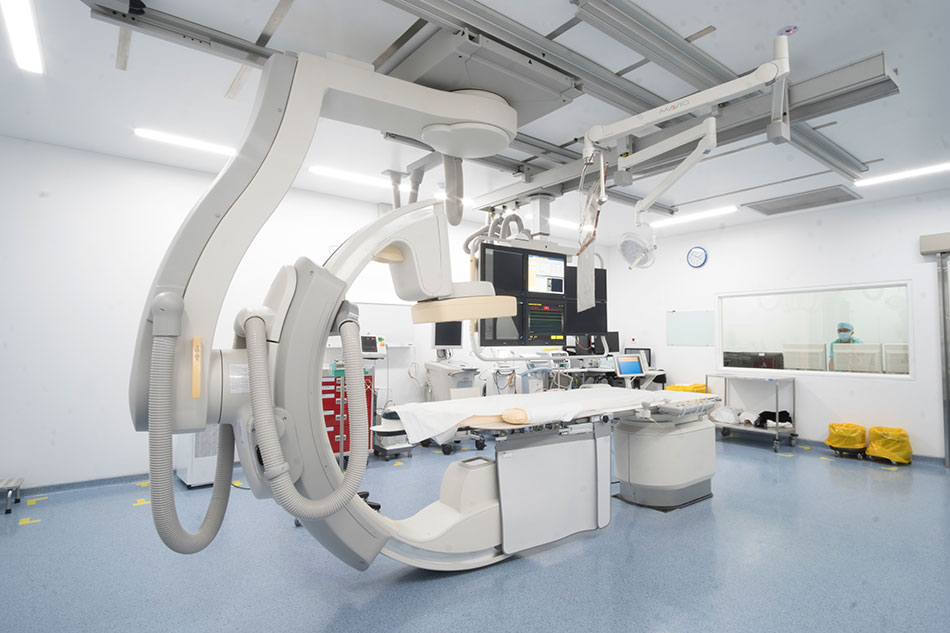
FV Hospital is equipped with a state-of-the-art Cath Lab (Photo: FV)
FV’s Cardiology & Interventional Cardiology Department continues to lead the region in adopting advanced techniques to treat cardiovascular conditions such as myocardial infarction, arrhythmia, valve disorders, and heart failure. The department provides high-quality care to Vietnamese patients at approximately half the cost of overseas treatment.
Importantly, many of FV’s intravascular procedures are covered under Vietnam’s national health insurance scheme, helping to reduce the financial burden on patients and providing greater peace of mind during their treatment journey.
Related News
See moreRelated News
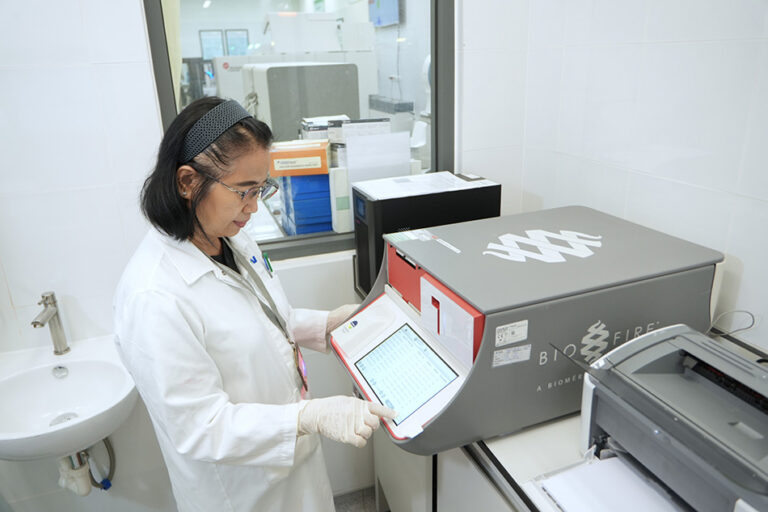
Quickly identify pathogens with 4 molecular diagnostic systems at FV
With four advanced rapid molecular diagnostic systems, BioFire® FilmArray®, QIAGEN QIAstat-Dx®, Cepheid GeneXpert®, and Sansure iPonatic III, the FV Hospital Laboratory & Blood Bank Department offers a wide range of rapid testing to help identify the bacteria, viruses and other infectious pathogens, helping your doctor make timely and informed treatment decisions. FV Hospital Laboratory & […]
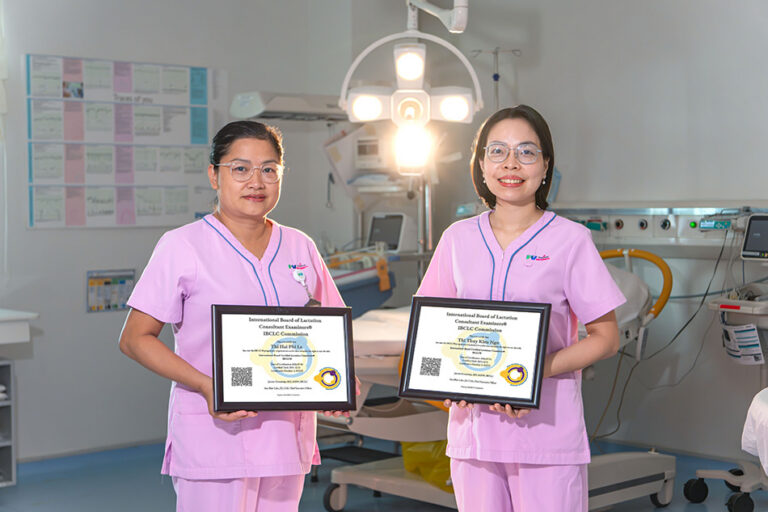
Two Vietnamese midwives attain international IBCLC certification in breastfeeding counselling
Two midwives from FV Thomson’s Maternity Department have earned IBCLC (International Board Certified Lactation Consultant) certification, the international credential for breastfeeding support specialists. This achievement represents a significant clinical milestone in infant feeding support at FV Hospital, driven by the real-world complexities these practitioners encounter daily when supporting mothers and their newborns. Beyond certification: A […]

Nutcracker Syndrome: How a one-hour stent placement ended a year of abdominal pain
FV Hospital successfully treated a complex case of nutcracker syndrome using minimally invasive endovascular stenting, sparing the patient major open surgery. Persistent abdominal pain linked to renal vein entrapment For over a year, 41-year-old Ms V.T.K.P. from Ho Chi Minh City experienced persistent, dull lower abdominal pain that worsened with prolonged sitting or standing. As […]
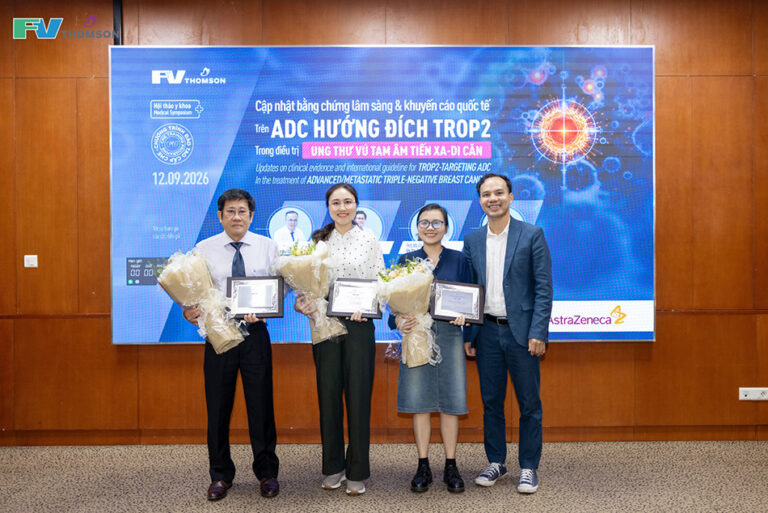
TROP2-directed ADCs: A breakthrough in improving outcomes in advanced/metastatic triple-negative breast cancer
Advances in the treatment of advanced/metastatic triple-negative breast cancer are providing new treatment options for patients; particularly where existing therapies have limited efficacy. Among these, TROP2-directed antibody-drug conjugates (ADCs) are receiving increasing attention from the oncology community, supported by emerging clinical evidence on their efficacy and potential to improve treatment outcomes. The Scientific Seminar organised […]
Quickly identify pathogens with 4 molecular diagnostic systems at FV
Two Vietnamese midwives attain international IBCLC certification in breastfeeding counselling
Nutcracker Syndrome: How a one-hour stent placement ended a year of abdominal pain

