




Following the discovery of suspected malignant lesions in both lungs, Mr Nguyen Van Hung underwent two consecutive surgical procedures within less than two weeks.
The clinical conundrum: determining the pathology of bilateral pulmonary nodules
At 70 years old, Mr Nguyen Van Hung from Ho Chi Minh City maintained a regular daily exercise routine. Recently, however, he developed concerning symptoms: persistent bouts of coughing, accompanied by ongoing fatigue, poor sleep quality, and a marked decline in his overall health.
Heeding his wife’s advice, he presented to FV Hospital for a medical evaluation. Computed tomography (CT) scanning revealed indeterminate, potentially malignant lesions in both lungs. A subsequent transthoracic needle biopsy of the left lower lung mass confirmed lung cancer.
Dr Dang Dinh Minh Thanh (PhD, Specialist Level II, Head of Thoracic Surgery and Head of the da Vinci Robotic Surgery Centre at FV Hospital), explained that to determine surgical eligibility, the medical team first needed to ascertain whether the nodule in the right lung was benign or malignant. If the right-sided lesion was also malignant and represented metastatic spread from the left lung, the patient would be classified as having advanced-stage disease, rendering radical surgery inappropriate.
During multidisciplinary team discussions with respiratory physicians and oncologists, Dr Minh Thanh and his team identified a suspicious mediastinal lymph node (a lymph node situated within the mediastinum, the central anatomical compartment between the lungs). This further complicated clinical staging: failing to thoroughly evaluate this node meant clinicians could not rule out regional nodal metastasis.
Dr Minh Thanh further elaborated that the primary challenge was concurrently establishing the tissue diagnosis of both the right pulmonary nodule and the mediastinal lymph node. A concurrent percutaneous biopsy was unfeasible, as a needle biopsy through the chest wall cannot safely access the mediastinal nodes. Evaluating mediastinal nodes typically requires endobronchial ultrasound (EBUS) or thoracoscopy. Following extensive consultation, the consensus was that performing a thoracoscopic wedge resection of the right lung alongside mediastinal lymph node sampling offered the only single-stage diagnostic solution, whilst also minimising financial strain for the patient.
On June 11, Dr Thanh and his team performed the initial diagnostic procedure, aimed not at definitive cancer treatment, but at achieving accurate clinical staging.
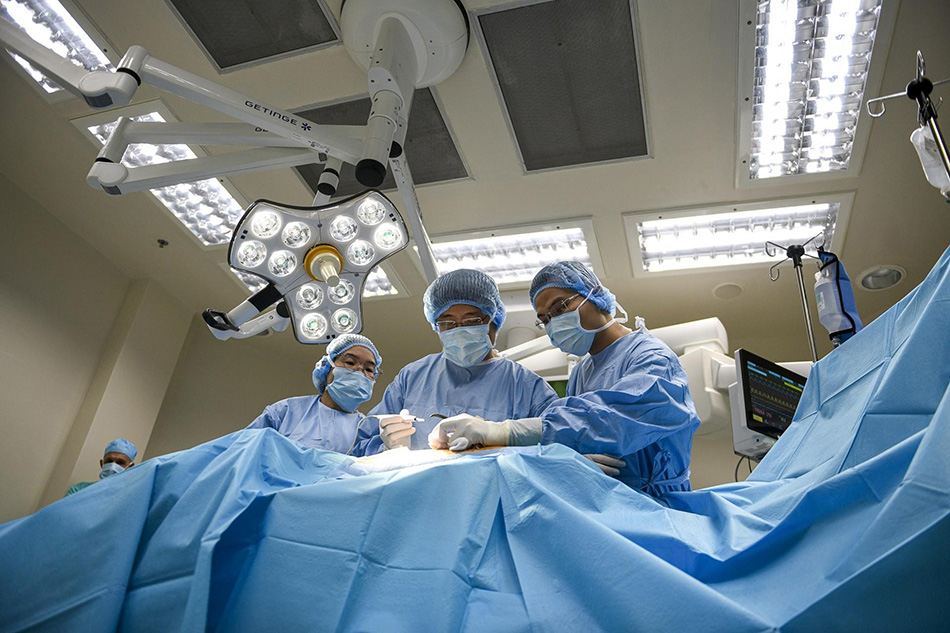
Patient undergoes thoracoscopic surgery for a right lung wedge resection and mediastinal lymph node biopsy.
A race against time for definitive lung cancer intervention
Ten days later, histological analysis provided reassuring news: both the right lung nodule and the mediastinal lymph node were benign. This confirmed that Mr Hung’s lung cancer remained in its early stages and was amenable to surgical resection.
However, the clinical team immediately faced another time-critical challenge. “Nearly a month had elapsed between initial detection and definitive histological confirmation. Any further delay could allow the tumour to progress, potentially compromising the efficacy of the treatment,” said Dr Dang Dinh Minh Thanh, PhD, Specialist Level II.
After carefully evaluating the patient’s recovery from the first operation from the initial procedure, the surgical team decided to proceed with the second major operation just 13 days later. “When the doctor recommended operating so soon, I felt anxious given the short interval between surgeries. But when he reassured me it was safe, I placed my full trust in him,” Mr Hung recalled.
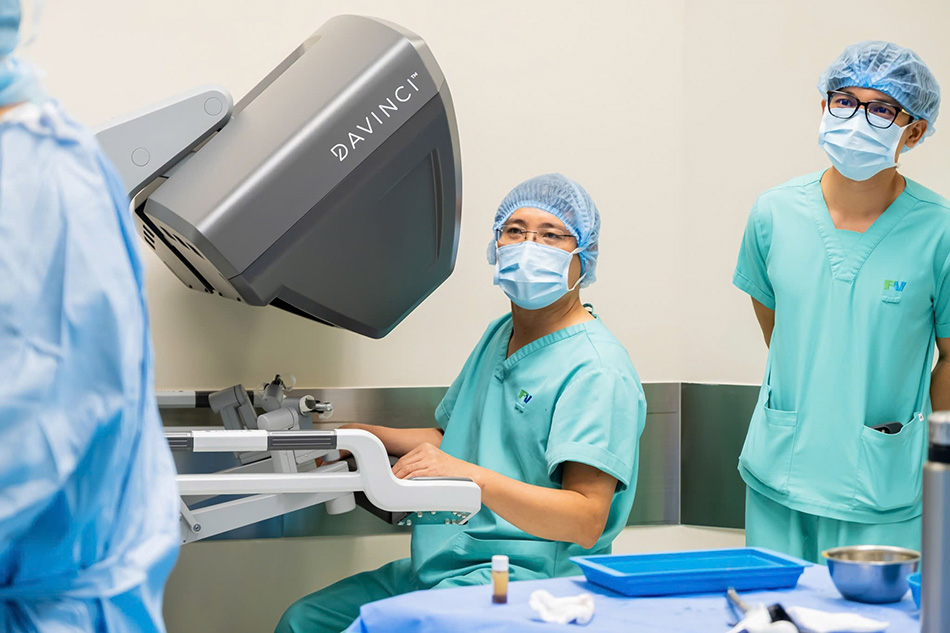
Dr Dang Dinh Minh Thanh (centre) performs a robotic-assisted pulmonary resection using the da Vinci Xi system.
For the procedure, the team selected the da Vinci Xi robotic system to perform a left lower lobectomy and radical lymph node dissection. Intraoperatively, surgeons encountered active bleeding due to the tumour’s close proximity to complex vascular structures. Utilising high-definition 3D visualisation and the superior dexterity of robotic articulation in confined spaces, the bleeding was rapidly controlled. Total intraoperative blood loss was limited to approximately 100ml.
Mr. Hung experienced a highly favourable recovery; he commenced early mobilisation by day two and was discharged once clinically stable. “Before the operation, I was worried about the pain. Afterwards, however, there was only mild soreness around the incision sites, far less painful than I had anticipated. Just two days later, the doctors had me up and walking, and my strength returned remarkably fast,” he said.
“Let’s go to FV Hospital, they will look after you even better than I can”
Throughout his month-long inpatient stay, the clinical team frequently observed the couple supporting each other without other family present. The couple confided that they had chosen not to inform their children to spare them unnecessary anxiety. Despite the absence of relatives, Mr Hung emphasised that his hospital stay was seamless due to round-the-clock nursing support. “The nursing staff took exceptional care of me, assisting with everything from meals to personal hygiene. My wife hardly had to lift a finger,” Mr Hung cheerfully said.
He added that having received routine care at FV previously, he had immense faith in the clinical team. When surgery became necessary, his wife encouraged him: “Let’s go to FV Hospital, they will look after you even better than I can.”
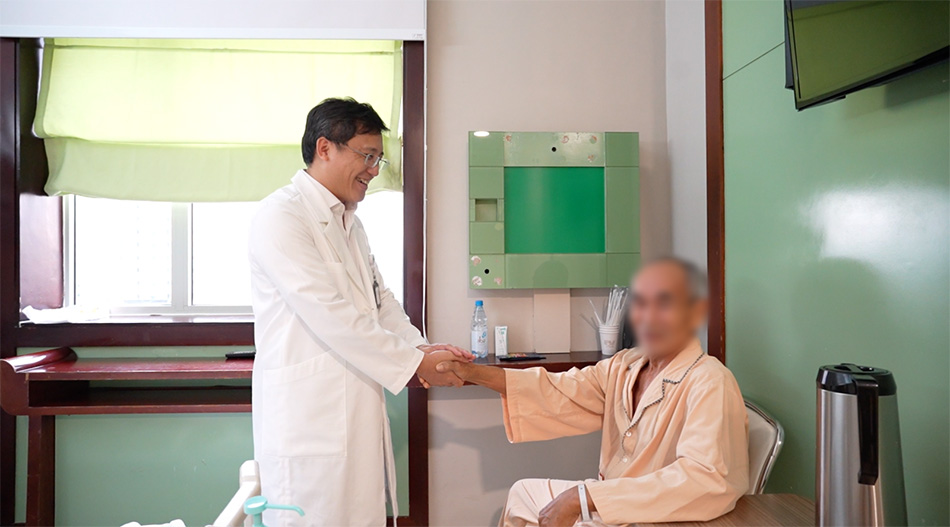
Dr Dang Dinh Minh Thanh congratulates the patient on his discharge day.
Alongside investment in leading technologies such as the da Vinci Xi robotic system, FV Hospital has expanded its coverage under the social health insurance scheme across numerous advanced clinical specialties, including oncology. This initiative enhances patient access to high-tech medical care at more reasonable costs. To learn more about services covered by social health insurance, please visit FV Hospital at 6 Nguyen Luong Bang Street, Tan My Ward (formerly District 7), Ho Chi Minh City, or call (028) 3511 3333.
Related News
See moreRelated News

Two Months of Persistent Tinnitus Lead to Cholesteatoma Diagnosis
The Otorhinolaryngology (ENT) Department at FV Hospital recently received a 54-year-old woman from Ho Chi Minh City who had been experiencing tinnitus for over two months. She was diagnosed with a cholesteatoma of the middle ear. At FV, she underwent endoscopic surgery to remove the cholesteatoma, with the aim of preserving as much of her […]
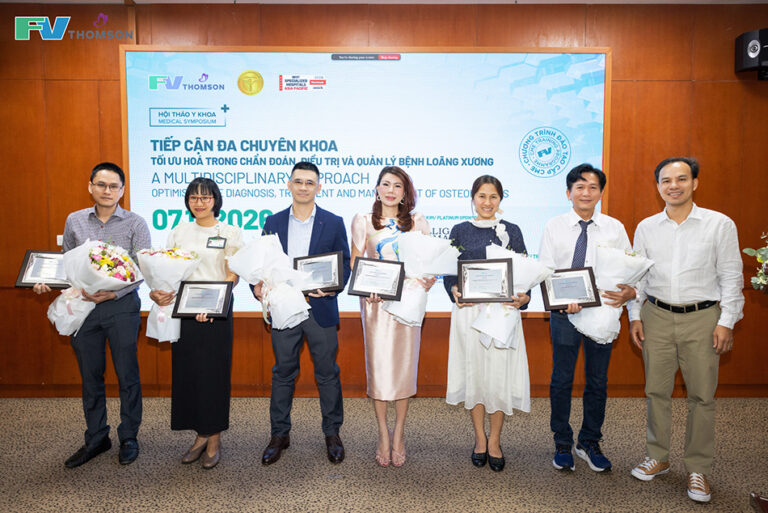
Breaking the cycle of osteoporotic fractures: A multidisciplinary approach at FV Hospital
On 7 November 2026, FV Hospital hosted a Continuing Medical Education (CME) programme entitled “A multidisciplinary approach: Optimising the diagnosis, treatment and management of osteoporosis”. The event brought together specialists from FV Hospital and Cho Ray Hospital, alongside more than 150 attendees. The Continuing Medical Education (CME) programme entitled “A Multidisciplinary Approach: Optimising the Diagnosis, […]
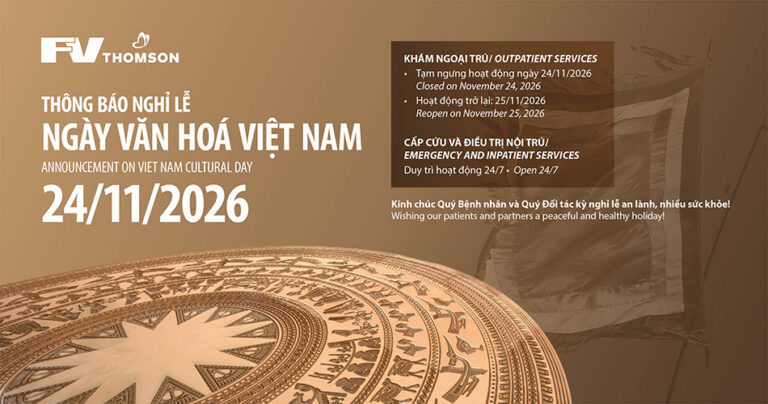
ANNOUNCEMENT ON VIETNAM CULTURAL DAY (24/11)
FV Hospital would like to announce our operating hours during the Vietnam Cultural Day holiday so that our patients and partners can conveniently arrange their visits and treatments: • Outpatient Services: Closed on Tuesday, November 24th. • Hospital Reopening: The hospital will resume normal operations on Wednesday, November 25th. • Emergency and Inpatient Services: Will […]
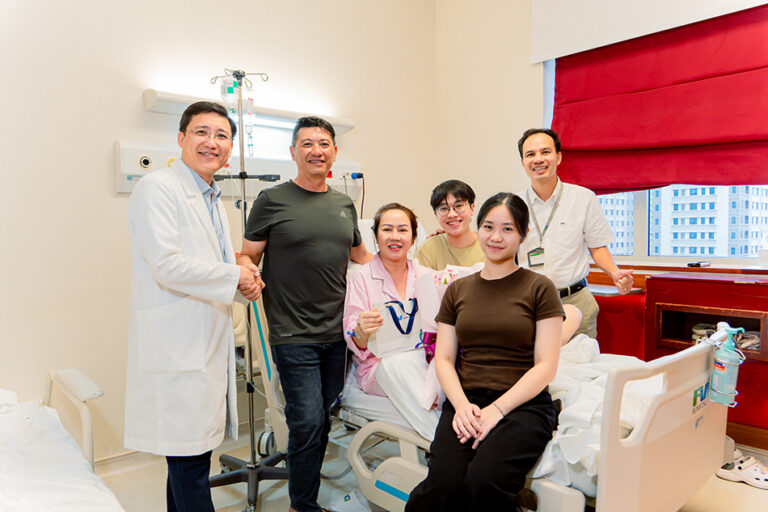
Robotic surgery removes a 3.8 cm lung tumour at FV: Patient back on her feet the next morning with minimal pain
After a 2.8 cm lung tumour was detected two years ago, a 50-year-old woman repeatedly postponed treatment because she was afraid of surgery. She eventually agreed to undergo the operation after doctors at FV Hospital took the time to answer her questions and address her concerns. After two years of delaying treatment, she cancels planned […]
Two Months of Persistent Tinnitus Lead to Cholesteatoma Diagnosis
Breaking the cycle of osteoporotic fractures: A multidisciplinary approach at FV Hospital
ANNOUNCEMENT ON VIETNAM CULTURAL DAY (24/11)

