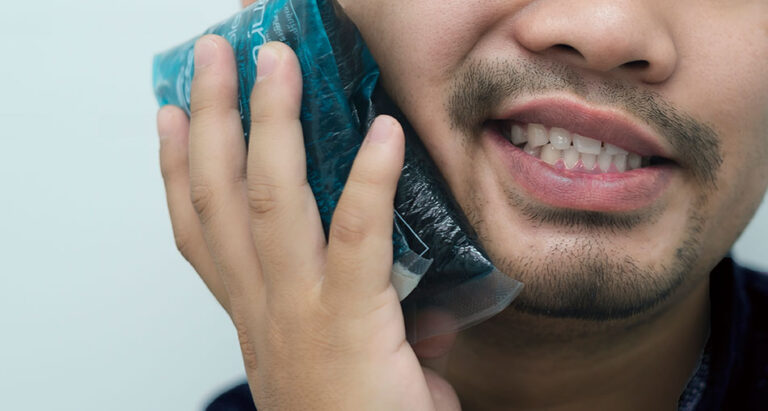




The new dentures you have received are a replacement for your missing teeth. They will attempt to restore support to the jaw, increase your chewing ability and improve your appearance. This information leaflet will assist you with your adjustment to new dentures.
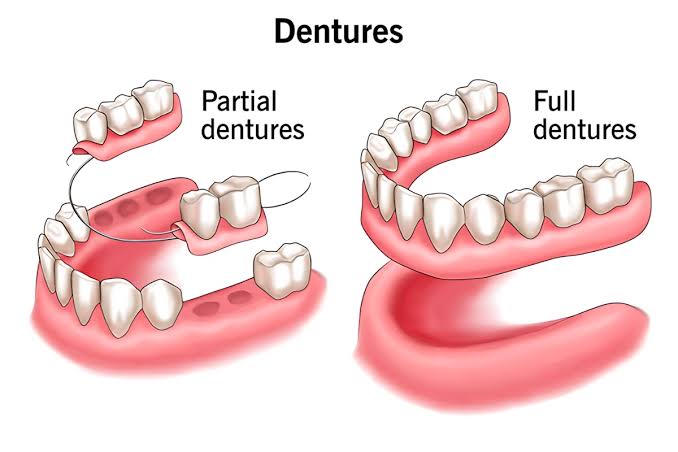
There are 2 types of dentures:
- Partial dentures (‘partials’) to fill the gap created by some missing teeth.
- Complete (or full) dentures (often referred to as ‘dentures’) for restoration of complete missing teeth on upper or lower jaw or both.
Getting used to your new dentures
For the first few weeks your new dentures may feel bulky and odd. However, you will eventually become used to it. Inserting and removing the dentures will need some practice. Please allow at least a week to 10 days before your dentures feel as though they are part of your body.
Upper dentures fit
Your new partial dentures may feel awkward or bulky. This is normal, and you will eventually become accustomed to wearing it. Initially, you may be asked to wear your dentures all the time. Although this may be uncomfortable at first, it’s the quickest way to identify areas that may need adjustments.
Lower dentures fit
Unlike upper dentures that have the entire roof of the mouth to provide surface area for retention, your lower dentures rely solid on your jaw to keep it in place. This is due to tongue space limiting the surface area to which dentures can rest. This means lower dentures are less retentive without natural teeth or implants to use as support. Therefore, if restoring natural teeth as anchors is not an option, implant-supported lower dentures is recommended. However, if this is not a viable option for you, you may need dentures adhesives to keep the lower in place to minimise rocking, shifting, and/or dislodging during function.
Dentures teeth
Since full dentures rely on soft tissue (not teeth or bone) for support, dentures teeth are limited in what they’re capable of in terms of function. Front teeth are for aesthetics and speech more so than for chewing. If you have both upper and lower complete dentures, it is recommended that you rely on back dentures teeth only for chewing. Attempting to use the front dentures teeth to bite a sandwich, for example, may lead to dislodging the dentures out of your mouth as they are not anchored to anything but soft tissue and so it can move when too much pressure is applied to the front rather than back.
Discomfort
Changes of the mouth: you may experience some of the following commonly known symptoms that occur when dentures are delivered:
- Immediate swelling
- Difficulty swallowing
- Increase in saliva (excess salivation)
- Mouth odour
- Minor bleeding
- Discomfort
- Difficulty chewing
- Gagging.
All of the mentioned symptoms above can be resolved once you’ve become more familiar with the new prosthesis and as minor adjustments are made by your dentist.
Most people manage to adapt well to new dentures irrespective of any dentures experience. If they put too much pressure on a particular area, that spot will become sore. The sore spots may appear 24 to 48 hours after initial wear. Your dentist will adjust your dentures to fit more comfortably. The sore spots may take up to a week to heal after that. After making adjustments, your dentist will probably recommend that you take dentures out of the mouth before going to bed and replace it in the morning. If you cannot see your dentist immediately, it might be wise to reduce or stop dentures wear until 2-3 days before the review appointment.
Dentures wear
You can wear the dentures during the day, taking them out only to clean after meals. However, they must be removed before going to bed (always store them in a container with cold water). This allows the gums to rest and promotes oral health. If you have concerns about removing your dentures, please discuss it with your dentist.
Speaking with your new dentures
Your speech may be altered initially and pronouncing certain words will require to practice. However, your speech should be back to normal within 1 or 2 weeks. To speed this process, reading out from a newspaper or magazine should help.
Eating with your new dentures
Dentures teeth are different from natural teeth in that they rest on your gums (soft tissue) rather than anchored to your jaw (hard tissue). It is estimated that natural teeth can withstand 6 times or more chewing force compared to dentures teeth. As a result, chewing function is significantly diminished compared to that of nature teeth. It is normal to have difficulty chewing efficiently during your first few meals.
Start with soft foods and gradually progress onto more solid food. You may need to cut your food into small pieces before placing them on the back dentures teeth for chewing, using both sides of your mouth to prevent dentures tipping.You may consume small amounts at a time and eat slowly. Learning to use your new dentures will take time and patience.
Avoid biting with your front teeth (like biting into an apple) as this will cause tipping at the back end of the dentures, may result in dislodging it from the mouth.
Avoid sticky and hard foods.
Always thoroughly rinse your dentures before placing it in your mouth after each meal.
Dentures care
Always keep your mouth and your dentures as clean as possible. Failure to do so may result in damage to your gums.
Cleaning
Daily cleaning of your dentures is necessary to prevent build-up of food debris, stains, and tartar. These can cause problems with appearance, mouth odour, irritation to gums and infections. Food particles trapped under dentures cause inflammation and sore spots.
We recommend that you remove and clean the dentures after each meal to prevent the build-up of debris.
Clean your dentures with a dentures brush or soft toothbrush and a dentures toothpaste (or with regular liquid soap and warm running water – avoid hot water). Avoid using toothpaste, abrasive pastes, or smokers’ toothpaste, as this can scratch dentures, which can make it more prone to collect debris, stains, and tartar.
Dentures cleansers can be used, but only after you have scrubbed your dentures.
Dentures are slippery when wet and can break, so always brush them over a basin filled with water, or over a towel just in case they slip out of your hands by accident.
If you should drop and damage your dentures, please DO NOT attempt to make your own repairs.
When your dentures are out of your mouth, store them in fresh clean water. This prevents the plastic from drying, warping and losing its shape.
Soaking
You can use proprietary dentures cleaning tablets (such as Polident) or solutions for soaking, to help loosen and remove stains and deposits and keep it clean. However, you should avoid leaving the dentures in the solution overnight. A 10-minute soak once or twice a week should be sufficient.
Do not soak if you have metal dentures as it can damage the metal. They can be effectively cleaned with a soft brush and warm soap water. Avoid soaking if your dentures have a soft lining as some products could damage the lining. They can also be cleaned by brushing.
Care of your mouth and maintenance of dentures
With partial dentures, you must take extra care of your teeth and gums. Even with full dentures, you still need to take good care of your mouth.
Brush the roof of your mouth (palate) as well as your gums and tongue with a soft brush twice a day. This helps to remove plaque and improves the general health of your mouth.
Leave your dentures out overnight or for at least 6 hours a day to allow your gums to rest. In some cases, if the muscles or jaw need the support of dentures it should be worn while sleeping.
You can use dentures cup to store dentures overnight.
In case your dentures are made immediately or within 2-6 months after tooth extraction: your gum ridges can recede or shrink, resulting in loosing dentures. So, you may need to use dentures adhesive or have your dentures relined.
Keep your partials and remaining natural teeth absolutely clean to prevent gum disease and tooth decay.
For partial dentures with metal clasps, special care should be taken while inserting and removing them so as not to place stress on your remaining teeth. You should maintain a 3-month or 6-month cleaning schedule to keep your remaining teeth clean and healthy.
For full dentures, return to our department once a year for follow up visits.
Return appointments
Your first scheduled appointment after receiving your new dentures is a very important consultation. The dentist will treat any sore tissues, adjust the occlusion, re-assess the speaking ability, check for looseness, or make any adjustments that may need to be done at that time.
Several return appointments may be necessary until you are completely comfortable. Dentures are not a final treatment. Your gums can change or recede. Periodic examinations and treatment by the dentist will be necessary.
Adjustments, reline, and replacement
Over time changes in the mouth will occur from things like bone loss, receding gum ridges and wear on the teeth. These changes will make dentures not fit right thus causing trauma to your gums and bone leading to continuing damage and/or loose dentures. When this occurs, your dentures/partials will feel loose and may require adjusting, relining, or replacing.
Wearing ill-fitting dentures/partials for too long without refitting can cause severe bone loss and very serious oral disease.
Adjusting dentures
Dentures that do not fit properly should be adjusted by your dentist. Poorly fitting dentures can cause various problems, including sores or infections. See your dentist promptly if your dentures become loose, and maintain your regular visits, too.
You can do serious harm to your dentures and to your health by trying to adjust or repair your dentures. If your dentures break, crack, or chip, or if one of the teeth becomes loose, call your dentist immediately. In many cases, dentists can make necessary adjustments or repairs, often on the same day. Complicated repairs may require that dentures be sent to a special dental laboratory or require a replacement.
Relining and Replacing dentures
Over time dentures will need to be relined, rebased or remade due to normal wear. The dentist will use your existing dentures to reline or rebase. It may need replacing if they become loose and the teeth show signs of significant wear. Dentures become loose because the mouth naturally changes with age. Gums and the underlying bone can shrink, causing dentures to become loose. It is important to replace worn or poorly fitting dentures before they start causing problems.
The fee for dentures adjustments, relines and replacement after 1-month delivery is not included in the dentures package.
When to call us
Most people experience some discomfort when they start wearing new dentures, but call us right away if you have:
- A reaction to the medication
- A spot where the dentures are rubbing and creating a sore spot
- Need for a bite adjustment once the dentures settle
- Dentures that become loose over time. Over time, dentures wearer experience changes to their jawbone and gums. These changes create loosed fitting dentures that will need to be re-lined. Wearing ill-fitting dentures can cause severe bone loss and serious oral disease.
Related Articles
Related Articles
Worried about Bad Breath?
WORRIED ABOUT BAD BREATH? Bad breath, or halitosis, is an unpleasant odour coming from the mouth. It’s a common concern that can affect anyone, often causing embarrassment and impacting social confidence. Understanding the causes and management strategies can help you maintain fresh breath and improve your overall oral health. WHAT CAUSES BAD BREATH? Most cases […]
Dental Implant Surgery
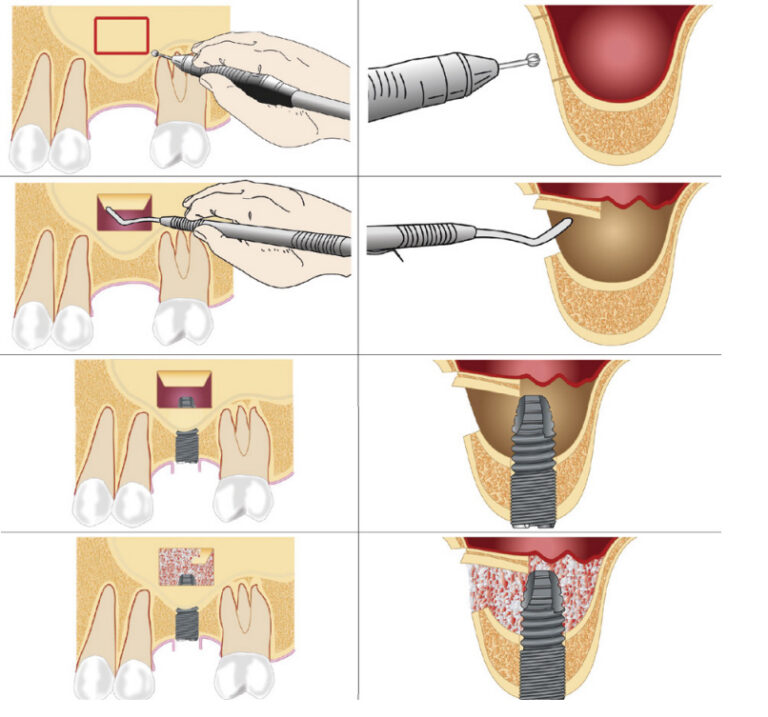
Post-Operative InstructionsThe first 2 weeks after surgery are very important. Healing of the bone around the implants takes 3–6 months. These instructions apply to all types of dental implant procedures, with or without bone grafting, sinus lift, ridge expansion, or soft tissue grafting. Dental implant with sinus lift and bone grafting General care after the […]