


Your Treatment Options
Medical, surgical and light-based treatment, planned by your dermatologist.
Our team provides comprehensive care for a wide range of skin conditions, from acne, eczema and infections to psoriasis, lupus and skin cancer. For skin cancer cases, our dermatologists work closely with specialists in Oncology and Head & Neck Surgery to coordinate assessment and treatment, particularly when complex surgery is required. This multidisciplinary approach helps ensure that care is tailored to each patient’s condition and needs.
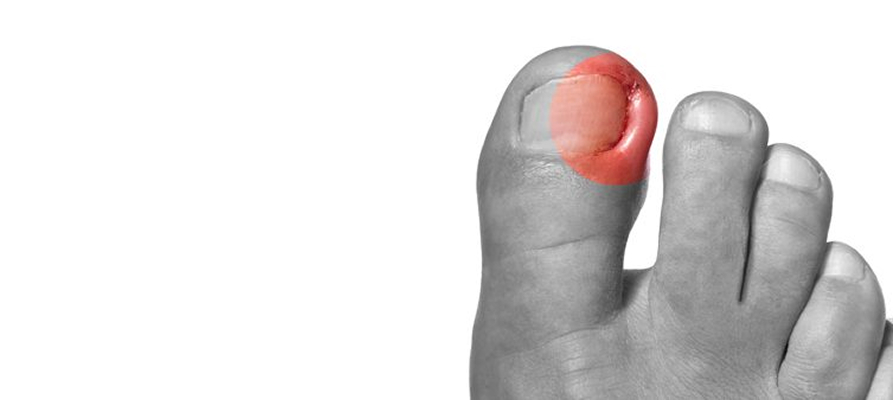
Skin Surgery
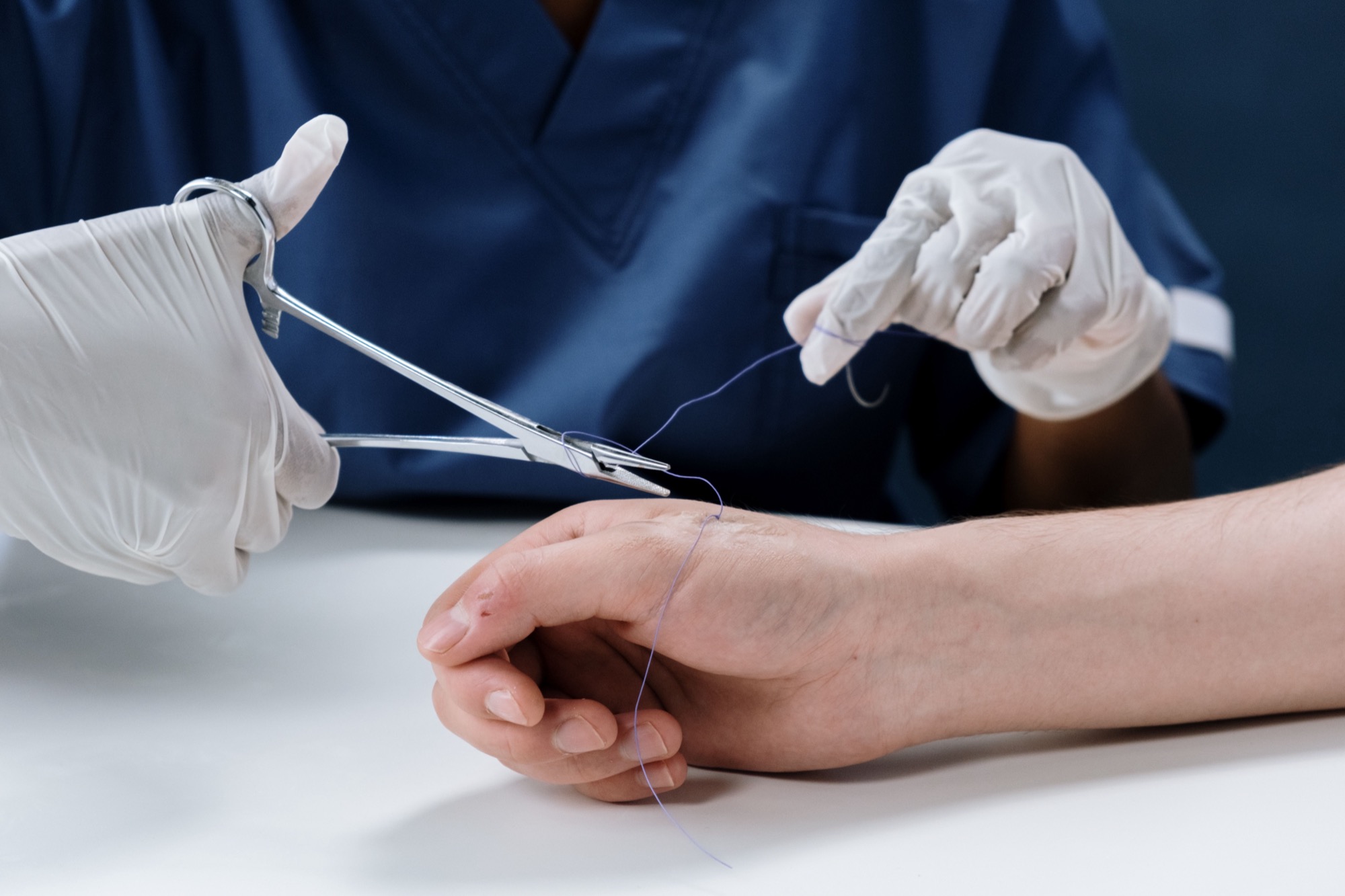
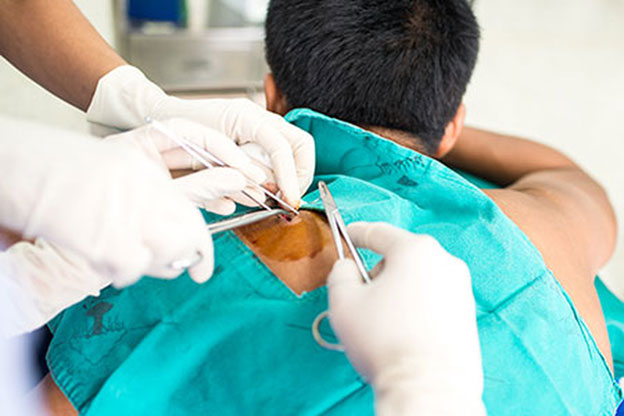
Skin surgery includes procedures to diagnose skin conditions, remove unwanted or suspicious lesions, and treat certain skin cancers. Many minor procedures can be performed under local anaesthetic, allowing you to go home the same day.
The procedure depends on the type, size and location of the lesion. Some wounds can be closed with stitches, while larger or more complex wounds may need a skin flap or graft to help restore the appearance and function of the affected area.
Phototherapy
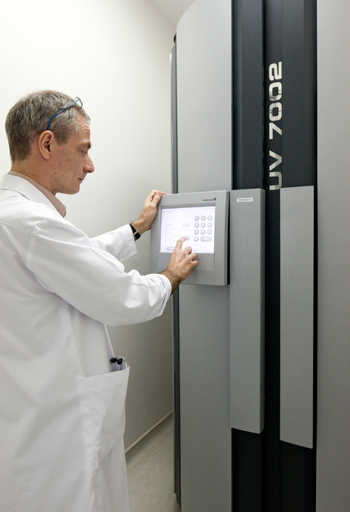
Phototherapy is a medical treatment that uses carefully controlled ultraviolet (UV) light to help manage certain skin conditions by reducing inflammation and slowing excessive skin cell growth. It may be recommended for conditions such as psoriasis, vitiligo and selected cases of eczema.
Treatment Precautions
Follow your dermatologist’s instructions before and after each session, including skin care, sun protection and medication precautions.
For details, read our NB-UVB phototherapy guide.
Iontophoresis for Excessive Sweating
If your hands or feet sweat excessively (a condition known as hyperhidrosis), everyday activities such as handling paper, shaking hands or holding objects can become uncomfortable. Iontophoresis can help reduce sweating by passing a mild electrical current through water.
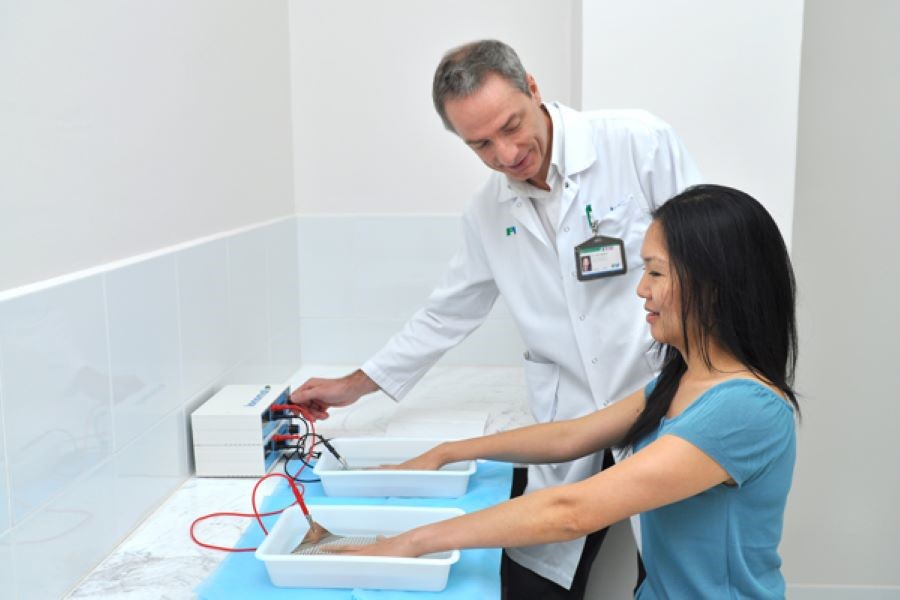
During treatment, you place your hands or feet in shallow trays of tap water while a mild electrical current passes through the water. You may feel a slight tingling sensation, but the treatment is generally well tolerated.
Iontophoresis does not require medication. This may be helpful if you have experienced side effects from oral medicines for excessive sweating, such as dry mouth or blurred vision. The treatment helps control sweating rather than providing a permanent cure. A course of sessions is usually needed, followed by maintenance sessions to help keep sweating under control.
Psoriasis Treatment
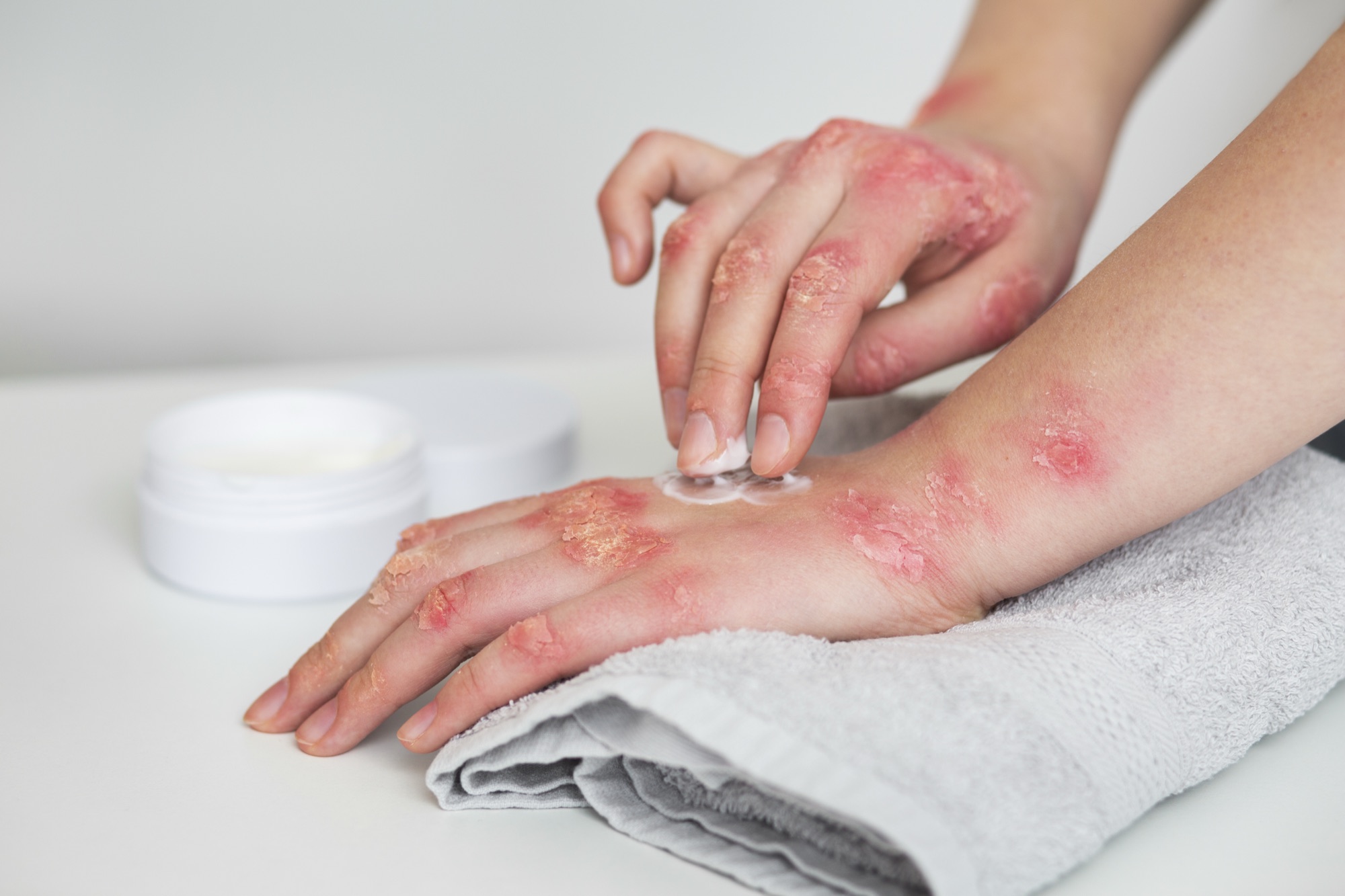
Psoriasis is a chronic inflammatory skin condition that causes raised, red or discoloured patches covered with silvery-white scales. These commonly appear on the scalp, elbows, knees, hands, feet and legs. Psoriasis is not contagious, but it can cause persistent itching, discomfort and distress. Although there is currently no cure, treatment can help control symptoms and keep the skin clear for longer.
How to Treat Psoriasis
The right treatment depends on the type and severity of psoriasis, the areas affected and how the condition affects your daily life.
Treatment options may include:
Mild or localised psoriasis:
Creams or ointments applied directly to the affected skin.
More widespread psoriasis:
Phototherapy or oral medication may be recommended.
Moderate to severe psoriasis:
Biologic therapy may be considered when other treatments have not worked well enough, are unsuitable or cannot be used.