



On 7 November 2026, FV Hospital hosted a Continuing Medical Education (CME) programme entitled “A multidisciplinary approach: Optimising the diagnosis, treatment and management of osteoporosis”. The event brought together specialists from FV Hospital and Cho Ray Hospital, alongside more than 150 attendees.
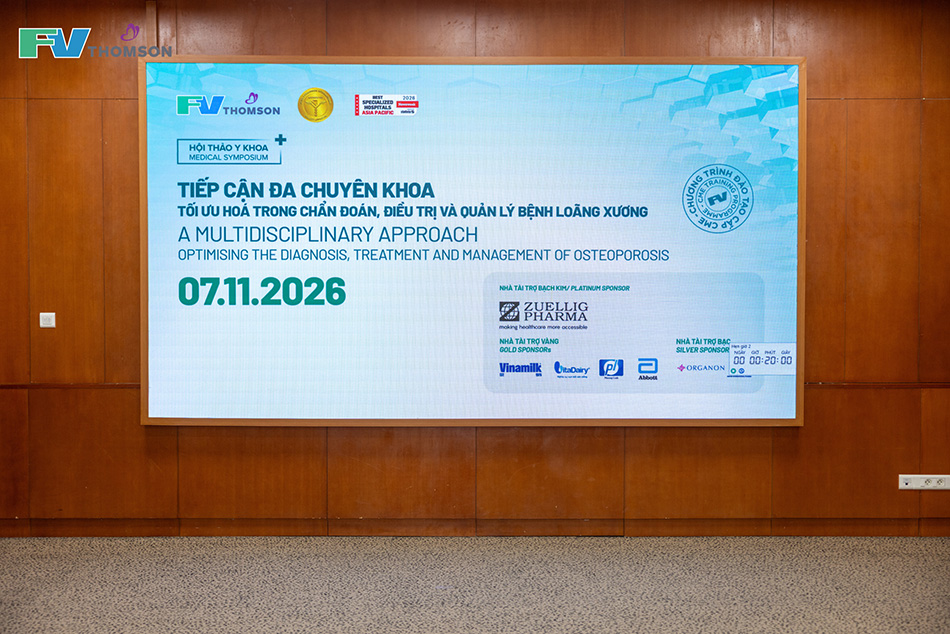
The Continuing Medical Education (CME) programme entitled “A Multidisciplinary Approach: Optimising the Diagnosis, Treatment and Management of Osteoporosis”, organised by FV Hospital.
In his opening remarks, Dr Vu Truong Son, MSc (Medical Director, FV Hospital) expressed his sincere gratitude to the professors, colleagues, speakers, and medical staff for taking the time to attend. Reflecting on Vietnam’s changing demographic landscape, Dr Son noted that the country has passed its demographic dividend phase. As the population ages, osteoporosis and other age-related conditions are expected to place an increasing burden on the healthcare system. “We must act now to prevent osteoporosis and reduce the risk of falls and fractures among older people,” said Dr Son.
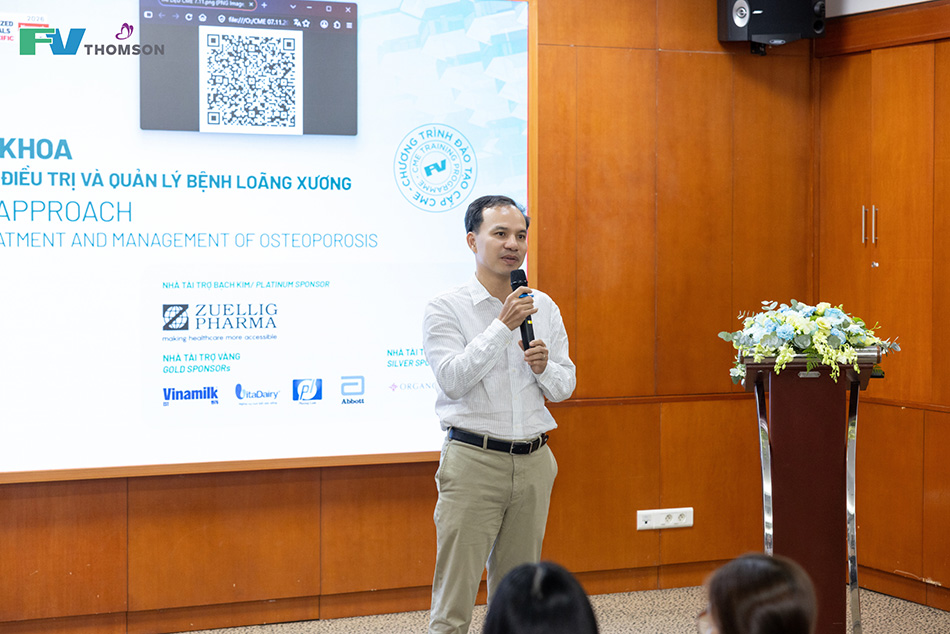
Dr Vu Truong Son, MSc delivers the opening address at the seminar.
Misconceptions about osteoporosis and modern treatment updates
The first presentation, “Gaps in the current diagnosis, treatment and management of osteoporosis”, was delivered by Dr Huynh Van Khoa, PhD (Rheumatology Department, Cho Ray Hospital; General Secretary of the Ho Chi Minh City Osteoporosis Association). He highlighted gaps between clinical guidelines and real-world practice. He highlighted the “osteopenia paradox”, whereby many fragility fractures occur in people with osteopenia rather than only in those with established osteoporosis.
Furthermore, the treatment process requires perseverance to overcome patient misconceptions, such as believing that “taking calcium and drinking milk is enough”, viewing it as a “painless condition of old age”, or worrying excessively about drug side effects. “We are facing three core gaps in treatment: patients go undiagnosed despite being in high-risk groups, they are not prescribed specialized medication even after suffering a fracture, and a lack of long-term monitoring leads to treatment abandonment,” stated Dr Huynh Van Khoa, PhD. He called for a comprehensive shift in the approach and care strategy for osteoporosis patients.
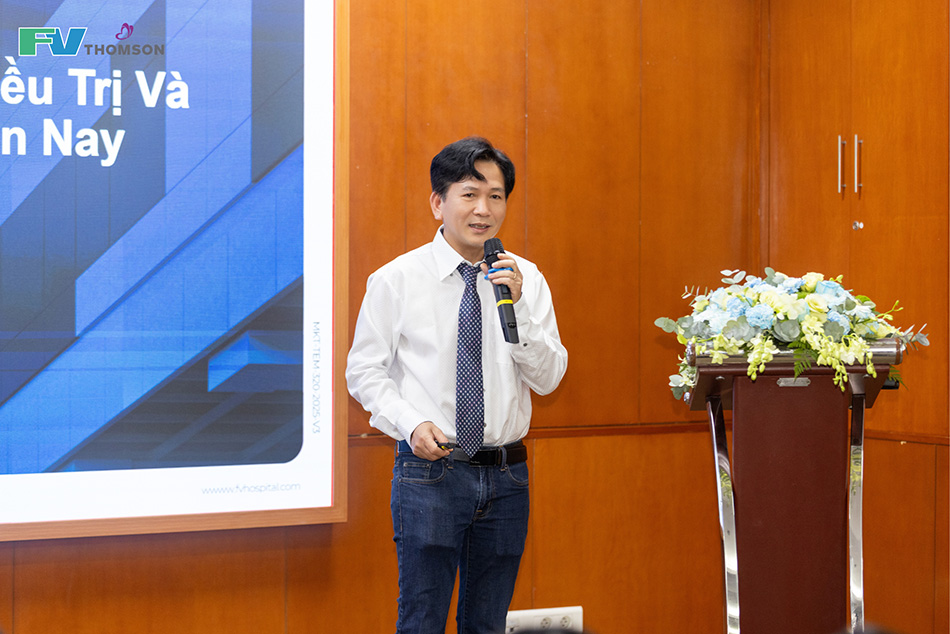
Dr Huynh Van Khoa, PhD during his presentation session.
In her presentation, “Multidisciplinary osteoporosis care toward a Gold-standard Fracture Liaison Service: goal-directed therapy, sequential treatment and breaking the secondary fracture cycle”, Dr Nguyen Thi Kim Huong, Specialist Level II (Rheumatology Department, FV Hospital), highlighted the importance of early intervention and coordinated post-fracture care. She introduced the Fracture Liaison Service (FLS), a multidisciplinary model designed to provide coordinated assessment, treatment and follow-up for patients following a fragility fracture. The approach aims to reduce the risk of subsequent fractures through timely intervention and continuity of care. “Our goal is to develop an FLS that meets the Gold-level standards of the international Best Practice Framework (*) at FV Hospital. We are also integrating digital applications to empower patients to proactively track their health and adhere to treatment at home,” Dr Huong emphasized.
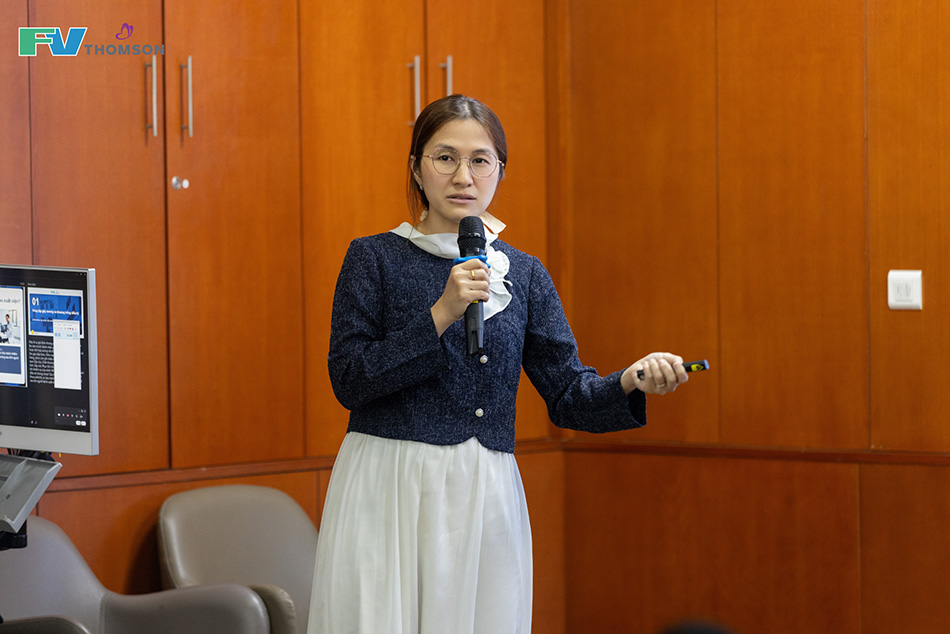
Dr Nguyen Thi Kim Huong, Specialist Level II introduces the international-standard FLS model at FV Hospital.
(*) The Best Practice Framework (BPF), developed under the International Osteoporosis Foundation’s (IOF) Capture the Fracture® programme, provides international standards for assessing Fracture Liaison Services. Participating services are assessed at three levels: Gold, Silver and Bronze.
Surgical management, pain control and the role of nutrition
The next presentation, “Atypical femoral fracture: another perspective on bisphosphonate therapy”, was delivered by Dr Truong Hoang Vinh Khiem, Specialist Level II (Orthopaedics and Hand Surgery Department, FV Hospital). He discussed the relationship between atypical femoral fractures and bisphosphonate therapy, a class of medication commonly used to treat osteoporosis. Dr Khiem also highlighted the importance of applying the American Society for Bone and Mineral Research (ASBMR) criteria when assessing and managing these fractures.
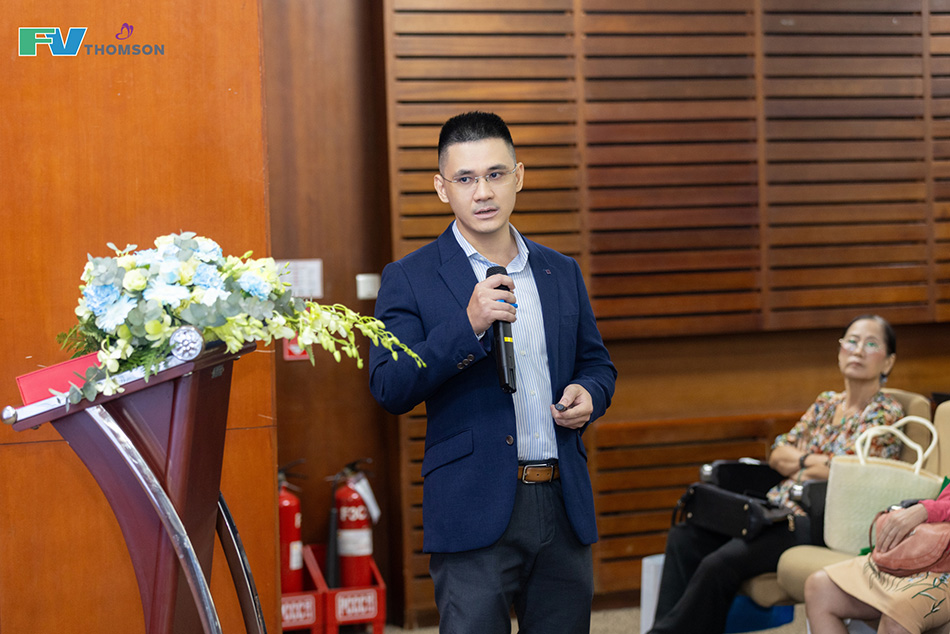
Dr Truong Hoang Vinh Khiem, Specialist Level II discusses ASBMR standards in surgical interventions.
Turning to another serious complication of osteoporosis, Dr Nguyen Cong, Specialist Level I (Neurosurgery and Spine Surgery Department, FV Hospital), presented “Osteoporotic vertebral compression fracture: surgical indications and techniques”. He explained how X-rays can help identify vertebral compression fractures and discussed the role of modern vertebroplasty, a procedure involving the injection of bone cement into a fractured vertebra. This minimally invasive procedure can help stabilise the affected vertebra, relieve pain and support an earlier return to mobility and daily activities, depending on the patient’s condition and clinical indications.
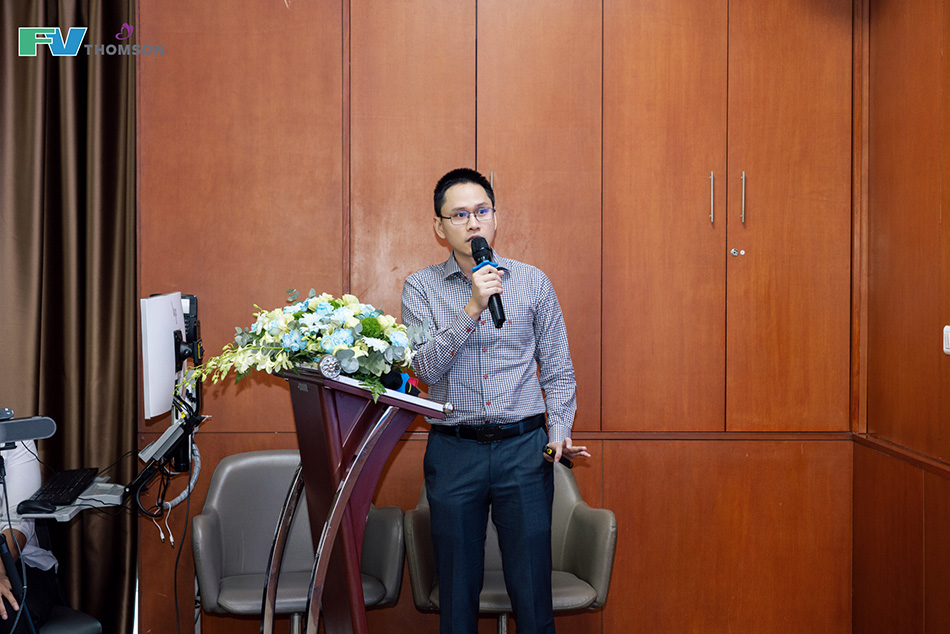
Dr Nguyen Cong, Specialist Level I presenting at the seminar.
Pain management was the focus of the next presentation, “Pain after osteoporotic fracture: from acute vertebral pain to chronic pain – a multimodal, opioid-sparing approach”, delivered by Dr Nguyen Nam Binh, Specialist Level I (Pain Clinic, FV Hospital). Dr Binh explained that once a fracture occurs, medical management becomes considerably more complex. She emphasised that pain relief alone addresses only the symptoms, rather than the underlying causes. “A multidisciplinary approach, in which surgical management addresses the mechanical aspects of the fracture while endocrinological treatment tackles the underlying causes of osteoporosis, is the key to effective long-term care,” Dr Binh explained.
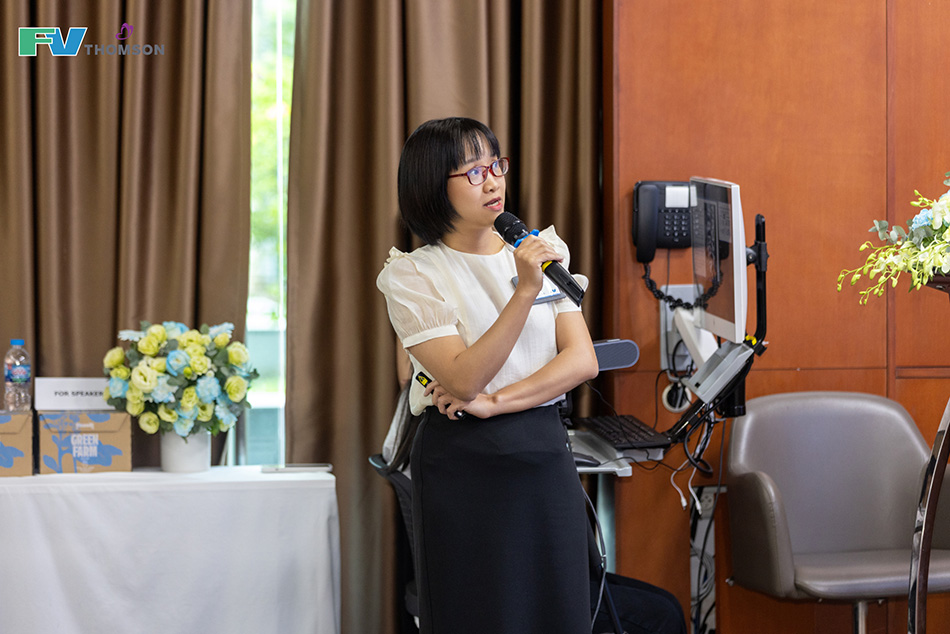
Dr Nguyen Nam Binh, Specialist Level I presenting at the seminar.
Closing the professional presentations, Dr Nguyen Viet Quynh Thu, MSc, Specialist Level II (Head of Dietetics and Nutrition, FV Hospital), delivered “Medical nutrition for bone and muscle: calcium, vitamin D and protein – preserving muscle mass and reducing falls in osteoporosis”. Dr Thu highlighted the importance of medical nutrition in maintaining bone and muscle health. She also drew attention to the risk of overlooking osteoporosis and reduced muscle mass in people living with obesity, whose body weight may mask underlying muscle loss. She emphasised that assessing musculoskeletal health should not rely on body mass index (BMI) alone. A more comprehensive assessment should also consider bone mineral density (BMD), muscle strength, muscle mass, balance and fall history to help identify risks and guide appropriate interventions for older people.
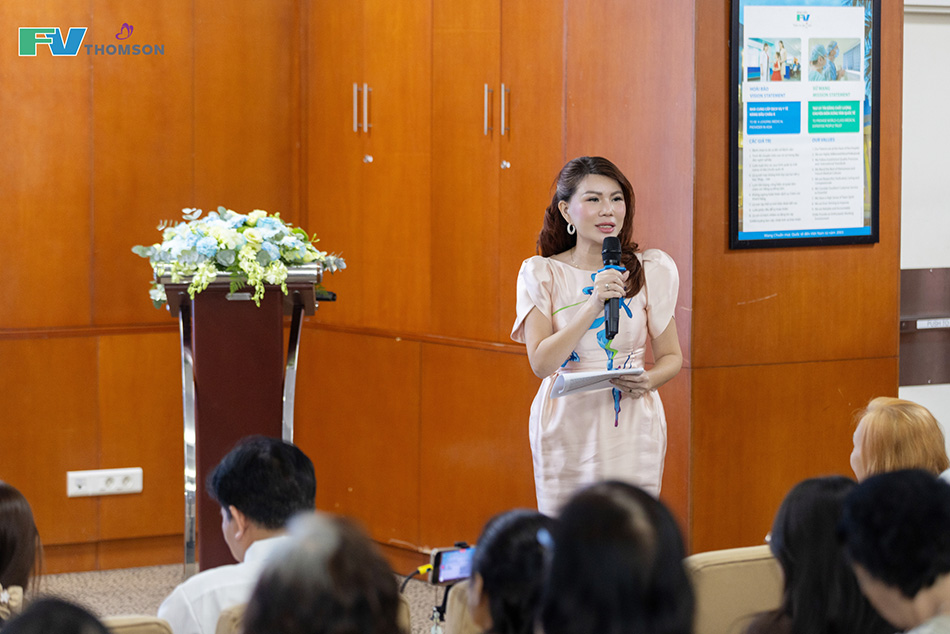
Dr Nguyen Viet Quynh Thu, MSc, Specialist Level II shares the role of medical nutrition for the musculoskeletal system.
In the closing discussion, the experts agreed that osteoporosis and its associated fractures are not only individual health concerns but also an increasingly important public health challenge as Vietnam’s population ages.
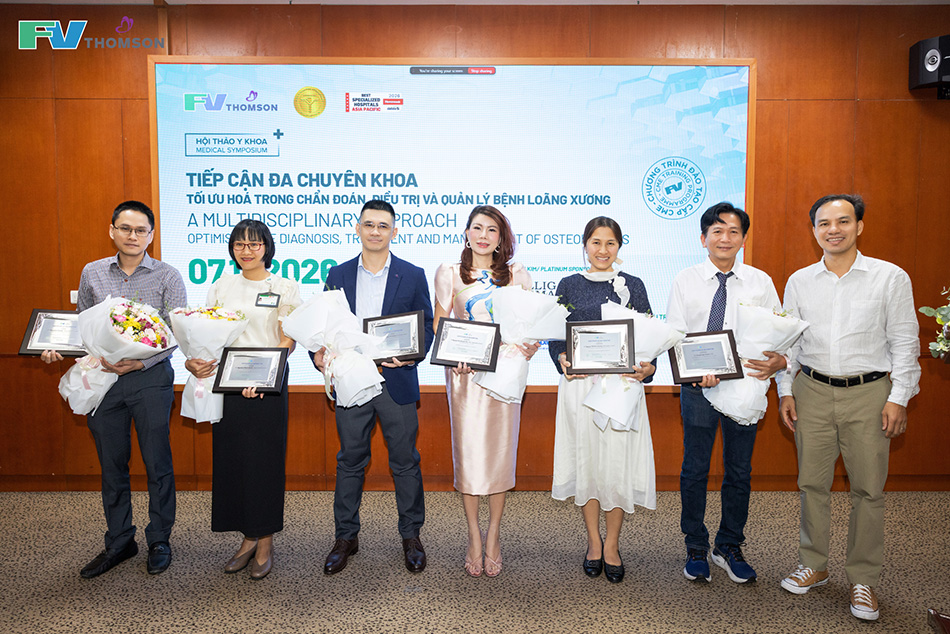
The seminar was successfully held, attracting more than 150 attendees
At FV Hospital, osteoporosis care involves close collaboration across multiple specialties, including Rheumatology, Orthopaedics and Hand Surgery, Neurosurgery and Spine Surgery, the Pain Clinic, and Dietetics and Nutrition. Geriatrics also plays an important role in the comprehensive assessment and management of older patients. Through this multidisciplinary approach, FV Hospital aims to strengthen osteoporosis prevention, improve early diagnosis and provide coordinated care to help reduce the risk of subsequent fractures. If you or your loved ones are concerned about bone health, consult the specialists at FV Hospital to learn more about osteoporosis screening, diagnosis and treatment options.
Related News
See moreRelated News
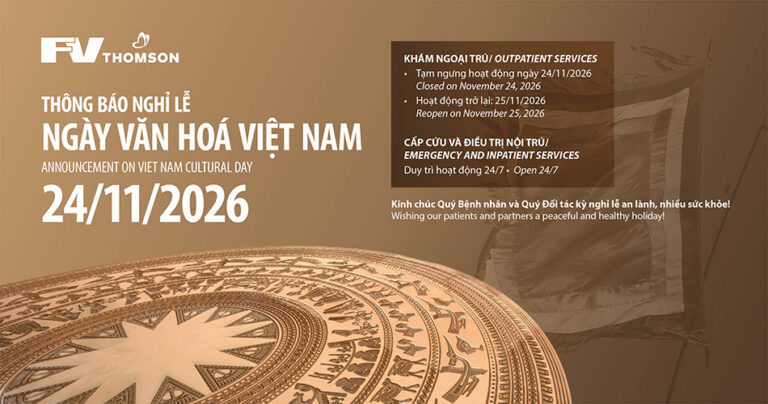
ANNOUNCEMENT ON VIETNAM CULTURAL DAY (24/11)
FV Hospital would like to announce our operating hours during the Vietnam Cultural Day holiday so that our patients and partners can conveniently arrange their visits and treatments: • Outpatient Services: Closed on Tuesday, November 24th. • Hospital Reopening: The hospital will resume normal operations on Wednesday, November 25th. • Emergency and Inpatient Services: Will […]

ANNOUNCEMENT ON VIETNAM CULTURAL DAY (24/11)

