



Height anxiety frequently drives parents to seek growth hormone therapy in the hope of helping their children keep pace with peers. According to endocrinology specialists, growth hormone is far from a “magic height potion” but a strictly indicated medical therapy suitable only for eligible patients.
“My child is the shortest in their class, could they be growth hormone deficient?” is one of the most frequent questions posed to Dr Nguyen Nhat Nam, PhD, Head of the Endocrinology Unit at FV Hospital, when evaluating children with growth faltering.
According to Dr Nam, whilst parents naturally fixate on their child’s current stature, paediatric endocrinologists place equal importance on growth velocity.
A healthy pre-pubertal child typically grows between 5-8 cm per year. If a child grows less than 4-5 cm per year, or if their height trajectory progressively deviates downwards on standardised growth charts, parents should consult a paediatric endocrinologist to investigate the underlying cause rather than seeking unproven height-boosting remedies.
Short stature does not equate to growth hormone deficiency
Although growth hormone (GH) plays a pivotal role in childhood development, growth hormone deficiency is merely one of many potential causes of short stature.
In alignment with clinical guidelines from the US Endocrine Society and the European Society for Paediatric Endocrinology (ESPE), growth faltering can stem from a wide array of factors, including genetic traits, chronic malnutrition, hypothyroidism, chronic kidney disease, congenital heart disease, being born small for gestational age (SGA) without catch-up growth, or genetic conditions such as Turner and Noonan syndromes.
Consequently, clinical evaluation cannot rely solely on a child’s current height. It requires a comprehensive review of multi-year growth trajectories, family history, pubertal staging, bone age assessment, and specialised endocrine testing.
“Therapy is only effective when the underlying cause is correctly diagnosed. Being short does not automatically mean a child requires growth hormone supplementation,” Dr Nam emphasises.

Accurate diagnosis of the underlying cause is essential when evaluating a child with growth faltering. Image: FV
Growth hormone therapy is not a ‘miracle height booster’
In recent years, growth hormone therapy has attracted widespread parental interest as a solution for height enhancement. However, Dr Nam stresses that this is an intervention with rigorous clinical indications.
Growth hormone is licensed for specific conditions with proven clinical efficacy, including growth hormone deficiency, Turner syndrome, Prader-Willi syndrome, children born with SGA who fail to achieve catch-up growth, and other selected clinical indications outlined in professional guidelines.
Furthermore, it is not a quick-fix treatment yielding results in a matter of months. Therapy usually spans several years, and its success hinges on timely initiation, strict compliance, and regular clinical monitoring.
Throughout treatment, doses must be adjusted based on body weight and growth response, while monitoring for local and systemic adverse effects to optimise efficacy while maintaining patient safety.
Why reaching final adult height is not the final finish line
According to Dr Nguyen Nhat Nam, many families assume that growth hormone therapy terminates once the child reaches their desired height. In reality, certain patients require re-evaluation upon transitioning into adulthood.

Dr Nguyen Nhat Nam, PhD, providing growth assessment and clinical consultation at FV Hospital. Image: FV
For individuals with severe growth hormone deficiency persisting into adulthood, abrupt discontinuation of therapy can adversely affect lean muscle mass, bone mineral density, and lipid metabolism, while increasing long-term cardiometabolic risk.
“The goal of treatment extends beyond helping a child grow taller; it aims to establish robust bone density, healthy muscle mass, and metabolic stability well into adulthood,” Dr Nam explains.

FV Hospital adopts a multidisciplinary model in paediatric growth hormone therapy. Image: FV
A multidisciplinary approach to personalised care
Medical experts stress that the management of growth faltering must be tailored to the individual, as every child presents with a unique underlying cause and growth trajectory.
At FV Hospital, paediatric growth evaluations are conducted by a joint team from paediatric endocrinology, working alongside clinical nutritionists, radiologists, and pathologists to establish a definitive diagnosis before initiating any treatment. For patients requiring growth hormone therapy, clinicians provide continuity of care from childhood through the transition into adulthood, adjusting treatment regimens and monitoring metabolic parameters and bone density in accordance with international consensus guidelines.
Dr Nguyen Nhat Nam advises that if parents notice their child is significantly shorter than their peers, they should track their growth velocity over a period of at least six months and seek early specialist advice if growth appears sluggish. “The priority is not to achieve rapid, dramatic height gain, but to pinpoint the exact cause of growth faltering. This allows us to select an appropriate, safe therapeutic path that preserves the child’s optimal adult height potential,” he concludes.
| To learn more about paediatric growth hormone therapy or to arrange a consultation with Dr Nguyen Nhat Nam (PhD), please contact the Endocrinology Unit at FV Hospital, 6 Nguyen Luong Bang Street, Tan My Ward (formerly District 7), Ho Chi Minh City, or call (028) 3511 3333. |
Related News
See moreRelated News
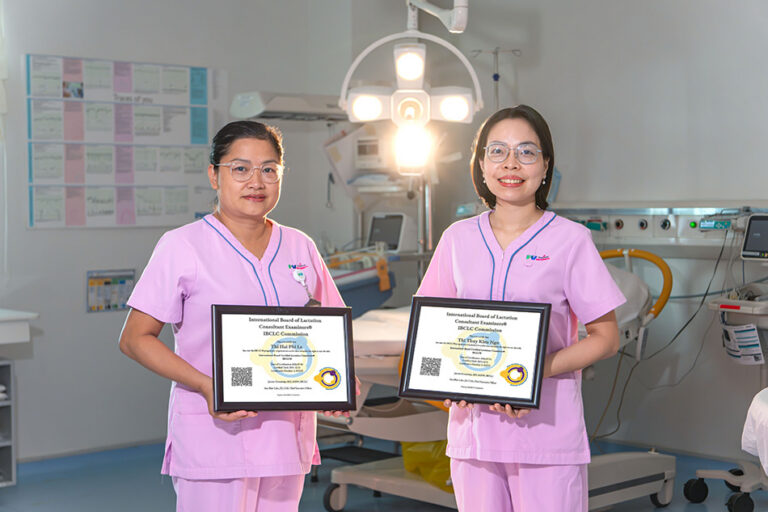
Two Vietnamese midwives attain international IBCLC certification in breastfeeding counselling
Two midwives from FV Thomson’s Maternity Department have earned IBCLC (International Board Certified Lactation Consultant) certification, the international credential for breastfeeding support specialists. This achievement represents a significant clinical milestone in infant feeding support at FV Hospital, driven by the real-world complexities these practitioners encounter daily when supporting mothers and their newborns. Beyond certification: A […]
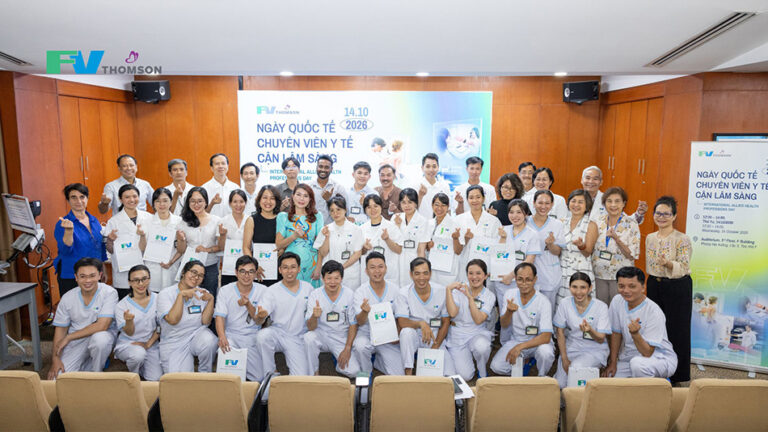
FV Hospital Celebrates International Allied Health Professions Day 2026
On 14 October 2026, FV Hospital held a special event to express its appreciation for allied health professionals. Attendees included members of the Board of Directors, heads of departments, and more than 40 allied health professionals and specialists. The event recognised the dedication of allied health professionals across a range of specialties, including Dietetics and […]

FV pioneers ERAS® implementation in Vietnam in line with international standards, supporting faster postoperative recovery
FV Hospital has become the first hospital in Vietnam to partner with Sweden-based Encare AB to implement the Enhanced Recovery After Surgery (ERAS®) programme. Through this partnership, FV joins Encare’s network of 22 hospitals in 11 countries across the Asia-Pacific region. The initiative aims to standardise surgical care according to international guidelines, leverage data to […]

The Pink Month 2026 at FV: Raising awareness and taking proactive care of breast health
Every year, millions of women worldwide are diagnosed with breast cancer. In 2024, an estimated 2.43 million new cases and nearly 694,000 deaths from breast cancer were recorded globally. In Vietnam, GLOBOCAN 2022 estimated 24,563 new cases, making breast cancer the most commonly diagnosed cancer among women. Behind these statistics are the individual health stories […]
Two Vietnamese midwives attain international IBCLC certification in breastfeeding counselling
FV Hospital Celebrates International Allied Health Professions Day 2026
FV pioneers ERAS® implementation in Vietnam in line with international standards, supporting faster postoperative recovery

