



On 10 August 2026, FV Hospital, in collaboration with Olympus Corporation, held the workshop “Advanced Zoom Gastroscopy: Mastering the Next Level of Early GI Cancer Diagnosis”, bringing together endoscopists, gastroenterologists, technicians and other medical professionals from hospitals and clinics in Vietnam and abroad.
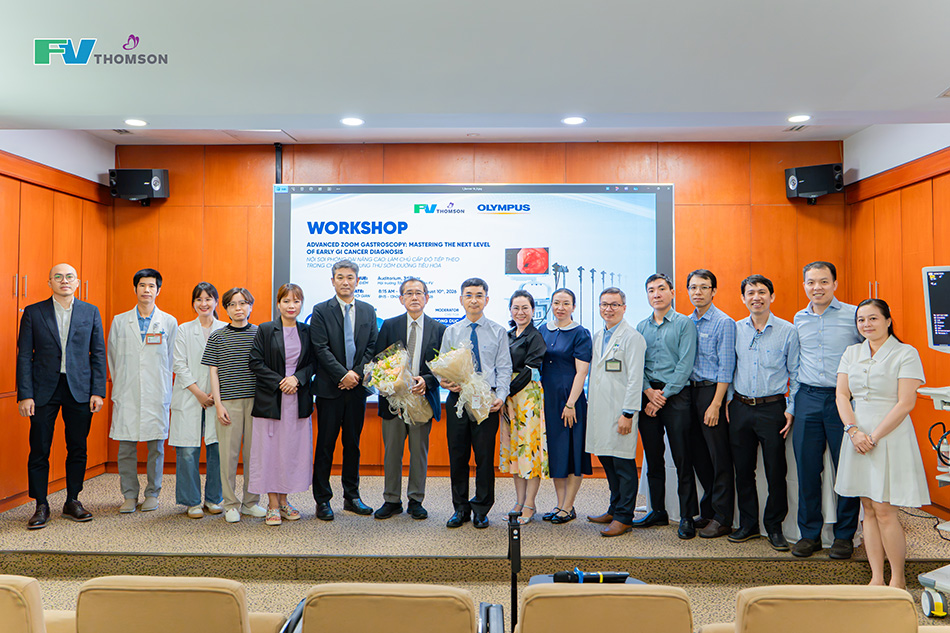
The workshop “Advanced zoom gastroscopy: mastering the next level of early GI cancer diagnosis”, organised by FV Hospital in collaboration with Olympus
Updates on magnification endoscopy techniques for early cancer diagnosis
The workshop featured Professor Kenshi Yao of Fukuoka University Chikushi Hospital, Japan, a renowned expert in endoscopy and early gastrointestinal cancer diagnosis. The programme also brought together specialists, including Associate Professor Dr Quach Trong Duc, PhD, Vice Chair of the Department of Internal Medicine at the University of Medicine and Pharmacy at Ho Chi Minh City; Dr Bui Nhuan Quy, MSc, Specialist Level II, Head of the Gastroenterology & Hepatology Department at FV Hospital and experienced endoscopists who shared clinical insights and practical experience.
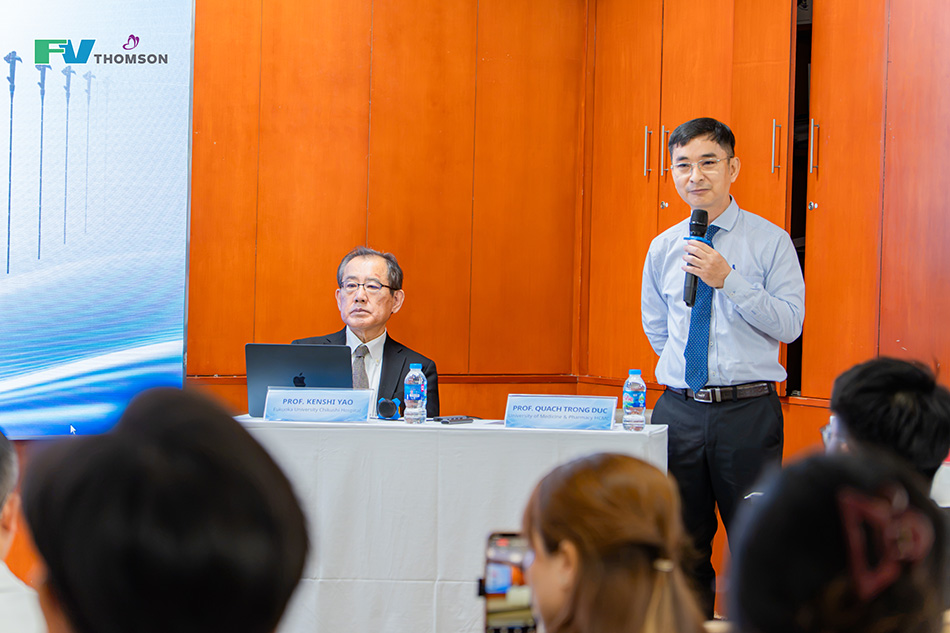
Professor Kenshi Yao and Associate Professor Dr Quach Trong Duc share insights at the conference
Gastrointestinal cancers, particularly cancers of the oesophagus, stomach and colorectum, are a major health concern in Vietnam. However, detecting early-stage lesions remains challenging, as some lesions can be difficult to identify using standard endoscopy.
At the workshop, experts shared their experience with Olympus’ next-generation magnification endoscopy system. By providing real-time magnified views during the endoscopic procedure, the system enables doctors to examine the mucosal surface and microvascular patterns in greater detail than standard endoscopy. This additional visual information can help physicians identify suspicious lesions, assess lesion boundaries and determine appropriate diagnostic or treatment approaches.
Associate Professor Dr Quach Trong Duc, PhD, Vice Chair of the Department of Internal Medicine at the University of Medicine and Pharmacy at Ho Chi Minh City, said: “Accurately assessing the extent of a lesion is crucial. Magnification endoscopy is particularly advantageous for evaluating flat lesions, helping to clearly identify lesion margins that may be difficult to detect with conventional endoscopy.”
When lesions are detected and assessed at an early stage, selected cases may be suitable for minimally invasive endoscopic procedures, such as endoscopic submucosal dissection (ESD) or endoscopic mucosal resection (EMR), potentially avoiding major surgery. When clinically appropriate, these techniques can reduce the need for more invasive surgery and support recovery. FV Hospital has routinely performed these advanced endoscopic procedures for many years.
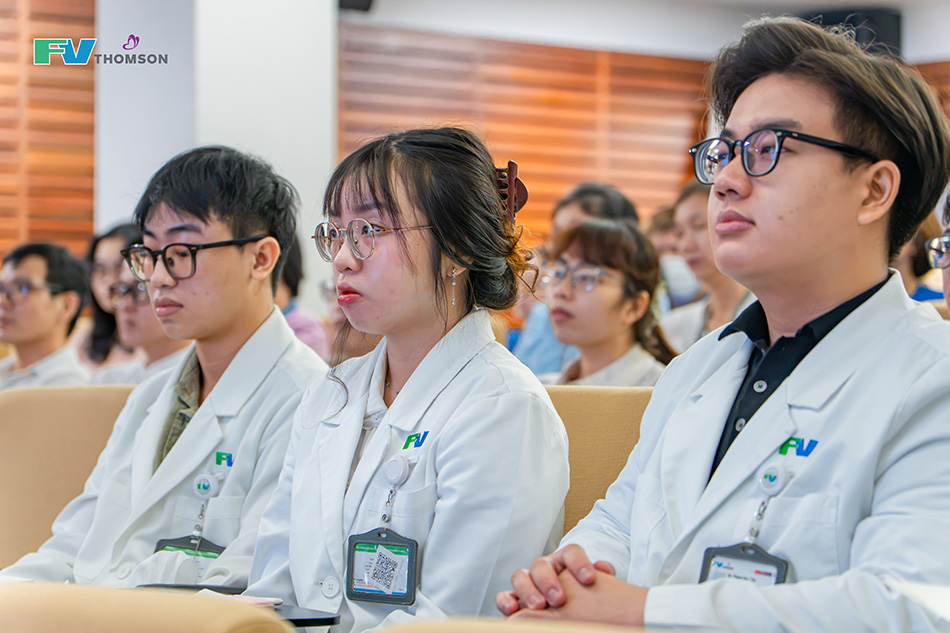
Doctors attend a presentation on magnification endoscopy for early GI cancer detection
FV Hospital invests in technology to enhance early detection of digestive diseases
Beyond specialized theoretical updates, Prof. Kenshi Yao personally led hands-on training on patients, giving attending doctors a direct view of clinical approach, lesion identification, and real-time evaluation. Consequently, doctors gained practical experience with advanced techniques in early GI cancer detection, contributing to enhanced clinical skills and higher patient care standards.
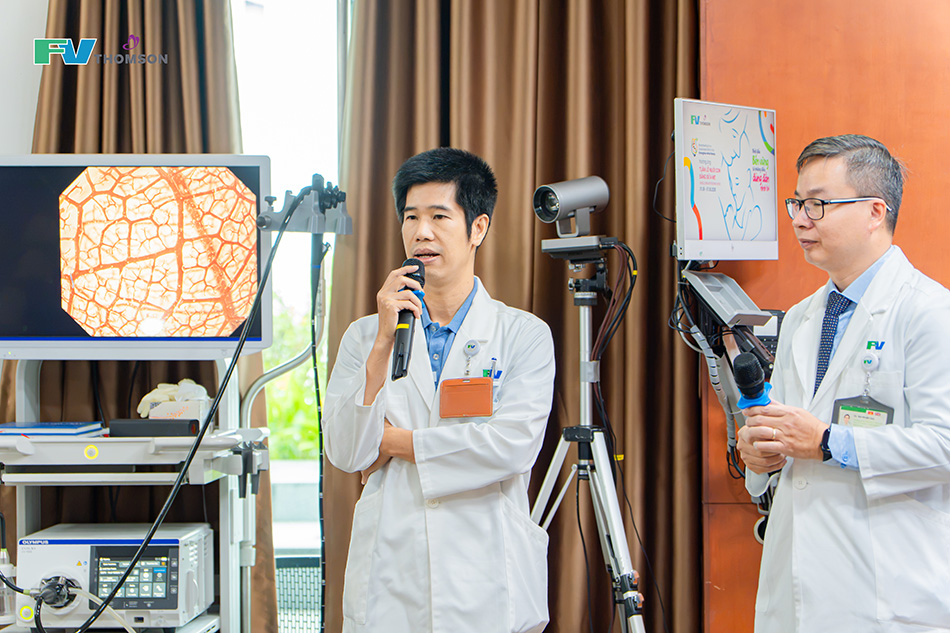
Dr Bui Nhuan Quy (right) and Dr Nguyen Huu Nhan, Gastroenterology & Hepatology Department, FV Hospital, present at the workshop
As the hosting institution, FV Hospital expects the event to promote professional training, medical knowledge updates, and clinical experience sharing using advanced technology in gastrointestinal endoscopy, while strengthening ties with domestic and international experts.
In the field of GI endoscopy, the Gastroenterology & Hepatology Department at FV Hospital brings together a team of specialists with over 20 years of experience, collaborating with major digestive treatment centers in Japan and India. The department is fully equipped to perform advanced diagnostic and interventional endoscopy using the AI-integrated Olympus X1 endoscopy system and capsule endoscopy, facilitating early detection and effective treatment of gastrointestinal, hepatobiliary, and pancreatic diseases. Through this program, doctors further update their professional knowledge, exchange insights with leading local and international experts, and adopt advanced early GI cancer diagnostic techniques to elevate practice capability and patient care quality.
For liver and gastrointestinal cancer management, the department collaborates closely with Interventional Radiology Unit and General Surgery Department to deliver state-of-the-art treatment solutions, such as transarterial chemoembolization (TACE) for liver cancer and robotic surgery using the da Vinci Xi system. Recently, the department was honored in the “Best Specialized Hospitals Asia-Pacific 2026” rankings published by Newsweek and Statista.
Related News
See moreRelated News
FV pioneers ERAS® implementation in Vietnam in line with international standards, supporting faster postoperative recovery
FV Hospital has become the first hospital in Vietnam to partner with Sweden-based Encare AB to implement the Enhanced Recovery After Surgery (ERAS®) programme. Through this partnership, FV joins Encare’s network of 22 hospitals in 11 countries across the Asia-Pacific region. The initiative aims to standardise surgical care according to international guidelines, leverage data to […]
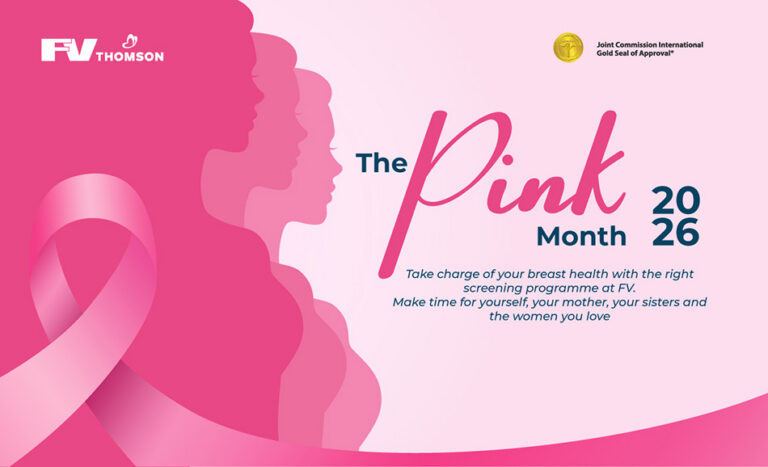
The Pink Month 2026 at FV: Raising awareness and taking proactive care of breast health
Every year, millions of women worldwide are diagnosed with breast cancer. In 2024, an estimated 2.43 million new cases and nearly 694,000 deaths from breast cancer were recorded globally. In Vietnam, GLOBOCAN 2022 estimated 24,563 new cases, making breast cancer the most commonly diagnosed cancer among women. Behind these statistics are the individual health stories […]
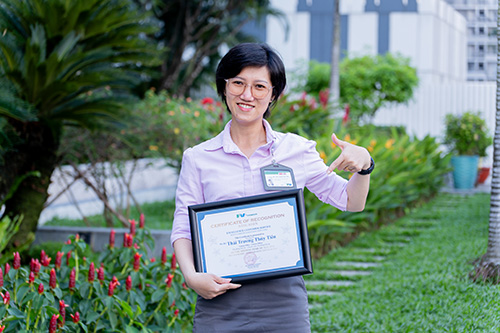
Shining star of Aug 2026
The Shining Star of August 2026 has been awarded to Ms Thai Truong Thuy Tien, Liaison Officer. With her dedication and professionalism, Ms Tien continually overcomes challenges and makes valuable contributions to the work of the Liaison Office. Having spent 10 years at FV, Ms Thai Truong Thuy Tien has had a memorable journey filled […]
16th Give Blood – Give Hope blood donation programme: Spreading the spirit of giving
On 25 September 2026, the 16th “Give Blood – Give Hope” blood donation programme, co-organised by FV Hospital and the Blood Transfusion Haematology Hospital, concluded successfully, receiving enthusiastic participation from FV staff, clients and community members. With 134 units of blood collected, the programme helped replenish blood supplies and support emergency care and treatment for […]
FV pioneers ERAS® implementation in Vietnam in line with international standards, supporting faster postoperative recovery
The Pink Month 2026 at FV: Raising awareness and taking proactive care of breast health
Shining star of Aug 2026

