



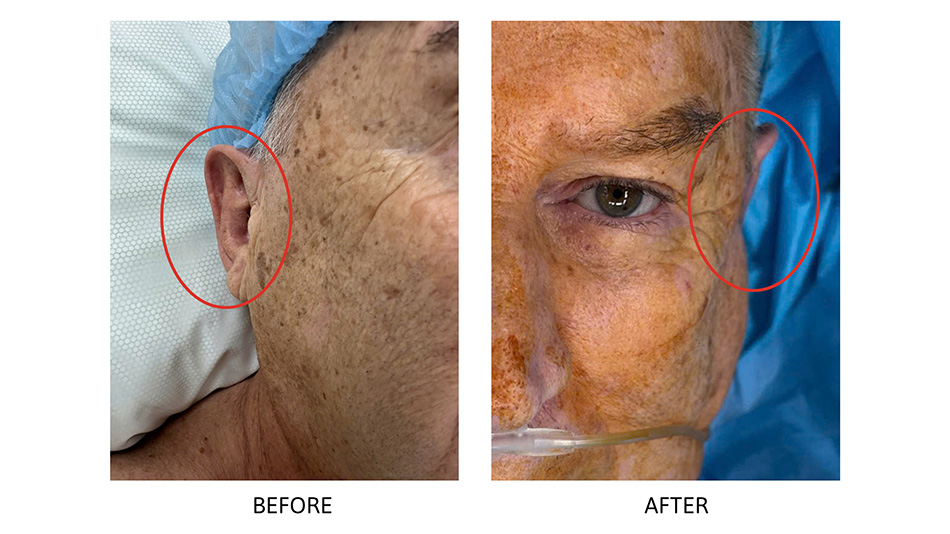
At nearly 80, when many people have come to accept the imperfections in their appearance that come with age, Mr D. (an Australian national) decided to visit FV Hospital with a personal wish: to correct the congenital prominent ears he had lived with throughout his life.
Initially, Dr Vo Cong Minh, PhD, Head of the Otorhinolaryngology (ORL or ENT) Department at FV Hospital, was hesitant, as the procedure was elective and not medically necessary. However, after speaking with the patient, Dr Minh was deeply moved by the patient’s words: “From childhood to adulthood, every time I looked in the mirror, I saw the image of the father who abandoned my mother and me when I was just four months old. For decades, I have been haunted by that memory. I don’t want to live with it any longer. Please operate on me, Doctor…”.
The difference between cosmetic trends and congenital ear abnormalities
While prominent ears are becoming a popular cosmetic trend among young Asians who wish to make their faces appear smaller, from a Western medical perspective, excessively protruding ears are considered a congenital structural abnormality involving the auricular cartilage.
Prominent ears can result from an underdeveloped antihelical fold, an overdeveloped conchal bowl, or a combination of structural factors. These changes can cause the auricle to protrude further from the side of the head than usual and increase the posterior auriculocephalic angle. In some patients, prominent ears can affect facial balance and may also contribute to emotional distress or reduced self-confidence.
Subcutaneous cartilage rolling suture technique: A highly complex procedure performed by few specialists

Dr Vo Cong Minh, PhD, performs the subcutaneous cartilage rolling suture technique to correct the patient’s prominent ears.
Many people mistakenly believe that correcting prominent ears is merely a minor procedure to trim excess skin behind the ear and pin it close to the head. Auricular cartilage is naturally elastic. “If the surgeon only removes skin without addressing the underlying cartilage, the ear may return towards its original position,” Vo Cong Minh, PhD, explained.
The subcutaneous cartilage rolling suture technique addresses the underlying cartilage structure and requires detailed anatomical knowledge, precise surgical technique and extensive surgical experience, and can be performed by only a limited number of suitably trained specialists. For bilateral procedures, achieving appropriate symmetry while maintaining a natural appearance is a key consideration.
At FV Hospital, Vo Cong Minh, PhD, and the Otorhinolaryngology (ORL or ENT) team used this technique to reshape the auricular cartilage and achieve a more natural and balanced ear position.
The surgery was performed through a small incision behind the ear, helping to minimise visible scarring. The surgeon then accessed the auricular cartilage and used durable subcutaneous sutures to recreate key structures, such as the scapha and antihelix, while repositioning and securing the cartilage to reduce the posterior auriculocephalic angle.
An important step was adjusting the tension of each suture. The tension must be carefully balanced: if the sutures are too tight, the ear may appear overly flattened and lose its natural contour; if they are too loose, the elastic cartilage may tend to return towards its original position.
The procedure took approximately one hour and was performed under local anaesthesia with conscious sedation to help ensure the patient’s comfort.
Relieving a lifelong emotional burden through compassionate care
Following surgery, the patient’s ears were positioned closer to the sides of his head, with attention paid to symmetry and a natural appearance. For the patient, however, the most meaningful outcome was the moment he looked in the mirror and saw an appearance that felt more comfortable and reassuring to him, helping him move forward from a painful memory that had stayed with him for decades.
At FV Hospital, surgical care focuses on achieving appropriate functional and aesthetic outcomes while supporting patients’ comfort, confidence and quality of life.
Contact the Otorhinolaryngology (ORL or ENT) Department at FV Hospital for a consultation: (028) 3511 3333
Related News
See moreRelated News
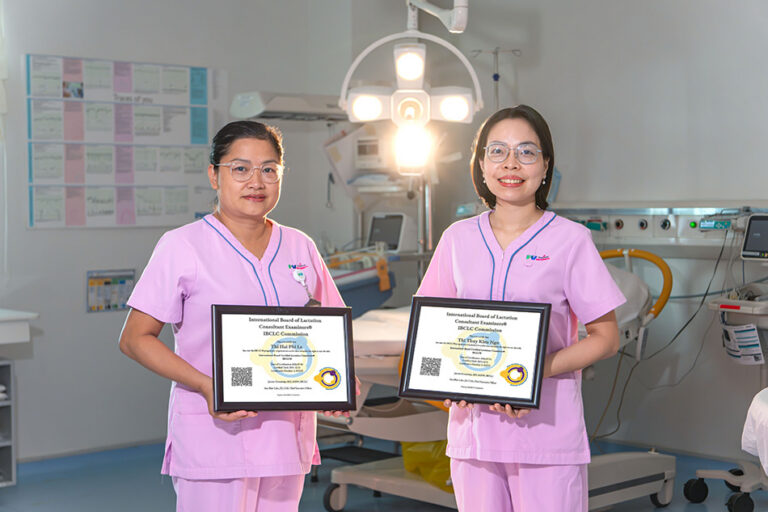
Two Vietnamese midwives attain international IBCLC certification in breastfeeding counselling
Two midwives from FV Thomson’s Maternity Department have earned IBCLC (International Board Certified Lactation Consultant) certification, the international credential for breastfeeding support specialists. This achievement represents a significant clinical milestone in infant feeding support at FV Hospital, driven by the real-world complexities these practitioners encounter daily when supporting mothers and their newborns. Beyond certification: A […]
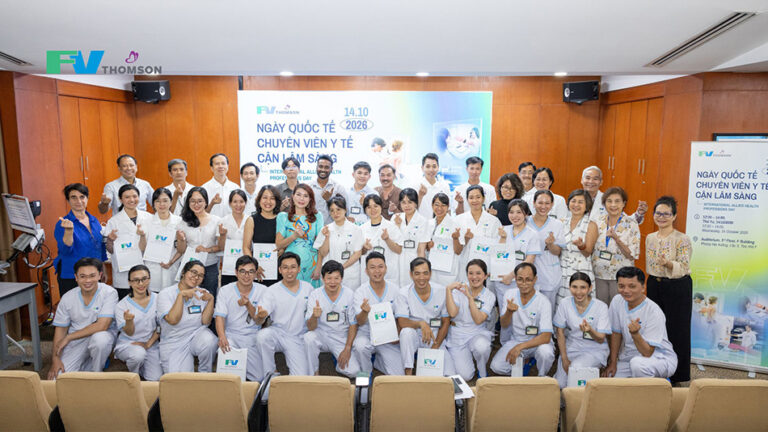
FV Hospital Celebrates International Allied Health Professions Day 2026
On 14 October 2026, FV Hospital held a special event to express its appreciation for allied health professionals. Attendees included members of the Board of Directors, heads of departments, and more than 40 allied health professionals and specialists. The event recognised the dedication of allied health professionals across a range of specialties, including Dietetics and […]

FV pioneers ERAS® implementation in Vietnam in line with international standards, supporting faster postoperative recovery
FV Hospital has become the first hospital in Vietnam to partner with Sweden-based Encare AB to implement the Enhanced Recovery After Surgery (ERAS®) programme. Through this partnership, FV joins Encare’s network of 22 hospitals in 11 countries across the Asia-Pacific region. The initiative aims to standardise surgical care according to international guidelines, leverage data to […]
The Pink Month 2026 at FV: Raising awareness and taking proactive care of breast health
Every year, millions of women worldwide are diagnosed with breast cancer. In 2024, an estimated 2.43 million new cases and nearly 694,000 deaths from breast cancer were recorded globally. In Vietnam, GLOBOCAN 2022 estimated 24,563 new cases, making breast cancer the most commonly diagnosed cancer among women. Behind these statistics are the individual health stories […]
Two Vietnamese midwives attain international IBCLC certification in breastfeeding counselling
FV Hospital Celebrates International Allied Health Professions Day 2026
FV pioneers ERAS® implementation in Vietnam in line with international standards, supporting faster postoperative recovery

