



Non-Surgical Treatment of Thyroid Cancer and Hyperthyroidism with I-131
Uses I-131 to treat hyperthyroidism, Graves’ disease, toxic thyroid nodules and differentiated thyroid cancer.
This is a standard treatment for differentiated thyroid cancer and hyperthyroidism.
Radioactive iodine (I-131) treatment uses the thyroid’s natural ability to take up iodine to deliver targeted radiation directly to thyroid tissue, whether it is overactive tissue, cancerous tissue or tissue remaining after surgery. Because iodine is selectively taken up by thyroid tissue, surrounding structures receive relatively little radiation exposure.
All I-131 treatments at FV are carried out in a strictly controlled environment and in accordance with national radiation safety regulations.
Before treatment:
-
Stop taking antithyroid medicines two days before treatment.
-
Your doctor will arrange a scan and other tests to assess your thyroid.
-
After taking the I-131 dose by mouth, you may be able to go home and follow radiation-safety precautions there for 5–7 days.
After treatment:
-
Avoid direct contact with pregnant women and children under 16 for seven days.
-
Keep at least one metre away from other people for seven days and sleep separately for seven days.
-
Avoid strenuous physical activity for 10 days.
-
Avoid foods high in iodine and iodised salt until advised otherwise by your treating doctor.
-
Do not become pregnant for one year. If you plan to become pregnant after this period, discuss your plans with your treating doctor.
-
Attend follow-up appointments to assess your response to treatment at one, three, six and 12 months.
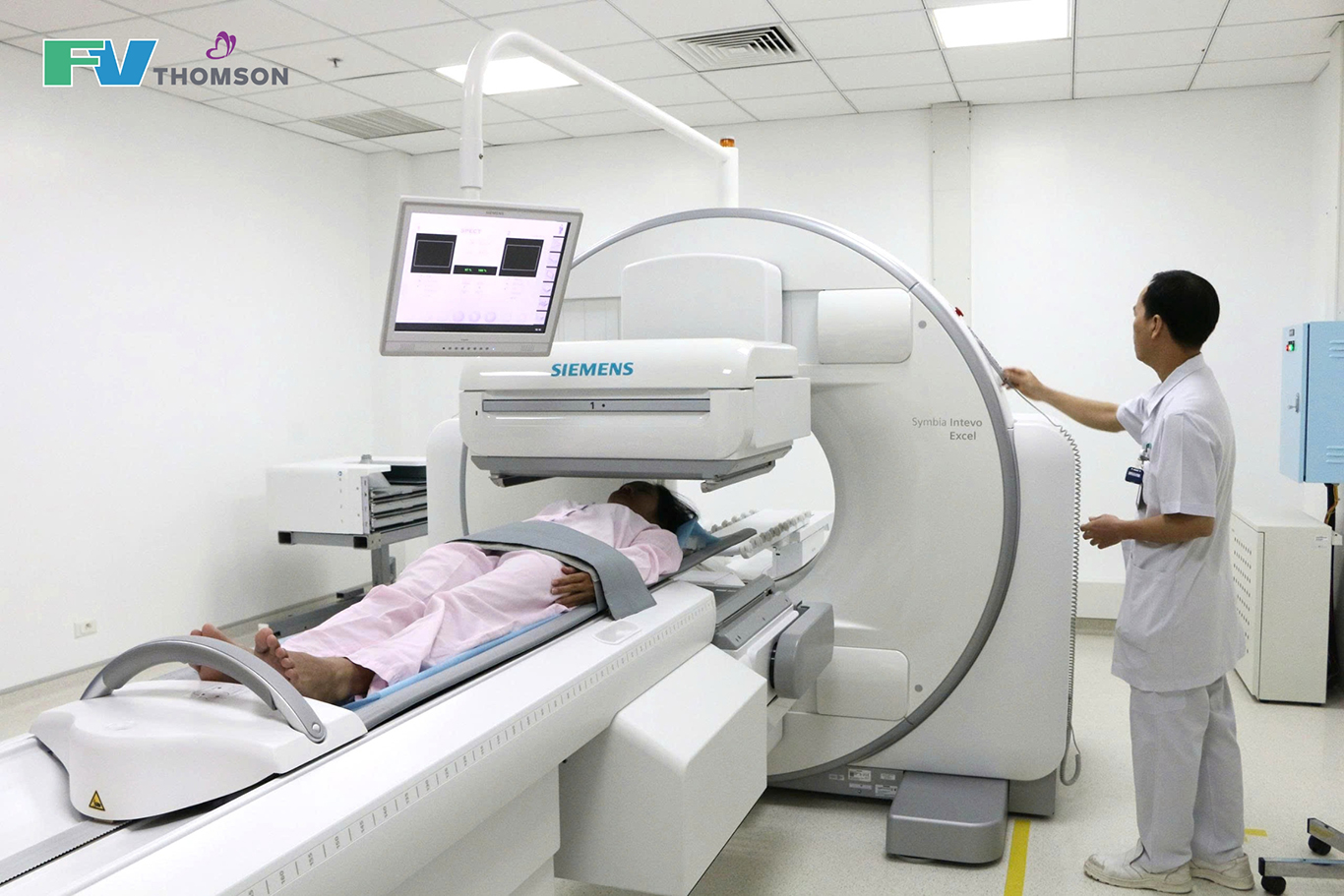
Considering I-131 treatment?
Book a consultation with our nuclear medicine specialist to find out if it is right for you.
Make an Appointment
