



Hong Zana (a 19-year-old Cambodian national) was admitted to the Accident & Emergency department following a severe traffic accident. He suffered from a large epidural haematoma estimated at more than 100 grams, causing brain compression, and multiple fractures across his maxillofacial region. Within less than 15 minutes of admission, the multidisciplinary team at FV Hospital activated an emergency surgical protocol to save the young man’s life just in time.
Fighting for life across borders: A critical late-night polytrauma emergency
Just past 9:00 pm, on his way home from a part-time job, a blinding flash of light from an oncoming car suddenly struck Hong Zana’s eyes. In an instant, the young man lost all sense of direction, causing his handlebars to wobble. The motorcycle lost momentum and veered straight into a deep roadside ditch.
The crash left Hong Zana’s head and face covered in blood, along with a series of other bodily injuries. Born deaf and dumb, the 19-year-old could not describe his condition. The friends travelling with him immediately rushed him to a local medical facility and contacted his family.
Faced with their son’s severe head and facial trauma, the family decided to bring Hong Zana to Vietnam that very night. They headed straight for FV Hospital, as the facility has successfully treated many Cambodian patients involved in serious accidents or critical illnesses over recent years.
“My family, as well as many of our friends and relatives, have been treated at FV before, so we have complete trust in the hospital. When we brought him to the Emergency Department, we entrusted his care entirely to the doctors,” a relative of the patient said.
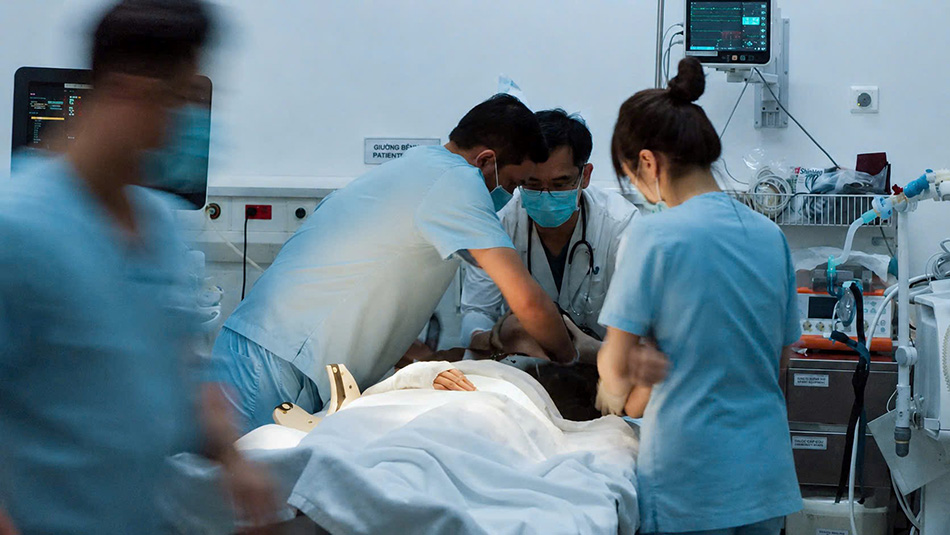
The medical team at FV Accident & Emergency Department providing urgent care to the patient (Photo: FV)
Hong Zana arrived at FV Hospital at 4:00 am with extensive facial abrasions, a severe headache, an inability to open his mouth, signs of nausea, as well as neck and arm pain. Because the patient is deaf and and unable to speak, the Accident & Emergency team faced difficulties during the diagnosis. However, CT scan results quickly revealed a massive epidural haematoma accompanied by progressive cerebral oedema (brain swelling).
“The large epidural haematoma, combined with multiple broken bones across the jaw and face, made this multiple-injury case critically dangerous. The absolute priority was to swiftly treat the brain injury to save the patient’s life,” noted Dr Trinh Van Hai, Head of the Accident & Emergency Department at FV Hospital.
15 minutes to activate the multidisciplinary team
Right in the emergency room, the multidisciplinary alert system was activated. Dr Tran Luong Anh, Specialist Level II – Head of the Neuro-Surgery and Spine Surgery, arrived just minutes later. Reviewing the CT scans, Dr Tran Luong Anh noticed that the blood clot outside the brain had grown to over 100 grams and was beginning to compress the brain, pushing it to one side.
“Any delay could have led to death or severe, permanent brain damage, so we ordered immediate emergency surgery,” Dr Luong Anh said.
While the emergency team stabilised the patient and prepared for anaesthesia, a crucial decision was made: instead of putting the patient through two separate surgeries, the specialist departments would work together to treat all injuries during a single operation.
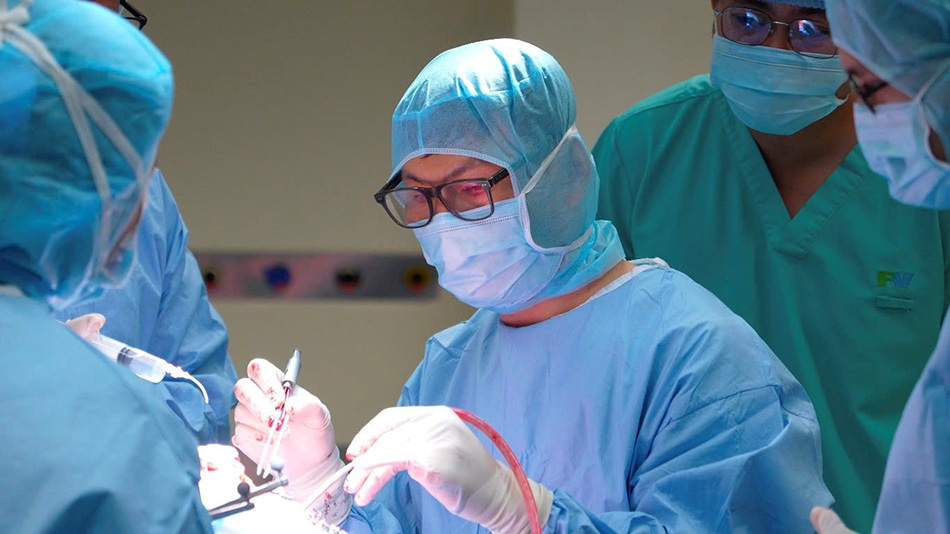
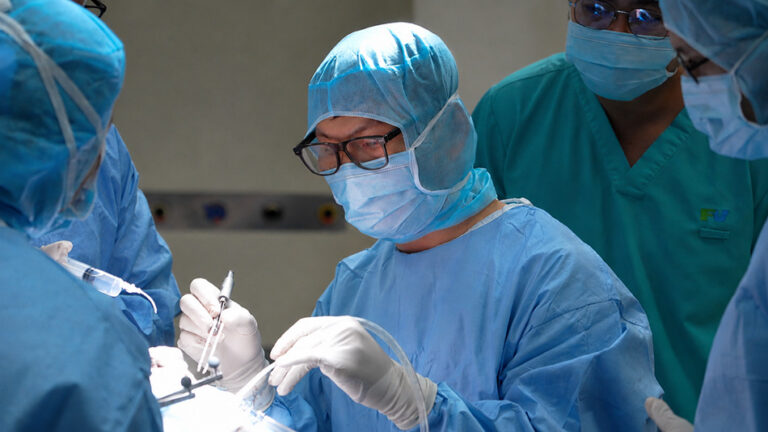
Dr Tran Luong Anh, Specialist Level II, performs surgery to remove the blood clot outside the patient’s brain. (Photo: FV)
The patient’s case, which included complex facial trauma, was immediately shared with Dr Nguyen Thanh Tung, PhD – Head of the Maxillofacial Surgery Department. The entire collaborative plan between the specialties was finalised in less than 15 minutes from the moment the patient was admitted.
Treating all head and facial injuries in a single surgery
To address the head injury, the Neuro-Surgery team urgently performed a craniotomy (an emergency skull operation) to relieve pressure, remove the blood clot, and stop the bleeding. They used a specialised skull drilling and sawing system to minimise operating time and limit blood loss.
Once the brain injury was stable, the maxillofacial surgery team immediately took over the patient in the exact same operating theatre. According to Dr Nguyen Thanh Tung, PhD, the young man had suffered a complex fracture of the right zygomaticomaxillary (cheek and jaw) complex and a fracture of the right jaw angle. The team decided to conservatively manage the slightly displaced cheekbone fracture and focus on treating the lower jaw fracture, prioritising the restoration of the patient’s ability to chew.
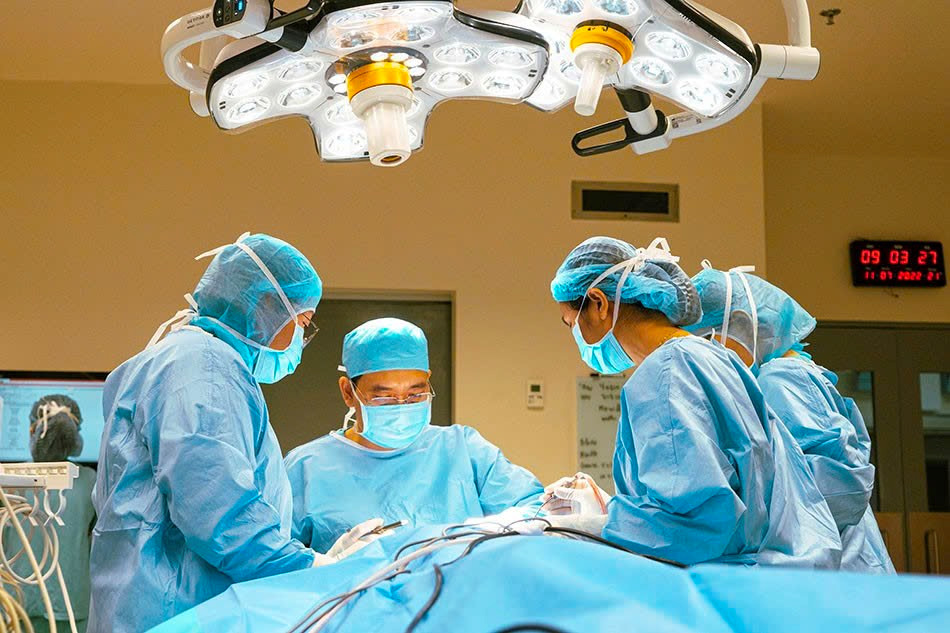
The maxillofacial surgery team realigns the patient’s jawbone. (Photo: FV)
Dr Tung realigned the jawbone and secured it with titanium plates through an incision inside the mouth. This technique ensures a good cosmetic result, promotes fast recovery, and significantly shortens the hospital stay. The procedure was completed in about 45 minutes.
After 5 days of treatment, Hong Zana made a spectacular recovery: he was fully conscious, showed no signs of brain damage, and could chew properly before his discharge.
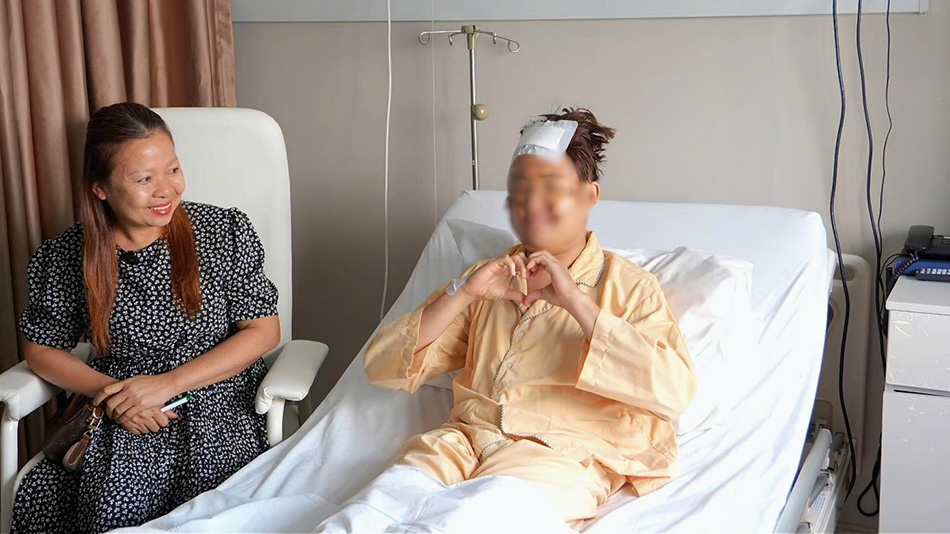
Hong Zana and his relative after the surgery at FV Hospital (Photo: FV)
“The emergency services at FV were incredibly fast and timely. He recovered so well after the surgery. Our family is truly grateful to the doctors,” the patient’s relative shared emotionally on the day Hong Zana was discharged.
Collaborative emergency care: Optimising the “golden window” for patients
With traumatic brain injuries involving an epidural haematoma, time is the deciding factor for a patient’s survival. Without timely surgery, brain swelling and compression can progress very quickly in just a few hours. Dr Tran Luong Anh, Specialist Level II, also noted that while cases like Hong Zana’s are not technically complex from a surgical perspective, arriving on time and getting the right treatment from the start helps minimise permanent damage.
In this case, the collaborative emergency care model at FV Hospital played a vital role. From initial emergency care, imaging, neuro-surgery, and anaesthesia to maxillofacial surgery, the entire team was linked in a seamless treatment process, shortening the response time and improving the patient’s recovery.
In case of an emergency, readers can contact the Accident & Emergency department at FV Hospital: 06 Nguyen Luong Bang, Tan My Ward (former District 7), Ho Chi Minh City. Phone: 028 3511 3333, Emergency hotline: 028 3511 3500.
Related News
See moreRelated News
Abdominal pain misdiagnosed as digestive issue: 23-year-old woman diagnosed with ovarian torsion
While studying abroad in South Korea, N.T.T.M. (23) experienced unusual pain in her lower right abdomen. She sought treatment at a local hospital and received medication for a suspected digestive issue. After returning to Vietnam to visit her family, the pain recurred and worsened. On her friends’ advice, M. visited FV Hospital for evaluation. She […]
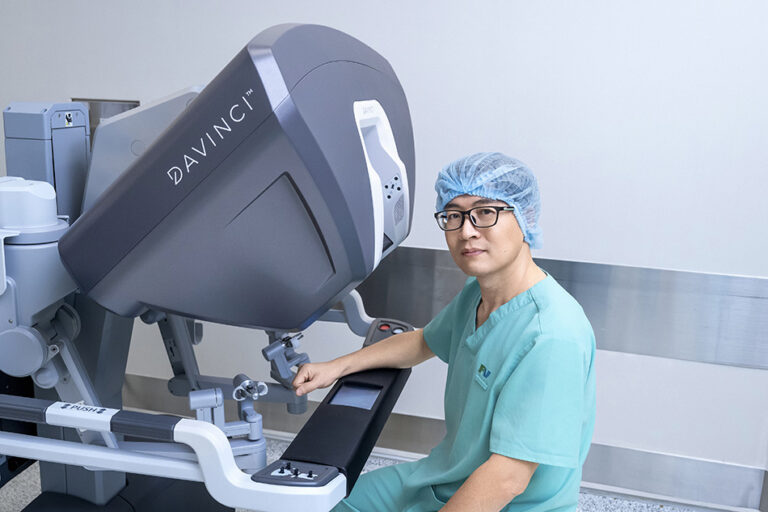
Advanced robotic surgery at FV Hospital removes tumour near aorta
Surgeons at FV Hospital used the da Vinci Xi robotic surgical system to successfully remove a fibrous tumour located in a difficult-to-access area next to the aorta in a 46-year-old woman. Ms Nguyen Thuy Phuong Dung recovered well after surgery to remove the fibrous tumour from her left chest. Image: FV When a subtle chest […]
Boy with ‘boneless arm’ and decade-long journey to find hope
A jump at the age of six left young D.V.C. with devastating consequences: a left forearm almost entirely devoid of skeletal architecture, facing the prospect of limb amputation through joint disarticulation. For more than ten years, hope faded as every attempt at recovery stalled. It was only through the intervention of the Children of Vietnam […]
Travelling halfway across the world for specialist spinal stenosis treatment
A Canadian woman who had nearly lost the ability to walk due to spinal canal stenosis was successfully treated at FV Hospital and was able to return home just one week after surgery. More than thirty years ago, Ms M.C. (49, Canada) underwent scoliosis correction surgery. In the past year, she developed severe back pain […]
Abdominal pain misdiagnosed as digestive issue: 23-year-old woman diagnosed with ovarian torsion
Advanced robotic surgery at FV Hospital removes tumour near aorta
Boy with ‘boneless arm’ and decade-long journey to find hope

