




After eight cycles of chemotherapy, a Cambodian patient with gastric cardia cancer underwent robotic-assisted surgery for complete tumour removal. When an intraoperative frozen section biopsy showed residual malignant cells at the margin, the Vietnamese and Japanese team promptly adjusted their approach. The complex procedure was completed successfully after nearly ten hours.
The clinical challenges of a precariously positioned tumour obstructing the digestive tract
Mr Hang Phalla, a 43-year-old from Cambodia, was diagnosed with gastric cancer located in the cardia, at the gastro-oesophageal junction. He experienced progressive dysphagia, making oral intake extremely difficult.
At University Medical Center Ho Chi Minh City (UMC HCMC), doctors found the tumour too large for immediate surgical removal. Mr Hang Phalla was prescribed neoadjuvant chemotherapy to shrink the lesion prior to surgical intervention.
A feeding tube was placed to maintain nutrition during treatment. After eight cycles of chemotherapy, the tumour responded well and shrank significantly, making surgery possible. However, removing a tumour at the junction of the thoracic and abdominal cavities remained highly challenging. Surgeons needed to achieve complete cancer removal while preserving vital nearby structures.
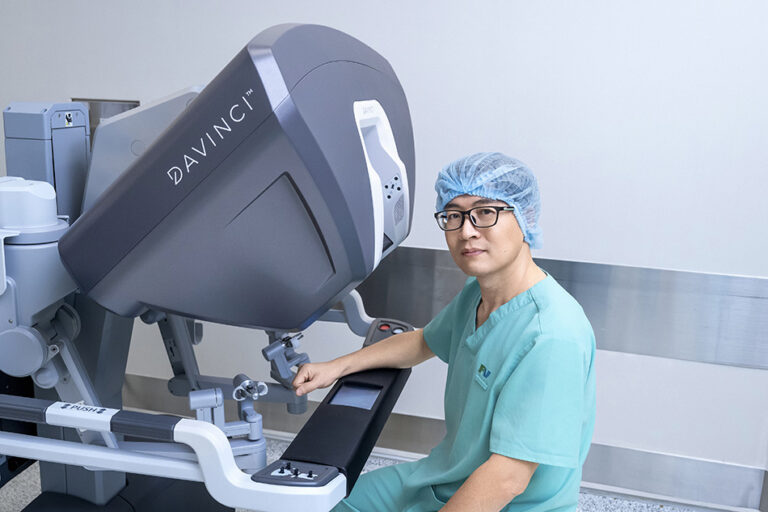
The UMC HCMC team consulted with Japanese surgical specialists to determine the best treatment strategy. They agreed to use the da Vinci Xi robotic surgical system for precise dissection in the narrow anatomical space, aiming to improve recovery. The procedure was scheduled at FV Hospital, which recently installed one of Southeast Asia’s most advanced da Vinci Xi systems.
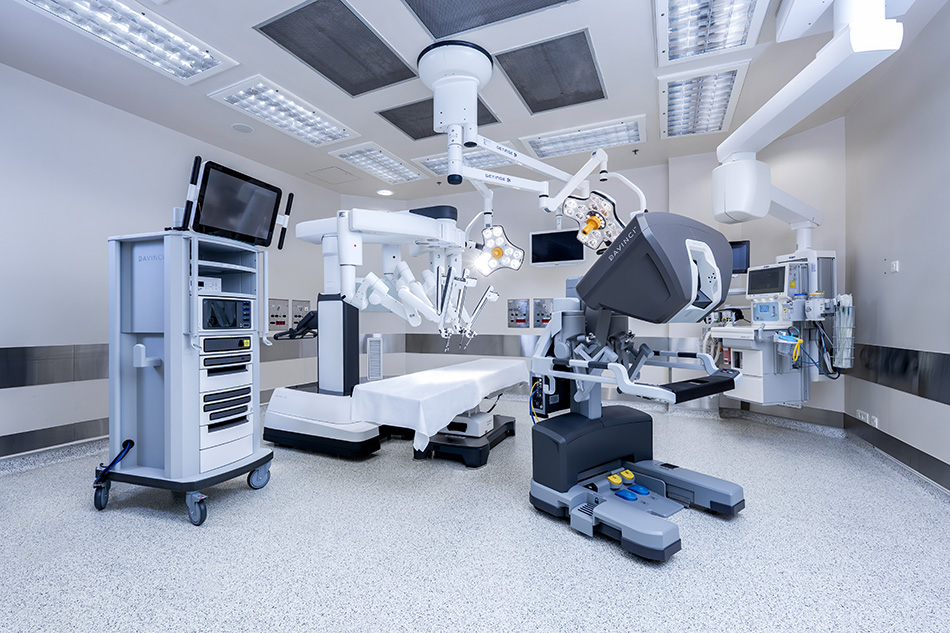
FV Hospital is equipped with the modern da Vinci Xi robotic system. Image: FV
Intraoperative frozen section analysis prompts an immediate surgical pivot
On May 14, the surgical procedure was performed by a collaborative team of Vietnamese and Japanese specialists: Prof. Dr Koichi Suda, PhD (Vice Director of Fujita Health University Hospital); Assoc. Prof. Dr Masaya Nakauchi, PhD (an expert in robotic gastrectomy and oesophagectomy from Fujita Health University); Dr Phan Van Thai, MSc, Specialist Level II (Head of General Surgery at FV Hospital); and Dr Nguyen Viet Hai, Specialist Level II (UMC HCMC).
Cardia cancers are particularly challenging to treat due to their anatomical location. Surgery requires both a transabdominal approach and careful dissection of the distal oesophagus deep within the gastro-oesophageal junction. Dr Phan Van Thai noted that although chemotherapy reduced the tumour size, it also caused significant tissue swelling and fibrosis, further complicating the procedure.
The initial surgical plan was to perform a proximal gastrectomy and distal oesophagectomy, aiming for a proximal clearance margin of at least 3cm to satisfy oncological principles. The team utilised the robotic platform transabdominally to precisely isolate the tumour, executed the planned resection, and immediately sent the tissue margins for an intraoperative frozen section biopsy.
About 25 minutes later, pathology confirmed residual cancer cells at the margin. The team quickly adapted, creating four additional thoracic ports to introduce the robotic arms into the mediastinum for a deeper oesophageal resection.
Combining transabdominal and transthoracic approaches increased surgical complexity and required precise planning to ensure adequate surgical margins while minimising surgical trauma. The team had anticipated this scenario. “We proceeded to resect an additional 5cm of the oesophagus via the transthoracic route to ensure complete, margin-negative clearance of the cancer cells,” Dr Phan Van Thai explained.
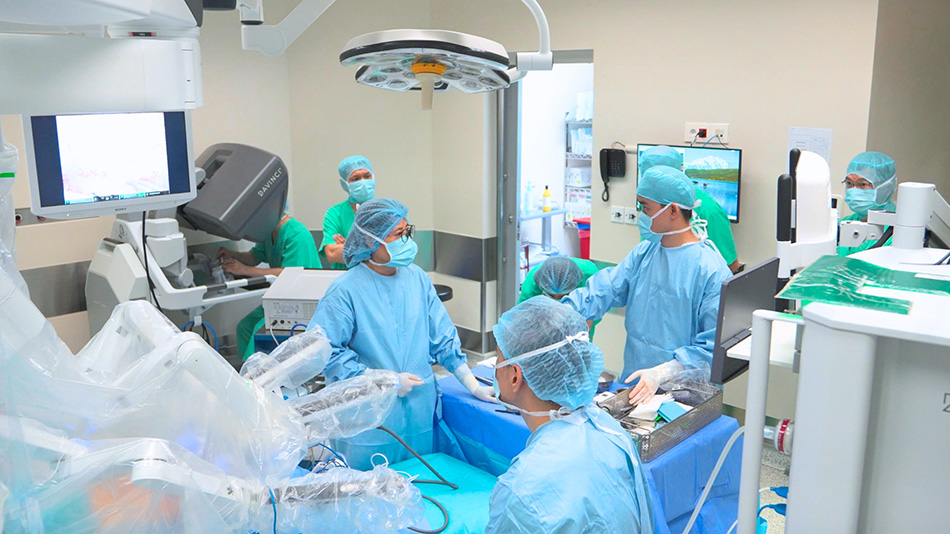
Vietnamese and Japanese doctors perform robotic-assisted oncological surgery. Image: FV
After nearly ten hours of surgery, the team completed a thorough lymph node dissection and successfully reconstructed the upper digestive tract with an oesophagogastrostomy, connecting the remaining stomach to the oesophagus.
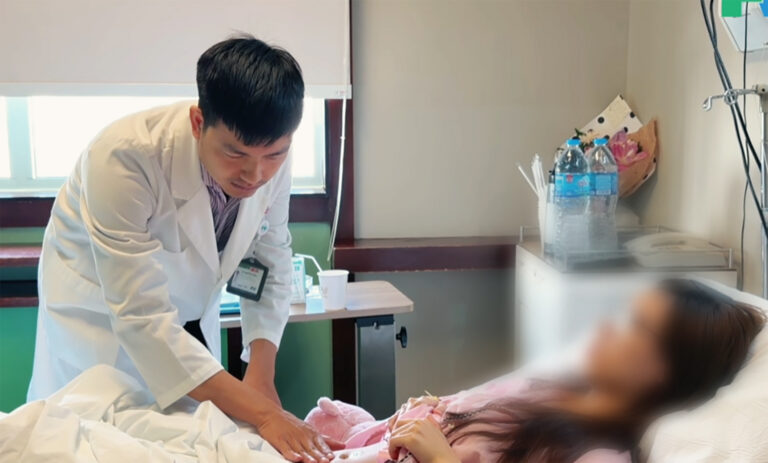
This timely intraoperative adjustment led to favourable clinical outcomes. By the fifth postoperative day, the patient’s drains were removed and he began a liquid diet. By day eight, Mr Hang Phalla advanced to a pureed diet, achieved stable recovery, and was discharged to continue follow-up care.
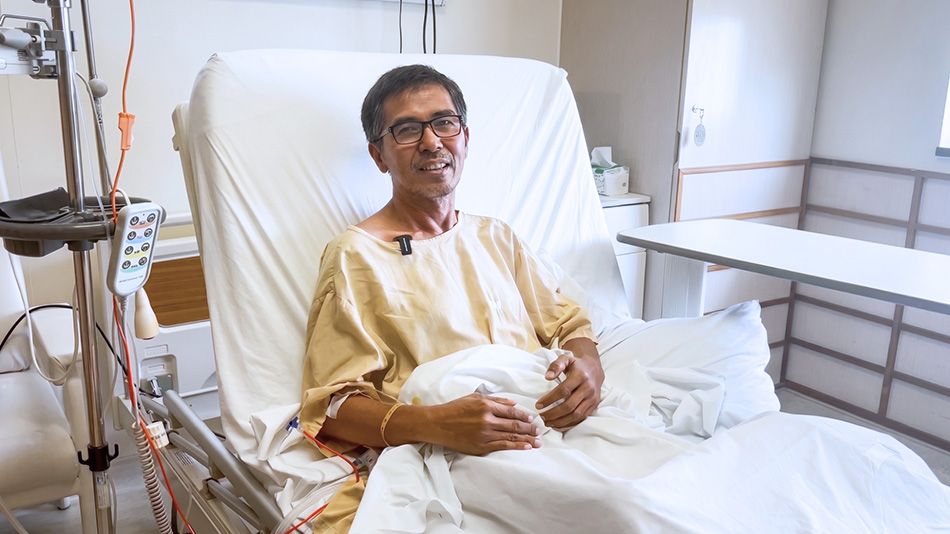
Hang Phalla recovers rapidly following his surgery. Image: FV
“I am incredibly grateful, especially to the doctors, nurses, and everyone here. It was a wonderful opportunity to receive robotic treatment performed by leading robotic specialists from both Vietnam and Japan!” Mr Hang Phalla said prior to his discharge.
FV Hospital fosters professional collaboration, expanding access to robotic surgery in Vietnam
The successful outcome of Mr Hang Phalla’s surgery underscores the critical role of multidisciplinary care, international collaboration, and advanced robotic technology in managing complex oncological cases.
Currently, robotic surgery requires significant investment, limiting the availability of advanced platforms in Vietnam. Since introducing the da Vinci Xi system in early 2026, FV Hospital has promoted a collaborative healthcare model. This allows surgeons from other hospitals to train, become certified, and use FV’s robotic infrastructure to operate on their own patients.
This high-tech medical collaboration is expected to accelerate local clinicians’ access to pioneering surgical techniques, whilst ensuring that Vietnamese patients no longer need to travel abroad to receive advanced care.
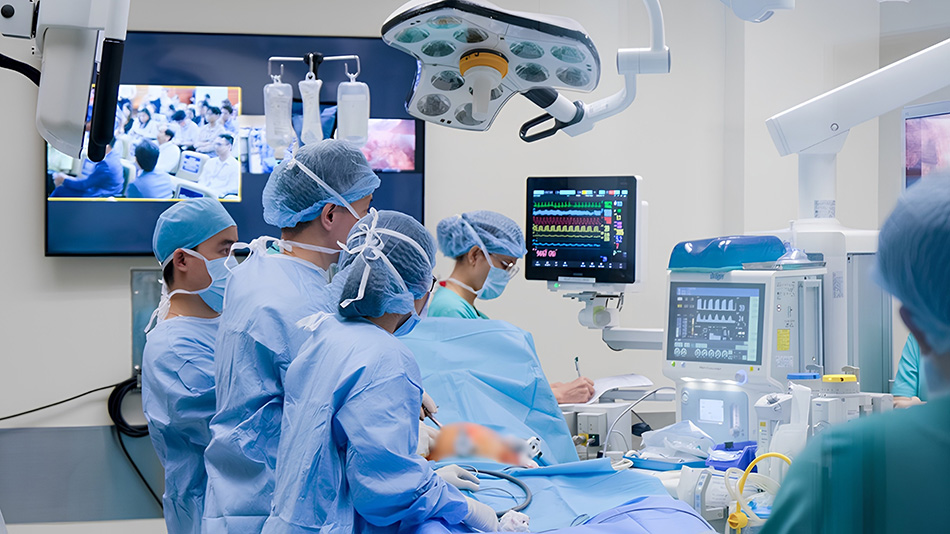
FV Hospital partners with local and international experts to deliver advanced robotic-assisted surgery. Image: FV
FV Hospital utilises the da Vinci Xi robotic system to treat complex conditions in hepatobiliary, gastrointestinal, urological, and gynaecological surgery. For more information, please contact the General Surgery Department at FV Hospital, 06 Nguyen Luong Bang Street, Tan My Ward (formerly District 7), Ho Chi Minh City, or call (028) 3511 3333.
Related News
See moreRelated News

Nutcracker Syndrome: How a one-hour stent placement ended a year of abdominal pain
FV Hospital successfully treated a complex case of nutcracker syndrome using minimally invasive endovascular stenting, sparing the patient major open surgery. Persistent abdominal pain linked to renal vein entrapment For over a year, 41-year-old Ms V.T.K.P. from Ho Chi Minh City experienced persistent, dull lower abdominal pain that worsened with prolonged sitting or standing. As […]
Abdominal pain misdiagnosed as digestive issue: 23-year-old woman diagnosed with ovarian torsion
While studying abroad in South Korea, N.T.T.M. (23) experienced unusual pain in her lower right abdomen. She sought treatment at a local hospital and received medication for a suspected digestive issue. After returning to Vietnam to visit her family, the pain recurred and worsened. On her friends’ advice, M. visited FV Hospital for evaluation. She […]
Advanced robotic surgery at FV Hospital removes tumour near aorta
Surgeons at FV Hospital used the da Vinci Xi robotic surgical system to successfully remove a fibrous tumour located in a difficult-to-access area next to the aorta in a 46-year-old woman. Ms Nguyen Thuy Phuong Dung recovered well after surgery to remove the fibrous tumour from her left chest. Image: FV When a subtle chest […]
Boy with ‘boneless arm’ and decade-long journey to find hope
A jump at the age of six left young D.V.C. with devastating consequences: a left forearm almost entirely devoid of skeletal architecture, facing the prospect of limb amputation through joint disarticulation. For more than ten years, hope faded as every attempt at recovery stalled. It was only through the intervention of the Children of Vietnam […]
Nutcracker Syndrome: How a one-hour stent placement ended a year of abdominal pain
Abdominal pain misdiagnosed as digestive issue: 23-year-old woman diagnosed with ovarian torsion
Advanced robotic surgery at FV Hospital removes tumour near aorta

