



A Russian crew member suddenly developed left-sided weakness while aboard a container ship travelling along an international shipping route. To bring the patient ashore without delay, a young female doctor and her emergency team from FV Hospital braved over 40 nautical miles at midnight, climbed a rope ladder to board the ship despite rough seas, and worked together to bring the patient back to the hospital for treatment.
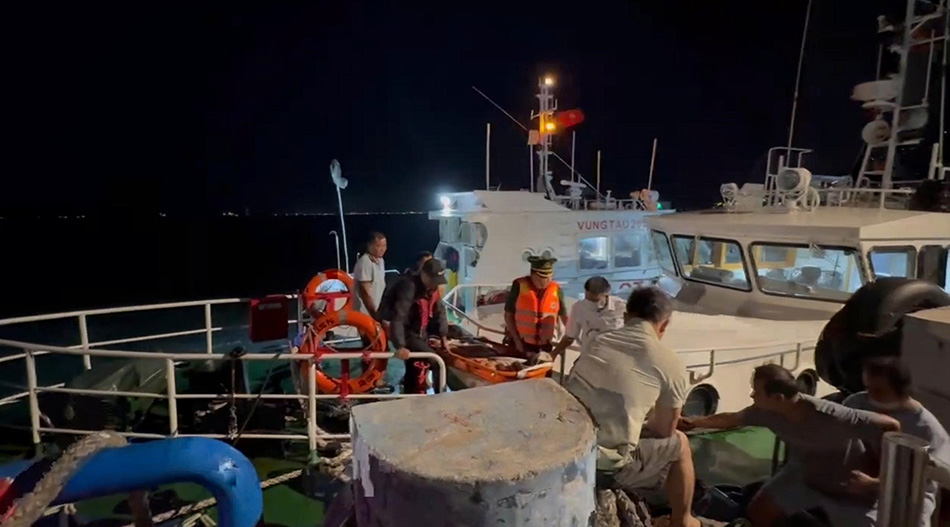
A small speedboat brings the crew member ashore at 5 am.
According to FV, after nearly two weeks of treatment and rehabilitation, the patient was discharged in a stable condition.
Earlier, in mid-July 2026, FV Hospital’s Accident & Emergency Department received an urgent call from a ship’s agent. A Russian crew member aboard a container ship sailing along an international shipping route had suddenly developed hemiparesis, suggesting a stroke. The vessel lacked the facilities required to manage a stroke emergency and was unable to divert to shore immediately. It was therefore agreed that the vessel would continue to Buoy No. 0, the boundary between the international shipping lane and Vietnamese waters, where the patient would be transferred to the FV Hospital medical team.
At the same time, an FV Hospital ambulance transported the emergency team, comprising Dr Ho Chau Anh Thu, Specialist Level I, and an emergency nurse, to Cau Da Port in Vung Tau. Equipped with emergency medications and essential medical supplies, the team then boarded a speedboat arranged by the ship’s agent to travel more than 40 nautical miles to Buoy No. 0.
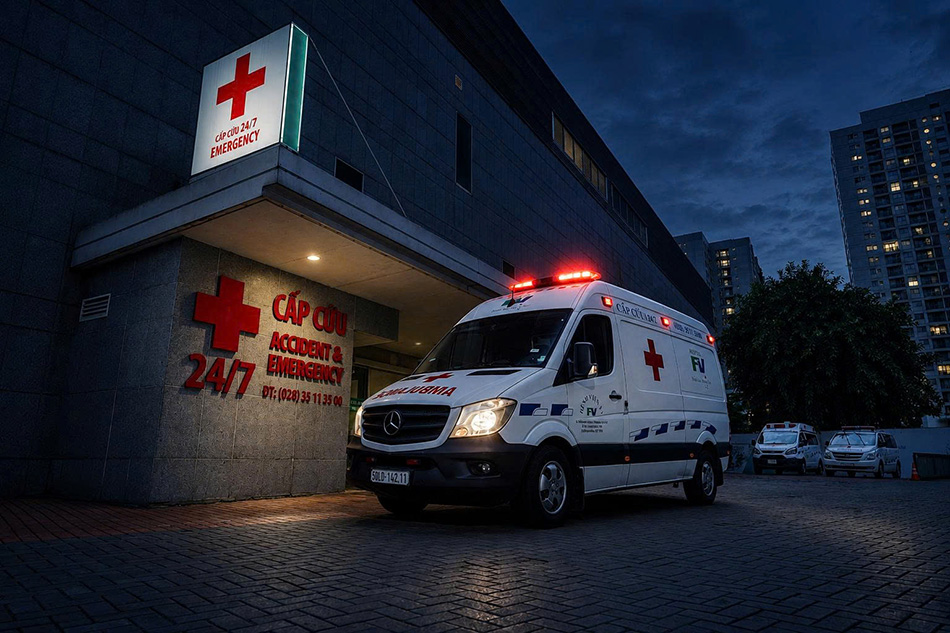
An FV Hospital ambulance transports the emergency team to Vung Tau.
Dr Trinh Van Hai, Head of the Accident and Emergency Department at FV Hospital, said: “Executing an emergency offshore rescue at midnight is always a challenging mission, particularly when climbing onto a cargo ship in heavy seas. However, Dr Anh Thu did not hesitate for a second upon taking the assignment. To me, that shows not only courage, but also the true sense of duty of an emergency physician.”
That night, the sea was rough, with waves reaching 2 to 3 metres high. It was not until around 2 am that the speedboat managed to pull alongside the container ship, which towered nearly as high as a 10-storey building. With no fixed gangway, the crew lowered a rope ladder from a height of approximately 10 metres. Waiting for the swell to raise the speedboat to the right height, Dr Anh Thu and the nurse took turns gripping the ladder to climb onto the deck.
Upon boarding, Dr Anh Thu’s first task was to swiftly assess the patient’s condition. The 46-year-old patient remained conscious. Following the examination, the team agreed that the patient had to be transferred ashore immediately to continue treatment.
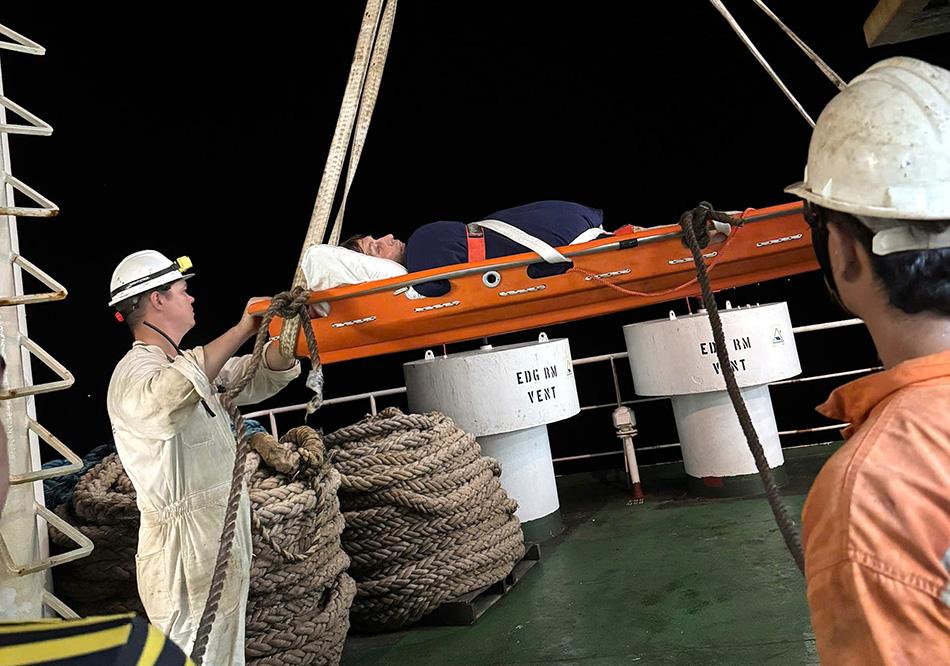
Crew members lower the patient into the emergency speedboat during a rough night at sea.
However, bringing the patient down to the speedboat proved even more challenging than climbing aboard. The patient was located on the fifth deck. Lacking specialized transport equipment, the crew members and medical team had to carry the stretcher down deck by deck. Afterwards, the patient was secured onto the stretcher and lowered down to the speedboat using the ship’s crane.
The available space for the stretcher on the speedboat was just over one metre wide, while the crane, the cargo ship, and the speedboat were all continuously pitching and rolling with the waves. To prevent any impact, the crew performed several trial runs using an empty stretcher before lowering the patient. This step alone took roughly 30 minutes.
At around 5 am, the speedboat docked at Cau Da Port. An FV Hospital ambulance was already waiting to transport the patient back to FV Hospital. By approximately 7 am, the patient was admitted directly to the Accident & Emergency Department. Before handing over the patient to the Neurosurgery team, Dr Anh Thu told her colleagues: “We’ve brought the patient back safely, please do your best for him!”
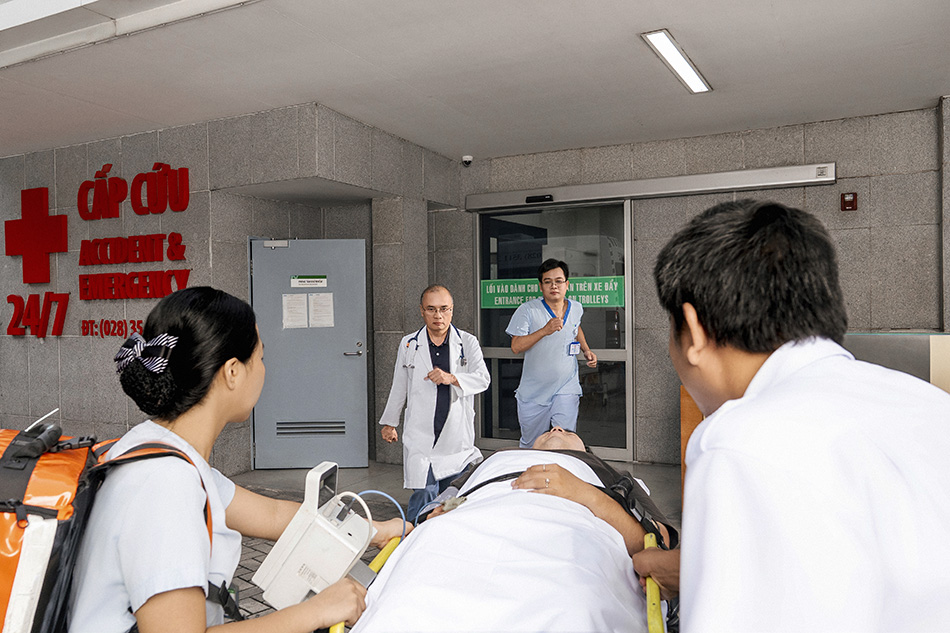
The patient is admitted to the Accident & Emergency Department.
CT scan results confirmed that the patient had suffered a cerebral haemorrhage in the right basal ganglia, with a haematoma measuring approximately 30 grams. According to Dr Tran Luong Anh, Specialist Level II, Head of Neurosurgery & Spine Surgery, this was a borderline case between conservative medical management and surgical intervention. Therefore, rather than operating immediately, the team initially focused on stabilizing blood pressure, controlling cerebral oedema, closely monitoring progress, and conducting multidisciplinary discussions to determine the optimal timing for intervention.
Three days later, as the patient’s headache worsened and the hemiparesis progressed, Dr Tran Luong Anh, Specialist Level II, decided to perform surgery to evacuate the haematoma. “The timing of intervention is crucial. Operating too early carries a higher risk of re-bleeding, but waiting too long allows the haematoma to continue compressing and damaging healthy brain tissue,” explained Dr Luong Anh.
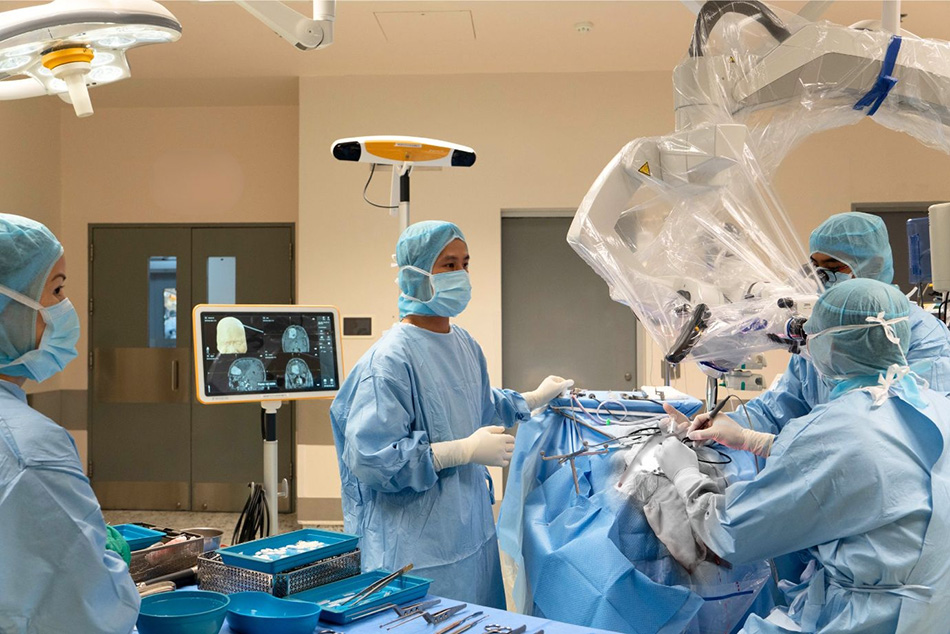
Dr Luong Anh and the surgical team evacuate the haematoma from the patient’s brain with the assistance of a Brain Navigation system.
The operation lasted approximately 90 minutes. The team utilized a Brain Navigation system combined with a surgical microscope to access the haemorrhagic site through a 7 mm tubular retractor. The haematoma was softened using a specialized ultrasonic aspirator before evacuation, minimizing impact on surrounding healthy brain tissue.
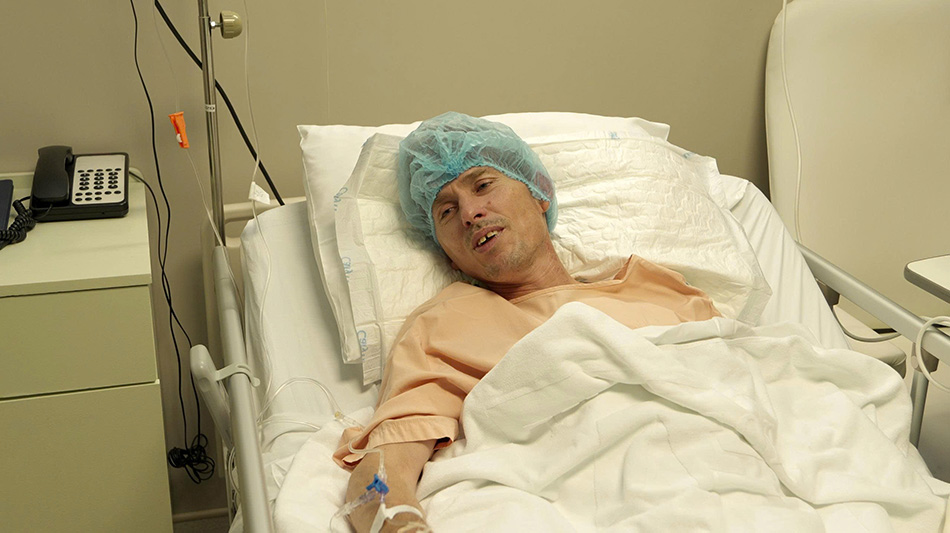
The patient regains consciousness shortly after surgery.
The patient regained consciousness right after the operation. By the following day, motor function in his leg began to recover, and he was able to grip objects with his hand. By the third day, he could independently hold light items. Following nearly two weeks of treatment and rehabilitation, the patient was discharged in a stable condition.
Recalling this extraordinary journey, Mr Vakhitov Renat emotionally shared: “While my life was threatened out at sea, I was fortunate enough to have doctors venture out to sea to reach my ship and bring me ashore for treatment. I am profoundly grateful to the medical team for overcoming such hardships to save my life.”
Dr Hai noted that in cases of haemorrhagic stroke, patients must be transferred to a medical facility capable of providing emergency stroke care and neurosurgery as early as possible for assessment, monitoring, and appropriate treatment selection. Not every case requires immediate surgery, but timely access to a multidisciplinary team is crucial for successful outcomes.
Alongside its 24/7 emergency response system, FV Hospital has for many years maintained an out-of-hospital emergency service, encompassing road and maritime support, as well as coordinated transfers for patients from cargo ships, oil rigs, or offshore areas upon request. Through seamless collaboration between the Accident & Emergency Department and over 45 specialties, numerous critically ill patients have been reached, safely transported, and treated promptly.
Related News
See moreRelated News
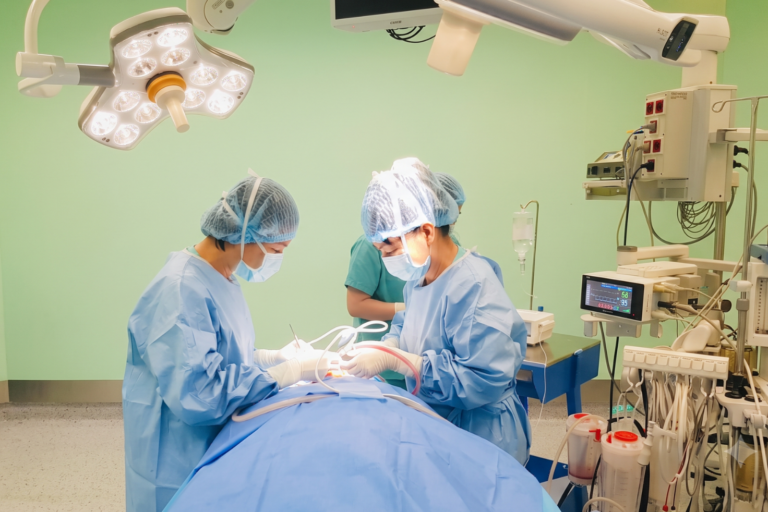
How 10 dental implants changed one patient’s life at FV Hospital
After years of tooth loss led to severe jawbone resorption and difficulty eating, specialists at FV Hospital restored the patient’s smile by placing 10 dental implants in one procedure. How years of tooth loss lead to jawbone loss For many years, Mr Lam Quang Kieu Phong (55, Ho Chi Minh City) experienced tooth loss. Some […]
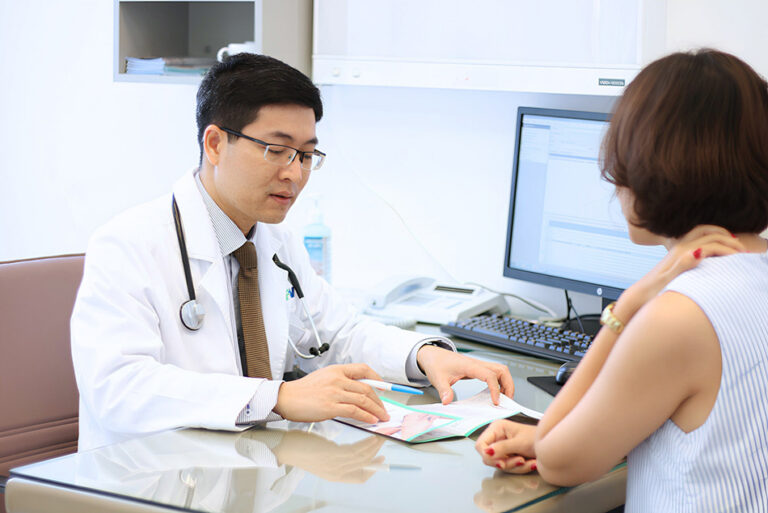
Nutcracker Syndrome: How a one-hour stent placement ended a year of abdominal pain
FV Hospital successfully treated a complex case of nutcracker syndrome using minimally invasive endovascular stenting, sparing the patient major open surgery. Persistent abdominal pain linked to renal vein entrapment For over a year, 41-year-old Ms V.T.K.P. from Ho Chi Minh City experienced persistent, dull lower abdominal pain that worsened with prolonged sitting or standing. As […]
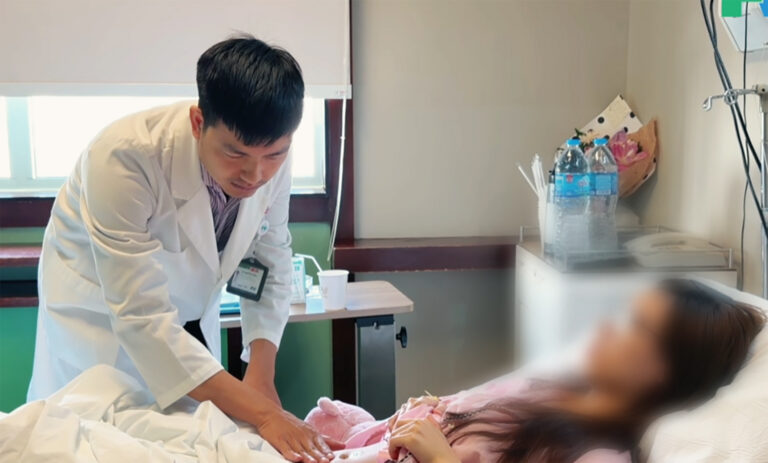
Abdominal pain misdiagnosed as digestive issue: 23-year-old woman diagnosed with ovarian torsion
While studying abroad in South Korea, N.T.T.M. (23) experienced unusual pain in her lower right abdomen. She sought treatment at a local hospital and received medication for a suspected digestive issue. After returning to Vietnam to visit her family, the pain recurred and worsened. On her friends’ advice, M. visited FV Hospital for evaluation. She […]
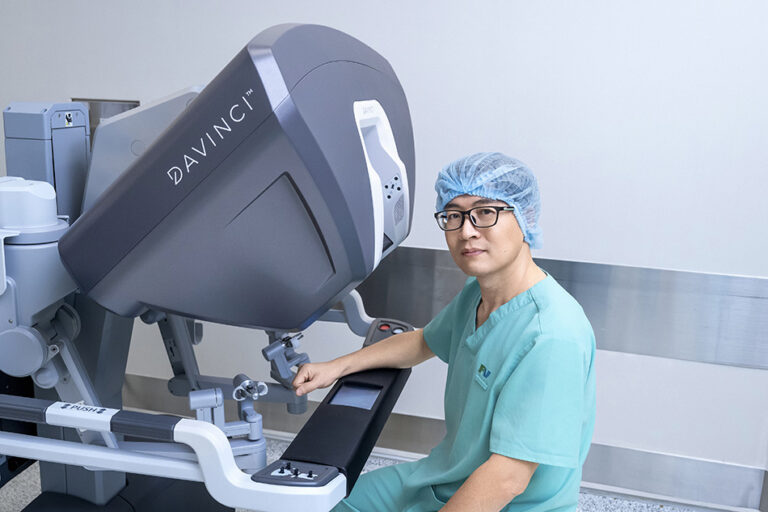
Advanced robotic surgery at FV Hospital removes tumour near aorta
Surgeons at FV Hospital used the da Vinci Xi robotic surgical system to successfully remove a fibrous tumour located in a difficult-to-access area next to the aorta in a 46-year-old woman. Ms Nguyen Thuy Phuong Dung recovered well after surgery to remove the fibrous tumour from her left chest. Image: FV When a subtle chest […]
How 10 dental implants changed one patient’s life at FV Hospital
Nutcracker Syndrome: How a one-hour stent placement ended a year of abdominal pain
Abdominal pain misdiagnosed as digestive issue: 23-year-old woman diagnosed with ovarian torsion

