



Previously dependent on tube feeding due to the complications of stage 4 gastric cancer, a 51-year-old patient was able to sip water and take light oral nutrition just three days after undergoing robotic total gastrectomy at FV Hospital.
Six months unable to eat: the devastating complications of stage 4 gastric cancer
In September 2025, Mrs. H (51-year-old patient from Dong Nai Province) began experiencing persistent nausea after every meal. Despite multiple medical consultations and medications, her condition did not improve, culminating in her hospitalisation after unexpectedly vomiting dark brown fluid. Endoscopy and subsequent biopsy confirmed stage 4 gastric cancer, identified as Linitis Plastica – an aggressive form of stomach cancer known for its ability to infiltrate deeply throughout the gastric wall. The tumour had not only damaged the stomach itself but had caused the organ to lose its functional capacity, severely impairing the ability to eat.
At the time of diagnosis, the patient’s tumour had already invaded the pancreas and metastasised to the peritoneum, rendering her ineligible for upfront radical surgery. Histopathological and molecular profiling of the tumour revealed it to be HER2-positive and PD-L1-positive. She was therefore commenced on a combination of chemotherapy, anti-HER2 targeted therapy, and checkpoint inhibitor immunotherapy at the University of Medicine and Pharmacy Hospital, Ho Chi Minh City (UMC HCMC)
After seven treatment cycles, Mrs H. demonstrated a significant clinical response with complete resolution of ascites and no evidence of new metastatic lesions. However, the tumour in the antral-pyloric region of the stomach continued to cause gastric outlet obstruction, preventing the passage of food from the stomach into the small intestine. As a result, she remained unable to take any oral nutrition and continued to depend on enteral nutrition via tube feeding to maintain adequate nourishment.
Dr Nguyen Viet Hai, Specialist Level II from Gastrointestinal Surgery Department at University Medical Center HCMC noted that owing to the complexity of this case, his team initiated discussions with surgical specialists at Fujita Health University Hospital, Japan. After extensive multidisciplinary consultations, the two teams decided to perform a total gastrectomy to resolve the gastrointestinal obstruction, thereby restoring the patient’s ability to eat and significantly improving her quality of life.
Given the exceptional technical complexity of the case, the surgeons elected to perform the procedure at the FV da Vinci Robotic Surgery Centre at FV Hospital, selected for its da Vinci Xi robotic system, internationally accredited operating theatres, and experienced multidisciplinary team.
Seven hours in the operating theatre: the da Vinci Xi robot achieves complete tumour resection
The procedure took place on May 13, in a collaborative operation between Vietnamese and Japanese surgical specialists, including: Prof. Dr Ichiro Uyama, PhD, one of the world’s foremost authorities in robotic gastrectomy, and Assoc. Prof. Dr Masaya Nakauchi, PhD, both from Fujita Health University Hospital, Japan, together with Dr Phan Van Thai, MSc, Specialist Level II – FV Hospital and Dr Nguyen Viet Hai, Specialist Level II – University Medical Center HCMC.
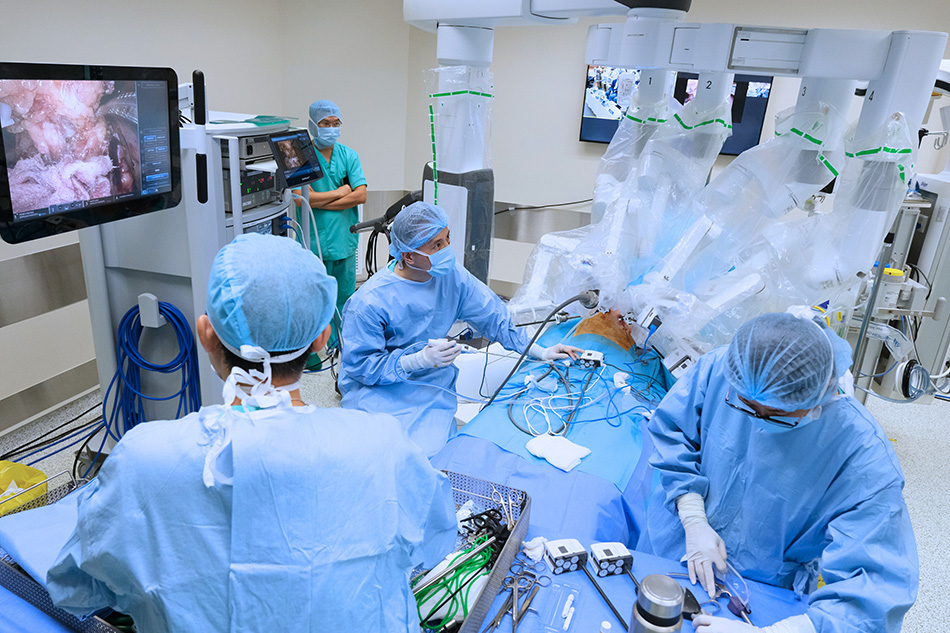
Robotic total gastrectomy using the da Vinci Xi system at FV Hospital.
Dr Phan Van Thai, MSc, Specialist Level II, Head of General Surgery at FV Hospital, explained that the greatest surgical challenge in this case was the extensive adhesion of the tumour to surrounding tissues and organs, a consequence of the prior systemic treatment.
Utilising the da Vinci Xi robotic system, surgeons spent over two hours performing meticulous adhesiolysis, carefully freeing the tumour from the surrounding structures it had adhered to. The robot’s 3D high-definition magnification and exceptional dexterity allowed the surgical team to achieve superior visualisation and execute highly precise manoeuvres within the difficult surgical field.
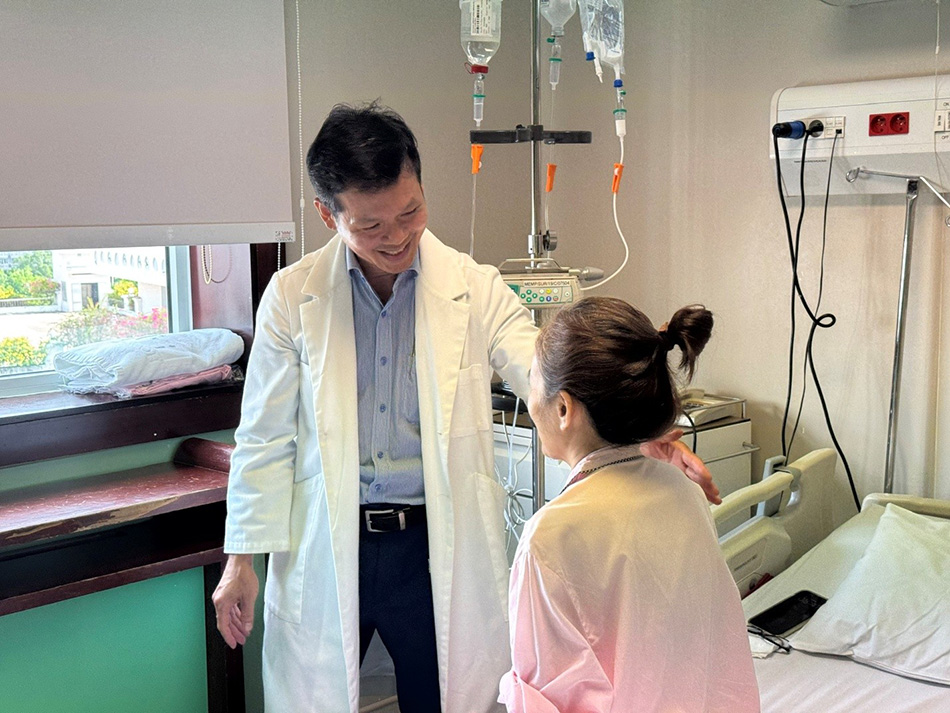
Dr Phan Van Thai is conducting a post-operative review with the patient.
After seven demanding hours, the team completed a total gastrectomy with lymphadenectomy and reconstruction of digestive continuity via Roux-en-Y oesophagojejunostomy. “It was the robotic system that made it possible to complete this procedure in its entirety. The da Vinci Xi enabled us to dissect the tumour with exceptional precision, particularly in a case of this degree of local invasion,” said Prof. Dr Ichiro Uyama, PhD.
Waking up from major surgery, Mrs H. was visibly emotional. She told the team that her family had considered taking her abroad for treatment, and that she felt incredibly fortunate to have received care of this standard right in Vietnam, delivered by both domestic and international experts using state-of-the-art robotic technology.
Her post-operative recovery was remarkably smooth. The port-site incisions were small, post-operative pain was well controlled, and her recovery progressed swiftly. Bowel function returned on post-operative day 2, evidenced by the resumption of peristalsis; by day 3, she was able to tolerate sips of water and light oral intake. She was discharged seven days after surgery, ready to resume the next phase of her systemic oncological treatment.
“The nurses and care assistants at FV were exceptional, compassionate and highly skilled. Every aspect of nursing care, from wound management to personal hygiene, was carried out with such gentleness and expertise that I barely felt I had been through major surgery,” she said.
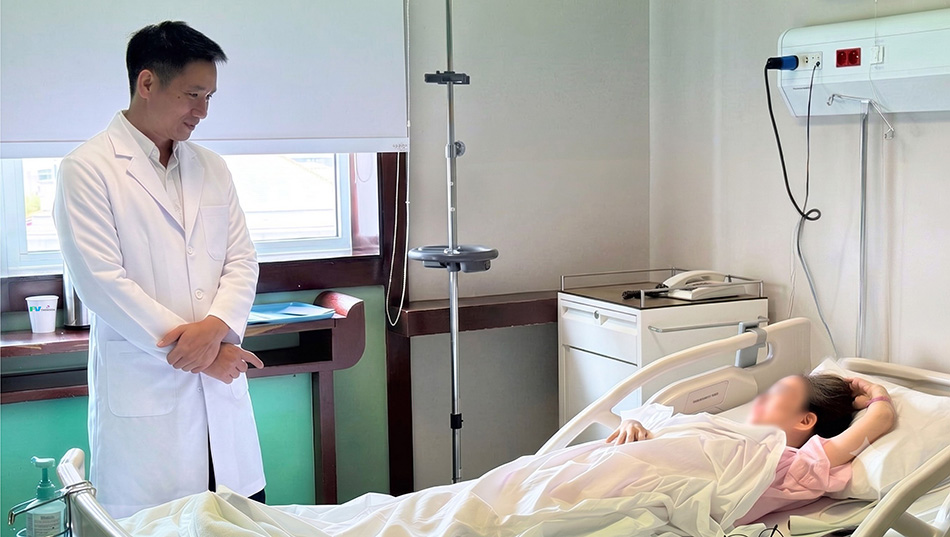
Dr Nguyen Viet Hai from the University of Medicine and Pharmacy Hospital, Ho Chi Minh City, visits the patient post-operatively.
FV Hospital advances international medical collaboration and implements cutting-edge treatments
The successful treatment of Mrs H. at the FV da Vinci Robotic Surgery Centre underscores the effectiveness of international cooperation between global experts and local medical teams in managing highly complex cases within Vietnam.
This case also reflects the strategic direction that FV Hospital has pursued consistently over many years: forging specialist partnerships with leading centres both within Vietnam and internationally, whilst investing in the most advanced surgical platforms to raise the standard of care available to patients here.
Through multidisciplinary tumour board review, clinical education, surgical demonstration, and skills transfer programmes, the latest medical advances can be brought to Vietnam sooner and patients can receive world-class care close to home.
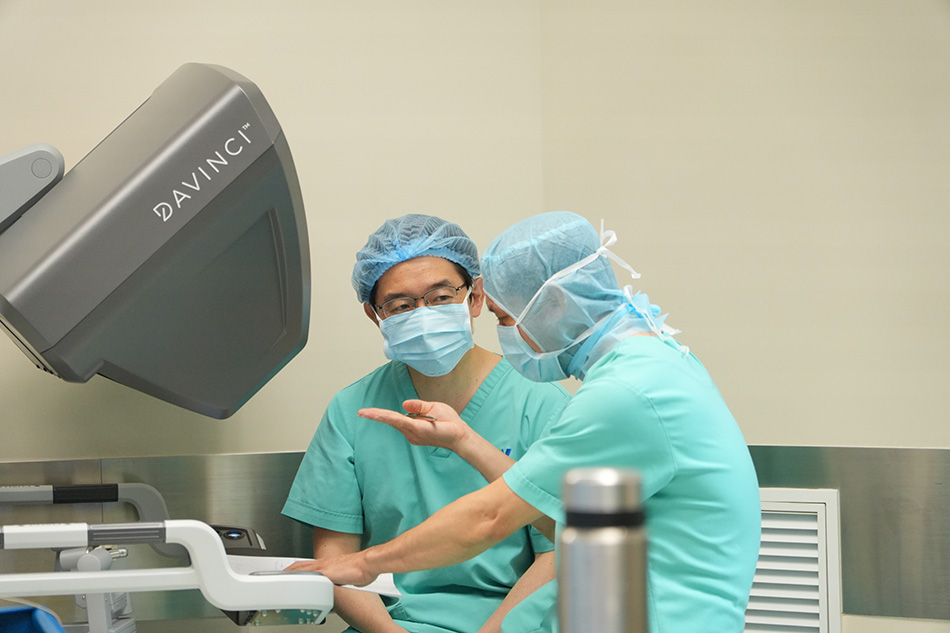
The international surgical team performing robotic total gastrectomy with the da Vinci Xi system at FV Hospital.
For more information, please visit FV Hospital at 6 Nguyen Luong Bang, Tan My Ward (former District 7), Ho Chi Minh City, or call (028) 3511 3333.
Related News
See moreRelated News
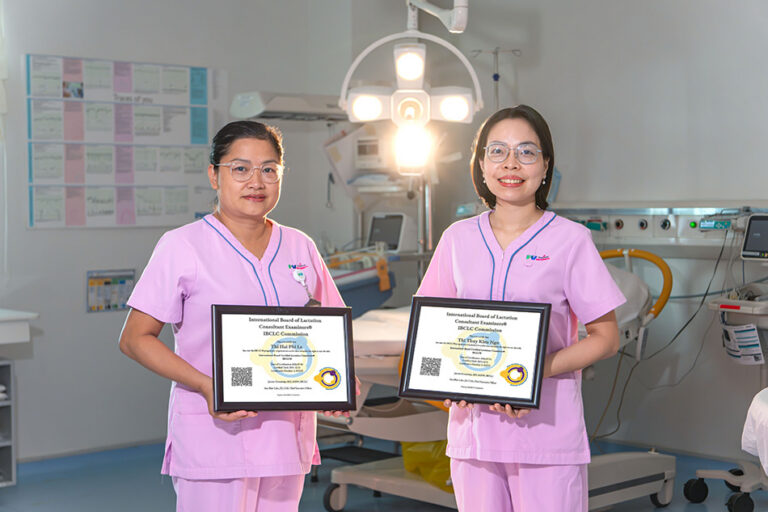
Two Vietnamese midwives attain international IBCLC certification in breastfeeding counselling
Two midwives from FV Thomson’s Maternity Department have earned IBCLC (International Board Certified Lactation Consultant) certification, the international credential for breastfeeding support specialists. This achievement represents a significant clinical milestone in infant feeding support at FV Hospital, driven by the real-world complexities these practitioners encounter daily when supporting mothers and their newborns. Beyond certification: A […]
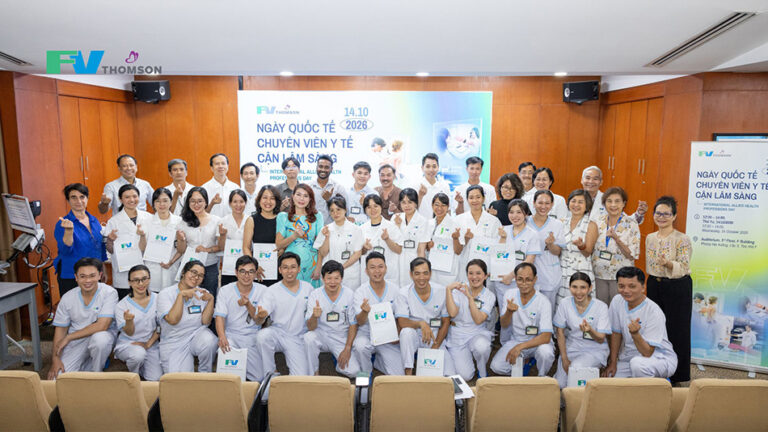
FV Hospital Celebrates International Allied Health Professions Day 2026
On 14 October 2026, FV Hospital held a special event to express its appreciation for allied health professionals. Attendees included members of the Board of Directors, heads of departments, and more than 40 allied health professionals and specialists. The event recognised the dedication of allied health professionals across a range of specialties, including Dietetics and […]
FV pioneers ERAS® implementation in Vietnam in line with international standards, supporting faster postoperative recovery
FV Hospital has become the first hospital in Vietnam to partner with Sweden-based Encare AB to implement the Enhanced Recovery After Surgery (ERAS®) programme. Through this partnership, FV joins Encare’s network of 22 hospitals in 11 countries across the Asia-Pacific region. The initiative aims to standardise surgical care according to international guidelines, leverage data to […]

Nutcracker Syndrome: How a one-hour stent placement ended a year of abdominal pain
FV Hospital successfully treated a complex case of nutcracker syndrome using minimally invasive endovascular stenting, sparing the patient major open surgery. Persistent abdominal pain linked to renal vein entrapment For over a year, 41-year-old Ms V.T.K.P. from Ho Chi Minh City experienced persistent, dull lower abdominal pain that worsened with prolonged sitting or standing. As […]
Two Vietnamese midwives attain international IBCLC certification in breastfeeding counselling
FV Hospital Celebrates International Allied Health Professions Day 2026
FV pioneers ERAS® implementation in Vietnam in line with international standards, supporting faster postoperative recovery

