



Over two days, a 48-year-old man experienced repeated brief episodes of dizziness that resolved on their own. Believing they were simply due to fatigue from working on an offshore oil rig, he had no idea that one of his carotid arteries, the major blood vessel supplying blood to the brain, was 95% narrowed, placing him at imminent risk of stroke.
Fleeting dizzy spells: A warning sign of a serious underlying condition
While working on an offshore oil rig off the coast of Ba Ria, Mr Rentap Ngunbong (48) suddenly experienced a brief episode of dizziness, everything suddenly went black. The episode lasted one to two minutes and resolved on its own, but recurred several times throughout the day.
After monitoring his symptoms for two days, the doctor on the rig recognised the unusual pattern. Suspecting an underlying cardiovascular or neurological condition, the doctor advised him to seek immediate assessment at FV Hospital.
During the initial consultation at FV Hospital, Dr Ho Minh Tuan, PhD, Head of Cardiology and Interventional Cardiology, suspected a carotid artery abnormality. A carotid ultrasound and CT angiogram confirmed that the artery’s lumen was more than 95% narrowed, with atherosclerotic plaque almost completely obstructing blood flow.
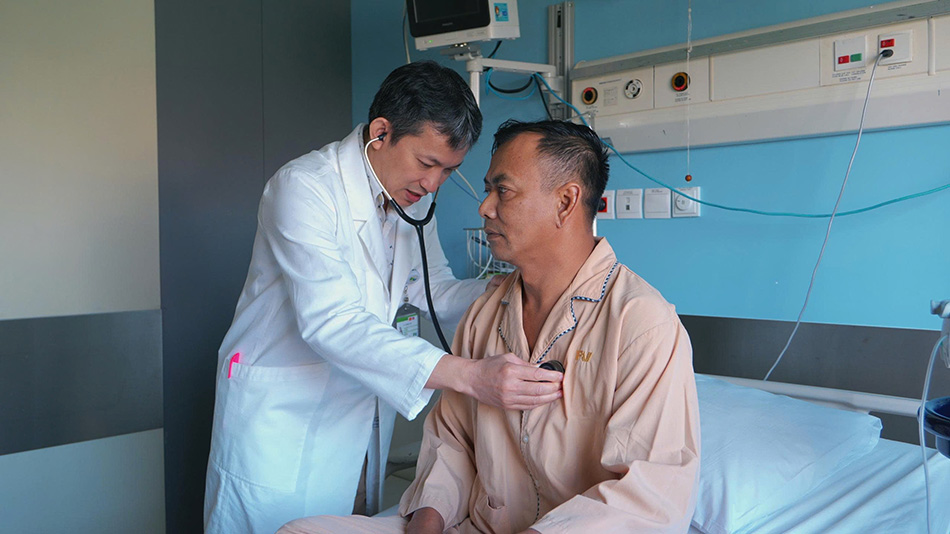
Dr Ho Minh Tuan, PhD, examining the patient. Photo: FV Hospital
According to Dr Ho Minh Tuan, this is an extremely serious condition. When blood flow to the brain is severely reduced, patients may experience transient ischaemic attacks (TIAs), with symptoms such as dizziness, blurred vision or presyncope (the sensation of almost fainting without actually losing consciousness). Without prompt treatment, the artery may become completely blocked, or the plaque may dislodge, triggering a stroke. International guidelines therefore recommend that symptomatic patients undergo intervention within one week of the condition being identified.
As the patient is a foreign national, his family initially wished to return him to Malaysia for treatment. However, the FV Hospital team carefully explained the risks of delaying care. With the artery almost completely blocked, even the stress of travelling could have triggered a stroke.
After receiving a detailed explanation of his condition and the available treatment options, Mr Rentap agreed to undergo immediate treatment at FV Hospital.
30-minute carotid artery stenting procedure restores blood flow to the brain
For patients with carotid artery stenosis of less than 90%, doctors first advance a cerebral protection filter beyond the narrowed segment to capture any plaque fragments that may break loose during the procedure. They then insert a stent, a small mesh tube permanently placed inside the artery to keep the narrowed blood vessel open and maintain blood flow.
However, because Mr Rentap’s carotid artery was more than 95% narrowed, the medical team first performed balloon pre-dilatation to create a safe passage through the blockage. Only then could they deploy the cerebral protection filter and insert the stent to restore blood flow to the brain. The entire procedure was completed in just 30 minutes.
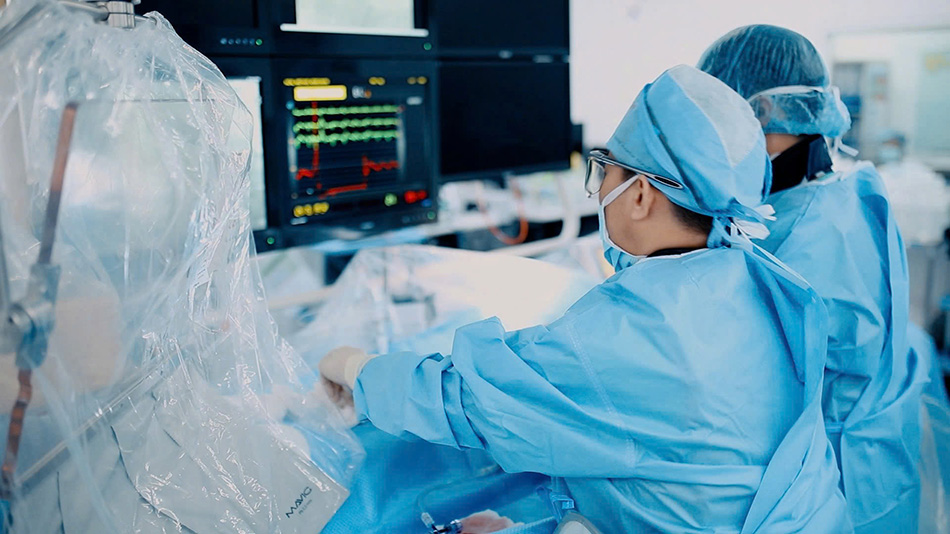
Dr Ho Minh Tuan, PhD, performing a carotid artery stenting intervention to restore blood flow for the patient. Photo: FV Hospital
Immediately after the procedure, Mr Rentap’s dizziness resolved completely. His blood pressure stabilised, and he recovered well, returning to his normal daily activities within two days.
“I am very satisfied with the treatment I received here. Everything was excellent. The quality of care at FV Hospital is on par with that of the leading hospitals in Malaysia. I will certainly recommend FV Hospital to my friends.” Mr Rentap shared before being discharged.
Do not ignore brief episodes of dizziness or fainting
According to Dr Ho Minh Tuan, carotid artery stenosis is one of the leading causes of ischaemic stroke. What makes this condition particularly dangerous is that it often develops silently over many years, as plaque gradually builds up inside the arteries without causing obvious symptoms.
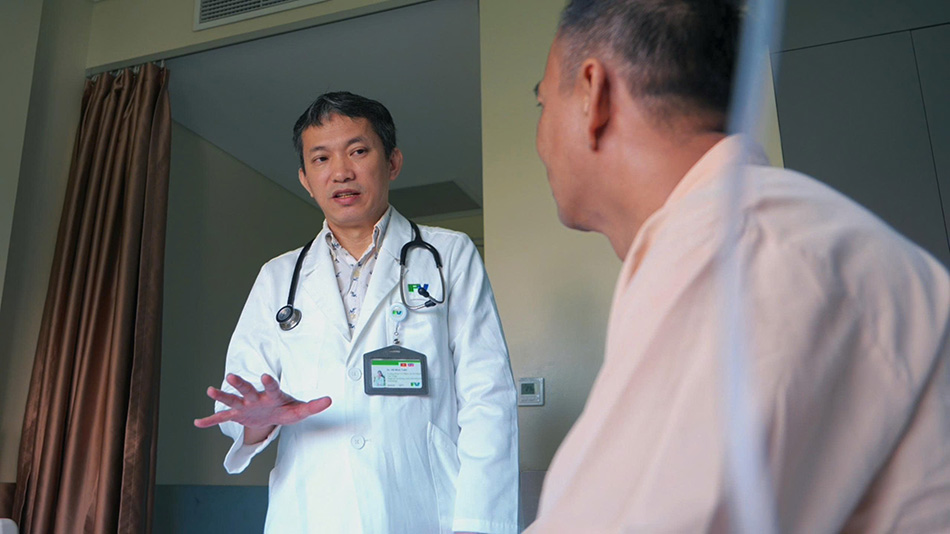
Dr Ho Minh Tuan, PhD, giving advice to the patient before discharge. Photo: FV Hospital
Smoking is the leading risk factor for carotid artery stenosis. In addition, people with hypertension, diabetes, dyslipidaemia, obesity or a history of cardiovascular disease should undergo regular screening, as the condition can progress silently for many years. Anyone who experiences recurrent dizziness, fainting, temporary blurred vision, difficulty speaking, or weakness or numbness on one side of the body should seek prompt assessment at a hospital with specialist cardiology or neurology services.
As one of southern Vietnam’s leading cardiac centres, FV Hospital provides treatment for complex cardiovascular conditions in both Vietnamese and international patients. Its well-equipped Cathlab system, combined with a highly experienced team of specialists, enables the hospital to routinely perform advanced endovascular procedures for coronary, carotid and peripheral artery disease, as well as many other complex vascular conditions.
Furthermore, FV Hospital has implemented an optimised cardiac emergency pathway, reducing emergency treatment time for cardiac patients to just 70 minutes. Optimising this critical “golden window” has helped improve survival rates while minimising long-term disability. For more information about the medical services at FV Hospital, please contact FV Hospital at 06 Nguyen Luong Bang, Tan My Ward (former District 7), HCMC, or call (028) 35 11 33 33.
Related News
See moreRelated News
Patient Safety Week 2026 at FV Hospital: Safe care for non-communicable diseases
In response to World Patient Safety Day 2026, launched by the World Health Organization (WHO), FV Hospital is organising Patient Safety Week 2026 from 14 to 18 September 2026, under the theme “Safe care for non-communicable diseases”. Non-communicable diseases (NCDs), such as cardiovascular disease, diabetes, cancer, chronic respiratory diseases and many other long-term conditions, often […]
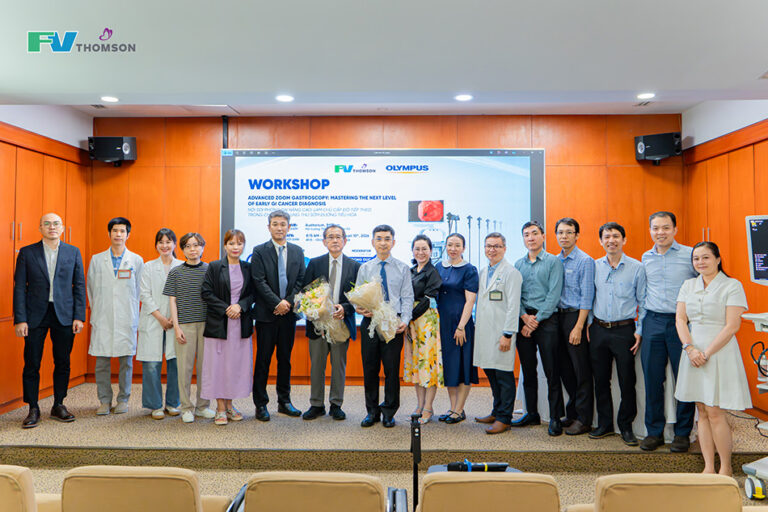
FV Hospital hold workshop on advanced magnification endoscopy for early detection of gastrointestinal cancer
On 10 August 2026, FV Hospital, in collaboration with Olympus Corporation, held the workshop “Advanced Zoom Gastroscopy: Mastering the Next Level of Early GI Cancer Diagnosis”, bringing together endoscopists, gastroenterologists, technicians and other medical professionals from hospitals and clinics in Vietnam and abroad. The workshop “Advanced zoom gastroscopy: mastering the next level of early GI […]
FV Hospital doctors publish two successful case reports on rare gynaecological conditions in an international medical journal
The reports, led by Dr Nguyen Duc Truong as the principal author, with co-authors Dr Vo Trieu Dat, MSc, and Dr Duong Bich Thuy, PhD, document two rare and complex gynaecological cases: a tubo-ovarian abscess caused by Salmonella and a twisted pedunculated fibroid. These publications provide additional clinical data on the diagnosis and management of […]

FV hospital performs prominent ear correction surgery for 74-year-old patient, helping ease a lifelong emotional burden
At nearly 80, when many people have come to accept the imperfections in their appearance that come with age, Mr D. (an Australian national) decided to visit FV Hospital with a personal wish: to correct the congenital prominent ears he had lived with throughout his life. Initially, Dr Vo Cong Minh, PhD, Head of the […]
Patient Safety Week 2026 at FV Hospital: Safe care for non-communicable diseases
FV Hospital hold workshop on advanced magnification endoscopy for early detection of gastrointestinal cancer
FV Hospital doctors publish two successful case reports on rare gynaecological conditions in an international medical journal

