



The Cardiology & Interventional Cardiology Department at FV Hospital successfully performed a carotid artery stenting procedure for Mr H.G. (92), who had a severe 90% narrowing of the carotid artery. After spending just one night in hospital, he recovered well, with symptoms of cerebral ischaemia – reduced blood flow to the brain – completely resolved, allowing him to safely return to his active daily life.
A 12-year bond of trust and recognising stroke warning signs at 92
Mr H.G. (92) has shared a long-standing doctor–patient relationship with Dr Ho Minh Tuan, PhD, Head of the Cardiology & Interventional Cardiology Department at FV Hospital. In 2014, following a myocardial infarction (heart attack), Mr H.G. underwent placement of four coronary stents performed by Dr Tuan. Over the following 12 years, by attending routine medical check-ups every three months and following medical advice closely, his cardiovascular health remained stable, allowing him to continue driving and enjoy his retirement.
Recently, however, Mr H.G. began noticing concerning symptoms. Upon waking up, he experienced brief moments of fatigue and dizziness, along with temporary vision loss. Aware that something was not right, he decided not to wait for his scheduled appointment the following month and went to FV Hospital promptly for a check-up.
“When I woke up, I didn’t feel quite myself, and my speech wasn’t quite normal. I could still drive, but my vision would suddenly blur. Since I couldn’t see clearly, I suspected something was wrong. I am always very diligent with my check-ups; the moment I feel unwell, I go straight to the hospital rather than waiting and risking it becoming serious,” Mr H.G. recalled regarding his timely decision.
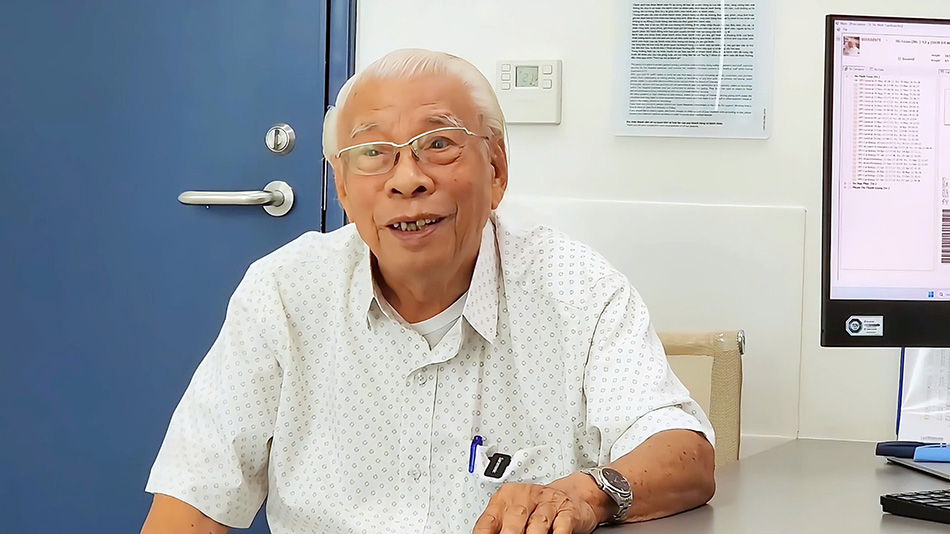
Mr H.G. highlights the importance of regular health check-ups
During the clinical examination, Dr Tuan detected an abnormal bruit (vascular sound) in the neck area and immediately ordered a carotid ultrasound. The scan revealed that the patient’s left carotid artery, one of the main arteries supplying blood to the brain, was severely narrowed by 90% due to large atherosclerotic plaques (fatty deposits). At the age of 92, combined with existing risk factors such as a history of high cholesterol and diabetes, this level of narrowing placing him at risk of a devastating stroke or even death at any time.
Faced with a nonagenarian patient whose tortuous (twisted) blood vessels made the procedure technically challenging, Dr Ho Minh Tuan, PhD, carefully reviewed the CT and MRI imaging data. He then decided to proceed with urgent carotid artery stenting using the Digital Subtraction Angiography (DSA) system in the Cathlab.
A Complex 90-Minute Cathlab Procedure and Remarkably Fast Recovery
Dr Tuan explained that for blockages exceeding 90%, a major 15-year clinical study has shown that relying solely on medication is associated with nearly a 7% risk of stroke and death after four years. In contrast, timely stent intervention reduces this risk to below 2%.
Mr H.G.’s procedure was considered a major technical challenge. Due to aging, his aortic arch was classified as Type III, a highly angulated (sharply bent) structure that makes it extremely difficult to guide interventional instruments from the groin area up to the neck arteries. Without extensive experience and precise navigation equipment, the risk of failure would have been very high. Working with great precision, the FV medical team took approximately 90 minutes to successfully place the stent, restoring and securing blood flow through the carotid artery.
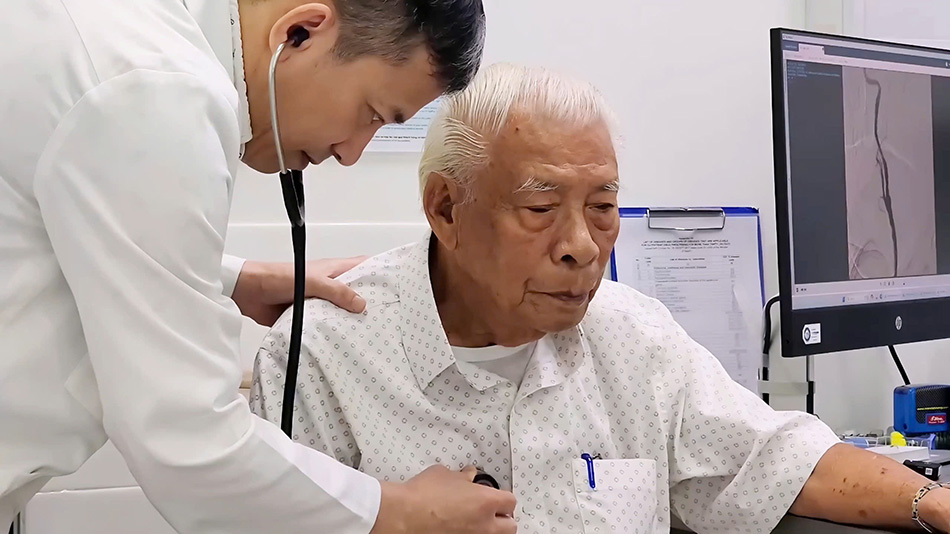
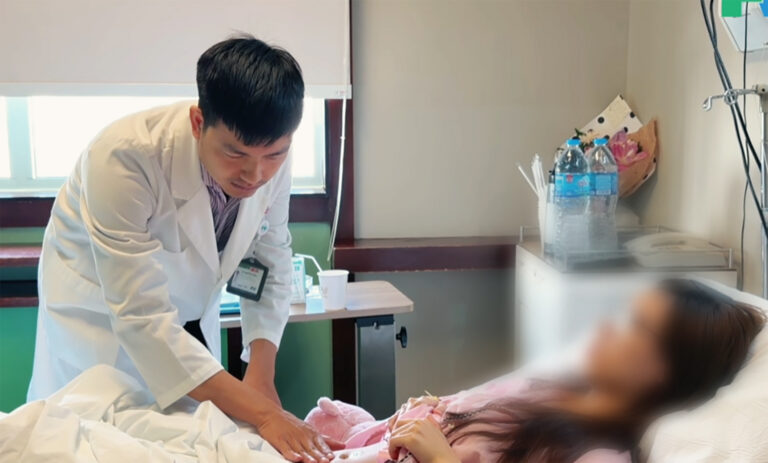
Dr Ho Minh Tuan, PhD, examines the patient and provides post-procedure care instructions
“Typically, a carotid artery stent placement at FV takes only about 20 minutes,” said Dr Ho Minh Tuan, PhD. “However, this case was highly unique, requiring a combination of specialized instruments and precise techniques to ensure accurate stent deployment, safely restoring blood flow to the brain.”
The 92-year-old patient’s subsequent recovery demonstrates the effectiveness of minimally invasive intervention performed without the need for general anaesthesia. Following just a single night of observation in hospital, Mr H.G. was up and walking, fully awake and alert, with his blurred vision and dizziness completely gone. A final follow-up ultrasound performed before his discharge the next morning confirmed that his blood flow through the artery had returned to normal.
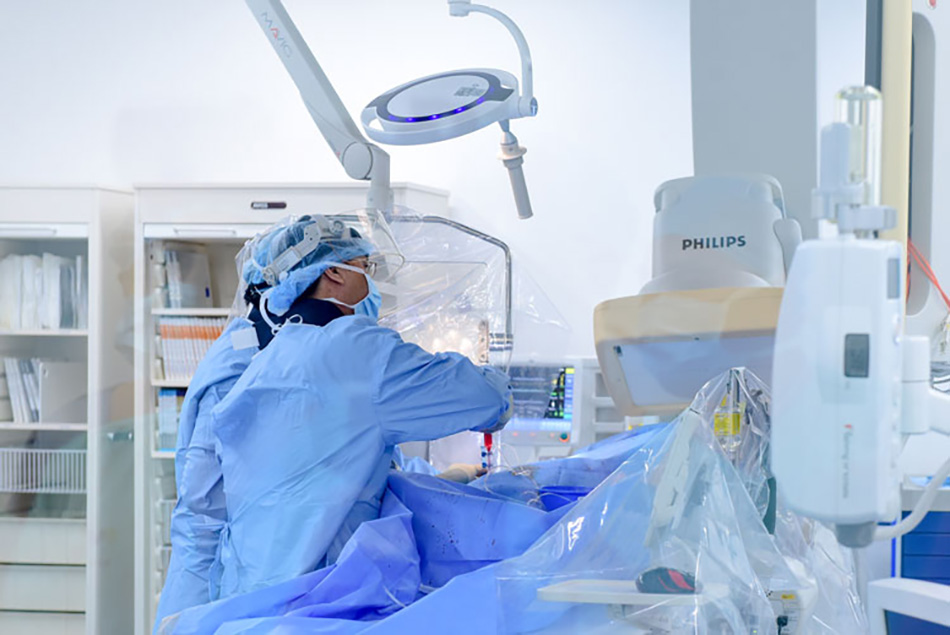
Advanced technology at FV Hospital enhances the safety and more effectiveness of cardiac interventions
Returning for his one-week follow-up appointment, Mr H.G. enthusiastically shared an update on his health: “I wouldn’t just say it is just good, it is excellent, because everything is back to normal.” He has already returned to his daily routine, including walking around his garden and caring for his plants.
The combination of Mr H.G.’s timely decision to seek medical attention and the expertise of the FV medical team not only helped prevent a high-risk stroke but also preserved his independence and quality of life.
Related News
See moreRelated News
How 10 dental implants changed one patient’s life at FV Hospital
After years of tooth loss led to severe jawbone resorption and difficulty eating, specialists at FV Hospital restored the patient’s smile by placing 10 dental implants in one procedure. How years of tooth loss lead to jawbone loss For many years, Mr Lam Quang Kieu Phong (55, Ho Chi Minh City) experienced tooth loss. Some […]

Nutcracker Syndrome: How a one-hour stent placement ended a year of abdominal pain
FV Hospital successfully treated a complex case of nutcracker syndrome using minimally invasive endovascular stenting, sparing the patient major open surgery. Persistent abdominal pain linked to renal vein entrapment For over a year, 41-year-old Ms V.T.K.P. from Ho Chi Minh City experienced persistent, dull lower abdominal pain that worsened with prolonged sitting or standing. As […]
Abdominal pain misdiagnosed as digestive issue: 23-year-old woman diagnosed with ovarian torsion
While studying abroad in South Korea, N.T.T.M. (23) experienced unusual pain in her lower right abdomen. She sought treatment at a local hospital and received medication for a suspected digestive issue. After returning to Vietnam to visit her family, the pain recurred and worsened. On her friends’ advice, M. visited FV Hospital for evaluation. She […]
Advanced robotic surgery at FV Hospital removes tumour near aorta
Surgeons at FV Hospital used the da Vinci Xi robotic surgical system to successfully remove a fibrous tumour located in a difficult-to-access area next to the aorta in a 46-year-old woman. Ms Nguyen Thuy Phuong Dung recovered well after surgery to remove the fibrous tumour from her left chest. Image: FV When a subtle chest […]
How 10 dental implants changed one patient’s life at FV Hospital
Nutcracker Syndrome: How a one-hour stent placement ended a year of abdominal pain
Abdominal pain misdiagnosed as digestive issue: 23-year-old woman diagnosed with ovarian torsion

