



On 31 October, FV Hospital partnered with the Children of Vietnam Charitable Fund and event organiser Nexus Sport Events to hold FV RUN 2026 (21 km) in Phu My Hung, Ho Chi Minh City. The event attracted more than 3,300 registered runners. However, an unexpected incident occurred when one participant suddenly collapsed near the finish line.
FV’s medical team delivers timely emergency care at major sporting events
The runner was 43-year-old Mr Hoang Van Cuong, who has worked at Phu Hung Company for 21 years. An experienced runner, he had taken part in numerous races across Vietnam, including full marathons of 42 km. However, in the days leading up to FV RUN 2026, he had not been getting enough rest or eating adequately. By the second kilometre, he had already noticed that his heart rate was unusually high. Despite this, he continued running until he collapsed just before the finish line.
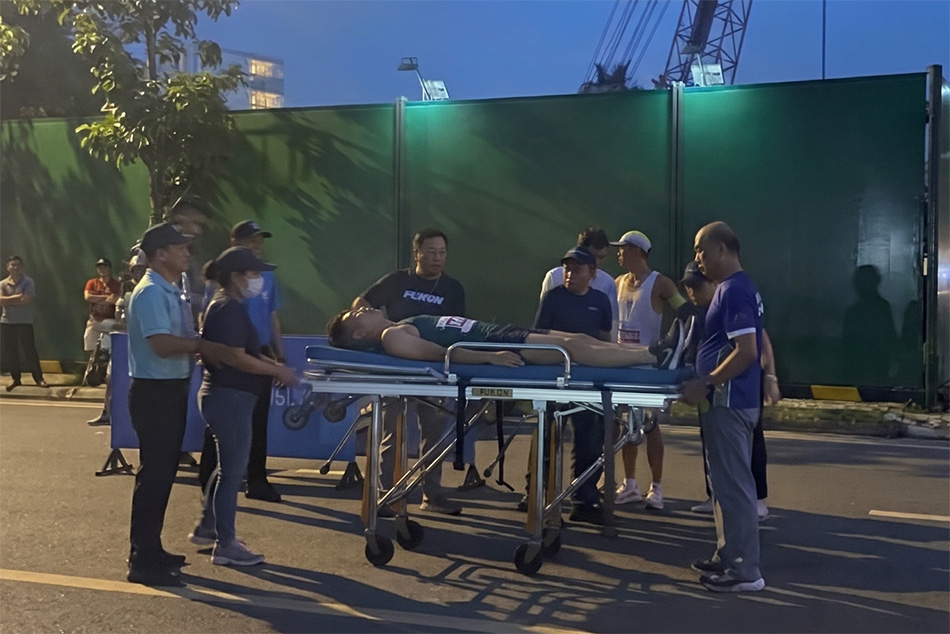
Dr Trinh Van Hai and the emergency team transfer the patient to FV Hospital.
Dr Trinh Van Hai, Head of the Accident & Emergency Department at FV Hospital, said the hospital had made thorough preparations to provide medical support along the race route. When Mr Cuong collapsed near the finish line, the medical team responded immediately and transferred him to an ambulance. He was drowsy, with a heart rate of 180-190 beats per minute and blood pressure of 70/50 mmHg. The doctors assessed his vital signs and promptly administered intravenous fluids. After approximately 15 minutes of monitoring, his blood pressure remained low and his heart rate was still elevated, despite having received half a bottle of intravenous fluids. The team therefore decided to transfer him to FV Hospital for further assessment and treatment.
At FV Hospital, his blood pressure remained low despite receiving two litres of intravenous fluids. An electrocardiogram (ECG) and blood tests were performed to investigate the cause of his condition. The initial ECG findings were inconclusive. However, blood tests revealed elevated cardiac and muscle enzyme levels, impaired kidney function and evidence of muscle damage. Even after receiving a total of three litres of intravenous fluids, his blood pressure remained low and his heart rate continued to be high. Repeat ECGs and blood tests showed further increases in cardiac enzyme levels, prompting the medical team to consult the Cardiology and Interventional Cardiology Department.
According to Dr Hai, heart muscle injury associated with a heart attack could not initially be ruled out. One possible explanation was that strenuous exercise had caused his heart rate to rise excessively, leading to myocardial ischaemia (reduced blood flow to the heart muscle). Another possibility was an acute myocardial infarction (heart attack). However, a coronary angiogram revealed no blockages in his coronary arteries. The doctors concluded that his extremely rapid heart rate (tachycardia) was associated with his low blood pressure, elevated cardiac enzyme levels and deteriorating kidney function, and had triggered temporary myocardial ischaemia.
“By the following morning, repeat tests showed that all measured parameters had returned to normal. Thankfully, the patient was no longer in immediate danger. Early detection and prompt, effective treatment helped prevent long-term complications and lasting damage,” Dr Hai said.
Know your health before taking part in sports
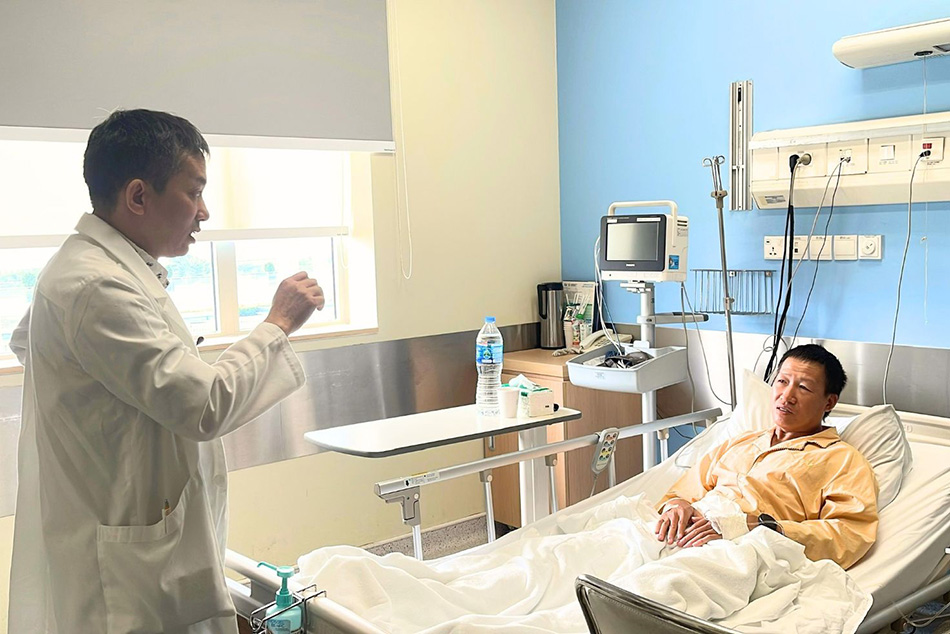
Dr Ho Minh Tuan, PhD, examines the patient at the bedside.
Dr Ho Minh Tuan, PhD, Head of the Cardiology and Interventional Cardiology Department at FV Hospital, explained that Mr Cuong had collapsed towards the end of the race. When someone faints during strenuous physical activity, comprehensive investigations are essential to establish the cause. One significant finding in this case was the marked elevation in cardiac enzyme levels, which can indicate heart muscle injury and may be associated with a heart attack. Fortunately, the patient’s coronary arteries were clear. He was kept under close observation while doctors investigated the cause of his exertional syncope (fainting during physical activity). Coronary artery disease and pulmonary embolism were ruled out. “However, other potential causes, including hypertrophic cardiomyopathy, cardiac arrhythmias and heart muscle injury, have not yet been ruled out. The patient will therefore need further specialised investigations,” Dr Tuan added.
Reflecting on his experience at FV RUN 2026, Mr Hoang Van Cuong said: “From now on, I will listen to my body. If I don’t feel well, I will stop rather than push myself and risk my health.” He also encouraged amateur runners, whether they aim to achieve personal bests or simply want to stay healthy, to have regular health check-ups to reduce the risks associated with strenuous physical activity.
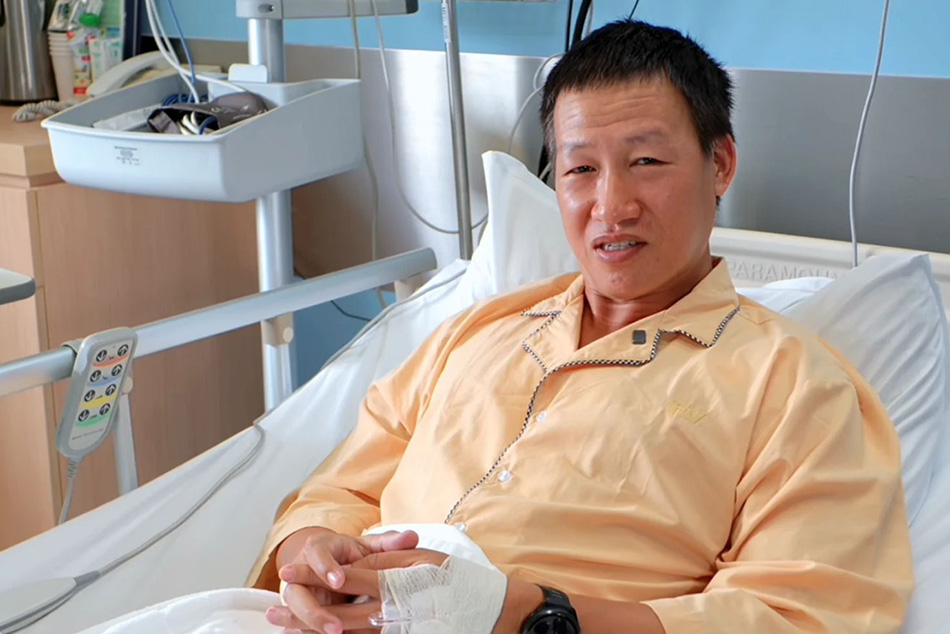
Mr Hoang Van Cuong shares his thoughts following treatment.
Dr Tuan advises people who participate in high-intensity sports to undergo cardiovascular screening beforehand, particularly those with a family history of heart disease. Other groups who may be at increased risk include women who experience premature menopause before the age of 40 and heavy smokers. Based on the screening results, individuals can receive advice on appropriate levels of physical activity and, where necessary, consider taking up a more suitable sport.
FV Hospital’s Sport Medicine Unit is among the few centres in Vietnam offering a comprehensive health screening programme for people interested in sports and physical activity. Its services cater to a wide range of individuals, from professional and semi-professional athletes to older adults, school pupils and university students who want to assess their health before taking up a sport. The assessment involves several medical specialties, with the results reviewed by sports medicine specialists. Each individual then receives personalised advice and a suitable training plan based on their health status.
Related News
See moreRelated News
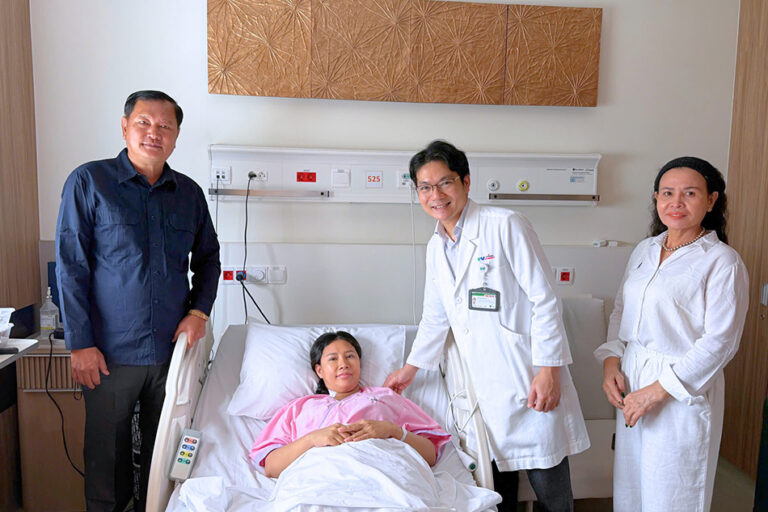
FV Hospital races against time to save a Cambodian mother with placenta praevia and pulmonary embolism
Early detection of the complication and coordinated multidisciplinary treatment enabled FV doctors to control the pulmonary embolism and preserve the mother’s uterus. She recovered and was discharged after seven days. Dr Vo Trieu Dat, MD, MSc, examines Cambodian patient Sourn Channa before her discharge. (Photo: FV Hospital) From Cambodia to Vietnam in Search of a […]
FV successfully treats a rare case of bladder diverticulum with a giant bladder stone
After reviewing 129 pages of medical records from the US and conducting a clinical examination, FV Hospital doctors quickly identified the underlying cause of Mr Culver Thomas William’s persistent urinary retention. Open surgery removed the abnormal bladder diverticulum and extracted a 4 x 6 cm stone, finally freeing the patient from the urinary catheter he […]

FV Doctors Use Robotic Surgery to Remove Uterine Fibroids in South African Patient
A large fibroid occupying almost the entire uterine wall caused prolonged heavy menstrual bleeding and severe abdominal pain in a 36-year-old woman. Following robotic surgery with the da Vinci Xi system, she made a remarkable recovery and was able to walk normally just one day after surgery. A 7cm fibroid threatened her fertility Ms Motaung […]

Two Months of Persistent Tinnitus Lead to Cholesteatoma Diagnosis
The Otorhinolaryngology (ENT) Department at FV Hospital recently received a 54-year-old woman from Ho Chi Minh City who had been experiencing tinnitus for over two months. She was diagnosed with a cholesteatoma of the middle ear. At FV, she underwent endoscopic surgery to remove the cholesteatoma, with the aim of preserving as much of her […]
FV Hospital races against time to save a Cambodian mother with placenta praevia and pulmonary embolism
FV successfully treats a rare case of bladder diverticulum with a giant bladder stone
FV Doctors Use Robotic Surgery to Remove Uterine Fibroids in South African Patient

