



In the past, many patients undergoing vascular interventions faced the risk of kidney toxicity and complications from contrast agents, which often prolonged hospital stays and increased treatment costs.
FV Hospital has successfully implemented CO₂-assisted angiography (Angiodroid CO₂), providing a safer treatment option for patients who cannot use iodine-based contrast agents, particularly those with kidney impairment.
CO₂ Technology – A Safe Angiography Solution for Patients with Kidney Disease or Allergies to Traditional Contrast Agents
Patient N.V.D., 76 years old, from An Giang, had a long history of diabetes and had been experiencing persistent pain, fatigue, and cramps in both legs when walking. Six months ago, he developed a wound on the fourth toe of his right foot. Despite visiting several medical facilities and using medications, the wound did not heal and gradually worsened. When the wound began to turn black and necrotic, his family brought him to FV Hospital.
Ultrasound and angiography at FV revealed complete blockage of the right iliac artery over a long segment, severe narrowing of the left iliac artery, complete obstruction of the right leg arteries, and over 90% blockage of the left leg arteries. Blood flow from the heart to both legs was almost completely blocked, causing toe necrosis and persistent pain in his right foot.
Specialist Level II, Luong Ngoc Trung, MD, MSc Head of Thoracic Vascular Endovascular Surgery at FV Hospital, stated that the patient has diabetes and kidney impairment, with a glomerular filtration rate (GFR) of 40 mL/min/1.73 m² (normal >90 mL/min/1.73 m²). He also had severe coronary artery stenosis, high blood pressure, and high cholesterol.
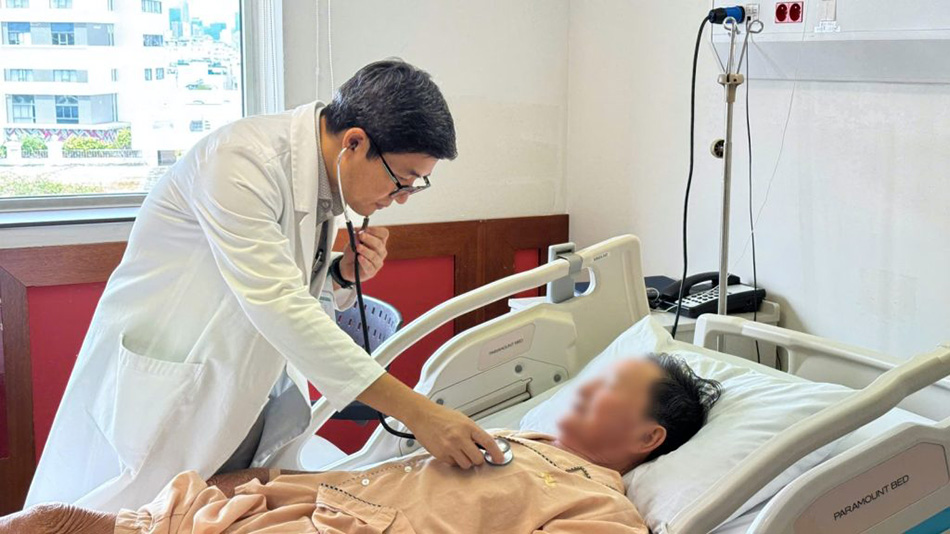
Dr Luong Ngoc Trung examines the patient.
Given the patient’s complex condition, including diabetes and severe kidney impairment, using iodine-based contrast agents for vascular intervention could have posed additional risks to the kidneys, particularly acute contrast-induced kidney injury. The FV Hospital team chose a new approach: performing angiography with CO₂ gas during the intervention using the Italian Angiodroid system.
With the Angiodroid system, pure CO₂ gas is injected into the blood vessels, replacing traditional contrast agents. This method still provides sharp X-ray images while helping protect kidney function. This technology is used in many advanced medical centres worldwide and is now being applied for the first time in Vietnam.
A Special Hybrid Surgery: Combining Endovascular Intervention and Bypass Surgery
Mr N.V.D.’s procedure was performed in the Cathlab with support from the Angiodroid CO₂ angiography system, the Philips Allura Xper DSA system, and other necessary instruments. The goal was to restore blood flow to the toe wound and promote healing.
First, Dr Trung treated the stenotic and blocked lesions in Mr N.V.D.’s abdomen using endovascular intervention, including balloon angioplasty and stent placement. This avoided traditional abdominal bypass surgery and restored blood flow to the arteries below the abdomen.
Next, because the patient’s right iliac artery was severely blocked and could not be treated endovascularly, Dr Trung performed bypass surgery, creating a short vascular bridge from the left femoral artery to the right femoral artery. The remaining blocked and narrowed arteries in both legs, including femoral and below-knee arteries, were also treated with balloon angioplasty and stent placement through small puncture sites.
After more than three hours for this hybrid procedure (combining endovascular intervention and bypass surgery), blood flow from the heart was successfully restored to both legs, improving overall perfusion.
“This was a particularly complex case. If we had performed only standard endovascular intervention, we could have treated only the left leg. The right iliac artery had a long-standing chronic blockage with heavy calcification, which endovascular techniques alone could not address,” Dr Trung explained.
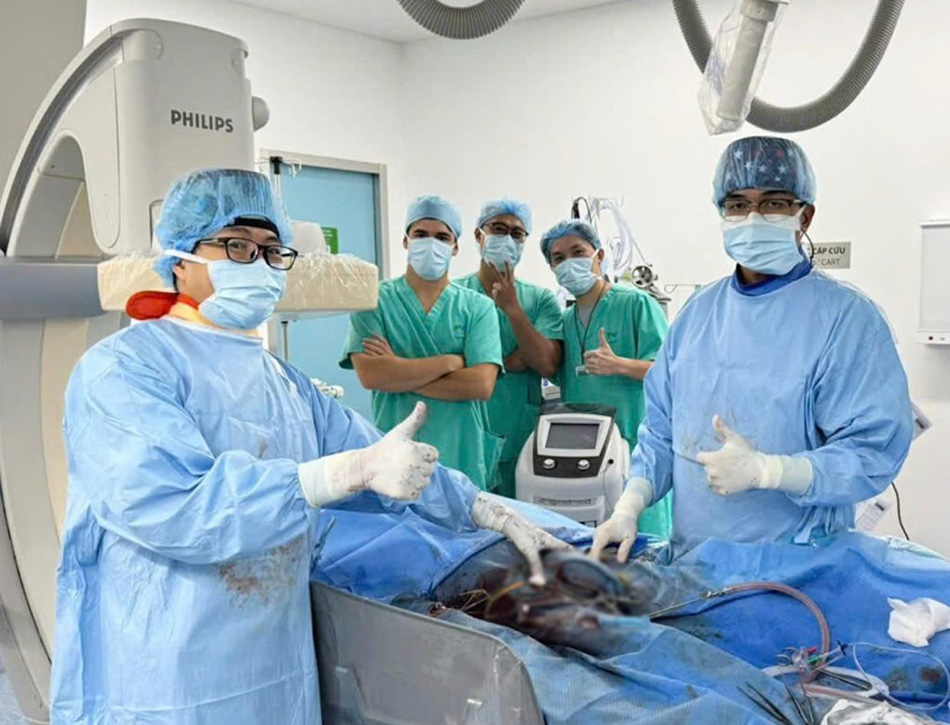
FV team successfully performs CO₂-assisted endovascular intervention and bypass for patient N.V.D.
After the surgery, the patient recovered quickly. Four days later, he was able to walk 500 meters, sleep well, and no longer felt sharp pain. The wound from the amputated necrotic toe began to heal. “I am truly grateful to the FV doctors and nurses for giving me a new lease on life,” he shared emotionally.
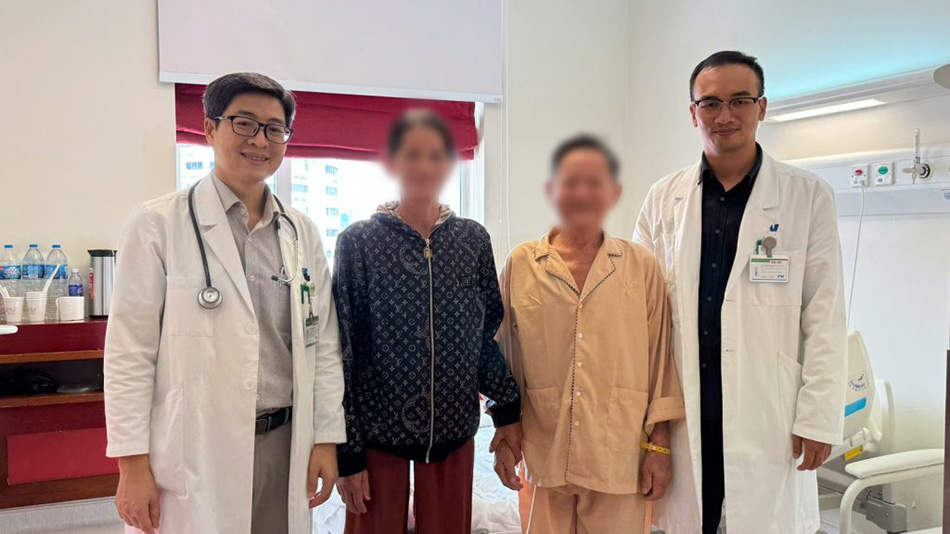
Dr Luong Ngoc Trung (left) visits Mr. N.V.D. the day before his discharge.
CO₂ Angiodroid: A Breakthrough in Vascular Intervention in Vietnam
The CO₂ Angiodroid angiography system functions as a medical “pump,” delivering CO₂ gas into the blood vessels to create images that clearly outline the vessel lumen.
The system precisely calculates the dose, pressure, and injection speed of CO₂, reducing the risk of vessel blockage from gas bubbles. At the same time, CO₂ acts as a biological contrast agent, providing X-ray image quality comparable to conventional iodine-based contrast agents.
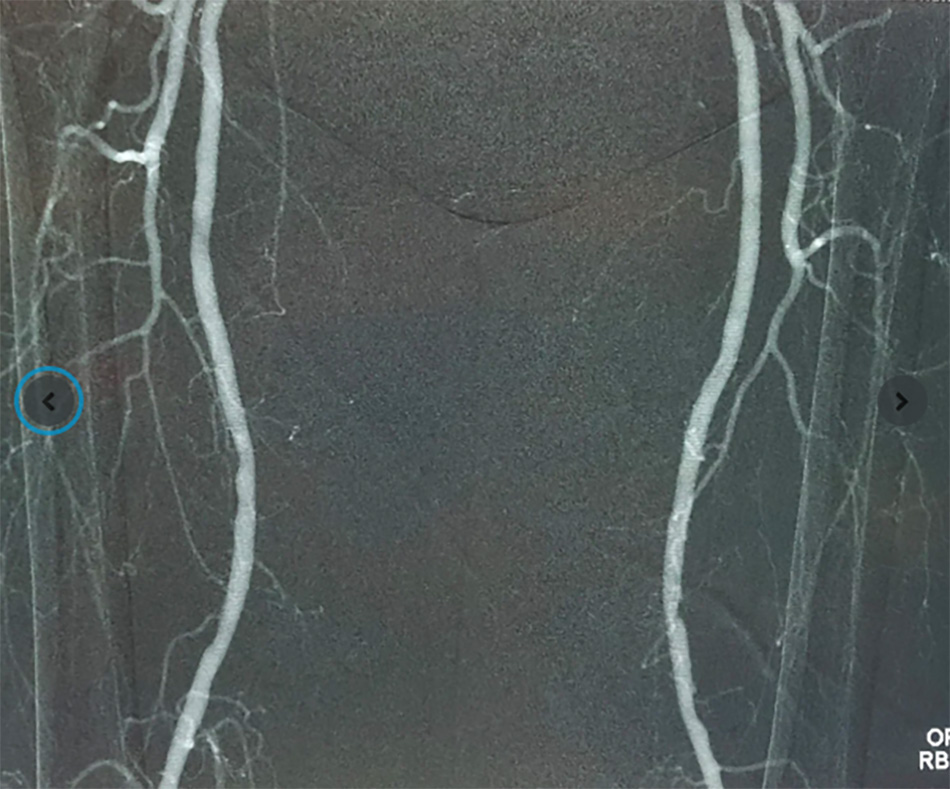
Pure medical CO₂ gas is injected to produce high-quality X-ray images.
This technology is particularly useful for:
- Patients allergic to iodine-based contrast agents
- Patients with kidney impairment or at risk of kidney toxicity from traditional contrast agents (e.g., those with diabetes or elderly patients)
- Interventions involving lower limb arteries, iliac arteries, the abdominal aorta, renal and hepatic arteries, and peripheral veins
- Diabetic foot cases requiring vascular assessment
For more information about this new method, visit FV Hospital at 06 Nguyen Luong Bang, Tan My Ward (former District 7), Ho Chi Minh City or call (028) 3511 3333.
Related News
See moreRelated News
Two Vietnamese midwives attain international IBCLC certification in breastfeeding counselling
Two midwives from FV Thomson’s Maternity Department have earned IBCLC (International Board Certified Lactation Consultant) certification, the international credential for breastfeeding support specialists. This achievement represents a significant clinical milestone in infant feeding support at FV Hospital, driven by the real-world complexities these practitioners encounter daily when supporting mothers and their newborns. Beyond certification: A […]
FV Hospital Celebrates International Allied Health Professions Day 2026
On 14 October 2026, FV Hospital held a special event to express its appreciation for allied health professionals. Attendees included members of the Board of Directors, heads of departments, and more than 40 allied health professionals and specialists. The event recognised the dedication of allied health professionals across a range of specialties, including Dietetics and […]
FV pioneers ERAS® implementation in Vietnam in line with international standards, supporting faster postoperative recovery
FV Hospital has become the first hospital in Vietnam to partner with Sweden-based Encare AB to implement the Enhanced Recovery After Surgery (ERAS®) programme. Through this partnership, FV joins Encare’s network of 22 hospitals in 11 countries across the Asia-Pacific region. The initiative aims to standardise surgical care according to international guidelines, leverage data to […]

Nutcracker Syndrome: How a one-hour stent placement ended a year of abdominal pain
FV Hospital successfully treated a complex case of nutcracker syndrome using minimally invasive endovascular stenting, sparing the patient major open surgery. Persistent abdominal pain linked to renal vein entrapment For over a year, 41-year-old Ms V.T.K.P. from Ho Chi Minh City experienced persistent, dull lower abdominal pain that worsened with prolonged sitting or standing. As […]
Two Vietnamese midwives attain international IBCLC certification in breastfeeding counselling
FV Hospital Celebrates International Allied Health Professions Day 2026
FV pioneers ERAS® implementation in Vietnam in line with international standards, supporting faster postoperative recovery

