



A woman attended FV Hospital’s Pink Month event to meet an old friend and decided to book a breast screening while she was there. She had no pain, no noticeable lump, and no reason to think anything was wrong. That seemingly routine decision led to a life-changing diagnosis: cancer was found in both breasts.
An unexpected diagnosis
Dr Phung Ngoc Thu, Specialist Level I, still vividly remembers meeting Ms T., a close friend from secondary school, at FV Hospital’s Pink Month annual event.
In her forties and in good health, Ms T. had not had regular breast screenings for many years, postponing them due to a busy schedule. Her appointment that day was unplanned; she signed up for screening while attending the event.
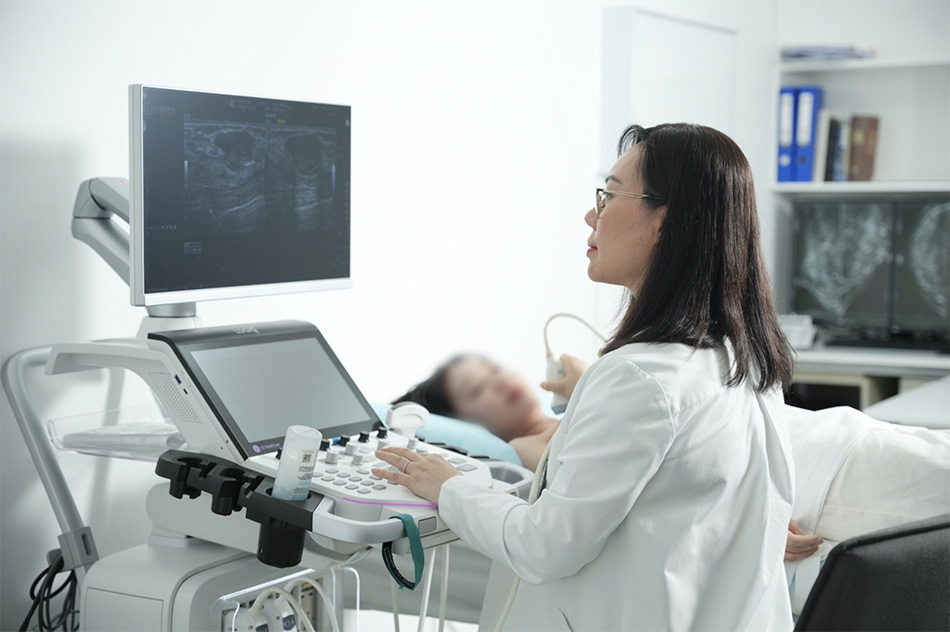
A patient undergoes breast cancer screening. Image: FV Hospital
Everything appeared normal until Dr Thu reviewed the mammogram, which revealed a suspicious lesion in one breast requiring further investigation.
Following protocol, Dr Thu assessed both breasts and identified a second, smaller abnormal area. Biopsy confirmed cancer in both breasts.
After diagnosis, the multidisciplinary team developed a treatment plan that included BRCA genetic testing, surgery, and personalised breast reconstruction options.
Common myths about breast cancer screening
Ms T.’s story is far from unusual. Many women postpone breast screening because they are busy or believe that if they feel well, there is no reason to be concerned. However, this false sense of reassurance can delay diagnosis and reduce treatment options.
According to recommendations from leading medical organisations, including the American College of Radiology (ACR) and the National Comprehensive Cancer Network (NCCN), women should undergo a breast cancer risk assessment by the age of 25. At FV Hospital, women at average risk are advised to have annual breast ultrasounds, with mammography added from age 40. Higher-risk women, including those with a family history or BRCA1/BRCA2 mutations, may need earlier and more personalised screening, which can include breast MRI.
Common misconceptions often prevent women from attending regular screenings. Many women seek medical advice only after discovering a lump, experiencing pain, or noticing breast changes. However, early-stage breast cancer often causes no symptoms. Waiting for warning signs can mean missing the best chance for early treatment.
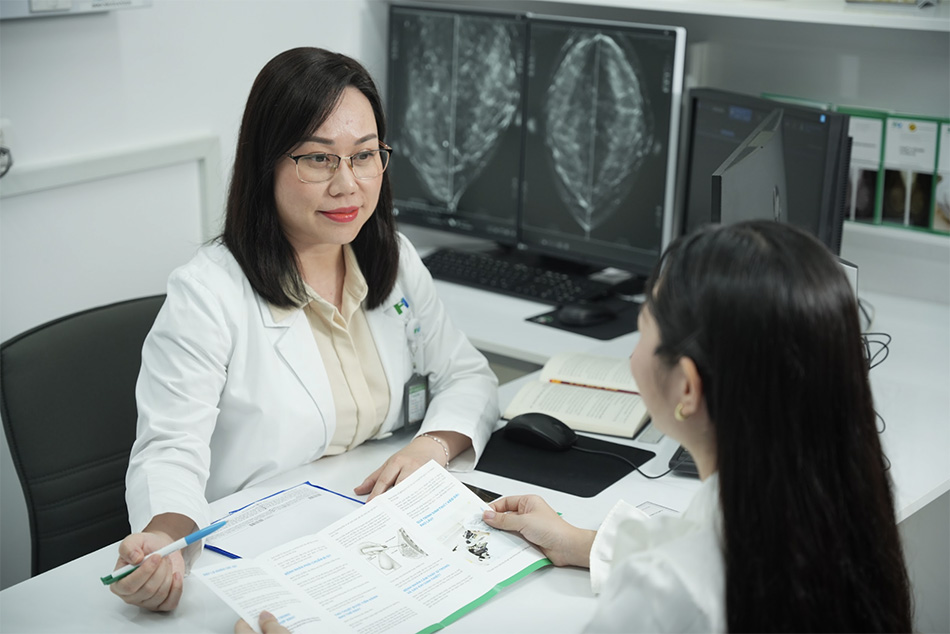
Dr Phung Ngoc Thu consulting with a patient. Image: FV Hospital
Some women believe they are protected because they are young, have no family history, or maintain a healthy lifestyle. While these factors may reduce risk, they do not eliminate it. Breast cancer can still occur in women with no clear risk factors.
Dr Thu emphasises that breast screening should not be a single event. Instead, it should be a regular part of a woman’s healthcare, tailored to her age, breast density, and individual risk profile.
More tests do not necessarily mean better care
Various imaging techniques serve distinct roles in detecting breast cancer. Mammography, including 3D mammography, is effective at identifying microcalcifications. Ultrasound is valuable for assessing abnormalities, especially in women with dense breast tissue. MRI offers additional detail when needed, while biopsy remains the definitive method for diagnosing cancer.
The most appropriate test depends on clinical findings, breast tissue characteristics, and the specialist’s assessment. A benign lesion may need only regular monitoring; conversely, if a biopsy is recommended, patients should not delay out of fear.
Dr Thu often observes two opposing reactions. Some patients delay a recommended biopsy due to fear of the results. One patient returned 18 months later to find a tumour had grown from 6 mm to over 20 mm and had spread to the lymph nodes. Others become anxious after being told they have a benign lesion. Despite a recommendation for routine six-month follow-up, they seek repeated consultations and unnecessary tests, increasing their anxiety.
“Good medicine is not about doing more tests,” says Dr Thu. “It’s about doing the right test, at the right time, for the right patient.”
When breast cancer is diagnosed, specialists assess tumour number and location, lymph node involvement, and disease characteristics to determine the best treatment plan. At FV Hospital, each case is reviewed by a Multidisciplinary Tumour Board of specialists in radiology, pathology, surgery, oncology, and related fields. They determine the best treatment approach, including options such as breast-conserving surgery, chemotherapy, radiotherapy, or targeted therapies.
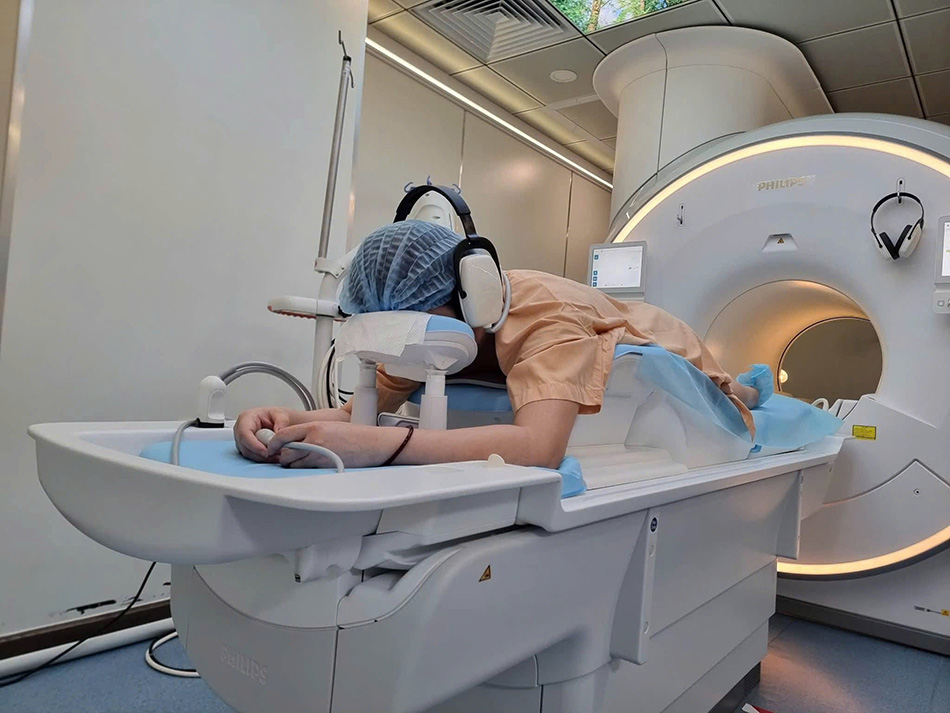
Breast MRI performed on FV Hospital’s new-generation Philips 3.0 Tesla MRI system. Image: FV Hospital
For Pink Month 2026, Dr Thu shares a simple message:
“Screening should not be driven by fear. It is an act of self-care and self-respect. No matter how busy you are, take the time to see a specialist and develop a breast health plan that is right for you.”
| Book a breast screening consultation At the FV Breast Centre, Dr Phung Ngoc Thu, Specialist Level I in breast disease (mastology), provides personalised advice and helps women select the most appropriate screening programme for their needs. – Standard Screening Package (starting at VND2.5 million): For women with average breast cancer risk and normal breast tissue. Includes 3D mammography (DBT) and consultation with a breast specialist. – Dense Breast Screening Package (starting at VND3.2 million): Includes consultation with a breast specialist, 3D mammography (DBT) and breast ultrasound. FV Hospital is also equipped with a new-generation Philips 3.0 Tesla MRI system, which reduces scanning time and significantly lowers noise levels. An abbreviated breast MRI can be added to the standard screening package for VND 4.5 million. FV Breast Care Centre 6 Nguyen Luong Bang Street, Tan My Ward, Ho Chi Minh City Hotline: (028) 3511 3333 |
Related News
See moreRelated News
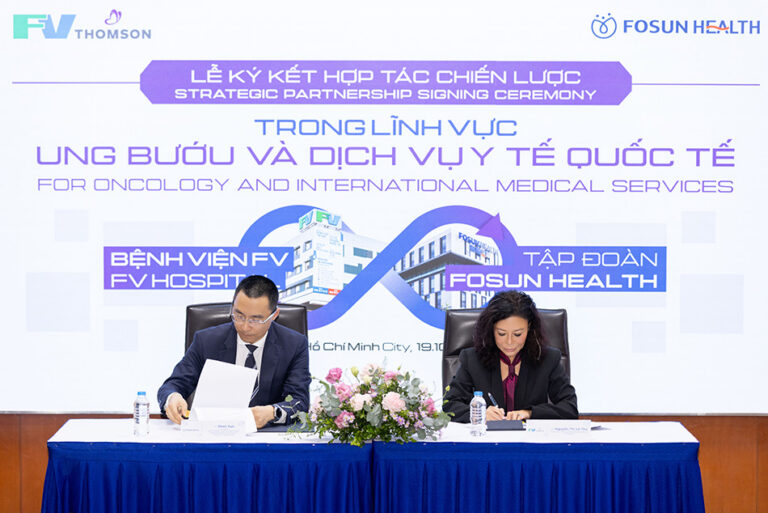
FV Hospital and Fosun Health enter strategic partnership in cancer care and other medical specialties
FV Hospital, a member of Thomson Medical Group (Singapore), and Fosun Health (China) have officially signed a Memorandum of Understanding (MoU) to establish a strategic partnership, combining their healthcare expertise in oncology, from pre-treatment diagnosis and access to specialised cancer treatments in China to post-treatment care and follow-up in Vietnam. In addition to coordinating patient […]
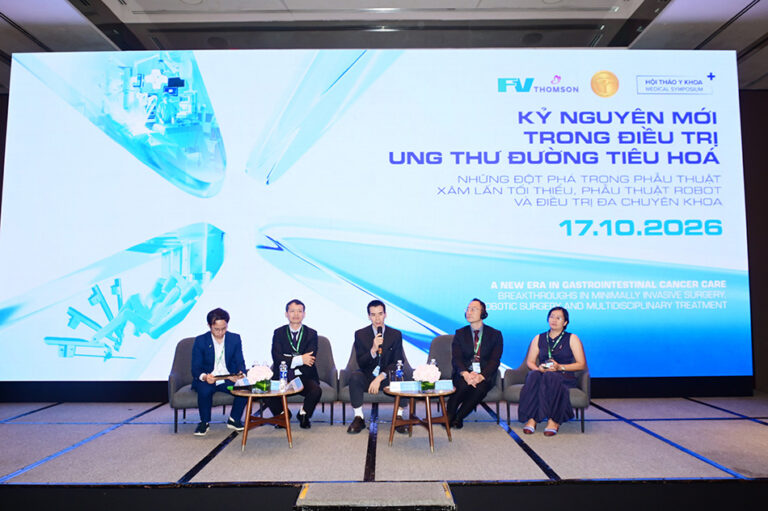
Five key insights into robotic surgery and gastrointestinal cancer treatment at FV Hospital
On 17 October 2026, at the Sheraton Saigon Hotel, FV Hospital hosted a scientific conference titled “A new era in gastrointestinal cancer care: breakthroughs in minimally invasive surgery, robotic surgery and multidisciplinary treatment”. The conference featured presentations by Vietnamese and international experts in surgery, gastroenterology and oncology, and attracted more than 500 attendees. Dr Phan […]
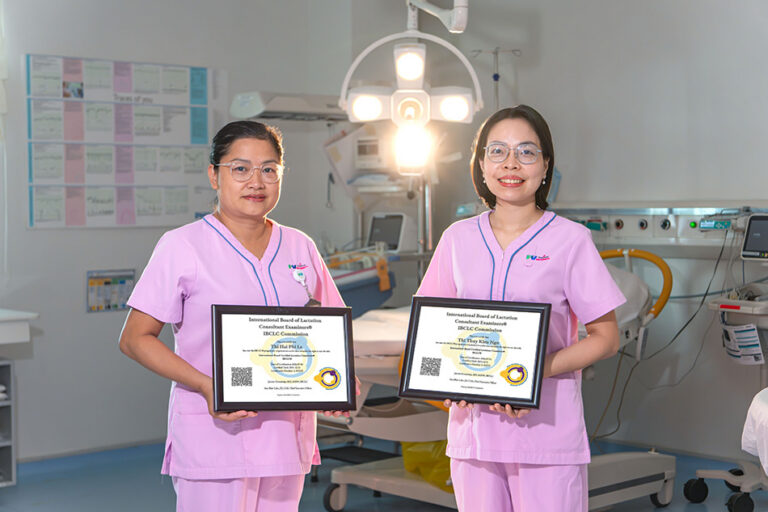
Two Vietnamese midwives attain international IBCLC certification in breastfeeding counselling
Two midwives from FV Thomson’s Maternity Department have earned IBCLC (International Board Certified Lactation Consultant) certification, the international credential for breastfeeding support specialists. This achievement represents a significant clinical milestone in infant feeding support at FV Hospital, driven by the real-world complexities these practitioners encounter daily when supporting mothers and their newborns. Beyond certification: A […]
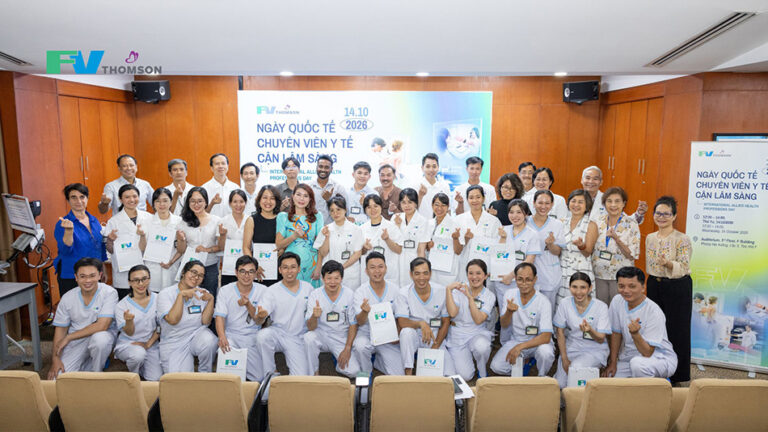
FV Hospital Celebrates International Allied Health Professions Day 2026
On 14 October 2026, FV Hospital held a special event to express its appreciation for allied health professionals. Attendees included members of the Board of Directors, heads of departments, and more than 40 allied health professionals and specialists. The event recognised the dedication of allied health professionals across a range of specialties, including Dietetics and […]
FV Hospital and Fosun Health enter strategic partnership in cancer care and other medical specialties
Five key insights into robotic surgery and gastrointestinal cancer treatment at FV Hospital
Two Vietnamese midwives attain international IBCLC certification in breastfeeding counselling

