




A 53-year-old male patient in Ho Chi Minh City underwent a successful seven-hour surgery at FV Hospital to treat two primary malignancies of the oesophagus and stomach. The surgical team reconstructed his upper digestive tract using a segment of his colon, a technique called colonic interposition, with support from the da Vinci Xi robotic surgical system, which is well-suited for complex gastrointestinal procedures.
Two simultaneous cancers and a severely distorted abdominal cavity
Mr V.A. (53 years old, Ho Chi Minh City) presented to FV Hospital with several months of progressive difficulty swallowing. He was diagnosed with synchronous double primary malignancies: oesophageal carcinoma and poorly differentiated gastric carcinoma.
According to Dr Doan Ngoc Giao, PhD, Gastrointestinal Surgery Specialist at the FV da Vinci Robotic Surgery Centre, this is an aggressive malignancy. It is highly invasive, progresses quickly, and has a strong tendency to metastasize. Without prompt treatment, the outlook would be very poor.
Mr A. also had a history of major polytrauma, including severe abdominal injury with complete pancreatic transection and multiple visceral injuries. He had previously undergone pancreatojejunostomy and several other major surgeries. As a result, his abdominal cavity was densely scarred with adhesions, mesenteric retraction, colonic angulation, and significant anatomical distortion.
In the vast majority of oesophageal cancer cases, the stomach is mobilised and drawn upward to serve as the oesophageal conduit. In Mr A.’s case, however, the stomach itself was the site of the second cancer and required complete resection. This left the surgical team with a single viable alternative: using a segment of the patient’s own colon to replace the oesophagus following total abdominal adhesiolysis. This is a technically demanding procedure requiring absolute precision to avoid injuring the mesenteric blood supply.
A seven-hour operation to reconstruct the entire digestive tract
For more than seven hours in the operating theatre, the surgical team carefully removed every band of scar tissue and patiently identified each anatomical landmark in the distorted area. Only then did they identify the section of colon with the strongest blood supply to use as the new oesophagus. A single misjudgement in the selection or anastomosis of the colonic conduit could have resulted in ischaemic necrosis, a life-threatening complication.
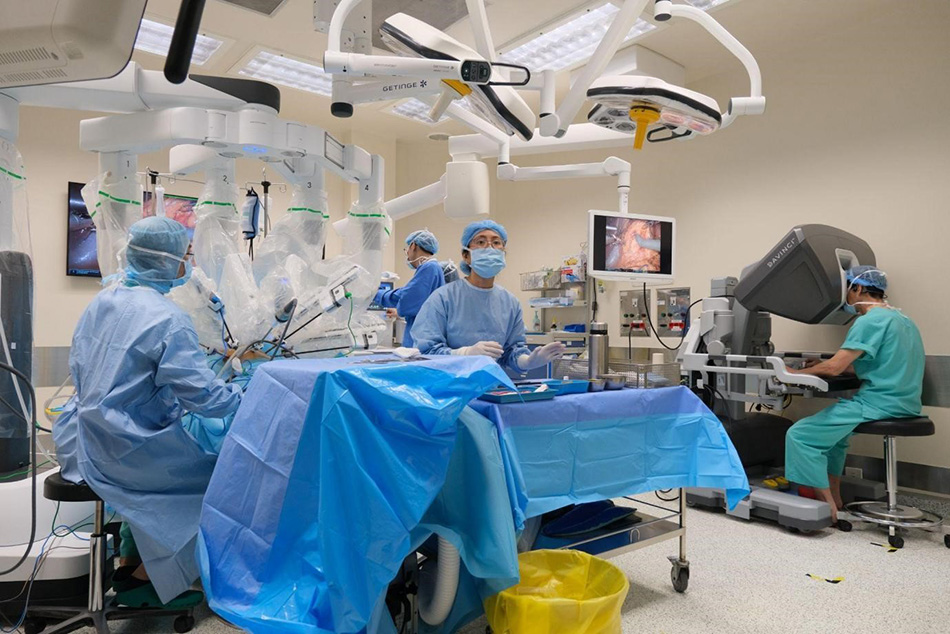
FV Hospital surgical team undertaking robot-assisted oesophagectomy and total gastrectomy, with colonic interposition to reconstruct the digestive tract. Image: FV
The da Vinci Xi robotic surgical system was an indispensable partner throughout this procedure. Indeed, the patient.’s severely distorted anatomy served as a near-definitive test of what robotic technology can achieve.
“With high-definition 3D magnification and robotic arms capable of articulating precisely within confined spaces, we were able to perform radical lymphadenectomy, achieve precise tumour dissection, and preserve the maximum amount of healthy surrounding tissue and vasculature,” said Dr Doan Ngoc Giao.
The team’s clinical experience, combined with the precision of the robotic system, helped them overcome challenges that would have seemed impossible. By the seventh day after surgery, Mr A. was stable and able to eat by mouth through his reconstructed oesophagus.
Since he no longer had a stomach, specialist dietitians helped him adjust his eating habits. He now focuses on eating small, frequent meals, chewing thoroughly, and eating slowly to help his body adapt.
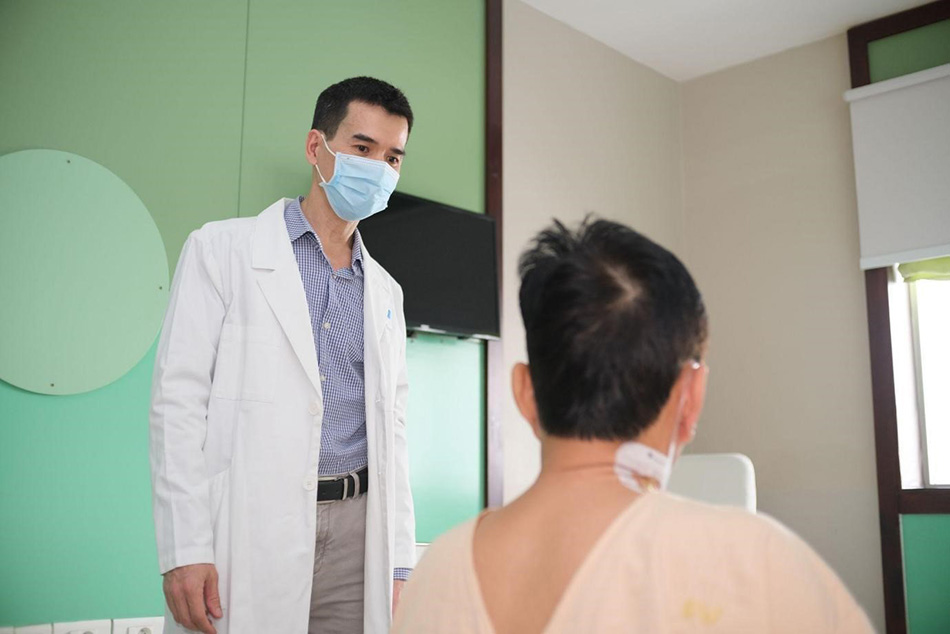
Dr Doan Ngoc Giao, PhD, examining the patient following surgery. Image: FV
Oesophageal and gastric cancer: a major burden in gastrointestinal oncology
According to data from the International Agency for Research on Cancer (IARC), oesophageal cancer ranks eighth globally in cancer incidence and sixth in cancer mortality. Gastric cancer is similarly prominent, ranking fifth globally in incidence and fourth in cancer mortality.
Both cancers often progress without symptoms in the early stages. Symptoms such as progressive dysphagia, unexplained weight loss, epigastric pain, persistent abdominal bloating, or early satiety are frequently overlooked or attributed to benign conditions, leading to late diagnoses. Treating synchronous oesophageal and gastric cancer is highly complex, especially in patients with a history of major abdominal trauma and multiple surgeries.
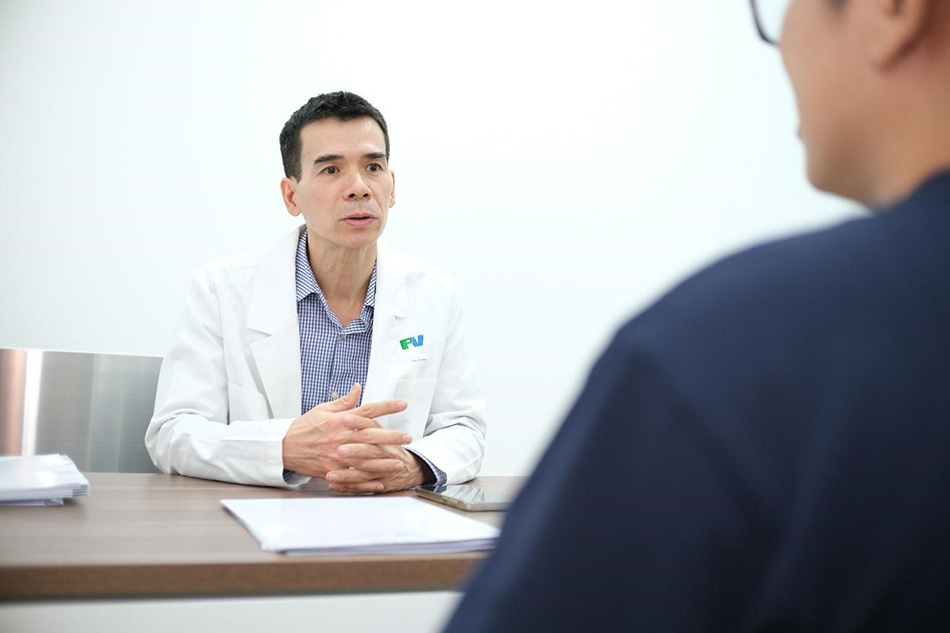
Dr Doan Ngoc Giao, PhD, gastrointestinal surgery specialist at the FV da Vinci Robotic Surgery Centre.
For more information or to request a consultation on robotic-assisted surgery for complex conditions using da Vinci System, please visit FV Hospital at 6 Nguyen Luong Bang Street, Tan My Ward (formerly District 7), Ho Chi Minh City, or call (028) 3511 3333.
Related News
See moreRelated News
How 10 dental implants changed one patient’s life at FV Hospital
After years of tooth loss led to severe jawbone resorption and difficulty eating, specialists at FV Hospital restored the patient’s smile by placing 10 dental implants in one procedure. How years of tooth loss lead to jawbone loss For many years, Mr Lam Quang Kieu Phong (55, Ho Chi Minh City) experienced tooth loss. Some […]
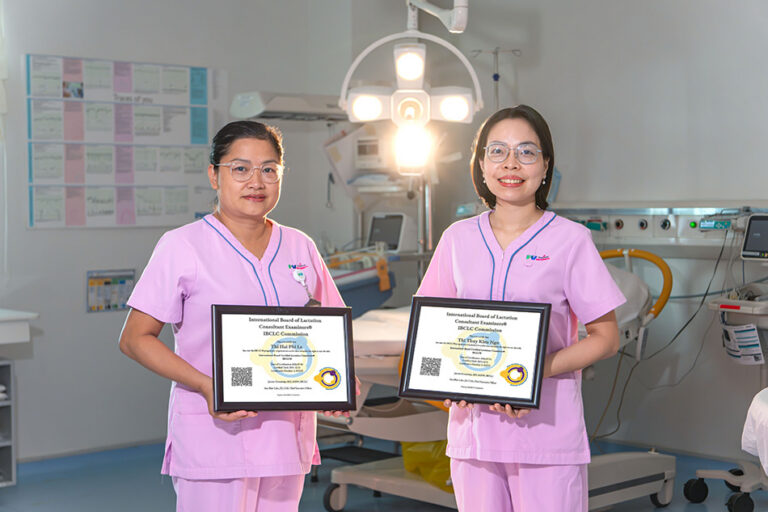
Two Vietnamese midwives attain international IBCLC certification in breastfeeding counselling
Two midwives from FV Thomson’s Maternity Department have earned IBCLC (International Board Certified Lactation Consultant) certification, the international credential for breastfeeding support specialists. This achievement represents a significant clinical milestone in infant feeding support at FV Hospital, driven by the real-world complexities these practitioners encounter daily when supporting mothers and their newborns. Beyond certification: A […]
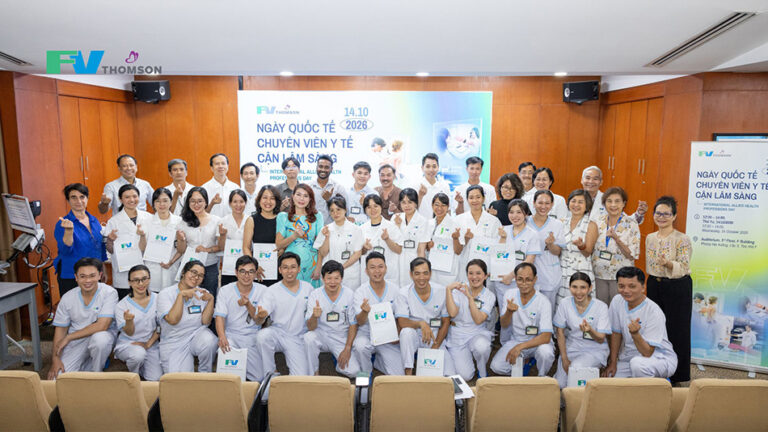
FV Hospital Celebrates International Allied Health Professions Day 2026
On 14 October 2026, FV Hospital held a special event to express its appreciation for allied health professionals. Attendees included members of the Board of Directors, heads of departments, and more than 40 allied health professionals and specialists. The event recognised the dedication of allied health professionals across a range of specialties, including Dietetics and […]
FV pioneers ERAS® implementation in Vietnam in line with international standards, supporting faster postoperative recovery
FV Hospital has become the first hospital in Vietnam to partner with Sweden-based Encare AB to implement the Enhanced Recovery After Surgery (ERAS®) programme. Through this partnership, FV joins Encare’s network of 22 hospitals in 11 countries across the Asia-Pacific region. The initiative aims to standardise surgical care according to international guidelines, leverage data to […]
How 10 dental implants changed one patient’s life at FV Hospital
Two Vietnamese midwives attain international IBCLC certification in breastfeeding counselling
FV Hospital Celebrates International Allied Health Professions Day 2026

