




Admitted to the emergency department with symptoms mimicking an acute stroke, Mr B.T.T. was found to have a massive brain tumour measuring nearly 7 cm alongside extensive cerebral oedema. Following a 5-hour neurosurgical procedure at FV Hospital, his neurological symptoms improved dramatically, allowing him to eat, speak, and move again just one day after surgery.
About a week prior to admission, Mr B.T.T. (70 years old, Ba Ria, Ho Chi Minh City) experienced persistent fatigue, slowed speech, and forgetfulness. Attributing these changes to normal aging, his family was not initially alarmed. However, when he suddenly became semi-comatose, developed dysphasia, and experienced near-complete right-sided hemiparesis, his family rushed him to a local emergency department.
Given his neurological deficits — slurred speech and right-sided hemiparesis — clinicians initially suspected an acute stroke. However, magnetic resonance imaging (MRI) revealed an entirely different underlying cause: a large mass in the left frontal lobe. Recognising that the condition exceeded local surgical capabilities, the family promptly transferred him to FV Hospital.
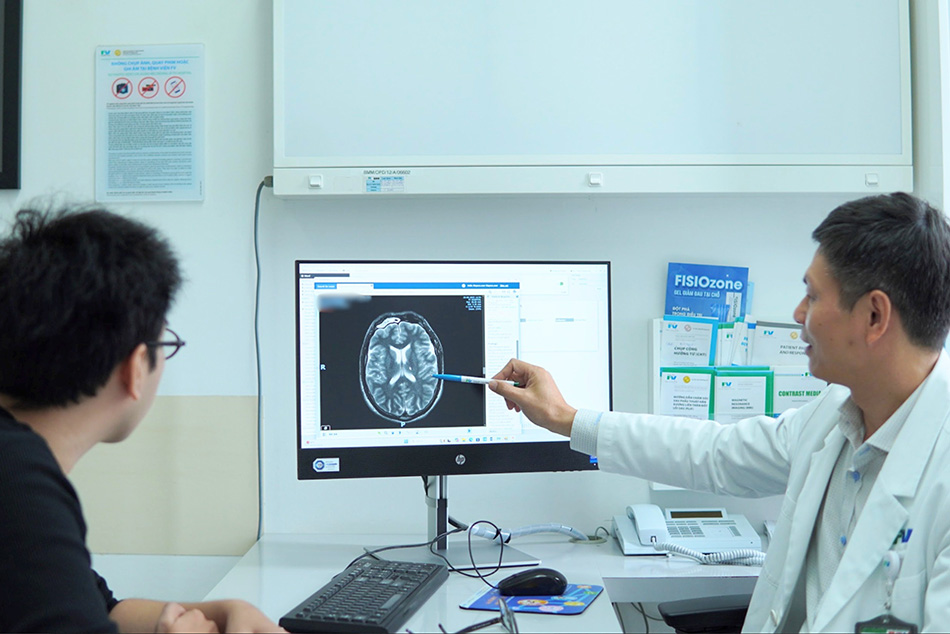
Dr Tran Luong Anh, Specialist Level II, evaluates the patient’s condition and treatment outcome.
At FV Hospital, contrast-enhanced MRI confirmed a left frontal lobe lesion measuring 68 x 40 x 59 mm (with a maximum diameter approaching 7 cm), causing a 10 mm rightward midline shift. The lesion was accompanied by severe perilesional cerebral oedema extending up to 9 cm, causing severe mass effect on adjacent brain tissue.
According to Dr Tran Luong Anh, Specialist Level II, Head of Neurosurgery and Spine Surgery at FV Hospital, neuroimaging features strongly point toward a high-grade glioma. This type of tumour often grows very quickly and is frequently diagnosed only after becoming large enough to compress the brain.
“The extensive tumour-associated swelling caused severe intracranial hypertension and headaches. Without prompt surgical intervention, complications such as seizures or vomiting could exacerbate cerebral oedema, risking brain herniation and death,” Dr Luong Anh explained.
Early surgery to achieve maximal safe resection
The patient was admitted over the weekend. Following urgent multidisciplinary consultation, the clinical team elected not to delay surgical intervention. “Leaving the patient in a holding pattern increased the risk of catastrophic neurological deterioration while accumulating higher medical expenses. Therefore, we scheduled emergency surgery at the earliest possible opportunity,” shared Dr Tran Luong Anh, Specialist Level II.
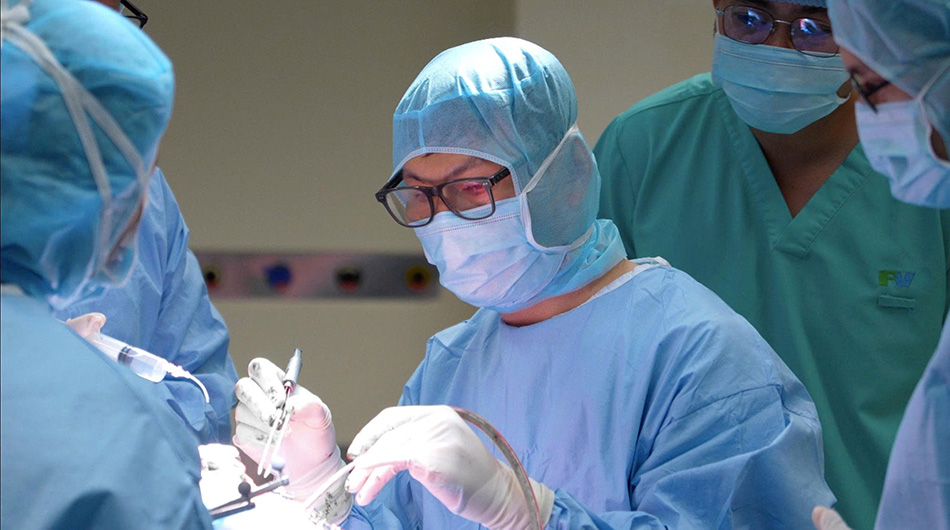
Dr Tran Luong Anh, Specialist Level II, performing surgical resection of the intracranial tumour. Image: FV
The procedure took place the following day, supported by a new-generation neuronavigation system, a high-definition surgical microscope, and an ultrasonic surgical aspirator. This integrated technological suite enabled the surgical team to precisely identify the tumour’s location, choose optimal cortical entry points, and achieve maximal safe resection. After 5 meticulous hours, the mass was resected without compromising critical neurological functions.
Upon awakening from anesthesia, Mr T.’s rapid recovery astonished his family. “I was completely amazed. I never expected my father to recover so quickly! Within mere hours of his major brain surgery, he was already eating, drinking, and talking with us,” shared Mr Hai Dang, the patient’s son.
At his two-week follow-up consultation, Mr T. demonstrated a stable gait, fluent speech, restored memory, and resolution of motor weakness. “I feel much stronger now. Motor function in my right arm and leg is back to about 80%. I have no postoperative pain and my appetite has fully returned,” Mr T. reported.
Reflecting on the experience, Mr Hai Dang expressed profound appreciation: “I knew FV was an exceptional hospital, but the care my father received went far beyond our expectations. The surgeons prioritised my father’s safety above all else, and the nursing staff provided care so attentive that I doubt even I could have cared for him better as his son.”
The family also expressed gratitude for FV Hospital’s direct billing integration with social health insurance and private health coverage, which significantly alleviated the financial burden of treatment.
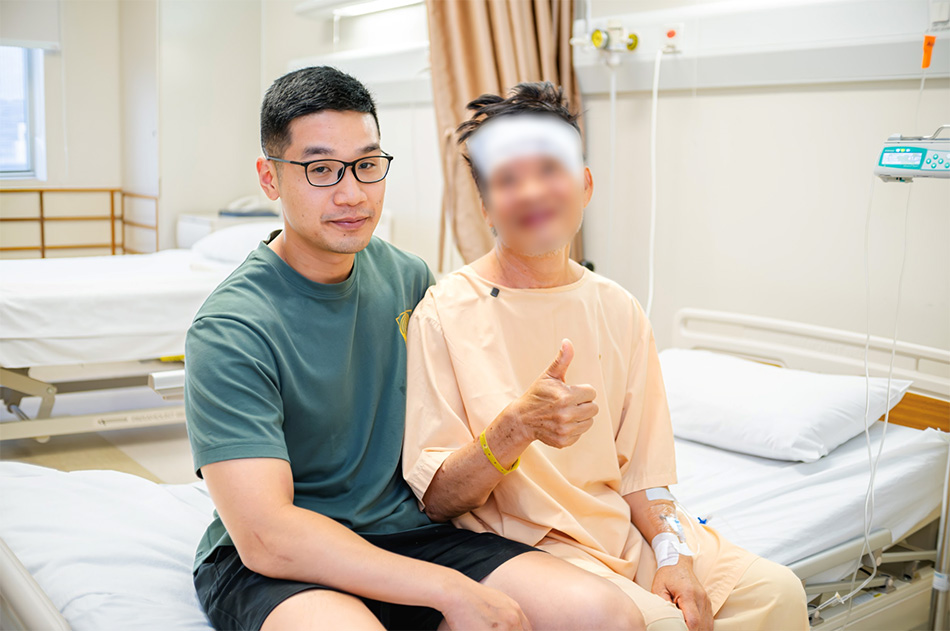
Mr Hai Dang alongside his father during postoperative recovery. Image: FV
Recognising brain tumour warning signs mimicking stroke
Histopathological analysis confirmed a diagnosis of Grade 4 Glioblastoma – one of the most aggressive primary brain malignancies in adults. Because glioblastomas grow rapidly and characteristically infiltrate surrounding parenchyma, adjuvant multimodality therapy – such as radiotherapy or chemotherapy – remains necessary even after maximal surgical resection. Mr T. will undergo further evaluation by FV Hospital’s Oncology Department to establish a tailored postoperative treatment protocol.
Dr Luong Anh emphasised that intracranial neoplasms often remain silent in their early stages. As mass effect builds, patients may manifest symptoms such as persistent headaches, motor weakness, dysphasia, memory loss, personality changes, or seizures. When lesions arise in the left cerebral hemisphere—the dominant hemisphere controlling language—they frequently mimic stroke presentations with sudden dysphasia or hemiparesis.
Timely transfer to a comprehensive neurosurgical centre equipped with advanced operative infrastructure is paramount for optimising outcomes in patients with large glioblastomas. With 24/7 emergency response capabilities and seamless multidisciplinary collaboration, FV Hospital routinely handles complex neurosurgical cases. The surgical team is led by Dr Tran Luong Anh, a leading expert in Vietnam proficient in both cranial and spinal neurosurgery, who brings decades of surgical experience and performs hundreds of procedures annually, always emphasising individualized, patient-centered care.
To learn more about neurological care and surgical services at FV Hospital, please visit 6 Nguyen Luong Bang Street, Tan My Ward (formerly District 7), Ho Chi Minh City, or call (028) 3511 3333. Emergency Hotline: (028) 3511 3500.
Related News
See moreRelated News

Nutcracker Syndrome: How a one-hour stent placement ended a year of abdominal pain
FV Hospital successfully treated a complex case of nutcracker syndrome using minimally invasive endovascular stenting, sparing the patient major open surgery. Persistent abdominal pain linked to renal vein entrapment For over a year, 41-year-old Ms V.T.K.P. from Ho Chi Minh City experienced persistent, dull lower abdominal pain that worsened with prolonged sitting or standing. As […]
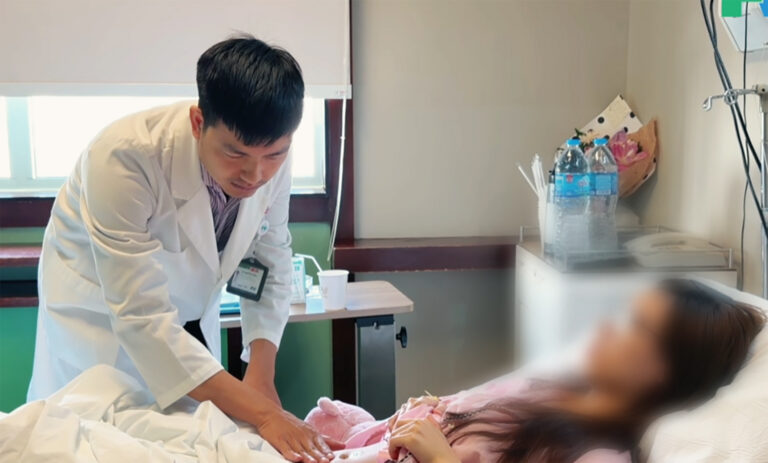
Abdominal pain misdiagnosed as digestive issue: 23-year-old woman diagnosed with ovarian torsion
While studying abroad in South Korea, N.T.T.M. (23) experienced unusual pain in her lower right abdomen. She sought treatment at a local hospital and received medication for a suspected digestive issue. After returning to Vietnam to visit her family, the pain recurred and worsened. On her friends’ advice, M. visited FV Hospital for evaluation. She […]
Advanced robotic surgery at FV Hospital removes tumour near aorta
Surgeons at FV Hospital used the da Vinci Xi robotic surgical system to successfully remove a fibrous tumour located in a difficult-to-access area next to the aorta in a 46-year-old woman. Ms Nguyen Thuy Phuong Dung recovered well after surgery to remove the fibrous tumour from her left chest. Image: FV When a subtle chest […]
Boy with ‘boneless arm’ and decade-long journey to find hope
A jump at the age of six left young D.V.C. with devastating consequences: a left forearm almost entirely devoid of skeletal architecture, facing the prospect of limb amputation through joint disarticulation. For more than ten years, hope faded as every attempt at recovery stalled. It was only through the intervention of the Children of Vietnam […]
Nutcracker Syndrome: How a one-hour stent placement ended a year of abdominal pain
Abdominal pain misdiagnosed as digestive issue: 23-year-old woman diagnosed with ovarian torsion
Advanced robotic surgery at FV Hospital removes tumour near aorta

