



A 60-year-old Vietnamese-American patient was admitted with severe respiratory failure due to blood clots blocking both pulmonary arteries, a condition that can quickly lead to acute heart failure or sudden death. Following prompt catheter-directed thrombectomy at FV Hospital, he fully recovered within one week.
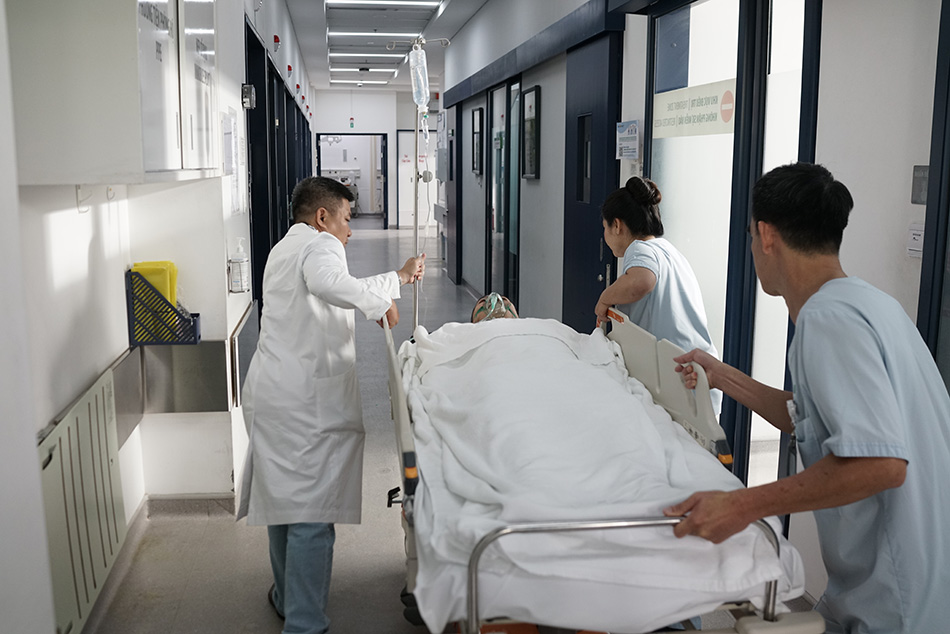
The patient received oxygen and was transported directly to the Emergency Department. Image: FV
Emergency admission for severe breathlessness and cyanosis reveals blood clots blocking both pulmonary arteries
Approximately one month prior to his emergency admission, Mr Nguyen Phong Huu (a Vietnamese-American) began experiencing palpitations. However, as the symptoms did not seem especially severe at the time, he did not seek medical attention.
One morning, a friend found Mr Huu wheezing and severely cyanotic, and immediately called Vietnam’s emergency medical services (115). He experienced an hour of severe respiratory distress. Due to the language barrier, the emergency team arranged for his transfer to FV Hospital to facilitate effective communication and treatment. During transport, he received nebulised medication and high-flow oxygen via a 10-litre reservoir mask.
Upon arrival at FV, he was taken directly to the Emergency Department. Dr Ha Thi Hanh, Specialist Level I, noted that although his colour improved with oxygen, his blood oxygen saturation continued to decline rapidly. His medical history included asthma, long-term smoking, and recent cough, fever, and chest pain.
Based on the clinical presentation, Dr Hanh suspected a blood clot obstructing the airway and ordered a D-dimer test (a blood test that detects the breakdown products of blood clots). The result showed a markedly elevated level. The team proceeded to CT pulmonary angiography. The scan clearly revealed near-total occlusion of both branches of the pulmonary artery.
“The patient presented with a critical pulmonary embolism. With this degree of obstruction, the majority of patients would progress rapidly to acute right heart failure or sudden cardiac death. The fact that Mr Hữu was able to hold on until he reached hospital is genuinely rare,” Dr Hanh said.
Coordinated multidisciplinary emergency response restores pulmonary airflow
Recognising the critical nature of the situation, FV Hospital’s multidisciplinary emergency protocol was activated instantly. Dr Hanh conducted an immediate bedside consultation with vascular interventional specialists, agreeing on emergency catheter-directed mechanical thrombectomy.
Dr Ho Minh Tuan, PhD, Head of Cardiology and Interventional Cardiology at FV Hospital, performed the procedure. Because the thrombus was extensively adhered to the main pulmonary artery and its branches, the team used a specialised aspiration catheter and clot fragmentation device to break down and remove the clot. After about one hour, the obstruction was cleared, relieving the pressure on the patient’s heart.
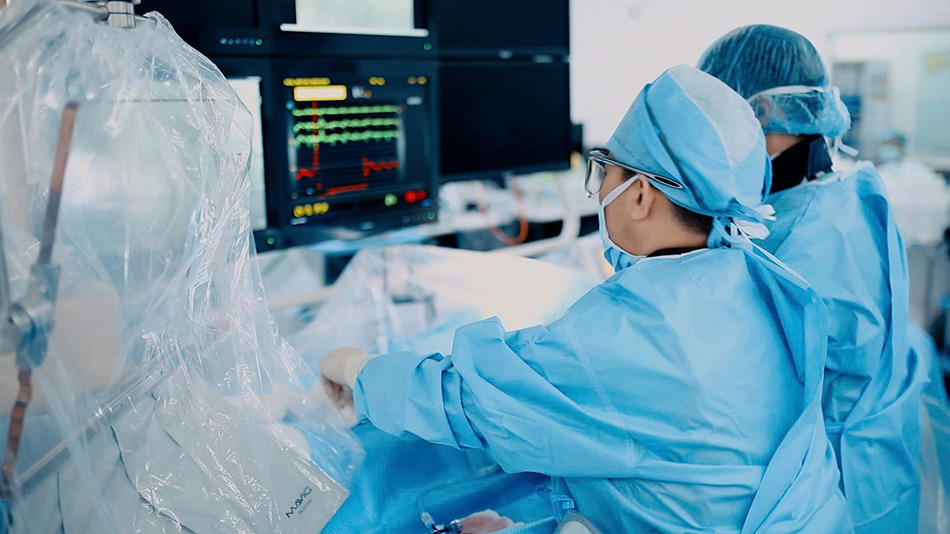
Dr Ho Minh Tuan, PhD, performing the catheter-based thrombectomy to relieve pulmonary artery obstruction. Image: FV
By the following day, Mr Huu’s blood oxygen saturation improved markedly, rising from 88% to 92%. He was transferred to the inpatient ward to begin dedicated cardiopulmonary rehabilitation and physiotherapy, ultimately achieving full recovery and discharge within one week.
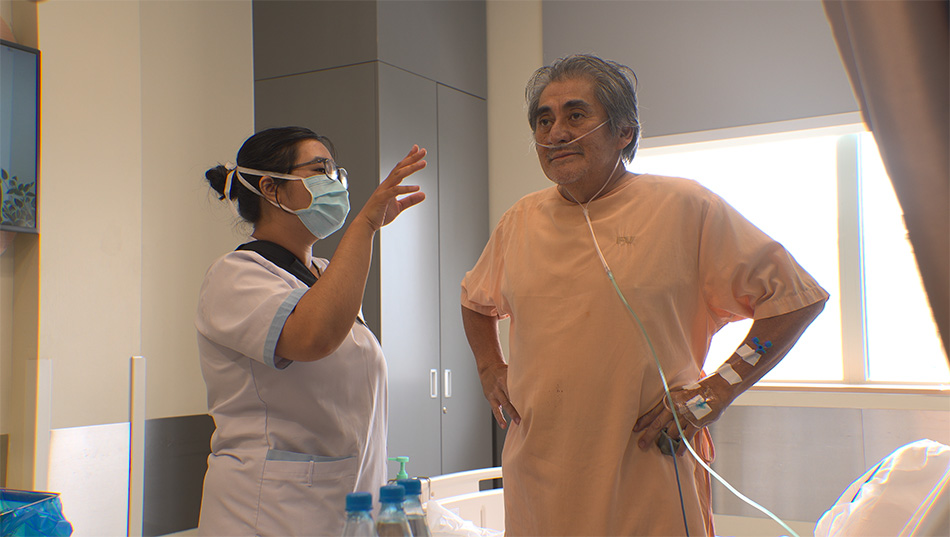
The patient undergoes physical therapy and rehabilitation to restore cardiopulmonary function. Image: FV
Reflecting on his time at FV, Mr Huu shared with gratitude: “I had always assumed that going to an emergency department meant a long wait. But at FV, I was taken straight into a treatment room, with a doctor already there waiting for me. Dr Hanh’s English was excellent, and she explained everything so thoroughly. Every time I coughed, staff would come and check on me straight away. That gentle, attentive care made me feel completely safe.”
Warning: Risk of pulmonary embolism from long-haul flights
Dr Ho Minh Tuan explained that Mr Huu had taken frequent long-haul international flights over the previous eight months. Prolonged immobility for 12 to 24 hours can cause venous stasis in the lower extremities, leading to deep vein thrombosis (DVT) that may dislodge and obstruct the pulmonary arteries.

Dr Ho Minh Tuan, PhD, Head of Cardiology and Interventional Cardiology at FV Hospital
Dr Tuan further noted that pulmonary embolism is a dangerous condition that is easily overlooked. It most commonly affects sedentary older adults, people who frequently undertake long journeys by car or aeroplane, cancer patients, and women taking oestrogen-containing contraceptives.
FV Hospital’s Emergency Department routinely manages critical cardiovascular and vascular emergencies, including acute stroke, myocardial infarction, and pulmonary embolism. Rapid multidisciplinary response, prompt diagnostic imaging, and close collaboration among emergency medicine, interventional cardiology, and intensive care minimise door-to-treatment times. Multilingual staff ensure accurate history-taking and clear communication with international patients during emergencies.
FV Hospital operates in strict compliance with JCI international quality standards and offers advanced diagnostic imaging, modern Cathlabs, and operating theatres equipped with advanced technology. FV ensures patients receive the maximum possible BHYT coverage for emergency admissions, and provides 0% interest payment plans to ease financial burdens. To learn more about emergency cardiovascular services at FV Hospital, please visit 6 Nguyen Luong Bang Street, Tan My Ward (formerly District 7), Ho Chi Minh City, or call (028) 3511 3333. Emergency Hotline: (028) 3511 3500.
Related News
See moreRelated News

Triumphant natural delivery: Mother overcomes unmedicated induced labour at FV Thomson Maternity
After a smooth first childbirth, Mrs Tran Hang expected a similar experience for her second delivery. However, intense induced labour contractions and complete resistance to anaesthesia required a change in approach. With her resilience and the dedicated support of the FV Thomson Maternity Department, she achieved a safe and joyful delivery. Mrs Tran Hang and […]
Patient Safety Week 2026 at FV Hospital: Safe care for non-communicable diseases
In response to World Patient Safety Day 2026, launched by the World Health Organization (WHO), FV Hospital is organising Patient Safety Week 2026 from 14 to 18 September 2026, under the theme “Safe care for non-communicable diseases”. Non-communicable diseases (NCDs), such as cardiovascular disease, diabetes, cancer, chronic respiratory diseases and many other long-term conditions, often […]
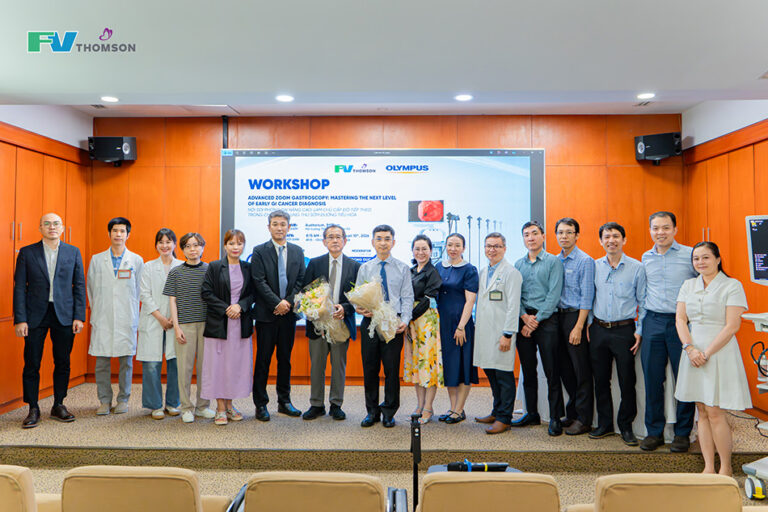
FV Hospital hold workshop on advanced magnification endoscopy for early detection of gastrointestinal cancer
On 10 August 2026, FV Hospital, in collaboration with Olympus Corporation, held the workshop “Advanced Zoom Gastroscopy: Mastering the Next Level of Early GI Cancer Diagnosis”, bringing together endoscopists, gastroenterologists, technicians and other medical professionals from hospitals and clinics in Vietnam and abroad. The workshop “Advanced zoom gastroscopy: mastering the next level of early GI […]
FV Hospital doctors publish two successful case reports on rare gynaecological conditions in an international medical journal
The reports, led by Dr Nguyen Duc Truong as the principal author, with co-authors Dr Vo Trieu Dat, MSc, and Dr Duong Bich Thuy, PhD, document two rare and complex gynaecological cases: a tubo-ovarian abscess caused by Salmonella and a twisted pedunculated fibroid. These publications provide additional clinical data on the diagnosis and management of […]
Triumphant natural delivery: Mother overcomes unmedicated induced labour at FV Thomson Maternity
Patient Safety Week 2026 at FV Hospital: Safe care for non-communicable diseases
FV Hospital hold workshop on advanced magnification endoscopy for early detection of gastrointestinal cancer

