




A large fibroid occupying almost the entire uterine wall caused prolonged heavy menstrual bleeding and severe abdominal pain in a 36-year-old woman. Following robotic surgery with the da Vinci Xi system, she made a remarkable recovery and was able to walk normally just one day after surgery.
A 7cm fibroid threatened her fertility
Ms Motaung Mosa, a 36-year-old South African woman, frequently experienced severe abdominal pain, particularly one to two weeks before her period. During menstruation, she suffered unusually heavy bleeding, which led to severe anaemia.
After seeking medical advice at a local clinic, she was diagnosed with uterine fibroids and advised to visit FV Hospital for specialist treatment.
At FV, Dr Nguyen Duc Truong – FV Thomson Maternity identified a fibroid measuring approximately 7cm at its widest point. The tumour occupied almost the entire thickness of the uterine wall, extending from the inner to the outer surface. It caused heavy menstrual bleeding, prolonged abdominal pain and anaemia.
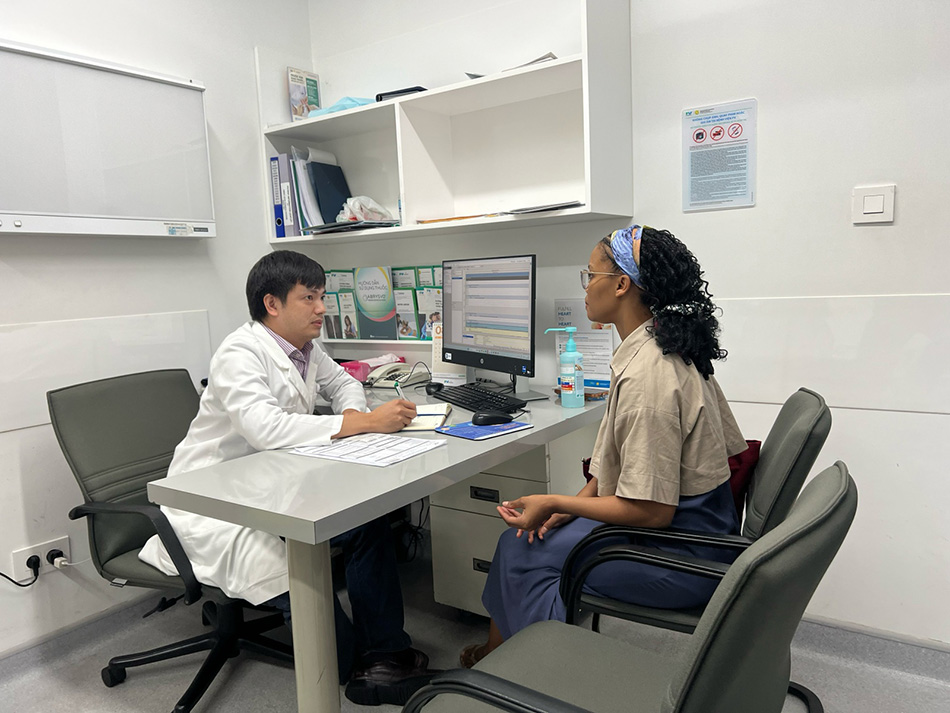
Dr Nguyen Duc Truong discusses da Vinci Xi robotic surgery with patient.
As the patient was only 36, had never given birth and still wished to become pregnant, the treatment goal was not only to remove the fibroid but also to preserve her uterus. According to Dr Nguyen Duc Truong, medical treatment could require the patient to take contraceptive medication until menopause. By contrast, myomectomy would remove the fibroid while preserving the uterus, allowing her to retain the possibility of pregnancy. This was an important factor in determining the most appropriate surgical approach. After considering both medical treatment and surgery, the doctors recommended robotic surgery to remove the fibroid while preserving the patient’s opportunity to become pregnant.
Robotic Surgery with the da Vinci Xi: Supporting Fibroid Removal and Uterine Muscle Repair
The surgery was performed by Dr Robert Francois Marie Riché, PhD – a robotic surgery specialist at the FV da Vinci Robotic Surgery Centre, through four small incisions, each approximately 8mm.
The greatest challenge was the fibroid’s location, which was obscured by the uterus. The surgical team had to lift and move the uterus to one side to create sufficient space to access the tumour.
The da Vinci Xi robotic system, with its four flexible arms, enabled the surgeon to perform precise manoeuvres, particularly when suturing and reconstructing the layers of uterine muscle following fibroid removal. This was a crucial step in preserving the uterus’s structure, supporting the patient’s future pregnancy plans and helping to minimise complications.
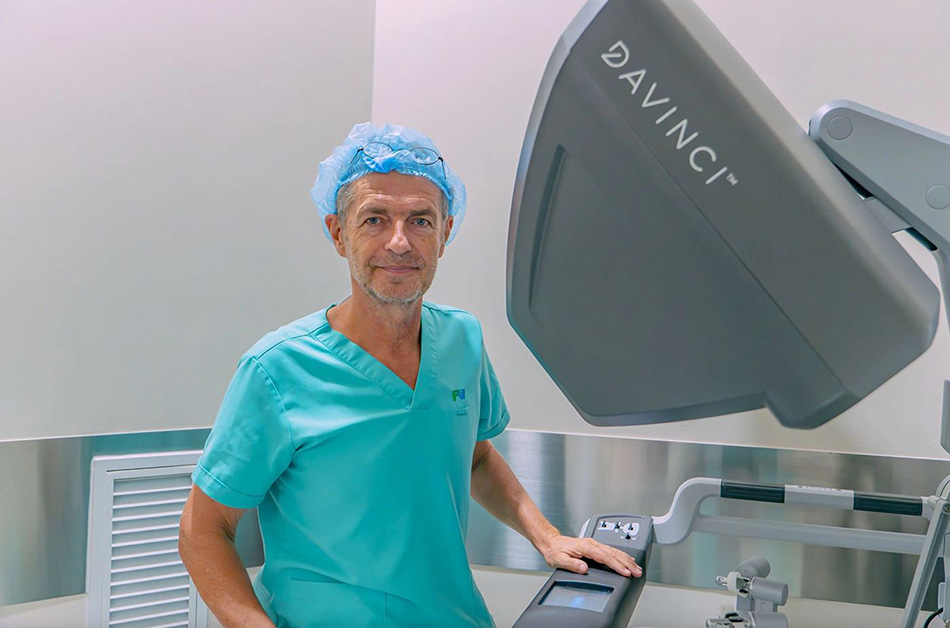
Dr Robert Francois Marie Riché, PhD, da Vinci Xi robotic surgery specialist in Obstetrics and Gynaecology
The surgery helped minimise blood loss and effectively preserve the uterine muscle. The patient was able to walk after just one night and was discharged two days later. One month after surgery, her pain had decreased by more than 80%, and the prolonged bleeding had stopped.
“At first, I was quite worried, but thanks to the doctor’s clear explanations and the professional care at FV, I gradually felt reassured about my treatment,” Ms Mosa shared.
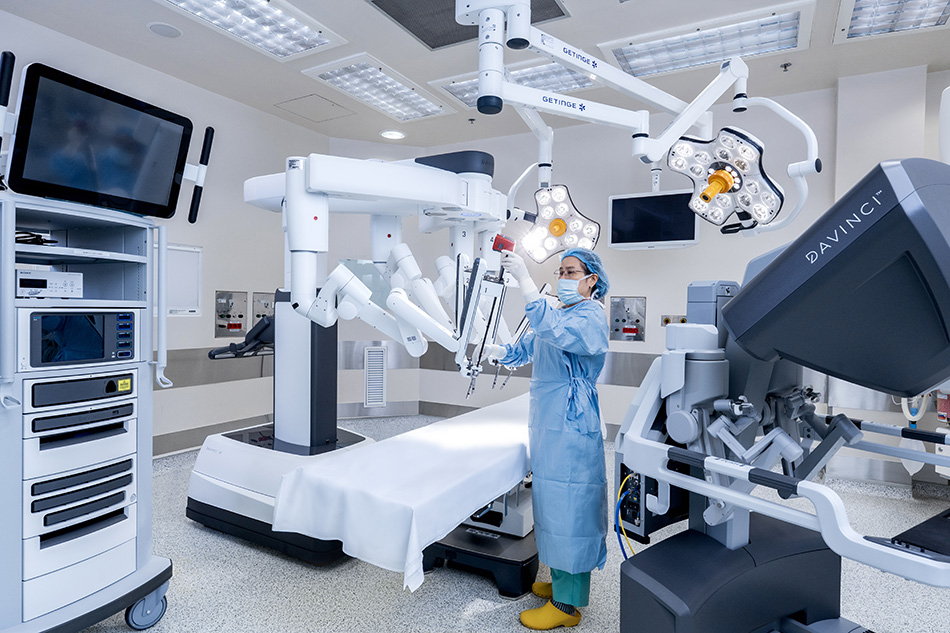
The da Vinci Xi robotic surgery system at FV Hospital
At FV, the da Vinci Xi robotic surgical system is used to treat a range of complex gynaecological conditions, including uterine fibroids, uterine cancer, ovarian cancer, endometriosis and pelvic organ prolapse. For younger women who wish to become pregnant after fibroid treatment, preserving the uterus and repairing the uterine muscle are particularly important treatment goals. In such cases, robotic surgery can assist surgeons in removing fibroids and precisely suturing and reconstructing the uterine muscle, while minimising impact on surrounding organs and tissues.
Furthermore, as a minimally invasive approach, robotic surgery can help reduce post-operative pain and blood loss, improve cosmetic outcomes and shorten recovery time.
For consultations and examinations for gynaecological conditions using the da Vinci Xi robotic system with Dr Robert Francois Marie Riché, patients can visit FV Hospital at 06 Nguyen Luong Bang Street, Tan My Ward (formerly District 7), Ho Chi Minh City, or call (028) 3511 3333.
Related News
See moreRelated News
FV Hospital provides emergency care after runner collapses at FV RUN 2026
On 31 October, FV Hospital partnered with the Children of Vietnam Charitable Fund and event organiser Nexus Sport Events to hold FV RUN 2026 (21 km) in Phu My Hung, Ho Chi Minh City. The event attracted more than 3,300 registered runners. However, an unexpected incident occurred when one participant suddenly collapsed near the finish […]
FV Hospital races against time to save a Cambodian mother with placenta praevia and pulmonary embolism
Early detection of the complication and coordinated multidisciplinary treatment enabled FV doctors to control the pulmonary embolism and preserve the mother’s uterus. She recovered and was discharged after seven days. Dr Vo Trieu Dat, MD, MSc, examines Cambodian patient Sourn Channa before her discharge. (Photo: FV Hospital) From Cambodia to Vietnam in Search of a […]
FV successfully treats a rare case of bladder diverticulum with a giant bladder stone
After reviewing 129 pages of medical records from the US and conducting a clinical examination, FV Hospital doctors quickly identified the underlying cause of Mr Culver Thomas William’s persistent urinary retention. Open surgery removed the abnormal bladder diverticulum and extracted a 4 x 6 cm stone, finally freeing the patient from the urinary catheter he […]

Two Months of Persistent Tinnitus Lead to Cholesteatoma Diagnosis
The Otorhinolaryngology (ENT) Department at FV Hospital recently received a 54-year-old woman from Ho Chi Minh City who had been experiencing tinnitus for over two months. She was diagnosed with a cholesteatoma of the middle ear. At FV, she underwent endoscopic surgery to remove the cholesteatoma, with the aim of preserving as much of her […]
FV Hospital races against time to save a Cambodian mother with placenta praevia and pulmonary embolism
FV successfully treats a rare case of bladder diverticulum with a giant bladder stone

