




For six months, a 62-year-old man from Lam Dong Province lived in distress, waking dozens of times each night to use the toilet. His fear of surgery led him to delay treatment, which allowed his rectal tumour to grow, nearly obstructing his bowel and invading his bladder.
Delaying treatment led to a complex, advanced rectal tumour
Mr Nguyen Xuan Tan first noticed digestive symptoms a year earlier, including dull, ongoing abdominal pain, changes between diarrhoea and constipation, rectal bleeding, and a constant urge to have a bowel movement (tenesmus). A colonoscopy at a local hospital confirmed rectal cancer, and doctors recommended immediate surgery. Concerned about the potential complications of surgery, he instead turned to traditional folk remedies, hoping to avoid an operation altogether.
However, his condition steadily deteriorated. Some nights, he was forced to wake as often as every 15 minutes just to use the bathroom. By early April 2026, no longer able to endure his symptoms, he finally presented to FV Hospital for assessment.
Examinations revealed a 6 cm tumour at the rectosigmoid junction, causing near-total bowel obstruction that prevented endoscope passage. CT imaging showed the tumour had penetrated the bowel wall, invading the bladder and pelvic peritoneum, with multiple enlarged regional lymph nodes.
Dr Phan Van Thai, MSc, Specialist Level II, Head of the General Surgery Department and robotic surgery specialist at FV Hospital, said this is locally advanced rectal cancer, a large tumour adherent to multiple surrounding organs, which makes the surgery considerably more complex. That said, because there is no evidence of distant metastasis, curative-intent treatment remains genuinely achievable.

Dr Phan Van Thai, MSc, Specialist Level II, advising on robotic surgery. Image: FV Hospital
The da Vinci Xi Robot achieves complete tumour resection
Mr Tan’s surgical team elected to use the da Vinci Xi robotic system to achieve complete tumour resection whilst preserving critical pelvic structures wherever oncologically feasible. Following bowel preparation, he underwent semi-urgent surgery, performed promptly to pre-empt the imminent risk of complete bowel obstruction.
The main surgical challenge was the tumour’s invasion of the bladder and pelvic peritoneum. The robotic system’s three-dimensional imaging and articulated arms enabled the team to achieve precise dissection and safe, clear resection margins.
Over nearly 4 hours, the surgical team removed a 25 cm segment of colorectum containing the tumour, cleared regional lymph nodes, and excised invaded tissue as a single specimen. The robotic system’s ICG fluorescence imaging enabled real-time assessment of bowel blood supply, reducing the risk of anastomotic leak after surgery.
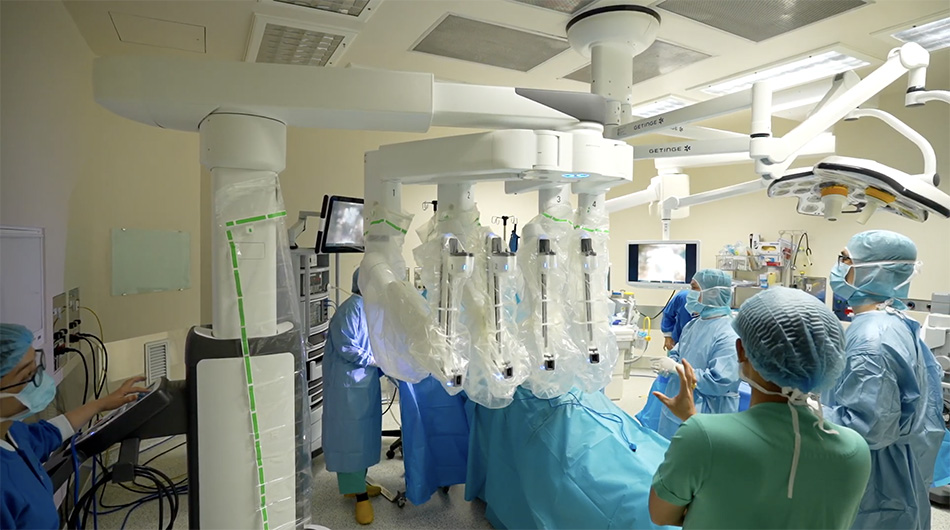
Robotic surgery for rectal tumour resection using the da Vinci Xi system. Image: FV
Don’t let fear of surgery delay treatment
One day after surgery, his digestive system resumed normal function. By day six, Mr Tan was discharged in stable condition.
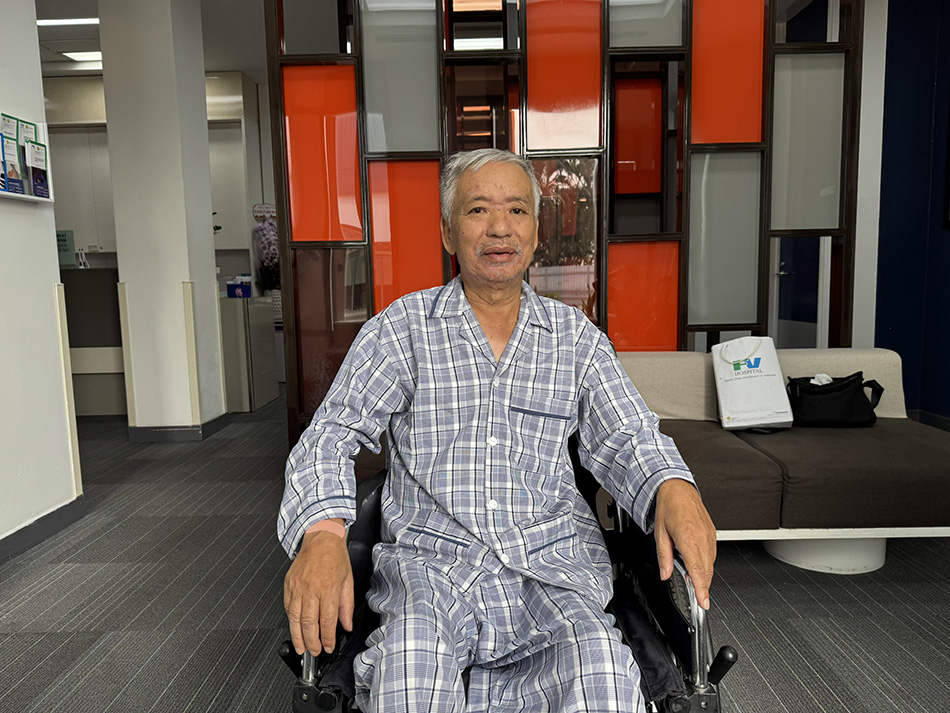
Two months after surgery, Mr Tan’s health has improved significantly. Image: FV
At his two-month follow-up, Dr Thai confirmed that Mr Tan’s digestive function had fully returned to normal. He is still being monitored and is now getting whole-body cancer treatment at the Hy Vong Cancer Care Centre.
Mr Tan’ss greatest regret, he says, is having delayed surgery for so long out of fear of pain and complications.
“In reality, I didn’t feel nearly as much pain as I had imagined. The doctor explained everything so thoroughly that I felt completely at ease,” he said.
According to Dr Phan Van Thai, MSc, Specialist Level II, colorectal cancer is amongst the cancers with the most favourable prognosis, provided it is detected and treated at the right time. Yet a significant number of patients miss this critical treatment window because they are apprehensive about surgery, or place their hope in unproven alternative treatments.
“Patients should not delay surgery once it has been indicated. With the support of modern techniques such as robotic surgery, even highly complex cases of rectal cancer can still be treated with curative intent, with less post-operative pain, faster recovery, and a good quality of life afterwards,” Dr Thai advised.
For more information on robotic cancer surgery using the da Vinci Xi robotic system, please contact FV Hospital at 6 Nguyen Luong Bang Street, Tan My Ward (formerly District 7), Ho Chi Minh City, or call (028) 3511 3333.
Related News
See moreRelated News

Challenging robotic surgery successfully removes lung tumour in patient with a 40-year smoking history
Mr Nguyen Van Hai, 66, was diagnosed with a lung tumour measuring approximately 17 mm. However, surgery was particularly complex because of his 40-year smoking history and a history of pulmonary tuberculosis around 30 years ago. Scarring caused by the previous tuberculosis had resulted in severe fibrous adhesions, causing the lung to adhere firmly to […]

Minimally invasive surgery ends decades of sweaty palms for one patient
For over twenty years, 22-year-old Ta Duy Khang struggled with the embarrassment of cold, sweaty palms. The condition was so severe that he often avoided shaking hands. After a quick five-minute endoscopic thoracic sympathectomy at FV Hospital, his palms became dry and his confidence returned. Doctors at FV Hospital say that endoscopic thoracic surgery for […]

How 10 dental implants changed one patient’s life at FV Hospital
After years of tooth loss led to severe jawbone resorption and difficulty eating, specialists at FV Hospital restored the patient’s smile by placing 10 dental implants in one procedure. How years of tooth loss lead to jawbone loss For many years, Mr Lam Quang Kieu Phong (55, Ho Chi Minh City) experienced tooth loss. Some […]

Nutcracker Syndrome: How a one-hour stent placement ended a year of abdominal pain
FV Hospital successfully treated a complex case of nutcracker syndrome using minimally invasive endovascular stenting, sparing the patient major open surgery. Persistent abdominal pain linked to renal vein entrapment For over a year, 41-year-old Ms V.T.K.P. from Ho Chi Minh City experienced persistent, dull lower abdominal pain that worsened with prolonged sitting or standing. As […]
Challenging robotic surgery successfully removes lung tumour in patient with a 40-year smoking history
Minimally invasive surgery ends decades of sweaty palms for one patient
How 10 dental implants changed one patient’s life at FV Hospital

